48 Hours in Muscat: The Perfect Weekend Itinerary
Muscat in 48 Hours: More Than You Expect
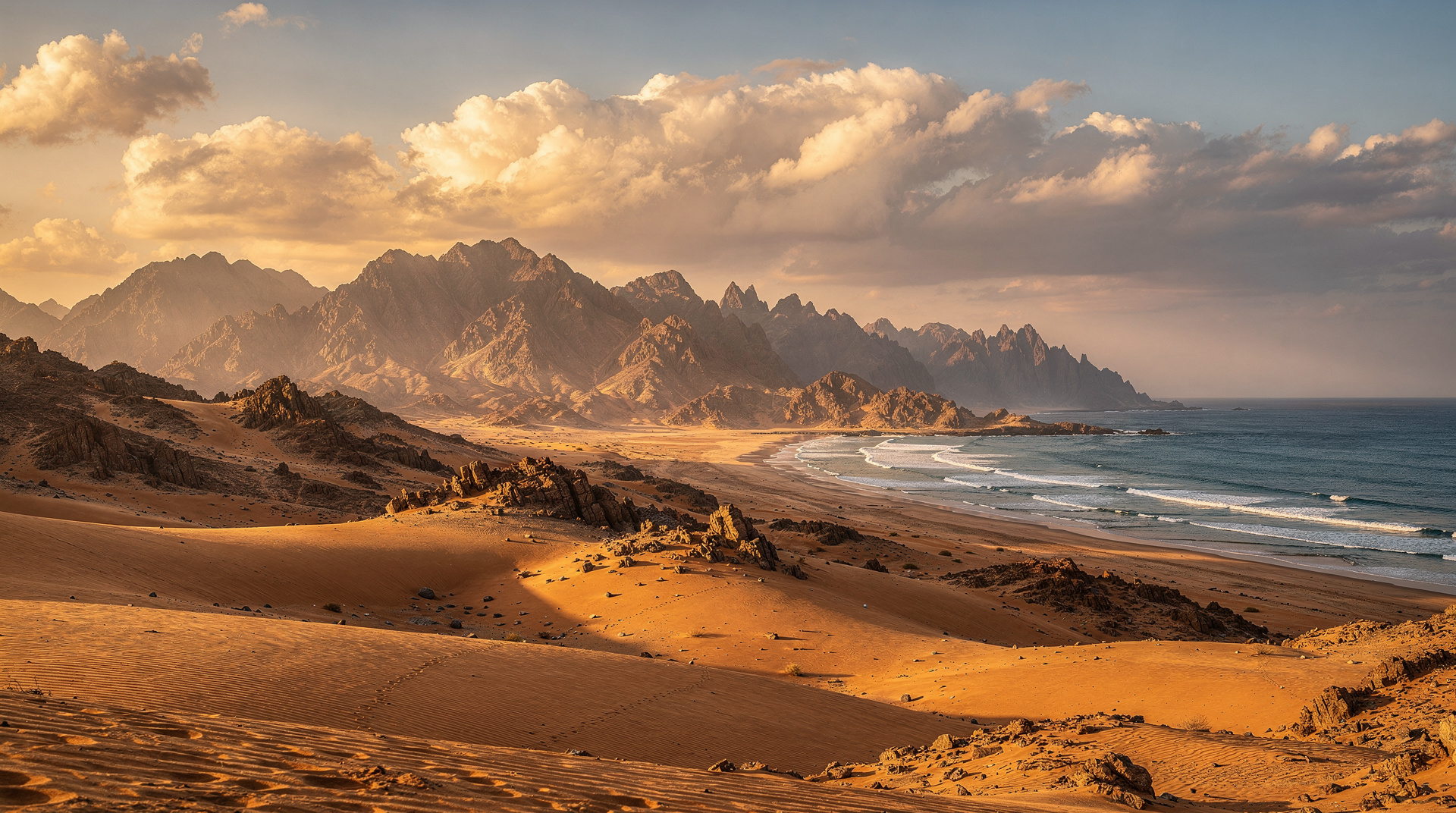
Muscat is a city that rewards those willing to move at its pace. It is not Dubai — there are no vertical towers competing for skyline dominance, no theme park attractions engineered for Instagram. What Muscat offers instead is a layered, human-scale city where ancient forts sit beside working fish markets, where the grandest mosque in the Gulf is neighboured by a traditional silver souq, and where an hour’s drive in almost any direction opens into dramatic desert, mountain, or wadi landscape.
A 48-hour weekend is enough time to understand Muscat’s character and leave with a genuine sense of the city — provided you use it well.
At a Glance
| Where | Muscat, capital of Oman, spread along roughly 60 km of coastline |
| Cost | Around 150-250 OMR per person for a two-day weekend (mid-range hotel, meals, one or two paid activities) |
| Time needed | 2 full days minimum; add a third for the Daymaniyat Islands or Wadi Shab |
| Getting there | Muscat International Airport (MCT), direct flights from most Gulf, European and Asian hubs |
| Getting around | Rental car for flexibility, or taxis/Bolt/OTaxi at around 5-10 OMR per journey |
| Best time | October to March for comfortable daytime temperatures |
Before You Arrive: Practical Setup
The city’s spread means transport planning matters. Muscat stretches along the coast for roughly 60 kilometres, and the main attractions are distributed across several distinct areas: the Royal Opera House and embassies in the Qurum and Madinat al Sultan Qaboos area, the Grand Mosque in Al Khuwair, the old city of Muttrah to the northeast, and the Qurayat and Bandar Jissa coast to the east.
Renting a car from the airport gives you full flexibility. Taxis and ride-hailing apps (Bolt and OTaxi both operate in Muscat) are a reasonable alternative if you prefer not to drive. Budget roughly 5–10 OMR per single journey across the city.
The best time to visit Muscat is October through March, when temperatures are mild and outdoor activities are comfortable. A May weekend, while warmer (temperatures around 38°C), is entirely manageable with early-morning and evening planning.
Day One: Old Muscat, the Mosque, and the Sea
Morning: Sultan Qaboos Grand Mosque (8:00–10:00)
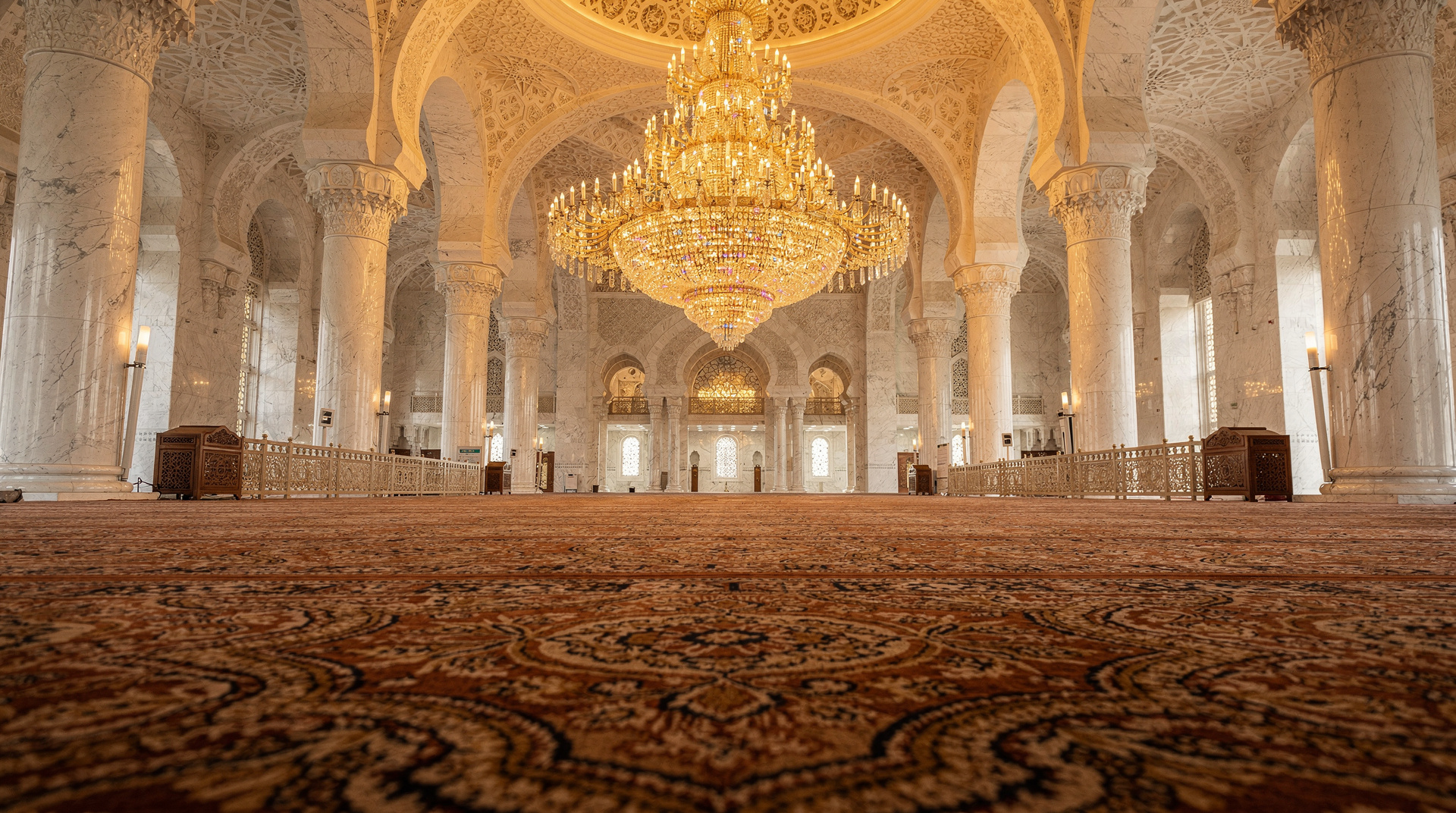
Start your Muscat weekend at the Sultan Qaboos Grand Mosque, not because it is simply the most-photographed attraction in the country, but because it genuinely merits the superlatives it attracts. The mosque complex can accommodate 20,000 worshippers, its main prayer hall chandelier weighs 8.5 tonnes, and the hand-woven Persian carpet covering the prayer hall floor took 600 women four years to complete.
Non-Muslim visitors are welcome on weekday mornings between 8:00 and 11:00 and on Saturday mornings. Visit as close to 8:00 as possible to experience the space in golden light with minimal crowds. The architecture rewards slow examination: carved plasterwork, intricate tile mosaic, and the extraordinary sense of scale in the main dome.
Women require a full-length abaya or similar cover — these are provided at the entrance for those without their own. Both men and women should dress modestly; shorts are not permitted. Read our detailed Grand Mosque visitor guide for full logistics.
Mid-Morning: Muttrah Souq and Corniche (10:30–12:30)
From the mosque, drive northeast to Muttrah — Muscat’s oldest neighbourhood and the site of the city’s most authentic trading souq. The Muttrah Souq has been in continuous operation for centuries, and while its upper lanes now contain tourist trinkets, the inner sections remain a genuinely working market selling frankincense, dried limes, Omani halwa, silver jewellery, and fabrics used in daily Omani life.
Spend at least an hour exploring. Engage with shopkeepers — bargaining is appropriate for most items, but do so good-naturedly. Look for quality silver khanjar daggers, frankincense from Dhofar, and bottles of rose water from Jebel Akhdar as genuinely Omani souvenirs. Plastic tat is abundant; the good stuff requires looking.
The Muttrah Corniche runs along the harbour in front of the souq. A morning walk along the waterfront, with traditional wooden dhows moored in the harbour and the Portuguese-era Al-Jalali Fort visible on the headland, provides one of Muscat’s most atmospheric moments. The fish market (Souk Al Samak) at the eastern end of the Corniche opens early and closes by late morning — worth a quick visit for the spectacle of the day’s catch being sorted and sold.
Lunch: Muttrah Area (12:30–14:00)
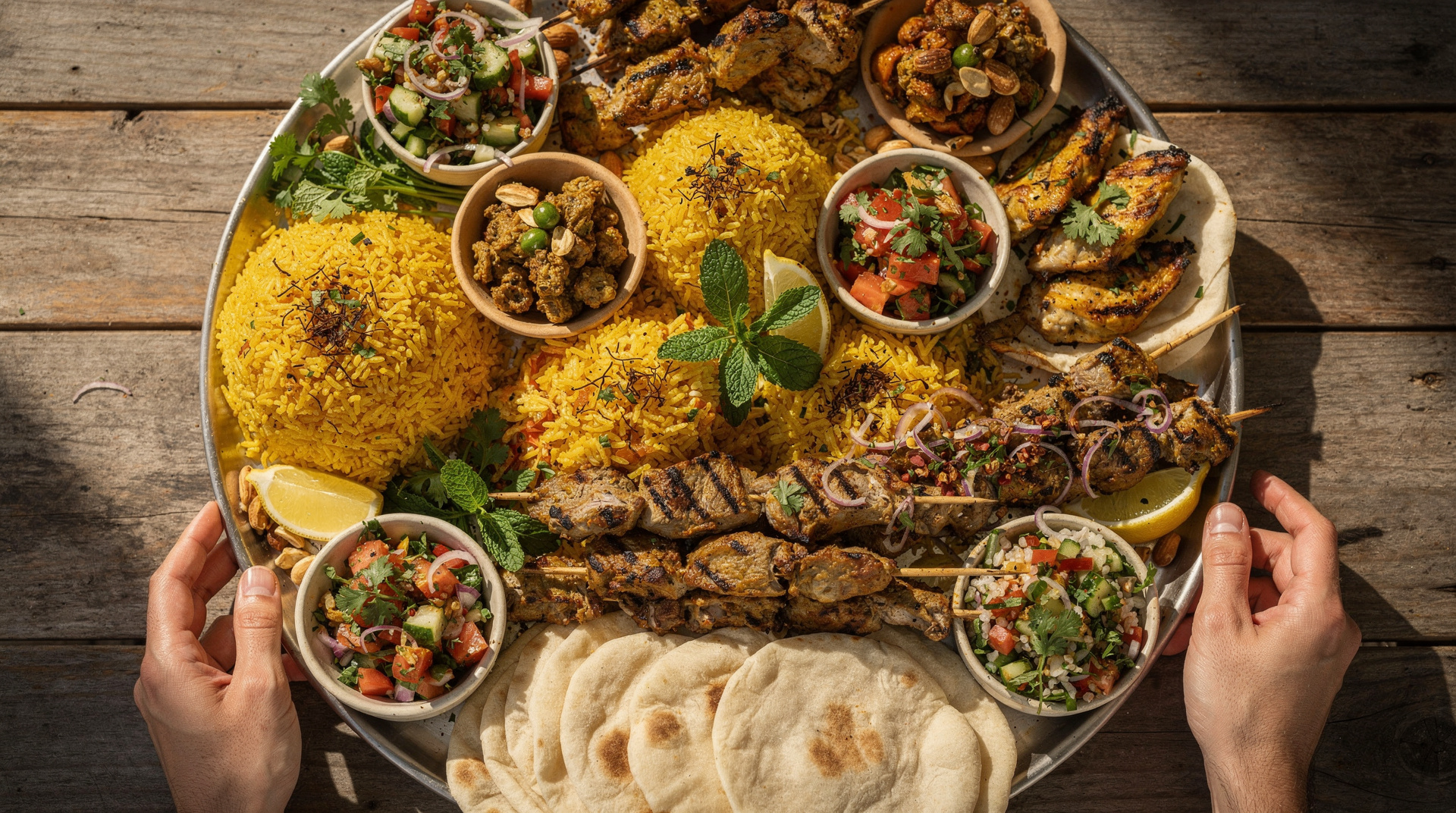
Several restaurants in and around the Muttrah Corniche serve reliable Omani food. Look for majboos (the spiced rice dish with chicken or fish) and fresh grilled fish. The neighbourhood is best explored on foot for food options — ask for recommendations at your hotel or from the hotel concierge before setting out.
If you want something more structured, the Muscat area has numerous well-regarded restaurants in the Qurum commercial district, a 20-minute drive from Muttrah, including some of the capital’s better Lebanese and Indian establishments.
Afternoon: Nizwa Road Drive or Royal Opera House (14:00–17:00)
Two afternoon options, depending on your interests:
Cultural option: The Royal Opera House Muscat in the Shati al Qurum area is architecturally remarkable — a contemporary interpretation of Omani architectural tradition in white limestone, with elaborate carved screens and an interior that rivals any performing arts venue in the world. Even if no performance is scheduled during your visit, the lobby and grounds are open for exploration, and the craftsmanship is extraordinary.
For a comprehensive overview of the city’s major landmarks in a single circuit, the Muscat Panoramic Tour (from 25 USD, 2026) covers the Royal Opera House exterior, palace district, key viewpoints, and old city in around 3 hours.
Active option: A short drive east of Muscat toward Bandar Jissa and the Shangri-La resort area reveals a dramatically different coastal landscape. Rocky headlands, small coves, and turquoise water provide a very different environment to the Muttrah waterfront. Swimming is possible at Bandar Jissa beach.
Sunset: Dhow Cruise from Muttrah (17:30–20:00)
A sunset dhow cruise from Muscat’s harbour is one of the weekend’s unmissable experiences. Traditional wooden dhows — the same vessel type that carried Oman’s trading empire across the Indian Ocean — depart from the Muttrah harbour area for cruises along the coast, typically taking in the Portuguese forts and rocky coastline while the light turns gold over the sea.
Booking in advance is worthwhile, particularly on weekends. A sunset dhow cruise in Muscat typically runs two hours, includes the dramatic views of the old city from the water, and offers a perspective on Muscat’s geography that is impossible to appreciate from land. Watch the Al-Jalali and Al-Mirani forts turn amber as the sun sets behind the Hajar Mountains for a view that defines the city’s historical character.
Evening: Dinner in Qurum or Madinat (20:00–22:00)
The area around Qurum Beach and Madinat al Sultan Qaboos concentrates some of Muscat’s best restaurants, from traditional Omani to excellent South Indian and Lebanese. The Al Khuwair neighbourhood has several rooftop dining options with good city views. Budget around 8–15 OMR per person for a good restaurant meal.
Day Two: The Sea, the Market, and the Mountain View
Early Morning: Dolphin Watching and Snorkelling (07:00–11:00)
Muscat’s coastal waters are home to populations of spinner dolphins, bottlenose dolphins, and during winter months, humpback whales. Morning boat tours from the harbour take advantage of the flat-calm sea conditions that prevail in the early hours before the wind picks up.
A dolphin watching and snorkelling tour from Muscat combines two of the coast’s best offerings: the chance to observe dolphins in their natural habitat (spinner dolphins frequently bow-ride alongside boats) and snorkelling in the clear waters of the coastal bays, where reef fish, sea turtles, and coral gardens are accessible from the surface.
Bring sunscreen, a light towel, and a change of clothes for this excursion. Most boat tours provide snorkelling equipment, but bringing your own mask ensures proper fit. Departure is typically at or before 7:00 to make the most of calm morning conditions.
Mid-Morning: Nizwa or Ruwi Area (11:30–13:00)
If you have not yet visited the National Museum: The National Museum of Oman in the Muttrah area opened in 2016 and houses one of the Arabian Peninsula’s finest collections of archaeology, natural history, and cultural heritage. Galleries cover Oman’s pre-Islamic civilisations, the frankincense trade, traditional crafts, and the history of the Imamate. Air-conditioned and beautifully curated, it is an excellent mid-morning stop, particularly if the temperature outside is climbing.
If museums are not your focus: The central Ruwi area — Muscat’s traditional commercial district — is worth an hour of exploration. The Ruwi high street has a different character to the tourist-facing Muttrah souq: wholesale fabric merchants, spice traders, Indian and Pakistani restaurants, and the kind of busy urban commerce that characterises working Gulf cities.
Lunch: Local Restaurant (13:00–14:30)
The Ruwi and Qurum areas both have excellent lunch options. For genuine Omani food at modest prices, small restaurants serving majboos, harees, and grilled fish provide far better value than hotel restaurants. Budget 3–5 OMR per person for a full Omani lunch at a local place.
Afternoon: The View from the Hills (15:00–17:30)
Several viewpoints around Muscat provide elevated perspectives over the city that contextualise everything you have seen at ground level. The Al Qurum Nature Reserve provides elevated walking paths above the beach area. The road to Bait al Baraka, the Sultan’s private residence on the coastal headland, passes through scenery that demonstrates why this stretch of coastline was chosen as a royal enclave.
If you have a car, a drive through the Al-Hajar mountain foothills north of Muscat — toward Fanja or up into the initial mountain roads — provides a preview of the dramatic landscape that characterises Oman’s interior and a very different view of the coastal capital from above.
Late Afternoon: Qurum Beach (17:30–19:00)
Qurum Beach in western Muscat is the city’s most accessible public beach. A gentle curve of sand backed by a public park and the Qurum Natural Park, it is a place where Muscat’s resident population comes to walk, exercise, and socialise at day’s end. The beach itself is clean, the park well-maintained, and the sunset views over the Gulf of Oman are excellent.
Final Evening: Souq al Jubail Fish Market and Dinner (19:00–21:00)
End your Muscat weekend where the city begins its mornings: at a waterfront location with food that connects directly to the Gulf outside the window. The Souq al Jubail area in the Muttrah district has several seafood restaurants that serve the day’s catch prepared simply — grilled, fried, or baked — alongside rice and salad. It is the kind of meal that summarises everything appealing about coastal Omani food culture: unfussy, fresh, and deeply good.
Weekend at a Glance
| Slot | Day One | Day Two |
|---|---|---|
| Morning | Sultan Qaboos Grand Mosque | Dolphin watching and snorkelling |
| Midday | Muttrah Souq and Corniche | National Museum or Ruwi souq |
| Afternoon | Royal Opera House or Bandar Jissa | Muscat viewpoints |
| Evening | Sunset dhow cruise, dinner in Qurum | Qurum Beach, dinner at Souq al Jubail |
If You Only Have One Day
Compressing this itinerary into a single day is possible but means choosing between the mosque-souq-dhow combination and the sea-based morning. Most first-time visitors get more out of Day One’s circuit: the Grand Mosque, Muttrah Souq, and the sunset dhow cruise together give the fullest sense of Muscat’s layered identity in the least time. If you have to cut something, drop the Royal Opera House visit before you drop the dhow cruise — the mosque and the harbour views define the city far more than the opera house interior does.
For a fuller circuit that goes beyond the capital, our 7-day classic Oman itinerary builds directly on this weekend and adds the interior and the wadis, while the 3-day Muscat express is a tighter, single-city version of the same plan.
Where to Stay for This Itinerary
Basing yourself in Qurum or Al Mouj keeps you close to the restaurants, beaches, and the Royal Opera House, with a reasonable 20-30 minute drive to Muttrah in the morning. Muttrah itself has fewer hotel options but puts you right beside the souq and the dhow harbour if an early start matters to you. Our where to stay in Muscat guide breaks down the trade-offs by neighbourhood in more detail.
Extending Beyond 48 Hours
A weekend scratches Muscat’s surface. If you have additional days, the most rewarding extensions are:
Day 3: Add a morning snorkeling trip to the Daymaniyat Islands marine reserve — sea turtles, reef sharks, and brilliant coral accessible from Al Sawadi beach 45 km north of Muscat. Book the Daymaniyat Islands Snorkeling Trip (from 55 USD, 2026) in advance as places are limited.
Day 3–4: Drive south to Wadi Shab via the coastal road, one of Oman’s most spectacular wadi hikes. The drive itself through the Hajar coastal range is exceptional.
Day 3–4: Drive inland to Nizwa and Jebel Akhdar, visiting the historic fort at Nizwa and the mountain villages of the green mountain. The Jebel Akhdar Rose Garden (in season, March–April) is extraordinary.
Day 3+: Add a night or two in the Wahiba Sands desert for sunset dune drives, camel encounters, and sleeping under an extraordinary sky.
For transport advice on extending your Muscat base into a broader Oman road trip, our 4x4 rental guide covers everything you need to know about choosing and driving the right vehicle.
Practical Muscat Information
Getting there: Muscat International Airport (MCT) is served by direct flights from most major European, Asian, and Gulf hubs. The airport is approximately 30 minutes from the Muttrah and central Muscat areas.
Getting around: Car rental from the airport is the most flexible option. Taxis are available but require negotiating a fare or using the meter — establish the price before departure. Ride-hailing apps (Bolt, OTaxi) operate with fixed fares.
Dress code: Muscat is relatively relaxed compared to some Gulf cities, but modest dress is appreciated — long trousers or skirts, covered shoulders in markets and religious sites. Swimwear is appropriate only at the beach and pool.
Currency: Omani Rial. ATMs are widely available in Muscat. Major hotels, restaurants, and shops accept credit cards. Small vendors and souq merchants may prefer cash.
Language: Arabic is the official language. English is widely spoken in hotels, restaurants, and tourist sites throughout Muscat.
Frequently Asked Questions
Is two days really enough time in Muscat? Two days covers the essential sights well — the Grand Mosque, Muttrah Souq, a dhow cruise, and either dolphin watching or a museum visit. It is a genuine introduction rather than a rushed skim, though most visitors leave wanting more time, particularly for day trips toward Nizwa or the coast.
Do I need a car for a Muscat weekend, or are taxis enough? Taxis and ride-hailing apps are workable for this itinerary since most stops cluster in a few areas, but a rental car saves money and time if you plan to add any day trip beyond the city, and gives more flexibility around the loosely timed slots above.