Salalah — Arabia's Monsoon Secret
Explore Salalah's Khareef monsoon, ancient frankincense trees, pristine beaches, and the edge of the Empty Quarter. Full 2026 guide.
Quick facts
- Best time to visit
- October to May (or July to August for Khareef)
- Days needed
- 3 to 5 days
- Getting there
- Salalah Airport (SLL) — direct flights from Muscat (1h20) and Gulf hubs
- Budget per day
- USD 60 to 150
A City Unlike Anything Else in Arabia
Salalah defies the image of Oman that most visitors form in Muscat. Where the north is arid limestone and desert, Dhofar in the south receives the tail of the Indian Ocean monsoon every year between late June and August. During those weeks, the mountains behind Salalah turn startlingly green. Waterfalls appear. The air cools to 25°C. Cattle graze on mountain meadows. The locals call it the Khareef season, and Omanis from the north descend in their thousands to experience something they do not have at home: proper rain and cool green hills.
Outside the monsoon, Salalah is a different kind of remarkable. The beaches on this stretch of coast are among the finest in Oman — wide, pale, and frequently deserted. The frankincense trees of Wadi Dawkah, a UNESCO World Heritage Site, have been harvesting incense for export since at least 5,000 years ago. The ancient port city of Sumhuram, and the lost city of Ubar — referenced in the Quran and once called “the Atlantis of the Sands” — sit within day-trip range. To the north, the Empty Quarter desert begins.
Salalah rewards at least three full days. Five is comfortable if you want to cover the coast, mountains, frankincense sites, and the desert edge without rushing.
At a Glance
| Where | Dhofar region, far south of Oman, around 1,000 km from Muscat by road |
| Best time | October to May for beaches and desert; late June to August for the green Khareef |
| Days needed | 3 to 5 days |
| Getting there | Fly Salalah Airport (SLL), around 1h20 from Muscat, from roughly OMR 25 one way |
| Around town | Rental car recommended (sites spread over 60 to 100 km); around OMR 15-20/day, more for 4WD |
The Khareef Season: Arabia’s Monsoon Experience
From late June through August, the southwest monsoon pushes moisture up from the Indian Ocean against the Dhofar mountains. The result is the only place in Arabia where you can experience a genuine monsoon: mist, rain, waterfalls, and lush green vegetation at elevation.
The Khareef Festival, running for most of July and August, brings cultural performances, markets, music, and events across Salalah. Hotels fill quickly and prices increase significantly. Book three to four months in advance if you plan to visit during peak Khareef.
The most dramatic monsoon landscape is found at Wadi Darbat, about 40 kilometres east of Salalah. During the Khareef, a waterfall drops from the plateau into a green valley populated by camels and cattle. After the monsoon ends (September through October), the landscape shifts to golden as the grass dries, offering a different but equally beautiful spectacle.
The Frankincense Trees of Wadi Dawkah
The boswellia sacra tree — source of the world’s most prized frankincense — grows naturally in Dhofar and almost nowhere else on earth. The protected grove of Wadi Dawkah, about 50 kilometres inland from Salalah, is a UNESCO World Heritage Site and the best place to see these extraordinary trees.
They are not large. The boswellia is a gnarled, modest-looking tree with peeling bark and sparse foliage. What matters is the resin — cut the bark, and a milky sap bleeds out and hardens into translucent pellets over a few days. The quality of Omani frankincense, particularly the premium Hojari grade from this region, has made it one of the world’s most traded luxury goods for five millennia.
Walking through the grove with a guide is a worthwhile investment in understanding the ecology and harvesting tradition. A local guide will show you fresh cuts, aging resin, and the different grades harvested from different parts of the tree. Entry to the grove area is free; a guide costs approximately OMR 10 to 15 for a group.
Frankincense is available throughout Salalah’s souq at considerably better prices than in Muscat. The Salalah souq near Al Hafah is the place to buy: Hojari (premium, pale green), Royal Hojari (the finest grade), and less expensive varieties are all available by weight.
Al Baleed Archaeological Park and Frankincense Land Museum
The ancient city of Zafar (Al Baleed) was one of the wealthiest ports in the medieval Indian Ocean trade network, the point from which Dhofar’s frankincense was exported to Egypt, Rome, India, and China. The UNESCO World Heritage site now contains an extensive archaeological park with excavated ruins — city walls, a mosque, warehouses, residential quarters — and an excellent modern museum.
The Museum of the Frankincense Land at Al Baleed is the best single resource for understanding Dhofar’s history. Four halls cover the natural history of frankincense, the ancient trade routes, Dhofari seafaring tradition, and the maritime connections of the Arabian Peninsula. Allow two hours. Entry is OMR 0.5 for the museum and park.
Sumhuram: The Ancient Frankincense Port
At the mouth of Khor Rori, 40 kilometres east of Salalah, the ruins of Sumhuram sit above a lagoon that was once a harbour for the frankincense trade in the first centuries CE. The site contains the remains of a walled city with a gate, temple, and residential buildings. The view over the lagoon — now a bird sanctuary — is striking.
Sumhuram is less visited than Al Baleed and therefore more atmospheric. Flamingos are frequently visible in the khor below. Entry is OMR 0.5. Combine with a visit to Wadi Darbat (just behind) for a full eastern Salalah day.
The Beaches: Mughsail, Fazayah, and Al Mughsayl Blowholes
Salalah’s coast southwest of the city contains some of the finest beaches in Arabia, most of them uncrowded outside the Khareef season.
Mughsail Beach is the showpiece — a long arc of white sand backed by limestone cliffs, with blowholes in the rocks that jet seawater spectacularly when the swell is right. The drive from Salalah takes 40 minutes along a coastal road with increasingly dramatic scenery. Facilities are basic (a small café), but the setting is extraordinary.
Fazayah Beach, a further 30 kilometres along the road past Mughsail, requires a 4WD to access properly but rewards the effort. The beach is extensive and almost always empty. Turtles nest here between May and October.
The road west from Mughsail enters the dramatic Dhofar coastal mountains before reaching the Yemen border — the scenery on this stretch is among the most impressive coastal driving in Oman.
Mirbat and Taqah: Beyond the Main Sites
East of Sumhuram, the small fishing towns of Taqah and Mirbat are worth the extra drive for travellers who have already covered Al Baleed and Wadi Darbat. Taqah has its own modest fort (free to view from outside, occasionally open with a caretaker) and a lively fish market in the early morning. Mirbat, another 30 minutes further east, was historically an important frankincense and horse-trading port and retains a scattering of old coral-stone merchant houses along its waterfront, plus a small fort of its own.
Neither town has significant tourist infrastructure, which is exactly the appeal — this is Dhofar without the day-trip buses. Combine both in a half-day loop from Salalah, or use them as a quieter alternative base if the main hotels are full during peak Khareef. For a deeper look at how the Khareef transforms this whole stretch of coast and mountain, see our dedicated guide to Salalah during the Khareef monsoon.
Travellers deciding between a Dhofar-only trip and adding Muscat should also read our Salalah vs Muscat comparison, which weighs up the two very different sides of Oman side by side.
Guided Tours in and Around Salalah
For an introduction to the city’s history, culture, and nature in a single day, the Discover Salalah: City, History and Nature Tour covers the key sites — Al Baleed, the frankincense souq, Wadi Darbat, and the coast — in one guided day. Priced from approximately USD 55 per person in 2026, it is the most efficient introduction for first-time visitors.
The western coast and frankincense landscape combination is covered by the Salalah West Tour: Fazayah Beach, Mughsail and Frankincense Trees. This full-day excursion reaches the most dramatic coastal scenery and the UNESCO frankincense grove. From USD 65 per person.
For one of Oman’s most unique experiences — the edge of the Rub al Khali — the Salalah Sunset Desert Safari in the Rub al Khali Empty Quarter takes visitors north into the world’s largest continuous sand desert for a sunset experience among the dunes. From USD 70 per person.
The eastern coast and Wadi Darbat are covered by two excellent dedicated tours. The East Salalah: Wadi Darbat Waterfall and Mountain Safari Tour focuses on the dramatic waterfall valley and mountain scenery east of the city, combining natural highlights with cultural stops.
From USD 60 per person. Alternatively, the East Salalah Adventure: Nature, History and Scenic Views adds a more adventurous dimension with access to historical sites and panoramic coastal viewpoints around Mirbat.
For visitors wanting to cover both coasts in one outing, the Salalah East and West Combination Tour links Wadi Darbat and the eastern coast with Mughsail Beach and the frankincense landscape to the west — an efficient way to see Salalah’s full geographic range in a single day.
For a truly immersive desert experience, the Night in the Desert: Overnight Camping from Taqah City goes beyond the standard day safari into the Rub al Khali — camping under an extraordinary star-filled sky with a full desert dinner experience included.
To explore the legendary lost city of Ubar and the Empty Quarter in depth, the Salalah Lost City Full Day Excursion to Rub al Khali combines the Shisr excavation site (the Ubar archaeological site) with the dune scenery of the world’s largest sand desert — one of the most historically significant day trips available from Salalah.
See also our complete Oman road trip itinerary for extending south into Dhofar.
The Empty Quarter: Where the Desert Begins
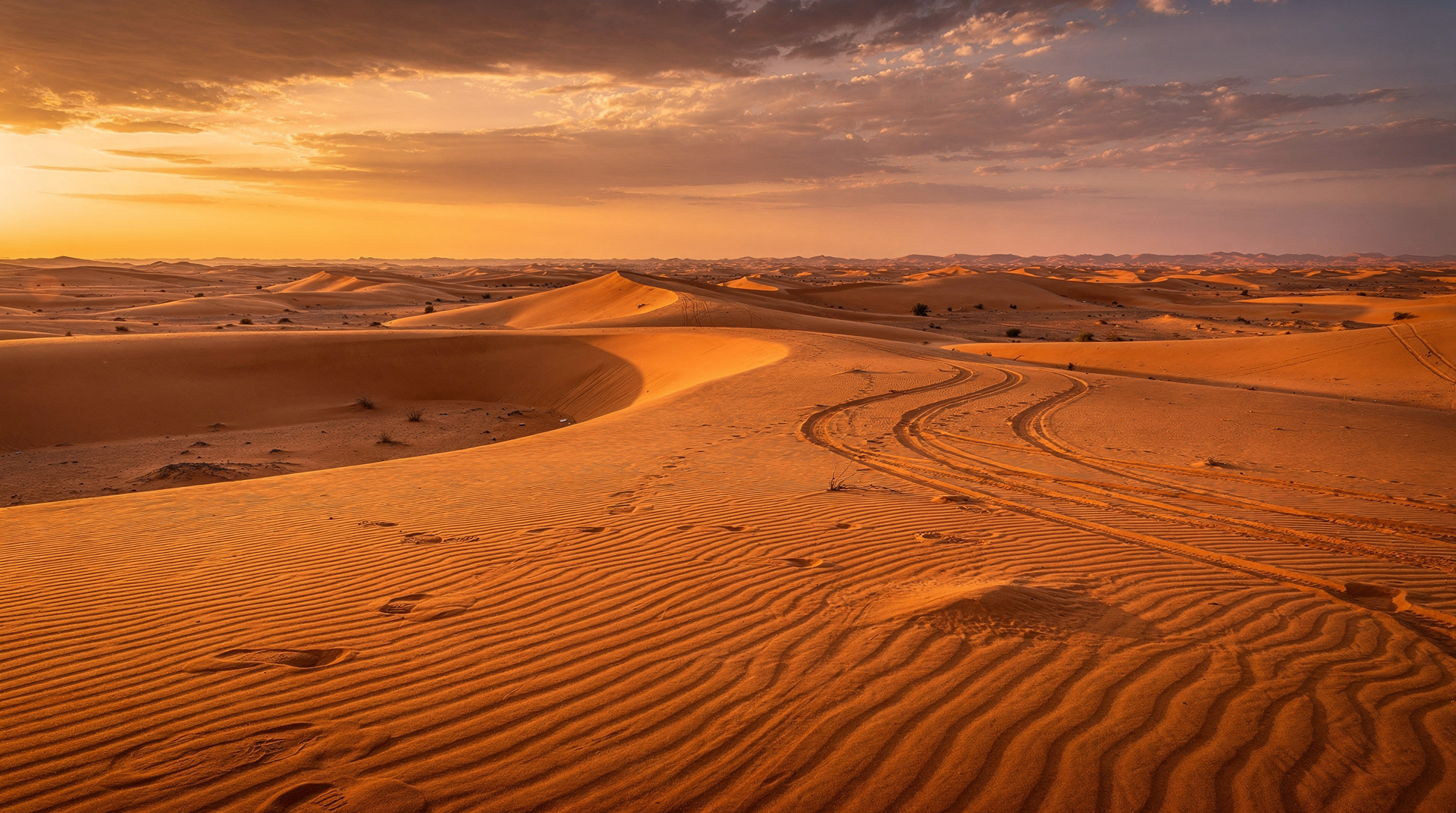
About 90 kilometres north of Salalah, the Rub al Khali — the Empty Quarter, the largest continuous sand desert on earth — begins. The dunes here, near the towns of Shisr and the legendary site of Ubar, are accessible by 4WD and offer a genuine wilderness experience: orange sand mountains with no footprints, absolute silence, and the sense of standing at the edge of something vast and indifferent.
The lost city of Ubar (Shisr) was excavated in the early 1990s and found to be a circular fortress that had collapsed into a limestone cavern — thought to be the “Iram of the Pillars” mentioned in the Quran. The site has a small museum and watchful guards. The drive from Salalah is on a good road (tarmac to Shisr) and takes about two hours.
Where to Stay in Salalah
Luxury (from USD 200 per night)
Hilton Salalah Resort sits directly on Al Hafah beach with expansive gardens, multiple pools, a private beach, and the best spa in the region. Rooms from USD 250 in shoulder season, rising to USD 400 during Khareef. The buffet breakfast is one of the best in Salalah.
Rotana Salalah Resort at Salalah Beach is a newer property at the marina end of the city, with good sea views, a beach club, and multiple dining options. From USD 220.
Mid-range (OMR 30 to 60 / USD 78 to 156)
Crowne Plaza Salalah provides reliable international standard accommodation near the beach and a short drive from the main sites. Pool, gym, and multiple restaurants. From USD 130.
Holiday Inn Salalah offers solid value in a convenient location, with comfortable rooms and a pool. Popular with family visitors and business travellers. From USD 100.
Budget (under OMR 25 / USD 65)
Haffa House Hotel is the long-standing budget standard in Salalah — simple, clean rooms, central location, and friendly staff who speak English. From USD 45.
Al Masa Hotel provides basic accommodation at competitive rates close to the souq area. From USD 38 per night.
Where to Eat in Salalah
Haffa House Restaurant: The hotel restaurant has been feeding travellers in Salalah for decades. Reliable Omani food — shuwa, rice, grilled fish — at very reasonable prices. Under OMR 6 per person.
Al Luban Restaurant (Salalah): Specialises in Dhofari cuisine, which differs from northern Omani food in its use of spices influenced by centuries of Indian Ocean trade. The harees (wheat and meat porridge) and seafood dishes are particularly good. OMR 6 to 12 per person.
Beach Restaurant at Hilton Salalah: For seafood with a view. The grilled fish comes directly from the Gulf of Oman. Expect to pay OMR 15 to 25 per person. Worth it for a special occasion.
Al Maha Restaurant: A local favourite near the Al Hafah souq area, known for its grilled meats and generous portions. Busy at lunchtime with local families. OMR 5 to 10 per person.
Salalah Souq food stalls: The traditional market area around Al Hafah souq has small stalls serving Dhofari snacks — sambusa, flatbreads with honey and butter, fresh coconut water. Breakfast here with local coffee costs under OMR 2.
Getting to and Around Salalah
By air: Salalah Airport (SLL) receives direct flights from Muscat (1 hour 20 minutes, from OMR 25 one way), Dubai, Abu Dhabi, Doha, and other Gulf hubs. During Khareef, additional charter flights operate from across the Gulf. Oman Air and flynas both serve the route regularly.
By road from Muscat: The coastal highway covers approximately 1,000 kilometres. While technically driveable in a long day (about 10 to 12 hours), this is not recommended. The road is good but the distance is extreme. Most travellers fly and rent a car on arrival.
Within Salalah: A rental car is strongly recommended. The key sites are spread over 60 to 100 kilometres and there is no practical public transport network connecting them. International rental agencies operate from the airport: budget around OMR 15 to 20 per day for a standard car, OMR 30 to 40 for a 4WD (recommended for Fazayah access).
Taxis: Available from the airport and hotels. Negotiate a full-day rate of OMR 25 to 35 for a driver who will take you to the main sites — often more economical than renting if you are not comfortable with the roads.
Seasonal Planning: When to Visit Salalah
October to May (Dry season): The best months for beaches, hiking, and desert visits. Clear skies, temperatures 25 to 35°C, minimal humidity. The frankincense groves are most accessible and the roads to Fazayah and the Empty Quarter are in best condition.
June to August (Khareef): The monsoon. Green mountains, waterfalls, misty mornings. Uniquely atmospheric but also: rain, cloud, poor visibility for beaches, and high hotel prices. Book far in advance. Not the best time for the desert.
September: Transitional. Monsoon ending, vegetation still green, prices dropping. Often a sweet spot that combines some green scenery with clearer weather.
| Season | Weather | Crowds | Best for |
|---|---|---|---|
| Oct-Feb (dry, cool) | 25-30°C, clear, minimal humidity | Moderate, busiest around New Year | Beaches, Empty Quarter, frankincense sites |
| Mar-May (dry, warming) | Up to 35°C, still clear | Quiet | Early mornings on the coast, fewer crowds |
| Jun-Aug (Khareef) | Mist, rain, 22-27°C in the hills | Very high, book months ahead | Wadi Darbat waterfalls, green mountains |
| Sep (transitional) | Monsoon fading, still lush | Low, dropping prices | Combining green scenery with clearer skies |
Practical Tips for Salalah
Language: The Dhofari dialect differs noticeably from Muscat Arabic. English is spoken in hotels and tourist contexts but less universally in rural areas than in the north.
Frankincense buying: The Al Hafah souq in Salalah offers the best prices and selection in Oman. Hojari grade is the quality standard — look for pale green, translucent pellets. Royal Hojari is rarer and pricier. A good 250-gram bag of Hojari costs OMR 5 to 12 depending on quality.
Fishing: Salalah’s coastline is one of the best recreational fishing spots in Oman. Local operators offer charter boats for kingfish, tuna, and barracuda from around OMR 50 to 100 for a half-day group trip.
Border proximity: Salalah is 170 kilometres from the Yemen border. The border is currently closed to tourists. Do not attempt to drive toward Hawf or beyond Salalah far west without current, local advice on the road situation.
Related Guides and Destinations
- Muscat guide — northern Oman’s capital and main hub
- When to visit Oman: Khareef season explained
- Oman road trip: covering north and south
- Wahiba Sands desert: the interior alternative to Rub al Khali
- The Oman frankincense trail: sites and shopping guide
- Where to stay in Salalah: full area-by-area breakdown
- Salalah complete guide: sites, timing, and logistics
FAQ: Salalah Travel Questions
What is the Khareef season and is it worth visiting?
The Khareef is the Indian Ocean monsoon that brings rain, mist, and green vegetation to the Dhofar mountains between late June and August. It is a genuinely unique experience in the Arabian Peninsula — nowhere else in the region turns green in summer. Whether it is worth visiting depends on your priorities: if you want beaches and desert, go in winter. If you want the green mountains and cultural festival atmosphere, the Khareef is special. Expect crowds and higher prices.
How far is Salalah from Muscat?
By road, approximately 1,000 kilometres — a long day’s drive not recommended for casual visitors. The practical route is by air: flights take around 80 minutes and cost from OMR 25 one way. Oman Air operates multiple daily departures.
Is frankincense really better in Salalah than elsewhere?
Yes, significantly. Dhofar is where the premium boswellia sacra frankincense trees grow, and the Al Hafah souq offers the widest selection at the best prices in Oman. The Hojari and Royal Hojari grades available here are the reference standard. Frankincense sold in Muscat or airport shops is typically the same Dhofari product at much higher markup.
Can I visit the Empty Quarter from Salalah?
Yes. The Rub al Khali begins about 90 kilometres north of Salalah. The drive to the edge of the dunes near Shisr takes around two hours on a decent road. Tours depart daily from Salalah hotels. Independent visitors need a 4WD, water, and basic desert preparation knowledge for any dune driving beyond the road.
What is the best beach near Salalah?
Mughsail Beach (40 km west) is the most dramatic: long, white, and backed by limestone cliffs with blowholes. Fazayah Beach (70 km west) is more remote and completely empty but requires a 4WD for the last section. Al Mughsayl itself is the easiest to reach and has basic facilities. For swimming, the beaches directly on the Salalah coast in front of the hotels are convenient though less spectacular.
Are there direct flights from Europe to Salalah?
Not currently as of 2026. European visitors connect through Muscat (Oman Air), Dubai (flydubai), Doha (Qatar Airways domestic to Salalah), or Abu Dhabi. The Muscat connection is typically the most convenient with the most departure times.
What should I budget for a 5-day Salalah trip?
Mid-range budget: approximately USD 120 to 180 per day all-in, covering a mid-range hotel, rental car, meals at local restaurants, and entrance fees. Budget travellers spending USD 60 to 80 per day can make it work using budget hotels, local restaurants, and self-driving. Luxury visitors at the Hilton or Rotana should budget USD 300 and above per day.
Is Salalah suitable for families with children?
Extremely so. The beach resorts are excellent for families, the historical sites are accessible and interesting for older children, and the Khareef landscape is magical for kids. The Hilton Salalah and Rotana both have extensive children’s facilities. The safety environment is outstanding.
Should I visit Salalah or Muscat first?
If you only have one Oman trip, Muscat comes first — it covers the mosque, forts, and souqs that most visitors expect. Salalah is the better second visit or a dedicated add-on for travellers specifically drawn to the Khareef monsoon, frankincense history, or the Empty Quarter. See the full Salalah vs Muscat comparison for a detailed breakdown.
Is Mirbat or Taqah worth visiting from Salalah?
Yes, for travellers with an extra half-day. Both are quiet fishing towns east of Sumhuram with small forts and none of the tour-bus traffic of the main sites — a good way to see Dhofar without crowds, particularly outside the Khareef when Al Baleed and Wadi Darbat are busier.