Best Road Trip Routes in Oman: Top 5 Drives
Oman Is Made for Road Trips
Few countries reward self-driving as generously as Oman. The roads are excellent and well-maintained. Petrol is cheap by any international standard. Traffic outside of Muscat is light. And the scenery — mountains, wadis, dunes, ancient forts, and coastline — shifts constantly and dramatically as you drive. The country is essentially a road tripper’s dream that most of the world has not yet discovered.
These five routes cover the best of Oman, from a manageable weekend loop to multi-week adventures that cross the length of the country. Each one is self-driveable, though some sections require a 4WD.
At a Glance
| Best time to drive | October–April (avoid the northern summer heat) |
| Vehicle | Standard car for coastal routes; 4WD required for Jebel Akhdar, Wadi Bani Awf, and dune driving |
| Fuel | Cheap and frequent on main routes; fill up before mountain or desert sections |
| Navigation | Google Maps works well on main roads; offline maps recommended for remote areas |
Routes Compared
| Route | Distance | Days | 4WD needed |
|---|---|---|---|
| Mountain and Wadi Loop | ~450 km | 3–4 | Yes (Jebel Akhdar, Wadi Bani Awf) |
| Sur Coast and Turtle Route | ~500 km | 3–4 | No |
| Wahiba Sands | ~600 km return | 2–3 | Yes, for driving in the dunes |
| Musandam Fjords | ~600 km + UAE crossing | 3–4 | No |
| Salalah and Dhofar Circuit | ~1,000 km one-way | 5–7 | No |
Route 1: The Mountain and Wadi Loop (3–4 Days)
Distance: Approximately 450 km
Starting point: Muscat
Highlights: Nizwa Fort, Wadi Bani Awf, Jebel Akhdar, Wadi Bani Khalid
This is the classic first road trip for visitors based in Muscat and it delivers an enormous range of experience in a short distance. Leave the capital on the Muscat-Nizwa Highway and head into the Hajar Mountains.
Your first stop is Nizwa — one of Oman’s most historically significant towns, built around a great circular fort tower that dominates the entire old city. The Friday goat market here is famous (running from about 7am), though the fort and the date souq are worth an hour or two any day of the week.
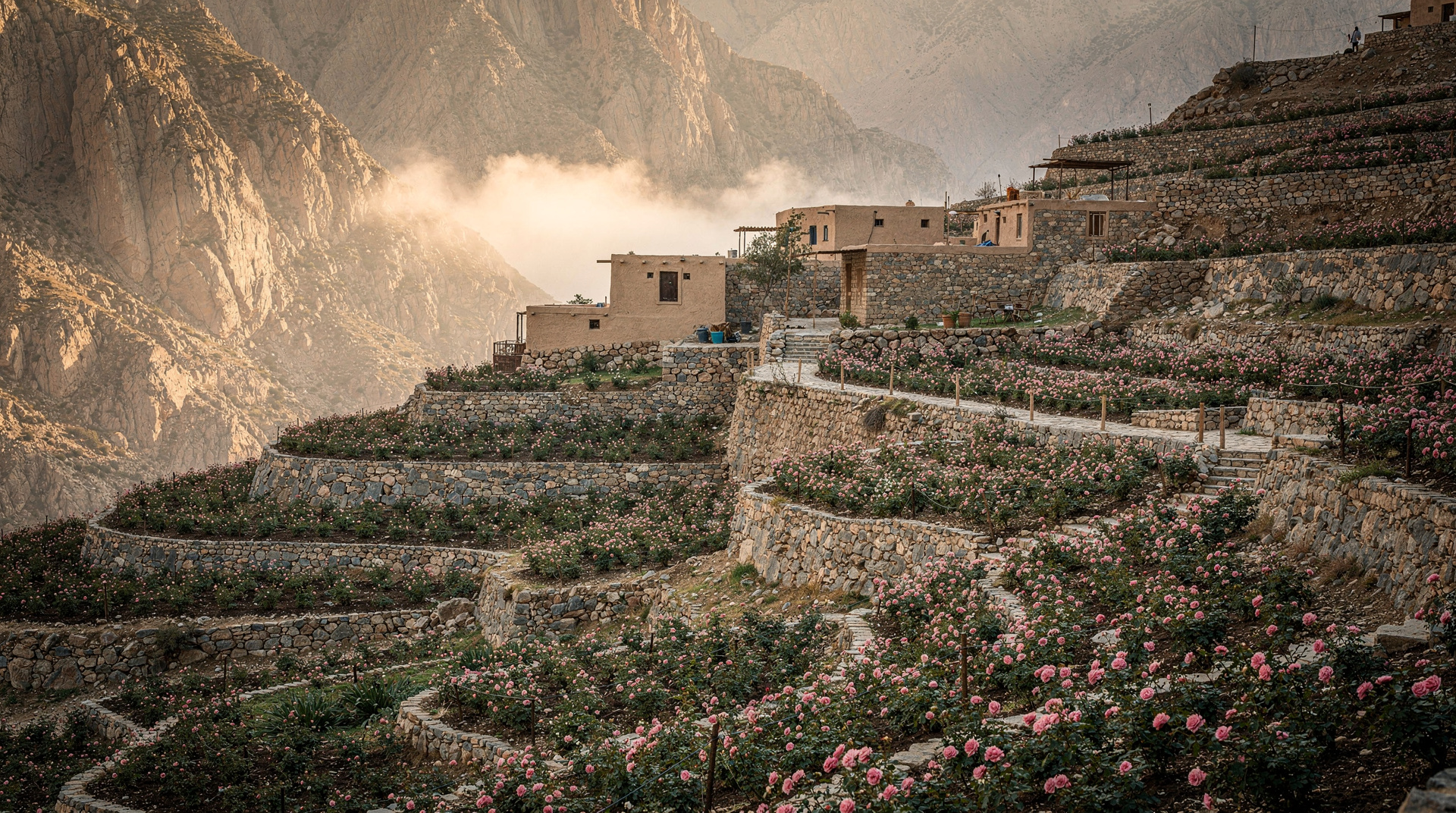
From Nizwa, the route to Jebel Akhdar climbs steeply through switchbacks into the high plateau, which sits above 2,000 metres. This section requires a 4WD — there is a checkpoint at the foot of the road that will turn back standard vehicles. Up on the plateau, the villages of Birkat al Mouz and Wadi Bani Habib offer terraced gardens, ancient falaj channels, and views across the canyon that are completely unexpected at this altitude. Rose products — water, jam, dried petals — are available in every village shop.
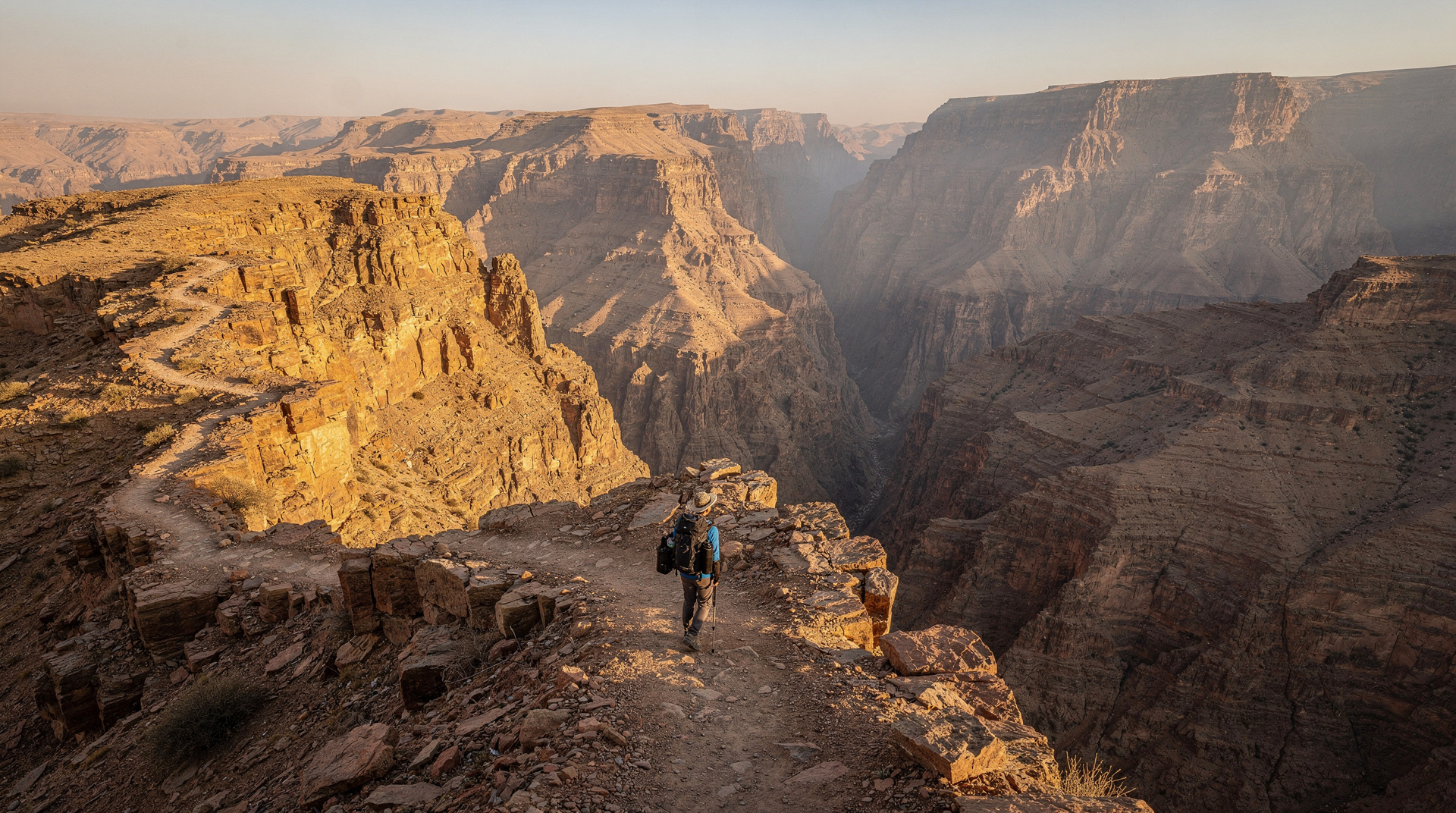
Adding a side trip to Jebel Shams — Oman’s Grand Canyon — extends this route by a day but adds its finest hiking experience. The guided day trip option: Day Trip to Jebel Shams from Muscat is an excellent way to include the canyon without adding significant driving complexity.
The descent back to the lowlands and the drive through Wadi Bani Awf — a rough track that winds between sheer rock walls — is one of the most dramatic drives in the country. It requires a 4WD and confidence on gravel roads, but the payoff is extraordinary.
End this loop with a swim at Wadi Bani Khalid, a stunning oasis-style wadi with clear pools surrounded by date palms. It is one of the most accessible and beautiful swimming wadis in Oman.
Route 2: The Sur Coast and Turtle Route (3–4 Days)
Distance: Approximately 500 km
Starting point: Muscat
Highlights: Bimmah Sinkhole, Wadi Shab, Sur, Ras al Jinz turtle beach, Wadi Bani Khalid
The coastal route southeast from Muscat toward Sur is one of the most varied drives in the country. The road hugs the Arabian Sea for much of its length, with mountains rising to the left and fishing villages appearing on the right.
The first major stop is the Bimmah Sinkhole — a turquoise pool of clear water sitting in a perfect circle of rock about two hours from Muscat. It is startlingly beautiful and genuinely unusual. Admission is minimal and it is a popular spot for a morning swim before continuing south.
Wadi Shab is the other great attraction of this coastal section — a narrow wadi that requires a short boat crossing to access and then a hike through pools of increasingly vivid green water to reach a cave waterfall at the end. It is among the best wadi experiences in Oman.
Sur itself is a historic port city with a strong maritime tradition — the dhow shipyard on the edge of town still builds traditional wooden boats by hand, a skill passed down through generations. The corniche is pleasant in the evening, and the fish market in the morning is excellent.
From Sur, Ras al Jinz Turtle Reserve is just 90 minutes away. This is where green turtles come ashore to nest, primarily at night, in numbers that can reach hundreds during the nesting season. Guided night tours are the only way to visit, and they are unforgettable.
Route 3: Into the Wahiba Sands (2–3 Days)
Distance: Approximately 600 km return from Muscat
Starting point: Muscat or Nizwa
Highlights: Wahiba Sands dunes, Bedouin camps, stargazing, Al Mintrib village
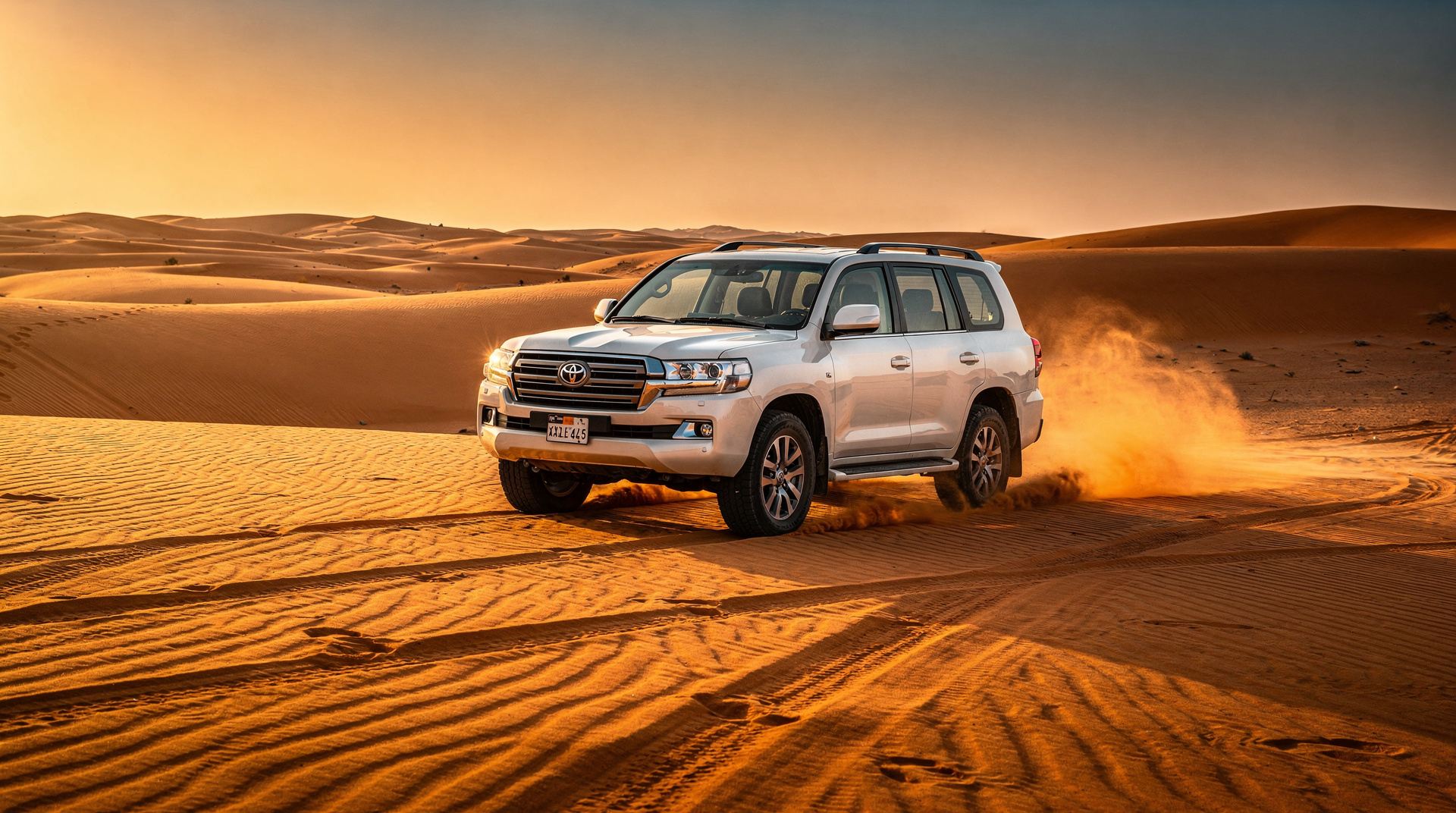
The Wahiba Sands — officially the Sharqiyah Sands — are Oman’s great desert, a sea of red and golden dunes stretching for hundreds of kilometres. The drive from Muscat takes around three hours and the landscape change is dramatic: mountains and wadis give way to flat gravel plains and then, suddenly, the dunes appear on the horizon.
The town of Al Mintrib marks the northern edge of the sands and is where most desert camps are based. Checking into a camp, spending the late afternoon watching the light change on the dunes, eating a Bedouin meal, and sleeping under the desert sky are among the best experiences Oman offers. The absolute darkness and the density of stars on a clear desert night are extraordinary.
Driving within the sands requires a 4WD with sand driving experience — or a guide. The soft sand is deceptively difficult and it is easy to get stuck. Many camps offer dune driving excursions. Alternatively, you can park at the edge of the sands and walk up into the dunes on foot.
A 4-day tour from Muscat that combines the desert with other Oman highlights is available here: 4-Day Oman Highlights Tour from Muscat. This is an excellent option if you want to experience the best of the country without the logistics of self-driving across multiple regions.
For a focused desert day trip combining the Wahiba Sands with a wadi swim, the Wahiba Sands and Wadi Bani Khaled Day Trip Desert Safari from Muscat is an excellent single-day option.
Route 4: The Musandam Fjords (3–4 Days)
Distance: Approximately 600 km from Muscat, with a short UAE crossing
Starting point: Muscat or Dubai
Highlights: Khasab, Jebel Harim, dhow cruise, Bukha Fort, Telegraph Island
The Musandam Peninsula is an Omani exclave separated from the rest of the country by the UAE. Getting there from Muscat involves crossing through Oman’s northern coast and either passing through or around UAE territory — check your visa situation carefully, as some nationalities lose their Oman visa when they exit and re-enter.
The peninsula is known for its dramatic fjords — khors — that cut deep into the mountains. Khasab is the main town, small and characterful, with a Portuguese fort overlooking the harbour. The famous dhow cruises from Khasab take you through the fjords alongside pods of dolphins (dolphin sightings are almost guaranteed in the morning) and past Telegraph Island, where British engineers lived in the 19th century while laying underwater telegraph cable.
The mountain drive up Jebel Harim — the highest point in the Musandam at over 2,000 metres — offers views across the Strait of Hormuz with Iran visible on clear days. Ancient rock carvings near the summit add another dimension to the visit.
The Musandam is worth the logistical effort of getting there. The landscape is unlike anywhere else in the Gulf, and the combination of mountain and fjord scenery is genuinely spectacular.
Route 5: The Salalah and Dhofar Circuit (5–7 Days)
Distance: Approximately 1,000 km from Muscat to Salalah
Starting point: Salalah (fly from Muscat) or Muscat by road
Highlights: Salalah souqs, Wadi Darbat, Mughsail Blowholes, Al Baleed Archaeological Site, Job’s Tomb
Salalah in the far south of Oman is effectively a different country from the north. The climate, the vegetation, the culture (heavily influenced by East Africa and the former Dhofari sultanate), and even the Arabic dialect are distinct. The city sits in a coastal plain backed by the Dhofar Mountains, and during the summer khareef monsoon — roughly July to September — those mountains turn an impossible green while waterfalls appear on every cliff face.
The drive from Muscat to Salalah through the Empty Quarter fringe is around nine hours on a fast highway — genuinely empty desert road that has its own stark beauty, but most visitors prefer to fly and then rent a car locally.
The Salalah circuit itself takes in: Al Baleed, a UNESCO World Heritage archaeological site of the ancient Frankincense Land of Dhofar; Wadi Darbat and its seasonal waterfall and camel-filled valley; the dramatic coastal cliffs at Mughsail with their blowholes (jets of seawater shooting through rock channels); and the coastal road to the Yemeni border, which passes through some of the most dramatic scenery in southern Arabia.
Job’s Tomb — the Islamic site marking where the Prophet Ayyub (Job) is said to be buried — sits on a hill above the city with panoramic views and is a peaceful, contemplative spot regardless of your religious background.
Flying into Salalah and spending five to seven days on this southern circuit is one of the most underrated travel experiences in the entire Arabian Peninsula.
Practical Notes for All Routes
Navigation: Google Maps works well across Oman’s main roads. Offline maps (Maps.me or downloaded Google Maps) are advisable for remote areas. Road signs are in both Arabic and English.
Fuel: Petrol stations are frequent on major routes. Fill up whenever you see one before heading into mountain or desert areas — some sections have no services for 150 km or more.
Timing: Start early. The morning light is spectacular, the temperature is manageable, and you avoid the midday heat. Most notable sites are best seen before noon.
Water: Carry significantly more water than you think you need, particularly in summer. Dehydration comes quickly in the heat and altitude.
Permits: Some areas, including Jebel Akhdar, require permits that are issued at checkpoints. Have your passport and travel documents accessible at all times.
Self-driving Oman is one of the great road trip experiences available to travellers today. The combination of route variety, road quality, safety, and sheer visual drama is genuinely hard to match anywhere in the world.
Renting the Right Vehicle for Your Route
Which route you choose should determine which car you book, not the other way around. A standard sedan handles Route 2 (Sur Coast), Route 4 (Musandam), and Route 5 (Salalah) comfortably. Routes 1 and 3 both have sections that legally or practically require a 4WD — the why rent a 4x4 in Oman guide explains the difference and when it actually matters versus when it is oversold by rental agencies. For a full breakdown of rental process, insurance, and driving rules, see the renting a car in Oman guide and the getting around Oman guide.
Frequently Asked Questions
Which of these five routes is best for a first-time visitor with only a long weekend? Route 1, the Mountain and Wadi Loop, packs the widest variety of Oman’s landscapes — forts, mountains, wadis — into the shortest distance and is the best introduction if time is limited.
Can I combine two routes into one longer trip? Yes — Routes 1 and 2 combine naturally into a 7-day loop from Muscat, since both start and end near the capital. Routes 4 and 5 are harder to combine with the others due to distance and are usually done as standalone trips.