How to Visit Musandam from Dubai: The Complete Guide
Musandam: Arabia’s Overlooked Fjord Landscape
| Details | |
|---|---|
| Where | Khasab, Musandam Peninsula, Oman (north of the UAE) |
| Cost | Around 20 OMR visa; day dhow tours from around 55-80 USD |
| Time needed | Full day for a day trip; 2 nights for the fuller experience |
| Getting there | 3-4 hours by road from Dubai via the Tibat border crossing |
| Best time | October-April for calm seas and comfortable temperatures |
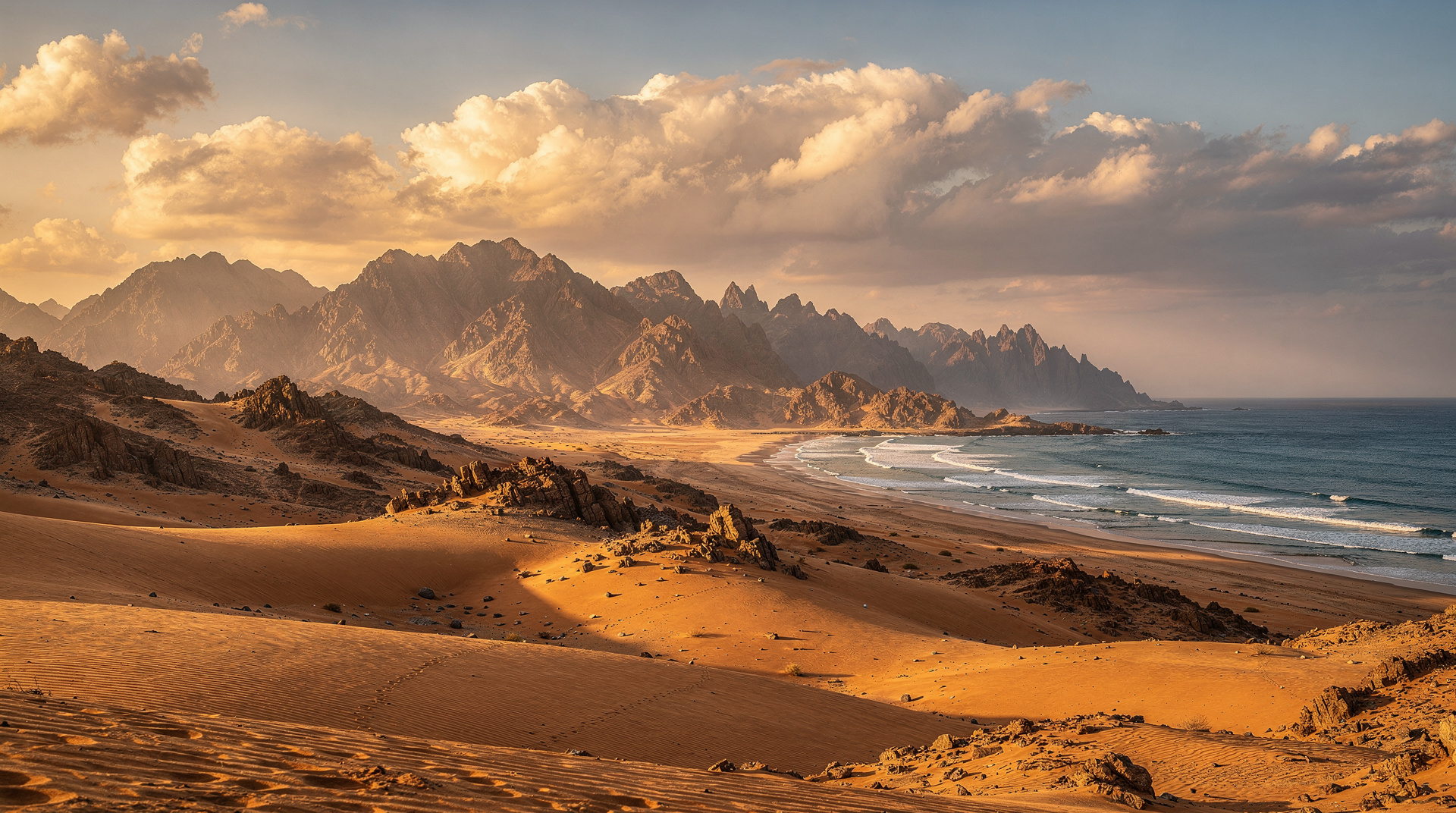
From most of the UAE, Musandam appears on a map as a narrow peninsula of Oman pointing north into the Strait of Hormuz — geographically isolated from the rest of Oman by UAE territory, and accessible from the UAE side by road or from mainland Oman by air. The landscape it contains is one of the most striking in the Arabian Peninsula: limestone cliffs dropping hundreds of metres into ink-blue water, fjords (called khors locally) that mirror Norwegian geography, and traditional villages accessible only by boat that have existed largely unchanged for centuries.
For visitors based in Dubai or anywhere in the UAE, Musandam represents one of the most dramatic and accessible escapes from the city — a destination that feels like a different world while being within three to four hours by road. This guide covers everything required to plan the trip, from border crossing logistics to the best activities once you arrive.
Getting There: Dubai to Khasab by Road
The drive from Dubai to Khasab, the main town and port of Musandam, takes approximately three to four hours depending on traffic and border crossing wait times. The route goes north from Dubai through Ras al Khaimah, then crosses the UAE-Oman border at the Tibat border crossing into Omani territory.
The Tibat Border Crossing
The Tibat crossing is the standard road entry point for vehicles coming from the UAE into Musandam. The process involves:
UAE exit: Stop at UAE exit immigration, present your passport (and UAE residence visa if applicable), and receive the UAE exit stamp.
Oman entry: Proceed immediately to the Oman entry point. All visitors need an Oman entry visa. The border crossing has an e-visa terminal and some nationalities can obtain a visa on arrival. Nationalities eligible for the Oman tourist visa should check the current Royal Oman Police portal before travelling, as the list and procedures are occasionally updated.
Visa cost: The standard tourist visa costs 20 OMR. Keep this in vehicle cash; some border crossings accept card payment but cash is safer.
Wait times: Border wait times vary enormously. UAE public holidays, Oman public holidays, and weekend mornings can produce queues of one to three hours. Midweek crossings are typically much faster, often under 30 minutes for the entire process.
Vehicle requirements: You must have your vehicle registration document, valid insurance for Oman (check with your rental company — most UAE rental agreements do not automatically cover Oman territory), and your driving licence. Many UAE rental companies prohibit driving rented vehicles into Oman. If you have a rental car, verify the terms explicitly before attempting the crossing.
Car Rental at the Border
If your UAE rental does not permit Oman driving, you can arrange a car specifically permitted for Oman crossing at the border area or in Ras al Khaimah. Several local car hire operators have offices near the Tibat crossing for exactly this purpose.
Alternatively, several tour operators in Dubai offer transport to Khasab as part of day-trip and overnight packages, which removes the vehicle logistics entirely.
Ferry from Oman Mainland (Muscat to Khasab)
National Ferries Company operates a passenger ferry service between Muscat and Khasab. The crossing takes five to seven hours overnight, arriving in Khasab in the morning. This route is more useful for visitors combining mainland Oman with a Musandam extension than for UAE-based day-trippers. Check current schedules on the National Ferries Company website, as services and timings change seasonally.
Khasab: The Musandam Capital
Khasab is a small, relaxed town of approximately 20,000 people, with a pleasant waterfront corniche, a well-preserved Portuguese-era fort, and a souq area with frankincense, local honey, and silver items from the mountain villages. The town itself warrants a few hours of exploration, but the primary draws are the activities on and around the fjords.
The Portuguese fort of Khasab overlooks the bay and houses a small museum of local history and maritime heritage. Entry is inexpensive and the building itself — solid Portuguese military architecture in white-washed stone — is photogenic.
The waterfront area below the fort is where the dhow fleet moors, and where the daily boat tours depart. This is the operational centre of Musandam tourism.
Musandam’s Best Activities
Dhow Cruising: The Essential Experience
The cornerstone of any Musandam visit is a dhow cruise through the khors. Traditional wooden dhows — wide-beamed, sheltered, and equipped with seating on the main deck — navigate slowly through the fjord system, stopping for swimming and snorkelling in sheltered coves, passing through narrowing channels where the cliffs rise vertically from the water on both sides, and typically providing lunch on board.
The scenery is extraordinary. At certain points in the inner fjords, the cliff walls are close enough to touch from the boat deck, and the only sounds are water and occasional bird calls. Small fishing villages appear around cliff corners, their traditional stone houses accessible only by boat — no road connects them to Khasab or the outside world.
The standard full-day dhow tour includes dolphin watching (the khors are home to populations of bottlenose and spinner dolphins that frequently approach boats), one to two snorkelling stops in clear water, and a buffet lunch of Omani fish and rice prepared on board. These tours depart from Khasab waterfront at around 9:00 and return at 16:00–17:00.
For visitors making the trip from the UAE, booking a Musandam Khasab dolphin watching trip with lunch departing from the UAE simplifies the logistics significantly — transport from the UAE side, border crossing assistance, and the dhow experience are combined in a single booking.
Alternatively, for a Dubai-based day trip that includes a sea safari in Musandam waters, the Musandam Day Sea Safari from Dubai (from 55 USD, 2026) departs directly from the Dubai side with no self-navigation required.
Private dhow charters are available for groups and couples wanting a more exclusive experience. Private charters allow you to dictate the route, timing, and stops, and the exclusivity transforms the experience. Cost is higher but splits reasonably among a group of four to eight people.
Snorkelling in the Fjords
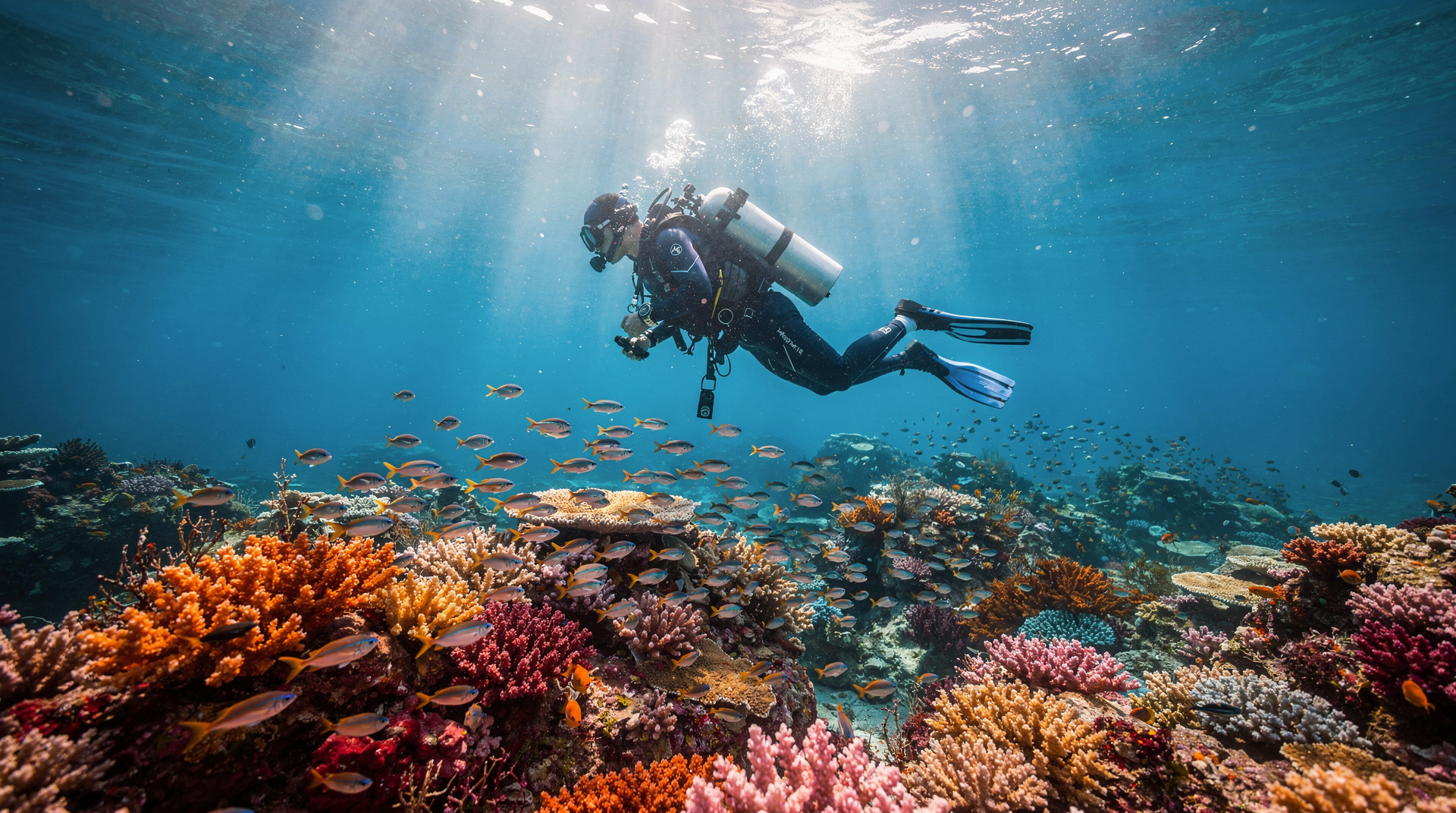
The waters of Musandam are exceptionally clear — particularly in the inner fjord sections sheltered from open-water chop and swell. Visibility of 15–20 metres is typical. The underwater landscape mirrors the surface: dramatic walls dropping steeply from just below the surface into deep blue water, colonised by sea fans, soft coral, and schooling fish.
Turtles are commonly encountered while snorkelling in the protected bays. Reef sharks, eagle rays, and large grouper are recorded in deeper areas accessible to divers. For snorkellers, the shallower sheltered coves offer excellent encounters with reef fish, lionfish, and the occasional hunting turtle.
Snorkelling equipment is provided on standard dhow tours. Bringing your own mask ensures fit quality.
Scuba Diving in Musandam
The Musandam dive sites — steep walls, tidal channels with strong currents, and deep fjord environments — are best suited to experienced divers comfortable with drift and current diving. Several dive operators in Khasab offer guided dives for certified divers, equipment rental, and PADI courses.
The deeper channel sites attract hammerhead sharks (most reliably in cooler months, November to February), large schools of barracuda, and the occasional whale shark. The inner bay sites are calmer and more accessible for less experienced divers.
See our Oman diving guide for detail on the best months and sites for Musandam diving specifically.
Kayaking the Khors
Sea kayaking is an excellent way to access the narrow inner sections of the fjords that dhows cannot navigate. Several operators in Khasab offer half-day and full-day guided sea kayak tours, paddling through channels where silence and scale create a meditative experience very different from a motorised boat.
Kayaking requires reasonable physical fitness and comfort on the water. Conditions in the sheltered khors are generally calm, making this accessible to intermediate paddlers.
Mountain Driving: Jebel Harim
The Musandam interior — accessible by 4x4 on gravel mountain roads — offers dramatic scenery of a completely different character to the fjords. Jebel Harim, the highest peak in the peninsula at 2,087 metres, can be reached by a switchback track and provides extraordinary views across the Gulf of Oman and into Iran on clear days.
The mountain road passes through villages of traditional stone houses, some still inhabited, others abandoned. Petroglyphs — ancient rock carvings of animals and human figures — are found along several mountain tracks, testimony to human presence here long predating the current settlements.
A 4x4 is essential for Jebel Harim. The road is steep, loose in places, and requires appropriate vehicle capability. Do not attempt in a standard sedan.
Telegraph Island
One of the most historically interesting dhow tour stops in Musandam is the small, rocky islet known as Telegraph Island — site of a British relay station for the undersea telegraph cable linking Britain to India in the 1860s. The phrase “round the bend” is occasionally attributed to the mental deterioration of British telegraph operators stationed on this isolated rock, though the etymology is disputed. The ruins of the station are visible on the island’s interior. Most dhow tours pass by or stop briefly.
Day Trip or Overnight: Which Should You Choose?
The Case for a Day Trip
A day trip from Dubai allows you to experience the main dhow cruise without the complexity of accommodation booking or multiple days away from UAE plans. It works well if:
- You have limited time (one free day from Dubai)
- You want a single concentrated experience (the fjord and dolphins)
- You are travelling in a group that includes people with varying interest levels in Oman
The limitation of a day trip is that you experience Musandam almost entirely from a boat deck. The mountain interior, the Khasab fort and souq, and the twilight quality of the fjords at dusk are all lost.
The Case for Staying Overnight
An overnight stay in Khasab transforms the experience. Early morning on the fjords — before any boats depart, in the flat calm of dawn — is some of the most beautiful light in Arabia. Sunset from a fjord viewpoint or from the deck of a private dhow is extraordinary. The mountain interior requires time and a different pace.
For the ultimate overnight Musandam experience without hotel accommodation, the Musandam Overnight Dhow Cruise puts you to sleep on the fjords themselves — the boat anchors in a sheltered khor, and you wake to the mountains rising from the water in complete stillness. This is the most immersive Musandam experience available and is often described as a highlight of a lifetime.
Options for accommodation in Khasab include the Golden Tulip Khasab (the most reliable mid-range option), several small locally-run guesthouses, and at the luxury end, the Six Senses Zighy Bay — remote even by Musandam standards, accessible through a private mountain road from Dibba on the UAE side or by the extraordinary paraglide arrival.
Two nights in Musandam is the optimal duration: one day on the fjords by boat, one day exploring the mountains by 4x4, with morning and evening time to appreciate the quality of light and silence that the peninsula specialises in.
Day Trip vs Overnight, Side by Side
| Day trip | Overnight (1-2 nights) | |
|---|---|---|
| What you see | Dhow cruise, dolphins, snorkelling | Fjords, mountains, Khasab town, fort |
| Best light | Midday, less dramatic | Sunrise and sunset on the water |
| Logistics | Simplest, no accommodation booking | Requires booking a hotel or dhow bed |
| Cost | Lower | Higher, but splits well across a group |
| Suits | Limited time, first taste of Oman | Photographers, divers, slower travellers |
Best Time to Visit Musandam from Dubai
October through April offers the best conditions: comfortable temperatures on the water (22–30°C), calm seas in the fjords, and excellent underwater visibility. The diving and dolphin encounters are best in November through March.
Summer months (May–September) bring extreme heat (40°C+) and occasional strong winds (the shamal) that can disrupt boat tours. While Musandam is technically accessible year-round, summer day trips from Dubai are uncomfortable and offer reduced experiences.
See the full seasonal guide for Oman for how Musandam’s conditions fit into broader Oman travel planning.
Combining Musandam With a Wider Oman Trip
Musandam is geographically cut off from the rest of Oman by UAE territory, so most UAE-based visitors treat it as a standalone excursion rather than part of a longer Oman itinerary. That said, the National Ferries Company route between Muscat and Khasab makes it possible to combine a Musandam extension with a broader trip through the rest of the country — see our 7-day classic Oman itinerary for how a mainland loop through Muscat, Nizwa, and the wadis could be extended with a Musandam add-on for travellers with extra time.
For honeymooners specifically, Musandam’s combination of dramatic scenery, boutique dhow stays, and the remote Six Senses Zighy Bay makes it one of the strongest arguments in our Oman honeymoon guide for choosing Oman over a purely UAE-based trip.
Practical Information
Currency: Omani Rial (OMR). UAE Dirham is not accepted in Musandam despite geographical proximity to the UAE. Bring Omani Rial in cash; ATMs are limited in Khasab.
Mobile connectivity: UAE SIM cards often roam on Omani networks in Musandam. Check your roaming charges before relying on UAE SIM data in Oman. A local Omani SIM provides cheaper data rates.
Dress code: Musandam is Oman, not UAE. The same modest dress norms apply — covered knees and shoulders away from beach and boat areas, no public displays of affection.
Border crossing hours: Tibat border crossing operates 24 hours, but processing speed varies significantly. Avoid early Friday mornings (Friday is the UAE weekend and holiday traffic is highest).
Emergency contacts: Save the Khasab Royal Oman Police number and your hotel’s emergency contact before departing mobile coverage areas, particularly if undertaking mountain driving.
Frequently asked questions
Can I visit Musandam from Dubai without a UAE residence visa?
Yes. Tourists on a UAE visit visa can cross into Musandam at Tibat, provided they hold a valid Oman entry visa (available as an e-visa or on arrival for many nationalities). Check current eligibility on the Royal Oman Police portal before travelling, as rules occasionally change.
Is a day trip to Musandam from Dubai worth it, or should I stay overnight?
A day trip is worth it if your time is limited and you mainly want the dhow cruise and dolphin watching. If you have two days to spare, staying overnight in Khasab adds the mountain interior, the fort and souq, and the best light on the fjords at sunrise and sunset.