Oman on a Budget: How to Travel Cheap
Oman Does Not Have to Be Expensive
| At a Glance | |
|---|---|
| Where | Applies country-wide, most powerfully outside Muscat (Nizwa, Sur, Salalah, wadis, desert) |
| Daily cost | Around 25-100 OMR/day per person depending on style (see budget table below) |
| Time needed | A week is enough to combine mountains, wadis, coast and one desert night on a budget |
| Getting around | Rental car split between travellers, or ONTC intercity buses for a car-free budget trip |
| Best time | November or March shoulder season for lower rates and good weather |
Oman has a reputation as a Gulf destination — which for many travellers automatically suggests expense. The assumption is understandable. Gulf countries are associated with luxury hotels, expensive tours, and tourist prices calibrated for well-heeled visitors.
The reality is more interesting. Oman can be done very cheaply indeed if you approach it with the right mindset. The country’s most spectacular attractions — its wadis, mountains, beaches, and desert — are largely free. Camping is legal and easy. Local food is excellent and affordable. Budget accommodation exists in most towns. With some planning, a week in Oman can cost significantly less than you might expect.
Here is how to do it.
Keep Accommodation Costs Low
Camp: This is the most powerful budget tool available in Oman. Free camping is legal on most public land, and the country’s geography makes it ideal — mountain plateaus, wadi banks, coastal headlands, and the edges of the Wahiba Sands all offer spectacular spots to pitch a tent. Bringing your own tent and sleeping bag from home (or buying a basic setup in Muscat) immediately removes your biggest expense.
Use guesthouses in smaller towns: Nizwa, Sur, Ibra, Bahla, and Salalah all have small guesthouses and budget hotels that charge between 15 and 30 OMR per night (approximately 40–80 USD). These are basic — a clean room with air conditioning and a bathroom — but entirely functional as a base.
Book mid-range hotels outside Muscat for better rates: Muscat accommodation is the priciest in the country. A night in Nizwa or Sur at a decent hotel costs noticeably less than an equivalent room in the capital.
Consider rest houses: Along major highways, particularly the Muscat-Salalah road, there are basic government-operated rest houses where accommodation is extremely inexpensive — primarily used by long-distance truck drivers, but perfectly adequate for budget travellers.
Eat Where the Locals Eat
The divide between tourist restaurant prices and local restaurant prices in Oman is significant. Learning to navigate toward the latter saves money and produces better meals.
Indian and Pakistani restaurants: Found in every town, these restaurants serve enormous portions of biryani, grilled chicken, dhal, and rice at prices that feel almost impossibly low — a full meal for 1.5 to 2.5 OMR (around 4–7 USD) is normal. The food is excellent and the clientele is predominantly local workers and Omanis, which is always a good sign.
Local Omani restaurants: Slightly harder to find in tourist areas but worth seeking. Shuwa (slow-cooked lamb), mashuai (grilled fish with saffron rice), and harees (wheat porridge with meat) are the staples. A full Omani meal at a local restaurant costs 3–5 OMR.
Supermarket shopping: Lulu Hypermarket has branches across Oman and stocks everything from local dates and flatbread to fresh vegetables and dairy at very reasonable prices. Buying breakfast and snacks from a supermarket rather than eating at hotels saves a meaningful amount over a week.
Dates and coffee: Omani dates are extraordinary — among the finest in the world — and inexpensive bought at a souq or market. A bag of quality dates makes the perfect snack for long drives and costs very little.
Maximise Free Attractions
Oman’s most remarkable experiences do not require an entrance fee. This is one of the things that makes budget travel here so viable.
Wadis: The best wadi swimming in Oman — Wadi Shab, Wadi Bani Khalid, Wadi Tiwi, Wadi Bani Awf — is either completely free or involves a tiny entrance fee of 1–2 OMR. These are genuine natural spectacles: turquoise pools surrounded by canyon walls, palm trees, and absolute silence. No expensive ticket required.
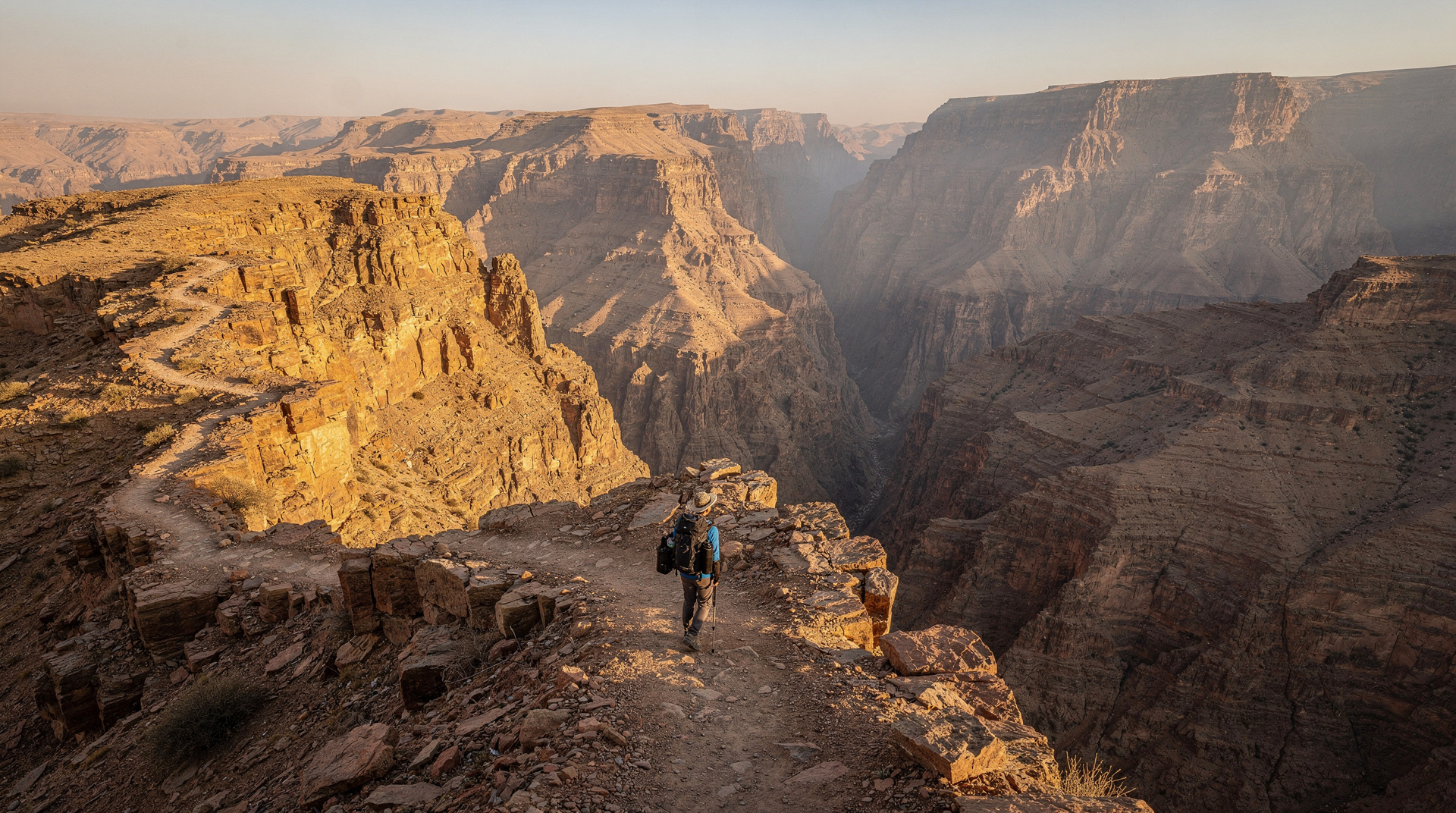
Mountains: Driving through the Hajar Mountains, hiking the Jebel Shams Balcony Walk, watching sunrise from a mountain plateau — these cost nothing beyond your fuel and your time.
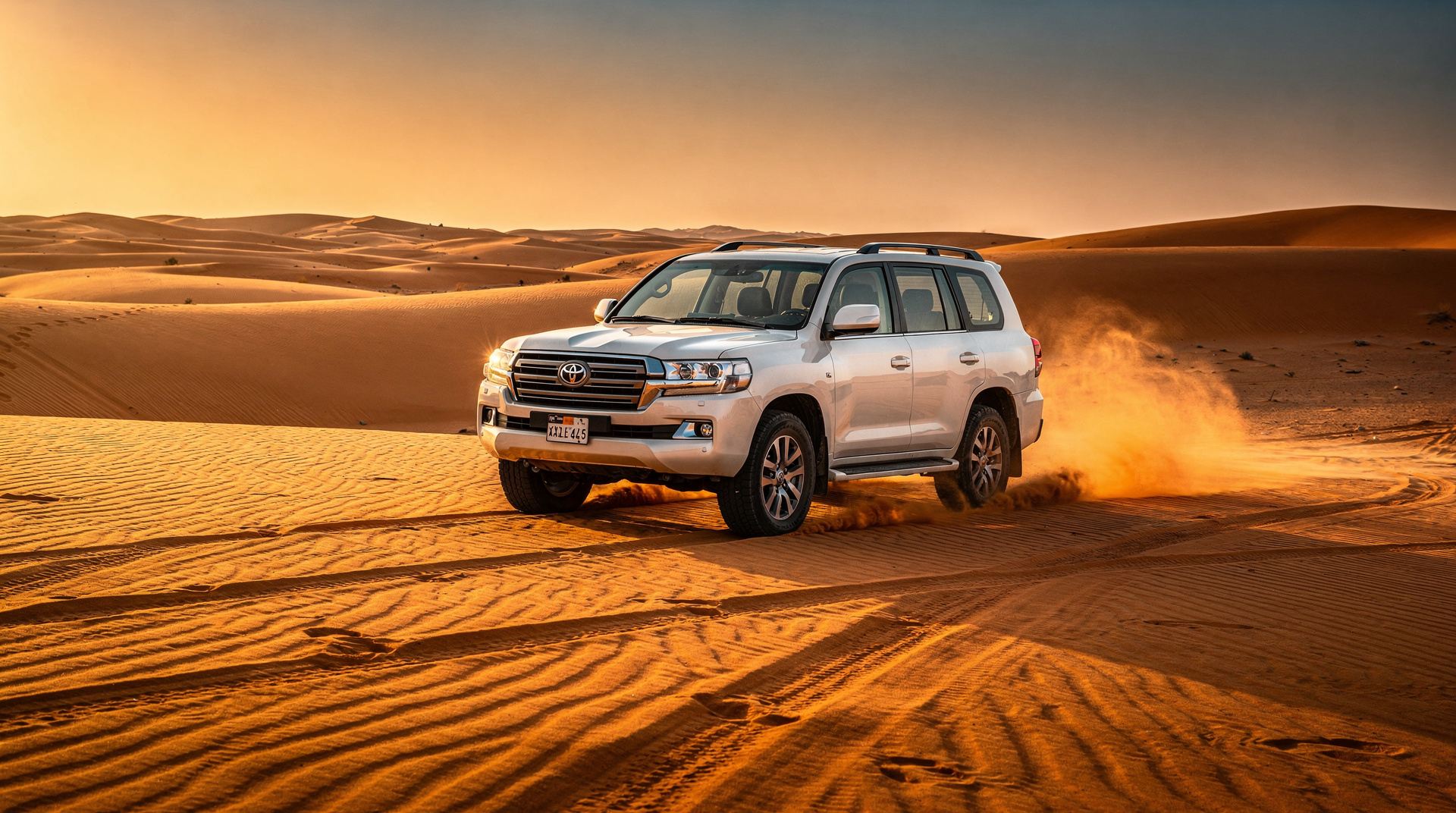
Desert: The outer edges of the Wahiba Sands are accessible without paying for a desert camp. Park near Al Mintrib, walk up into the dunes, and you have one of the great desert experiences in the Arabian Peninsula for free.
Beaches: Oman’s coastline is largely public. The beaches near Sur, around the Musandam, and on the Batinah coast are free to access and often empty.
Souqs and markets: Walking through Muttrah Souq in Muscat, Nizwa’s covered market, or the small weekly markets in mountain villages costs nothing and offers some of the richest cultural immersion available.
Forts: The admission fees for Oman’s main forts — Nizwa, Bahla, Nakhal — are very low, typically 2–5 OMR for foreigners. For the quality of what you see, these represent exceptional value even on a tight budget. The exterior of most forts and the surrounding villages can be explored freely.
Budget Transportation
Car hire: A standard car rental in Oman costs around 15–20 OMR per day (approximately 40–50 USD) with unlimited mileage. Splitting this cost between two or three travellers makes it very affordable. Shop around at the airport and consider smaller local agencies, which sometimes undercut the major international brands.
Petrol: Fuel in Oman is heavily subsidised and costs a fraction of European or North American prices. Filling a tank for a long mountain or desert drive is genuinely inexpensive.
Intercity buses: ONTC (Oman National Transport Company) buses connect Muscat to Nizwa, Sur, Salalah, and other major cities at low fares. The Muscat-Salalah overnight bus, for instance, costs around 7–10 OMR (18–26 USD) one way — a fraction of the flight cost. These buses are comfortable and reliable.
Shared taxis: Between some towns, shared taxis (called baisa taxis) operate on fixed routes at low fares. They are less convenient than a rental car but significantly cheaper.
Fly Cheaply to Muscat
Muscat International Airport is well connected and regularly appears in flight deal searches. From the UK, Europe, and South Asia, fares on Oman Air, Air Arabia, flydubai, and other regional carriers can be very competitive — particularly if you book two or three months in advance and are flexible with dates. The best deals tend to appear for travel in November, February, and March.
Smart Splurges Worth the Cost
Budget travel does not mean avoiding every paid experience. Some things in Oman are worth spending on even when you are watching costs carefully.
A night in a desert camp: The Wahiba Sands at night under an undiluted desert sky is one of the great experiences. Basic camp accommodation with dinner and breakfast included can be found for around 30–45 OMR per person. Worth every baisa.
Wadi tour or boat trip: Group tours to Wadi Shab or a dolphin-watching cruise near Muscat cost 15–25 OMR and take care of the logistics of reaching places that are difficult to access independently without a 4WD.
Turtle watching at Ras al Jinz: The guided night tour to see green turtles nesting costs around 5–7 OMR. It is an extraordinary experience that cannot be replicated.
Realistic Budget Examples
Bare minimum (camping, cooking, free attractions): 25–35 OMR per day (65–90 USD) including car hire split between two people
Mid-budget (budget guesthouse, local restaurants, some paid tours): 40–60 OMR per day (105–155 USD) per person
Comfortable but not extravagant (mid-range hotel, mix of restaurants, guided experiences): 70–100 OMR per day (180–260 USD) per person
Compared to equivalent trips in Europe or Southeast Asia’s tourist circuit, Oman represents very good value — particularly given the quality and rarity of what you see.
Budget-Friendly Day Trip Ideas
If you are based in Muscat and looking for day trips that cost almost nothing beyond fuel, the following routes deliver exceptional value:
Wadi Bani Khalid day trip: Three hours of driving, a small entrance fee, and a full afternoon of swimming in turquoise pools. Bring food from a supermarket. Total cost per person: under 5 OMR excluding car hire.
Nakhal Fort and hot springs: A morning at the impressively restored Nakhal Fort followed by a dip in the natural hot springs at Ain Thowarah nearby. Entrance to the fort is around 2 OMR. The springs are free. A supermarket lunch on the road there keeps costs minimal.
Bimmah Sinkhole and coastal drive: The sinkhole charges a nominal entry fee (around 1 OMR). The drive along the coastal road to reach it passes through fishing villages and dramatic mountain scenery. Pack a picnic, stop at a viewpoint, swim in the sinkhole, and return to Muscat by evening. Total cost: negligible.
Nizwa market and fort day: An early start for the Friday animal market, then the covered date and craft souq, then the fort — all in Nizwa, three hours from Muscat. Budget for the fort entrance (5 OMR), a local lunch (2 OMR), and whatever you cannot resist buying in the silverwork section of the souq.
Timing Your Visit for Value
Travelling in November or March — the shoulder season before and after the December-January peak — finds good availability and lower accommodation prices without sacrificing weather quality. Many mid-range hotels offer 20–30 percent lower rates in November than in December. Booking directly rather than through aggregator sites sometimes unlocks further savings, particularly at smaller guesthouses.
Final Thought
The secret of budget travel in Oman is that the country’s best experiences are also its cheapest. A wadi swim costs nothing. A mountain sunrise costs nothing. Driving through frankincense-scented villages costs the price of petrol. Camping under the desert stars costs less than a mediocre hotel room.
Budget travel in Oman is not about deprivation. It is about understanding that the things that make Oman special — its landscapes, its quiet, its genuinely welcoming people — are not behind a paywall. They are freely available to anyone who shows up with curiosity, a map, and a full tank of petrol.
Oman is generous with its landscapes and its hospitality. It does not require a large budget to reveal its best self.
Budget Style Comparison
| Style | Accommodation | Food | Daily cost (per person) | Best for |
|---|---|---|---|---|
| Bare minimum | Camping / free pitches | Self-catered, supermarket | around 25-35 OMR | Backpackers, road-trippers with a tent |
| Mid-budget | Guesthouses (15-30 OMR/night) | Local restaurants, Indian/Pakistani eateries | around 40-60 OMR | Most independent travellers |
| Comfortable | Mid-range hotels | Mix of local and hotel dining, some guided tours | around 70-100 OMR | Couples, shorter trips wanting more comfort |
For a more detailed daily breakdown across a full week, our 7-day cost guide walks through exactly where the money goes, and the general Oman budget guide covers strategies beyond what fits here.
Getting Around Without Overspending
Transport is usually the second-biggest line item after accommodation, and how you handle it shapes the rest of the trip. A rental car gives full flexibility to reach wadis, forts and viewpoints on your own schedule, and our guide to getting around Oman compares car hire against buses and domestic flights in more depth. If you are weighing whether flying between Muscat and Salalah beats the long drive or overnight bus, the domestic flights guide breaks down when the time saved is worth the extra cost.
Packing smart also saves money on the ground — a good sun hat, reef shoes for wadi scrambles, and a lightweight scarf for mosque visits mean fewer last-minute purchases at tourist prices. The complete packing checklist covers everything worth bringing from home.
Is Budget Travel in Oman Actually Worth It?
Some travellers arrive expecting Gulf prices and leave surprised at how far a modest budget stretches here. If you are still deciding whether Oman belongs on your itinerary at all, our broader piece on whether Oman is worth visiting tackles that question directly — budget is rarely the reason to skip it.
Frequently Asked Questions
Can you visit Oman on a shoestring without a car? Yes, though it takes more planning. ONTC intercity buses connect Muscat to Nizwa, Sur and Salalah cheaply, and shared taxis cover shorter hops — see getting around Oman for the full picture, including where a car genuinely becomes necessary.
Is camping in Oman actually free and legal? Free camping is legal on most public land outside protected reserves and private property, and it is one of the biggest reasons Oman is cheaper than it first appears. Always ask locally if a spot looks like it might be private, and never camp inside marked nature reserves without a permit.