Ras Al Jinz — Oman's Green Turtle Nesting Reserve
Watch green turtles nest and hatch at Ras Al Jinz, Oman's protected marine reserve, one of the world's great wildlife experiences.
From Muscat: Wadi Shab, Ras Al Jinz, Wahiba Sands 2-day tour
Duration: 2 days
- Free cancellation
- Hotel pickup
- Small group
Quick facts
- Best time to visit
- Year-round (peak nesting July–September)
- Days needed
- 1 night minimum
- Getting there
- 4 hrs from Muscat, 45 mins from Sur
- Budget per day
- OMR 12 (tour only) to OMR 80 (guesthouse + tour)
Where Turtles Return to Shore
At the far southeastern tip of Oman’s mainland coast, where the Arabian Sea meets the Gulf of Oman at the headland of Ras Al Jinz, green sea turtles have been returning to the same beach for millions of years. They nest here year-round, making Ras Al Jinz one of the most important green turtle nesting sites in the Indian Ocean — and one of the few places in the world where a visitor can legally and responsibly watch this ancient ritual take place.
The Ras Al Jinz Scientific and Visitor Centre opened in 2009, formalising decades of conservation work and replacing the informal (and ecologically damaging) tourist access that had developed before it. The reserve now operates a strict permit system, limits group sizes, prohibits artificial light on the beach, and employs trained guides who know the beach intimately. The result is a wildlife experience that feels genuinely wild — not staged, not sanitised, but real.
Approximately 20,000 green turtles nest at Ras Al Jinz annually. On a peak summer night (July through September), over 100 females may emerge from the water in a single evening. In the quieter winter months, the numbers are lower but the beach is less crowded with visitors, and the experience is often more intimate. There is no bad time to visit.
| At a glance | |
|---|---|
| Where | Southeastern tip of mainland Oman, 45 km from Sur |
| Cost | Night tour OMR 12/adult, OMR 6/child 6-12 (tourist rates); guesthouse doubles around OMR 50-80 |
| Time needed | 1 to 2 nights |
| Getting there | Around 4h drive from Muscat, or around 45 min from Sur |
| Best time | Year-round; peak nesting July-October, hatchlings October-February |
Getting to Ras Al Jinz
Ras Al Jinz lies approximately 370 kilometres from Muscat and 45 kilometres southeast of Sur. The approach from Sur follows a well-paved road through the headland village of Ras Al Hadd, where a lighthouse has guided ships around the eastern point since the Portuguese colonial period.
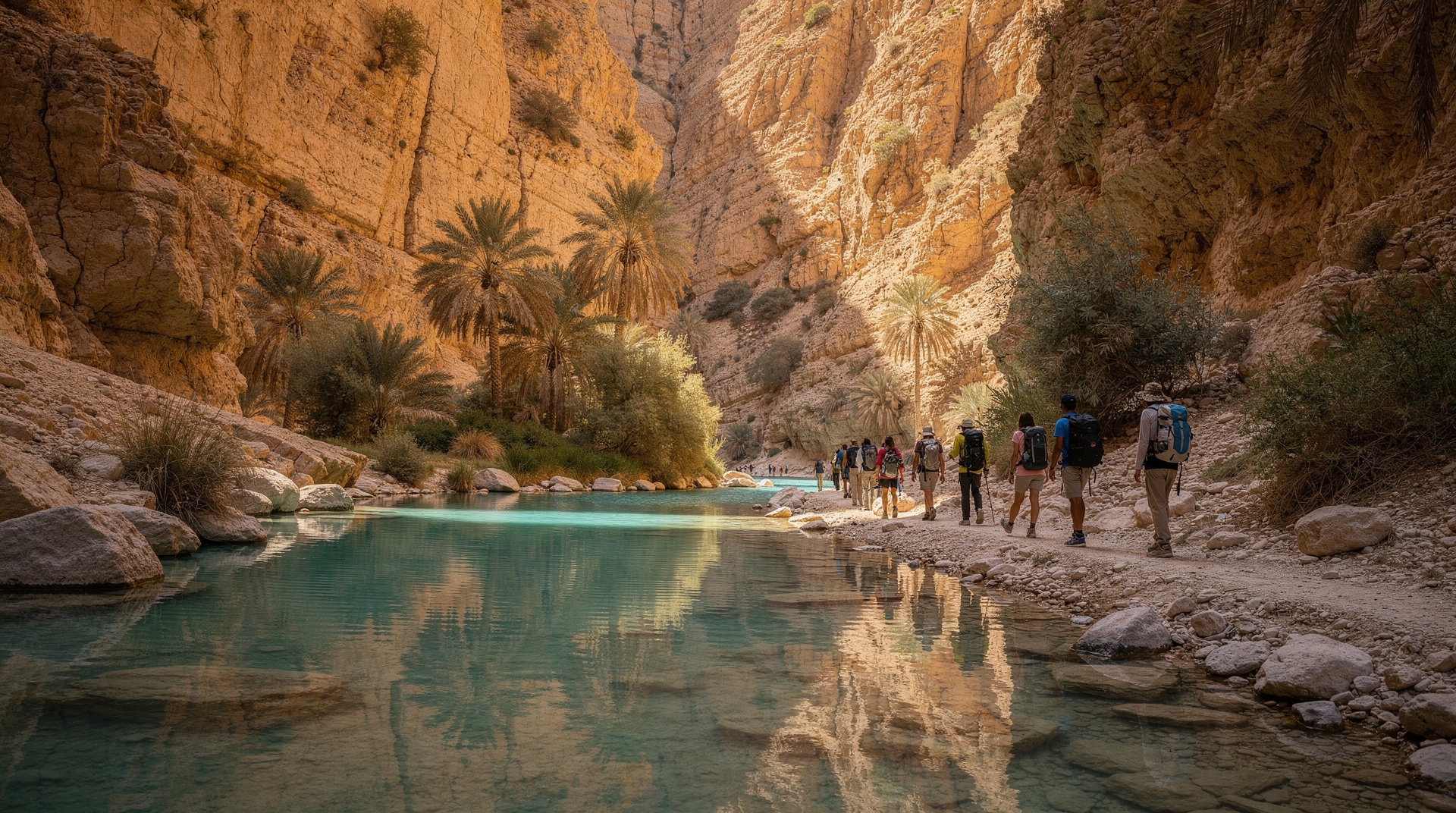
From Muscat, the drive takes approximately four hours on Highway 17, passing through Quriyat, Bimmah (Sinkhole), Tiwi, and Sur before the final coastal stretch to the reserve. This is one of Oman’s most scenic road journeys — factor in stops at Wadi Shab and Bimmah Sinkhole if you are making the trip in a single day.
A guided tour from Muscat is the simplest option for those without a rental car. For a multi-day alternative, this 2-day tour from Muscat to Wadi Shab, Ras Al Jinz and Wahiba Sands combines the turtle reserve with Wadi Shab and the Wahiba Sands desert, without the logistics of driving it yourself.
The Night Tour: Watching Turtles Nest
All visits to the turtle nesting beach at Ras Al Jinz are conducted as guided tours, with night viewing starting from 9pm and a dawn viewing from 5am (timings may change with the season; check the official site). Visitors are accompanied by a trained guide from the reserve’s staff. Booking in advance is essential — the sessions fill weeks ahead during peak season (July–October) and on weekends year-round.
Tickets are purchased at the Visitor Centre. As of 2026, the night tour costs OMR 12 per adult (12 and over) and OMR 6 per child aged 6–12 for tourists, and is free for children under six. Guesthouse guests get priority booking access — another reason to stay on-site rather than day-tripping from Sur.
The protocol is strict and should be respected without exception. No torches, phones, or cameras with flash are permitted on the beach — even a brief flash of light can disorient a nesting turtle, causing her to return to the sea without completing the nesting cycle. The guides carry specialist red-filtered torches that are visible to humans but do not appear to affect the turtles’ behaviour. All visitors must stay behind the guide and maintain absolute silence when a turtle is observed.
The experience unfolds over approximately ninety minutes. Your guide leads the group along the beach in darkness, pausing when they spot signs of recent activity — flipper tracks crossing the sand, the distinctive circular depression of a completed nest, or the silhouette of a female emerging from the water. When a turtle is located, the guide positions the group at an appropriate distance and angle and uses the red torch to illuminate the scene.
Watching a green turtle — which can weigh 150–200 kilograms — labour up the beach, dig a nest chamber with her rear flippers, and lay a clutch of approximately 100 eggs is a profoundly moving experience. The turtle enters what biologists describe as a trance-like state during egg-laying and is oblivious to human presence, allowing the guide to bring the group close enough to see the eggs dropping into the chamber. The process takes 30–45 minutes from nest-digging to the turtle’s return to the sea.
During the hatching season (October through February), groups may encounter hatchlings emerging from previously laid nests — small, urgent creatures making their first and most dangerous journey from sand to sea. This is the rarest and most emotionally affecting version of the experience. Hatchling sightings cannot be guaranteed but occur regularly.
The Reserve’s Conservation Story
Ras Al Jinz’s conservation history spans over four decades of Omani government commitment to protecting the nesting site. The reserve was formally established in 1996 and the scientific centre opened in 2009 under the management of the Environment Authority.
The green turtle (Chelonia mydas) nesting at Ras Al Jinz migrate from feeding grounds across the Indian Ocean — some travel as far as Somalia, the Seychelles, and the coast of India. Females return to the same beach where they were born to lay their own eggs, a phenomenon called natal philopatry that makes long-term site protection essential for the survival of any particular population.
The reserve’s research programme has been tracking individual turtles since the early 1980s using metal flipper tags. The database now contains records of thousands of individuals, some of whom have been observed nesting at Ras Al Jinz for over thirty years — a remarkable long-term dataset that has contributed significantly to global green turtle conservation science.
Visitors can learn about the research and conservation programme at the Visitor Centre, which contains an excellent museum with display panels on turtle biology, behaviour, and the threats facing marine turtles globally (plastic pollution, bycatch, climate change, and coastal development are the primary concerns). Entry to the museum is included in the tour ticket.
Staying at Ras Al Jinz Guesthouse
Staying at the reserve’s own guesthouse is the most rewarding way to experience Ras Al Jinz. The accommodation is simple but comfortable — forty-five rooms in a low-rise building designed to minimise light pollution, with a restaurant, a small shop, and a terrace that looks toward the sea. The atmosphere is that of a nature retreat rather than a hotel.
Rates in 2026 run from OMR 50–80 per double room including breakfast, with the night tour ticket charged separately. Rooms include air conditioning (essential in summer), private bathrooms, and reliable Wi-Fi — the basics are well-covered.
The primary advantage of staying on-site is that turtle viewing at night and at dawn is included in the room rate, including the early morning walk, which guests can take from around 5am to see the tracks and disturbed sand left by the night’s nesting activity, and occasionally to witness the last hatchlings of the night crossing the beach in the half-light. This early morning walk is available exclusively to guesthouse guests and is not included in the day-trip tour programme.
For travellers who prefer to stay in Sur (45 minutes away), the Sur Plaza Hotel and several guesthouses offer comfortable accommodation at lower prices, with the turtle tour accessible by car or taxi. This arrangement works perfectly well — many visitors stay in Sur for two nights and make the turtle reserve visit on one evening.
Beyond the Turtles: Ras Al Hadd and the Headland
The Ras Al Jinz headland offers more than turtles. The beach where nesting occurs is part of a broader coastal environment that includes rocky headlands, tidal pools rich in marine invertebrates, and waters that attract dolphins (spinner and bottlenose species are both commonly observed from the shore).
Ras Al Hadd village, six kilometres north of the reserve, contains the remains of a Portuguese-era fort on a small promontory above the fishing harbour. The fort is in partial ruin but the setting — waves breaking on the rocks below, dhows at anchor in the harbour, the lighthouse in the background — is quintessentially eastern Omani. Entry is free.
The lighthouse at Ras Al Hadd marks the geographic point where the Arabian Sea meets the Gulf of Oman. On a clear day, you can sometimes see the mountains of the Musandam Peninsula in the far north — a hundred kilometres away across the water.
Birdwatchers will find the coastal scrub around the reserve productive during the spring and autumn migration seasons (March–April and September–October), when the eastern Omani coast acts as a funnel for species moving between Central Asia and East Africa. Sooty falcons nest on the offshore rocks in summer.
Combining Ras Al Jinz with the Eastern Coast Circuit
Ras Al Jinz is the southeastern anchor of Oman’s most rewarding coastal drive. The complete eastern coast circuit from Muscat combines:
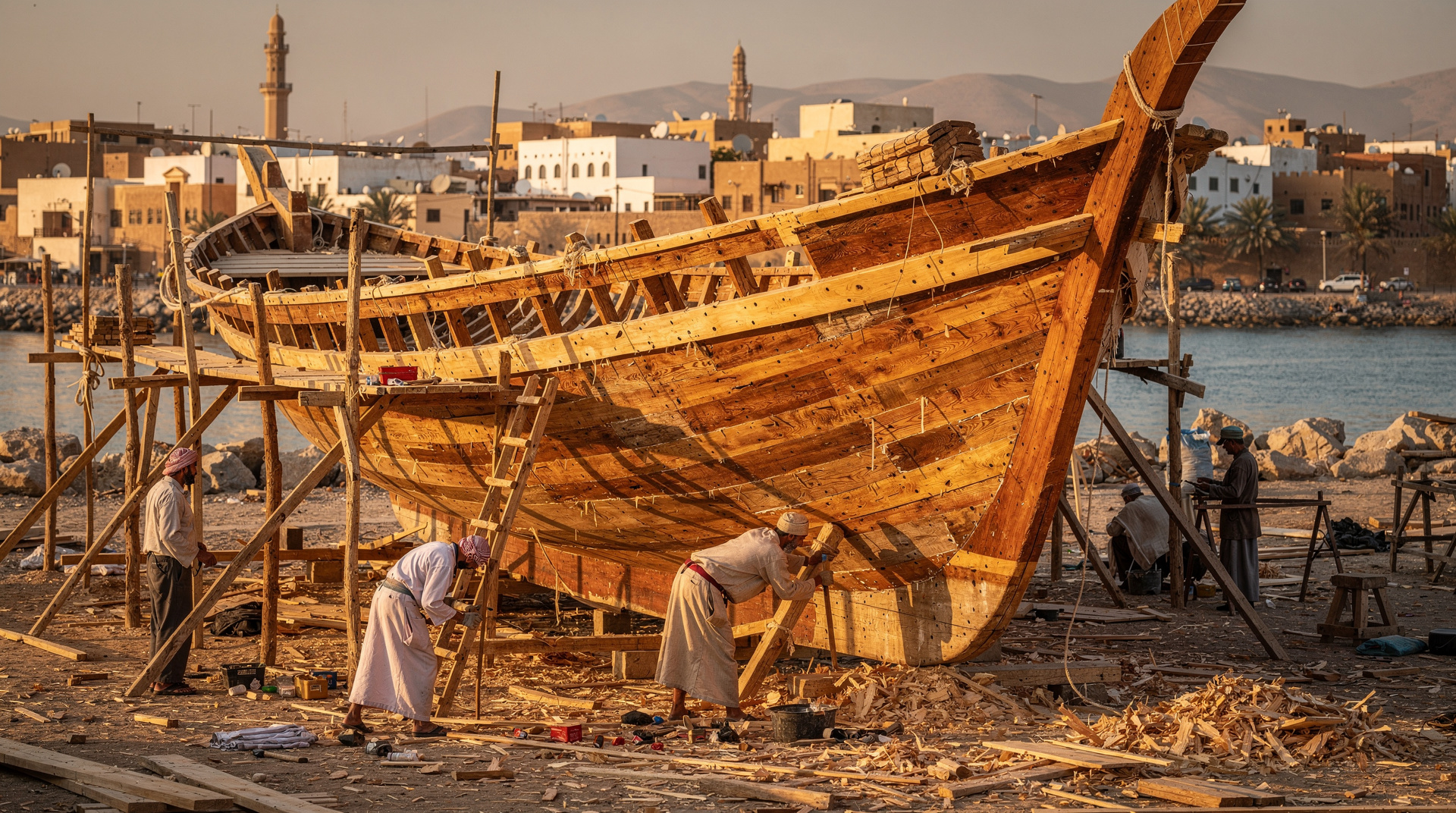
Day 1: Morning at Wadi Shab and Bimmah Sinkhole, afternoon arrival in Sur — visit the Al Barakah dhow yard before sunset, walk the corniche, dinner at Bin Ateeq.
Day 2: Morning at Sunaysilah Fort and the Maritime Museum in Sur, afternoon at Ras Al Hadd, evening turtle tour at Ras Al Jinz (staying at the guesthouse or returning to Sur).
Day 3: Sunrise walk at Ras Al Jinz (guesthouse guests), morning return to Muscat via the inland highway through Ibra and the Wahiba Sands.
This circuit is detailed in the Ash-Sharqiyah region guide and in the one-week Oman road trip itinerary. The Oman wildlife guide covers additional marine and coastal wildlife experiences across the country.
Ras Al Jinz vs Other Oman Wildlife Experiences
Ras Al Jinz is Oman’s single best land-based wildlife encounter, but it is not the only one. Dolphin watching is common along the entire coast, including easy morning trips from Muscat, and the Daymaniyat Islands offer superior underwater biodiversity for snorkelers and divers.
What sets Ras Al Jinz apart is the guaranteed, guided, night-time proximity to a wild nesting event that few other places on earth allow visitors to witness responsibly. If your Oman trip includes the eastern coast circuit through Sur and Wadi Shab, Ras Al Jinz is a natural and worthwhile addition rather than a detour.
Practical Information for 2026
Booking: Night tours must be booked in advance through the Ras Al Jinz Visitor Centre website (rasaljinz-tourismreserve.com) or by phone. Guesthouse stays should be booked simultaneously. Walk-in availability exists but is not reliable, especially on weekends and during peak season.
Photography: No flash photography on the beach under any circumstances. Red-filtered torch light from the guide creates usable conditions for high-ISO photography with a fast lens — a 50mm f/1.8 or 85mm f/1.8 on a camera with good high-ISO performance produces adequate results. Bring a memory card with plenty of capacity; the guide may allow the group to photograph during the egg-laying phase once the turtle is settled.
Clothing: Dress modestly for the Visitor Centre. On the beach at night, the temperature in winter (December–February) drops to 18–22 degrees Celsius — a light jacket is useful. In summer (July–October), night temperatures remain above 28 degrees.
Children: The tour is suitable for children aged six and above. Younger children may struggle with the darkness, the walking, and the required silence. The experience is recommended from age eight for optimal appreciation.
Frequently asked questions about Ras Al Jinz — Oman’s Green Turtle Nesting Reserve
When is the best time to visit Ras Al Jinz for turtle nesting?
Green turtles nest at Ras Al Jinz year-round, but the peak season is July through October when the highest number of females arrive each night. The hatching season (October through February) offers the chance to see hatchlings emerging from the sand and crossing the beach to the sea — the most emotionally powerful version of the experience. November through January sees fewer visitors and more manageable tour group sizes, despite good numbers of nesting turtles.
How do I book the night turtle tour at Ras Al Jinz?
Book directly through the Ras Al Jinz Scientific and Visitor Centre website (rasaljinz-tourismreserve.com) or by calling the centre. Guesthouse guests receive priority booking access and can reserve their tour at the time of room booking. For weekend visits between October and April, book at least two to three weeks in advance. For July and August peak season, book two months ahead.
Can I visit Ras Al Jinz as a day trip from Muscat?
Technically yes, but it requires leaving Muscat by 4pm and a four-hour drive each way, with the night tour running 9–10:30pm. The return drive would put you back in Muscat at around 3am. This is not recommended unless you are a genuinely experienced long-distance night driver. Staying in Sur (45 minutes from the reserve) or at the Ras Al Jinz guesthouse is strongly preferable. Guided tours from Muscat that include overnight accommodation are the most practical option for those without a rental car.
Is it guaranteed I will see turtles?
The reserve reports a sighting rate of over 95 percent for night tours during peak season (July–October). Outside of peak season, the rate is lower but remains above 80 percent. The reserve’s guides know the beach intimately and spread out to locate activity before the tour groups reach the beach. In the unlikely event of no turtle activity, the Visitor Centre typically offers a complimentary place on the following evening’s tour. No cash refunds are given.
What should I do if I see a turtle without a guide?
Do not approach it. Do not use a torch or phone light. Do not make sudden movements or noise. Back away slowly and report the sighting to the Visitor Centre immediately. While turtles emerging from the sea are resilient, human interference during the critical nesting phase can cause the female to abandon the nest and return to the sea without completing the process — wasting the energy of the journey and costing the breeding population a clutch of eggs.
Are there other turtle species at Ras Al Jinz besides green turtles?
Ras Al Jinz is primarily a green turtle (Chelonia mydas) nesting site. Loggerhead turtles (Caretta caretta) occasionally nest here in smaller numbers, and Hawksbill turtles are sometimes observed in the offshore waters. The reserve’s research team also tracks data on leatherback turtles passing the headland during migration, though these giants rarely approach the beach. The Visitor Centre museum covers all species found in Omani waters.
Can I combine Ras Al Jinz with Wadi Shab and Sur in one trip?
Yes — this is the standard and most rewarding way to visit. A typical two-to-three-day circuit from Muscat covers Wadi Shab and Bimmah Sinkhole on day one, Sur’s dhow yards and corniche in the afternoon, then Ras Al Hadd and the Ras Al Jinz night tour before returning to Muscat via the interior. See the full breakdown above and in our one-week Oman itinerary.
Is Ras Al Jinz suitable for young children?
The reserve recommends a minimum age of six, with the best experience from around age eight, since the tour requires walking in darkness and maintaining silence for extended periods. Families with younger children may find the late hours and strict quiet rules difficult; consider a shorter, earlier alternative like Muscat’s dolphin-watching trips if travelling with toddlers.
Top experiences
Bookable activities with verified prices and instant confirmation on GetYourGuide.
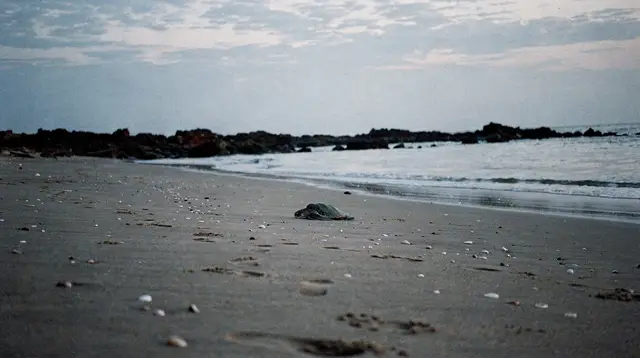 📍 Ras Al Jinz
 From Muscat: Wadi Shab, Ras Al Jinz, Wahiba Sands 2-day tour
- Free cancellation
- Hotel pickup
- Small group
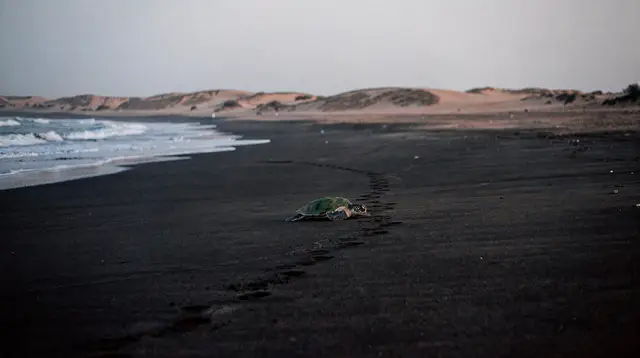 📍 Ras Al Jinz
 2-day Oman adventure: Wadi Shab, turtles and desert
- Free cancellation
- Hotel pickup
- English guide
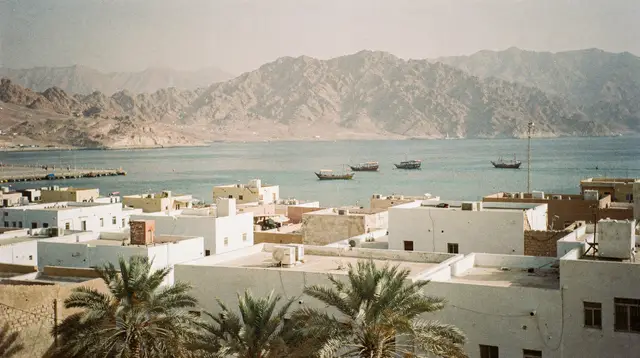 📍 Muscat
 Muscat: half-day city tour
- Free cancellation
- Instant confirmation
- Hotel pickup
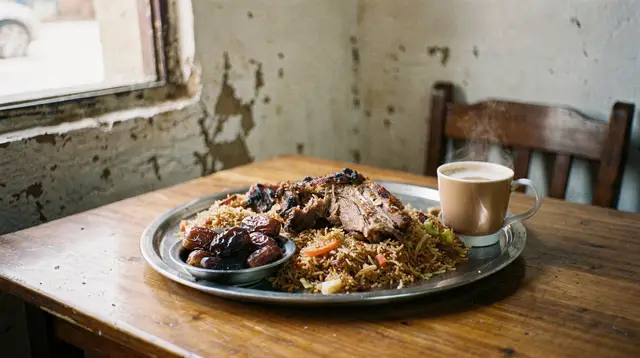 📍 Muscat
 Muscat: 2-hour sunset dhow cruise
- Instant confirmation
- Free cancellation
- Best seller