Frankincense Trail Salalah: Oman's UNESCO Land of Incense
Discover Salalah city, history, nature, culture
Duration: 5 hours
- Free cancellation
- Hotel pickup
- English guide
What is the Land of Frankincense and where exactly is it?
The Land of Frankincense is a UNESCO World Heritage Site in southern Oman's Dhofar region, centred on Salalah. It includes Sumhuram port ruins, Al-Balid city, Wadi Dawkah frankincense trees, and Shisr oasis.
The Trade That Built an Ancient World
For more than 5,000 years, the frankincense that burned in temples from Rome to Mesopotamia, from Egypt to China, came primarily from one place: the Dhofar region of southern Oman. This hot, rocky land at the foot of the Qara Mountains was uniquely suited to producing Boswellia sacra, the tree that yields the finest frankincense in the world, and the trade routes that moved this precious resin northward through Arabia and by sea across the Indian Ocean made Dhofar one of the wealthiest corners of the ancient world.
The UNESCO World Heritage Site known as the Land of Frankincense encompasses four distinct areas that together tell this story: the Wadi Dawkah nature reserve where the ancient Boswellia trees still grow wild, the ruins of the ancient port city of Sumhuram, the medieval city of Al-Balid on the outskirts of modern Salalah, and the remote desert oasis of Shisr (ancient Ubar). Together they constitute one of the most layered and significant archaeological and natural heritage landscapes in Arabia.
At a glance
| Where | Dhofar region, centred on Salalah, southern Oman |
| Sites | Wadi Dawkah, Sumhuram, Al-Balid, Shisr (Ubar) |
| Entry fees | A small ticket applies at Wadi Dawkah, Sumhuram and Al-Balid; hedge for a few Omani rials per site |
| Time needed | 2-3 days in Salalah for the main sites at a relaxed pace |
| Best time | October-May for dry conditions; June-September (khareef) for the green-mountain spectacle |
Wadi Dawkah: The Sacred Grove
The Frankincense Trees
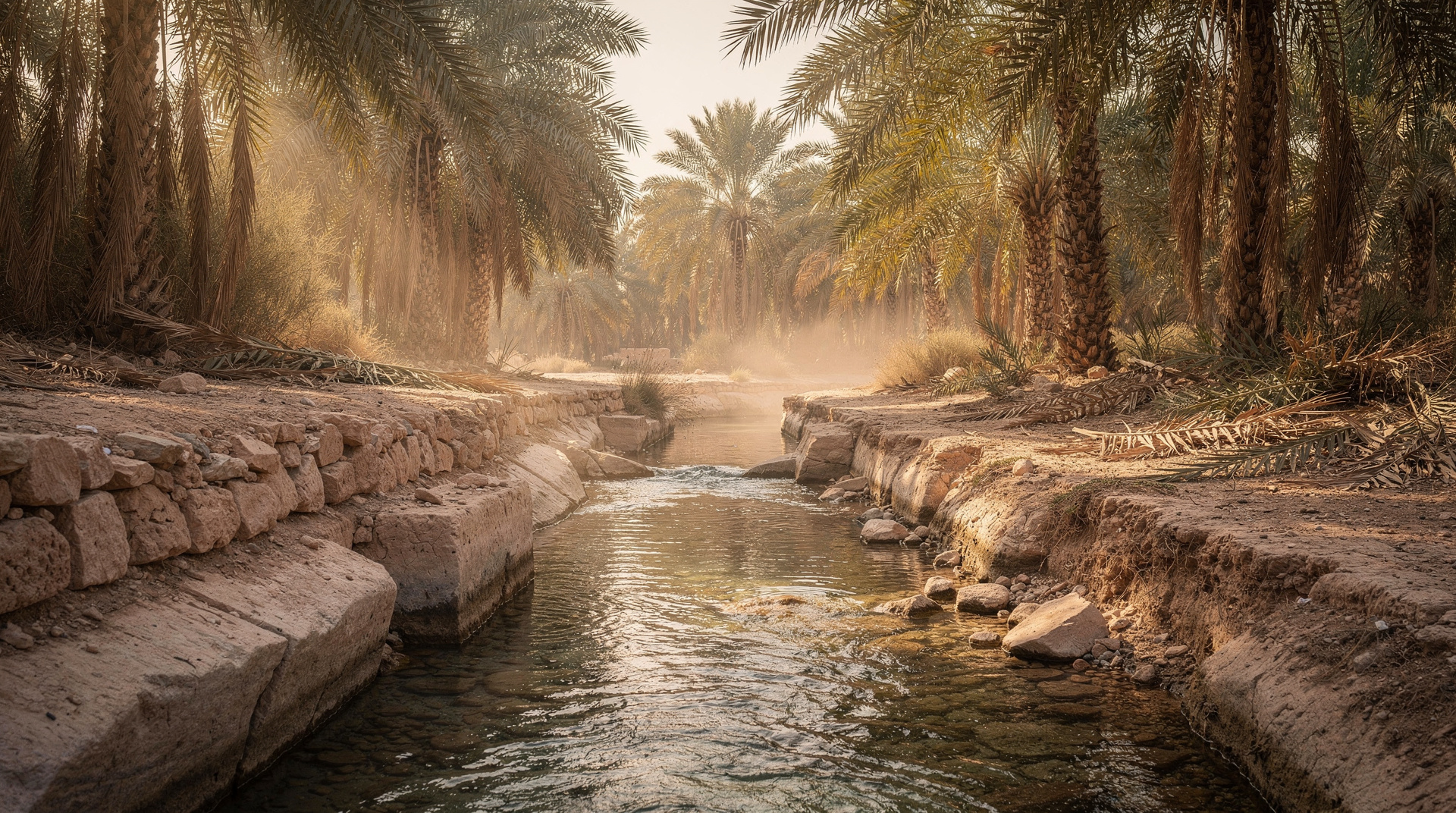
Wadi Dawkah, approximately 40 km north of Salalah on the road toward Thumrait, is the most accessible of the Land of Frankincense sites and in some ways the most affecting. Here, in a protected valley, hundreds of ancient Boswellia sacra trees grow wild in the rocky landscape, their gnarled silvery trunks emerging from bare limestone ground, their canopies surprisingly green despite the apparent hostility of the environment.
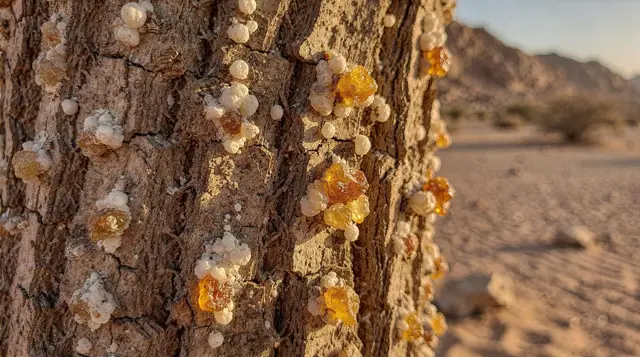
These trees are the source of everything. The resin bleeds naturally from cuts in the bark — a milky white liquid that hardens on contact with air into the translucent yellowish lumps sold throughout the world as frankincense. Traditional harvesters (known locally as mutakhallin) make shallow incisions in the bark three times per year and collect the hardened resin some weeks later. The finest quality resin, pale green and almost transparent, is the Hojari grade from Dhofar that commands the highest prices in international markets.
Standing among these trees at Wadi Dawkah, it is possible to appreciate why Dhofar was regarded as a sacred or magical landscape by the ancient world. The trees look unlike anything in European or North American experience — prehistoric in their form, improbably alive in their apparently barren setting, secreting their fragrant resin with complete indifference to the centuries of human desire and trade that have accumulated around them.
The Nature Reserve
Wadi Dawkah is protected as a nature reserve and entry requires passing through a checkpoint where a small fee is payable. Marked paths allow visitors to walk among the trees and read interpretive panels explaining the botany, the harvesting process, and the historical significance of the trade. A small visitor centre provides additional context.
The best time to visit is late afternoon, when the light on the trees is richest and the temperature has dropped from its daytime peak. Early morning visits avoid the heat of the day and often allow closer encounters with the birdlife in the reserve.
Sumhuram: The Ancient Harbour City
A Port at the Edge of History
Sumhuram (Khor Rori) is perhaps the most dramatically situated of the four Land of Frankincense sites. The ruins of an ancient walled city sit on a rocky promontory above a tidal creek, approximately 40 km east of Salalah. The creek (khor) once provided a sheltered natural harbour where ancient ships could anchor to load consignments of frankincense for transport to the markets of Arabia, Mesopotamia, and the Mediterranean world.
The city was founded around the 1st century BCE by the kings of the Hadramawt kingdom (from what is now Yemen) and served as a major frankincense export point for at least four centuries. At its height, Sumhuram was a prosperous, cosmopolitan port with connections to South Arabia, East Africa, India, and the Mediterranean world — a node in the ancient globalisation of the incense trade.
The Archaeological Site
Excavations at Sumhuram, conducted over several decades by Italian and Omani archaeologists, have revealed a city of considerable complexity. The main gate, palace complex, temple, and residential quarters are all visible, though most structures survive only to a metre or two in height. The quality of construction — large dressed stone blocks fitted with considerable precision — indicates that this was no temporary trading post but a permanent city of substance.
The temple at Sumhuram appears to have been dedicated to the moon god Sin, a deity worshipped across South Arabia in the pre-Islamic period. Inscriptions in the ancient Sabaean script found at the site provide invaluable evidence for the city’s history, its rulers, and its connections to the wider South Arabian world.
The view from the site across the tidal creek to the Indian Ocean beyond gives a vivid sense of why this location was chosen: sheltered enough for secure anchoring, open enough for easy departure, commanding enough for defensive purposes.
The Visitor Experience
A well-designed visitor centre at Sumhuram presents the archaeological findings in accessible form, including scaled models of the city at its height, examples of objects found during excavation, and explanation of the trade routes that passed through the port. Allow 1.5 to 2 hours for a thorough visit to the ruins and visitor centre.
Al-Balid Archaeological Park
Salalah’s Medieval City
Al-Balid is an extensive archaeological site on the western edge of modern Salalah, accessible from the city centre in under 15 minutes. This was the location of the medieval city of Zafar, a prosperous trading city that reached its height between the 12th and 16th centuries and was known to Arab geographers as one of the great cities of the Indian Ocean trade.
The site covers approximately 27 hectares and includes the ruins of mosques, the city palace complex, residential quarters, and a substantial fortification wall. The great mosque of Al-Balid, with its multiple prayer halls and elaborate mihrab work, was one of the largest in medieval Oman. The ruins stand between 1 and 4 metres in height, giving enough structure to understand the city’s layout without the ruins being so complete as to feel artificially preserved.
The Museum of the Frankincense Land
Within the Al-Balid complex is the Museum of the Frankincense Land, one of the best museums in Oman. The displays cover the natural history of the Boswellia tree, the processing and grading of frankincense resin, the ancient trade routes by land and sea, and the history of the sites within the Land of Frankincense World Heritage property. Presentations are in Arabic and English and are well produced.
The museum’s coverage of the maritime history of the ancient Indian Ocean trade — the ships, the routes, the commodities traded alongside frankincense — provides essential context for understanding why Dhofar’s coast was so historically significant.
Shisr: The Desert Oasis (Ancient Ubar)
The City of Ubar
Shisr, approximately 180 km north of Salalah in the Empty Quarter desert, is the site identified by some researchers as the ancient city of Ubar — the legendary “Atlantis of the Sands” mentioned by classical writers as a major camel caravan staging post on the land route of the frankincense trade. The site was identified in 1992 following satellite image analysis that revealed ancient caravan tracks converging on the location.
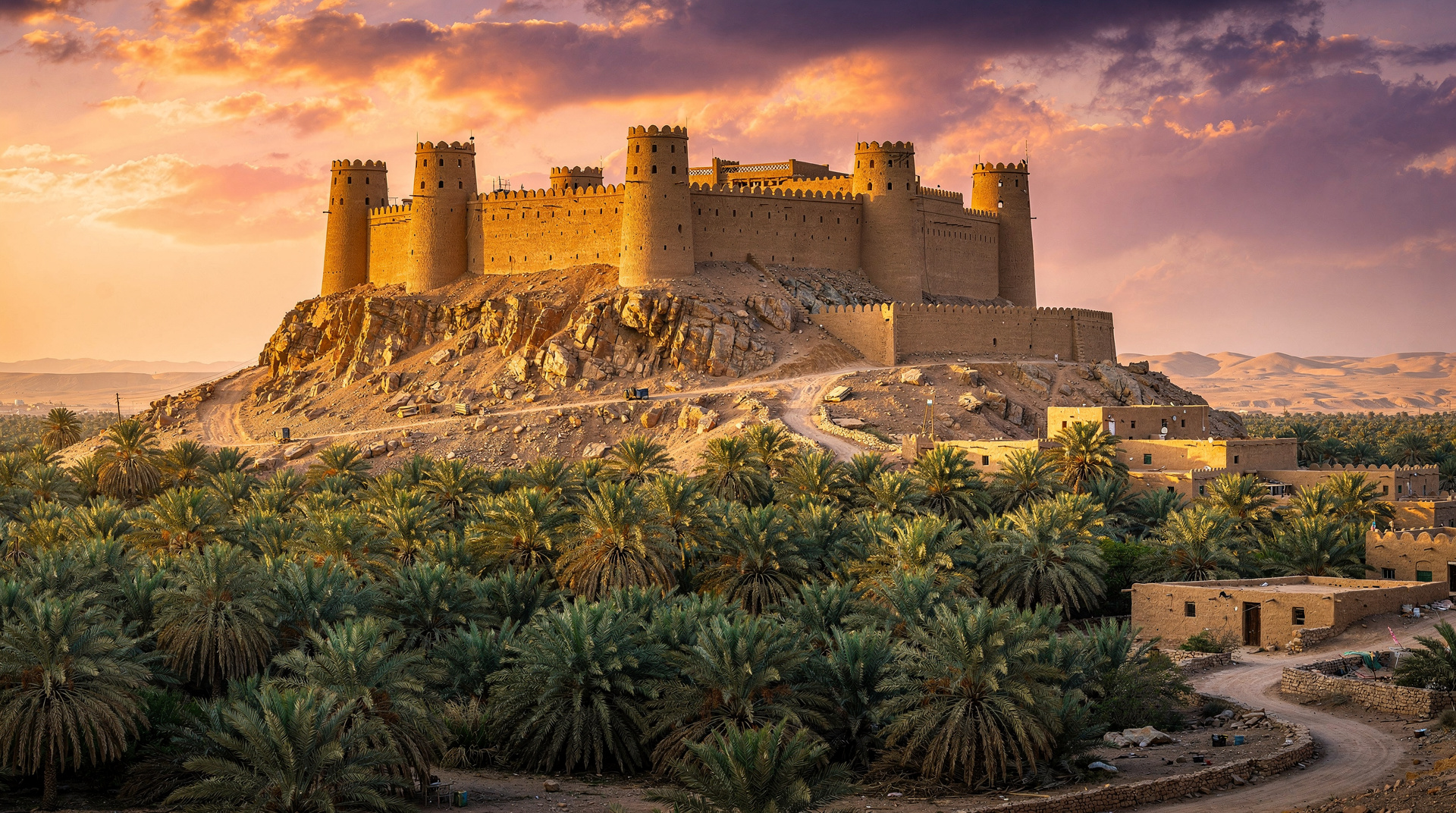
The visible ruins at Shisr are substantial: a large fortified tower that partially collapsed when its foundations gave way over a subterranean cavern, surrounded by the traces of a settlement. A small visitor centre explains the site’s history and the story of its identification.
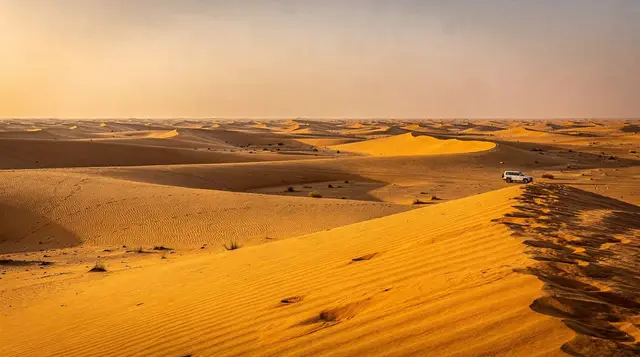
Shisr requires either a 4WD vehicle or an organised desert tour to reach. The journey from Salalah is a full day excursion in itself, but for those with a deep interest in the ancient incense trade, it is a genuinely rewarding destination.
Touring the Frankincense Sites
Organised Tours from Salalah
Given the distances between the four Land of Frankincense sites, an organised tour is the most efficient way to see multiple locations in a single day. A guided tour typically includes the Al-Balid museum, Wadi Dawkah, and Sumhuram, providing transport and expert explanation throughout. Shisr is usually a separate excursion given its distance.
For a well-organised Salalah cultural tour covering the Land of Frankincense sites alongside other Dhofar highlights, this Salalah history, nature and culture tour provides excellent coverage with an experienced guide.
Grading the Resin: What “Hojari” Actually Means
Frankincense is graded by colour, clarity and origin, and understanding the grades makes buying in the souq far less confusing. The pale, almost translucent green-white Hojari grade, harvested from trees growing in the rocky highlands around Dhofar’s interior, is considered the finest quality available anywhere and commands the highest prices. Darker, more opaque brown or black grades come from coastal or lower-altitude trees and are generally cheaper, still perfectly usable for everyday burning but without the delicate sweetness of top-grade Hojari. Merchants in Salalah’s souq will typically offer to burn a small piece so you can judge the scent before buying — a legitimate and expected part of the transaction, not an imposition.
How the Sites Connect: A Practical Route
For visitors without a guide, the three closer sites can be sequenced sensibly in a single day: start at Al-Balid in the cool of the morning (it has the most shade and the museum), continue to Sumhuram around midday when the coastal breeze off Khor Rori offers some relief, and finish at Wadi Dawkah in the late afternoon when the light on the frankincense trees is at its best.
Shisr, being a full day’s excursion on its own given the distance into the Empty Quarter, is better treated as a separate day rather than squeezed into the same itinerary. Those planning a wider Dhofar trip may also want to see the Salalah destination guide for accommodation and general orientation, and the khareef season guide if timing a visit around the monsoon.
Planning Your Frankincense Days in Dhofar
The sites make most sense when they are folded into a wider Salalah stay rather than treated as a checklist. The complete Salalah guide lays out the other things worth doing around the city, and where to stay in Salalah helps you choose a base that keeps Al-Balid close and the longer drives to Sumhuram and Wadi Dawkah manageable.
Because the sites are spread out, having your own vehicle gives the most freedom. The guide to renting a car in Oman covers what to check before you collect one, and the domestic flights guide is useful if you are arriving from the north by air rather than driving.
If the resin itself captures your interest, the blog feature on frankincense as Oman’s white gold goes further into its story, and the Oman souvenirs and shopping guide helps you decide what to bring home once you know the grades.
Travellers drawn to the desert side of the incense trade may also want to read about the Empty Quarter expedition, which gives a sense of the landscape that surrounds Shisr.
The Khareef Season: Salalah’s Unique Climate
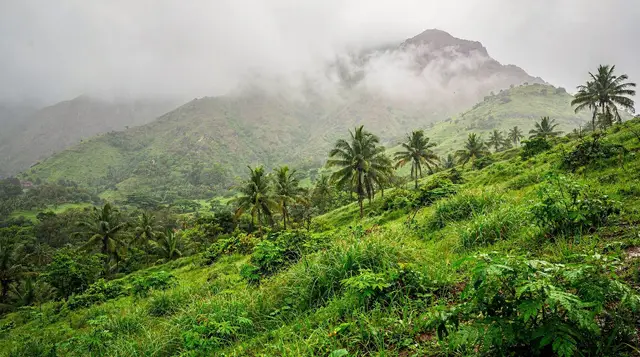
Salalah’s position at the foot of the Qara Mountains means it receives the tail of the Indian Ocean monsoon between June and September — the only part of Oman to experience this. During the khareef season, the mountains turn green, waterfalls cascade down the escarpments, and the entire landscape transforms from its usual arid character into something subtropical and luminously green.
Visiting the frankincense sites during the khareef is a very different experience to visiting at other times of year. The Wadi Dawkah trees appear particularly alive against the green mountain backdrop. The coastal sites at Sumhuram are cool and occasionally misty. The frankincense market in Salalah’s souq is at its most active, with fresh resin newly harvested.
For the green-mountain side of the season, the Salalah in khareef guide and the Wadi Darbat waterfall guide pair naturally with a day among the frankincense sites, and the best time to visit Oman guide helps you weigh Dhofar’s seasons against the rest of the country.
The downside of khareef season is that some roads can be affected by flooding and that the constant mist and cloud can make photography challenging. The peak season runs from late June through August, and Salalah’s hotels fill with Omani and Gulf tourists escaping the extreme heat of the Arabian interior.
Frankincense in Omani Culture Today
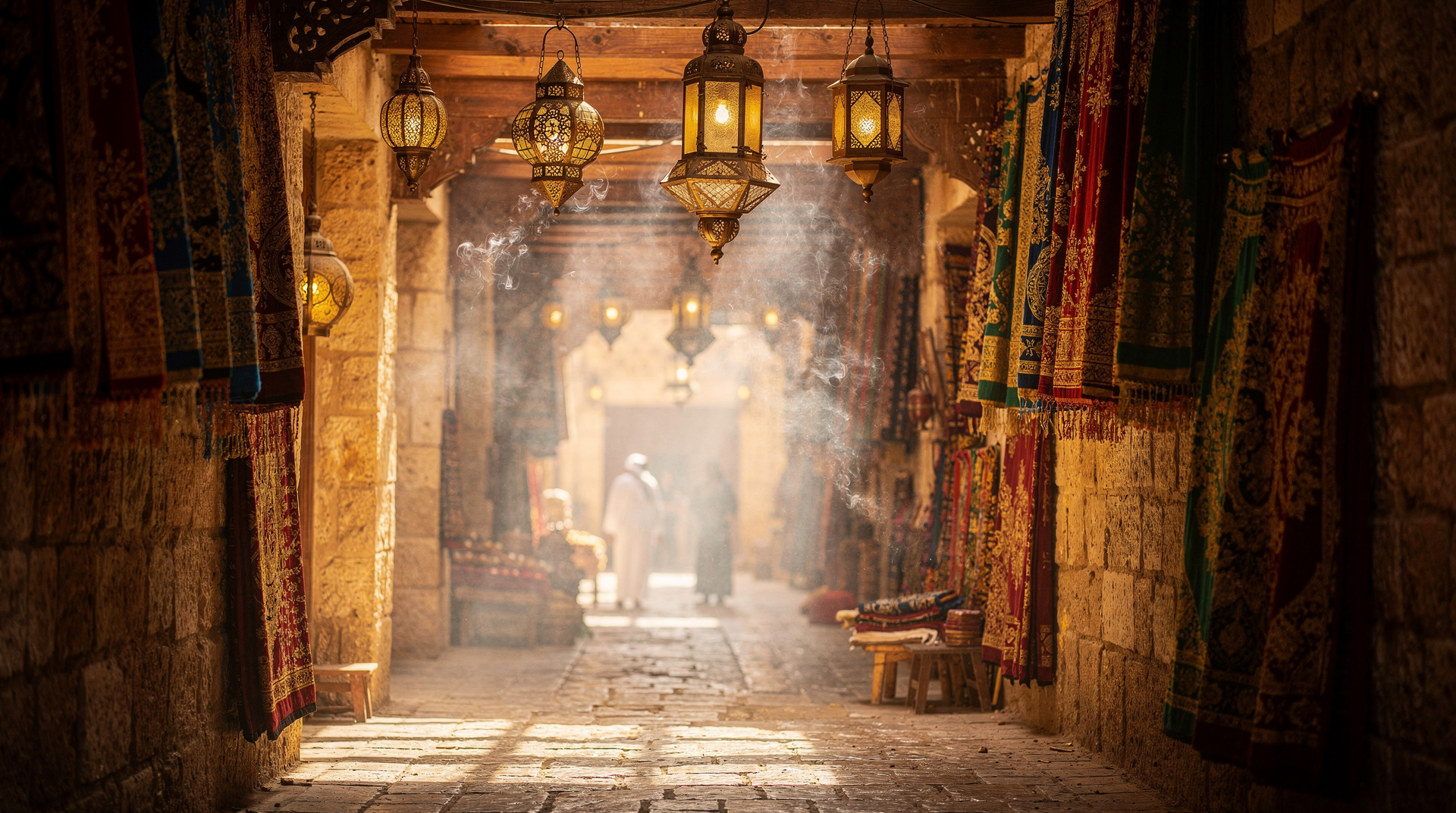
Frankincense is not a historical curiosity in Oman — it remains central to everyday life. Burning frankincense (usually in a clay or silver mabkhara burner) is standard Omani domestic practice, used to welcome guests, to scent clothing and living spaces, and for specific social rituals. The smell of burning frankincense is as characteristic of Omani interiors as coffee and rose water.
The Muttrah Souq in Muscat sells excellent frankincense from Dhofar, but for the finest Hojari grade and the widest selection, purchasing directly from merchants in Salalah — where the resin originates — gives you both the best quality and the most authentic provenance. Salalah’s central souq has specialist frankincense merchants who can guide you through the different grades and their appropriate uses.
Getting to Salalah
Salalah has its own international airport with direct connections from Muscat (approximately 1 hour), Dubai, Abu Dhabi, and several Indian cities. The overland journey from Muscat via the desert highway is approximately 1,000 km and takes around 10 to 12 hours — a genuinely epic drive through some of Oman’s most dramatic desert landscapes, but not a realistic day trip.
Most visitors to the Land of Frankincense sites stay in Salalah for 2 to 3 days, which is the minimum needed to cover the main sites at a relaxed pace. For getting around once there, the getting around Oman guide covers Salalah’s more limited taxi and rental car options compared with Muscat, and travellers combining Dhofar with the north should see the Muscat to Salalah drive guide for the overland option in full.
Frequently asked questions about Frankincense Trail Salalah: Oman’s UNESCO Land of Incense
What is frankincense and why is Omani frankincense special?
Frankincense is a resin produced by the Boswellia tree when its bark is cut. The Omani variety, Boswellia sacra, is considered by most traders and users to produce the finest frankincense in the world, particularly the pale green Hojari grade from Dhofar. The specific combination of soil, altitude, and climate in the Dhofar region produces a resin with a distinctive freshness and complexity that other frankincense-producing regions cannot replicate.
How many UNESCO sites are in the Land of Frankincense?
The Land of Frankincense UNESCO designation covers four components: Wadi Dawkah (the frankincense tree reserve), Sumhuram archaeological site, Al-Balid archaeological site, and Shisr (Ubar). Together they were inscribed as a single World Heritage Site in 2000 on the basis of their collective outstanding universal value in documenting the ancient frankincense trade.
When is the best time to visit Salalah?
This depends on what you want. October through May is the driest and most comfortable period for visiting the archaeological sites. June through September is the khareef season, when the mountains are green and the landscape is unique in Arabia — a dramatically different experience that many visitors consider even more memorable, despite the mist and occasional rain.
Can I buy frankincense directly from producers in Dhofar?
The frankincense in Salalah’s souq comes from the surrounding region and in many cases is sold by people directly connected to the production. Wadi Dawkah is not a retail site but the visitor centre sometimes has small quantities available. The souq in central Salalah is the primary retail point and offers the best selection and most authentic provenance for purchasing frankincense from the source region.
Is Shisr worth visiting?
If you have a serious interest in the ancient incense trade and are comfortable with a full day’s drive through desert, yes. The ruins at Shisr are not visually spectacular compared to Sumhuram or Al-Balid, but the setting — a substantial fortified tower on the edge of the Empty Quarter, reached by roads that pass through enormous uninhabited desert — is powerful in its own way. Most visitors content themselves with the three main sites closer to Salalah.
How does the Land of Frankincense fit with the rest of Oman?
Salalah and Dhofar feel genuinely different from northern Oman — different climate, different landscape, different dialect of Arabic, different historical connections. The Land of Frankincense sites add a pre-Islamic and early Islamic historical layer that complements the Ya’aruba-era forts of the north, covered in the complete guide to Oman’s forts. Many visitors treat Salalah as a separate trip from Muscat and the interior, allocating at least 3 days to Dhofar before or after their northern Oman exploration.
Do I need a guide to visit the Land of Frankincense sites?
No — Al-Balid, Sumhuram and Wadi Dawkah are all straightforward to visit independently with a rental car, and each has on-site interpretive panels or a visitor centre. A guide adds historical depth and saves time coordinating logistics between sites, which is useful if you have limited days in Salalah, but is not essential for a rewarding visit.
Top experiences
Bookable activities with verified prices and instant confirmation on GetYourGuide.
 📍 Salalah
 Discover Salalah city, history, nature, culture
- Free cancellation
- Hotel pickup
- English guide
 📍 Salalah
 Salalah: sunset desert safari - Rub Al Khali - Empty Quarter
- Free cancellation
- Hotel pickup
- Small group
 📍 Salalah
 West Salalah tour: Fazayah Beach, Al Mughsail Beach, blowhole
- Free cancellation
- Hotel pickup
- Instant confirmation
 📍 Muscat
 Muscat: half-day city tour
- Free cancellation
- Instant confirmation
- Hotel pickup