Dune Bashing and Sandboarding in Oman: The Complete Adventure Guide
What is dune bashing in Oman like?
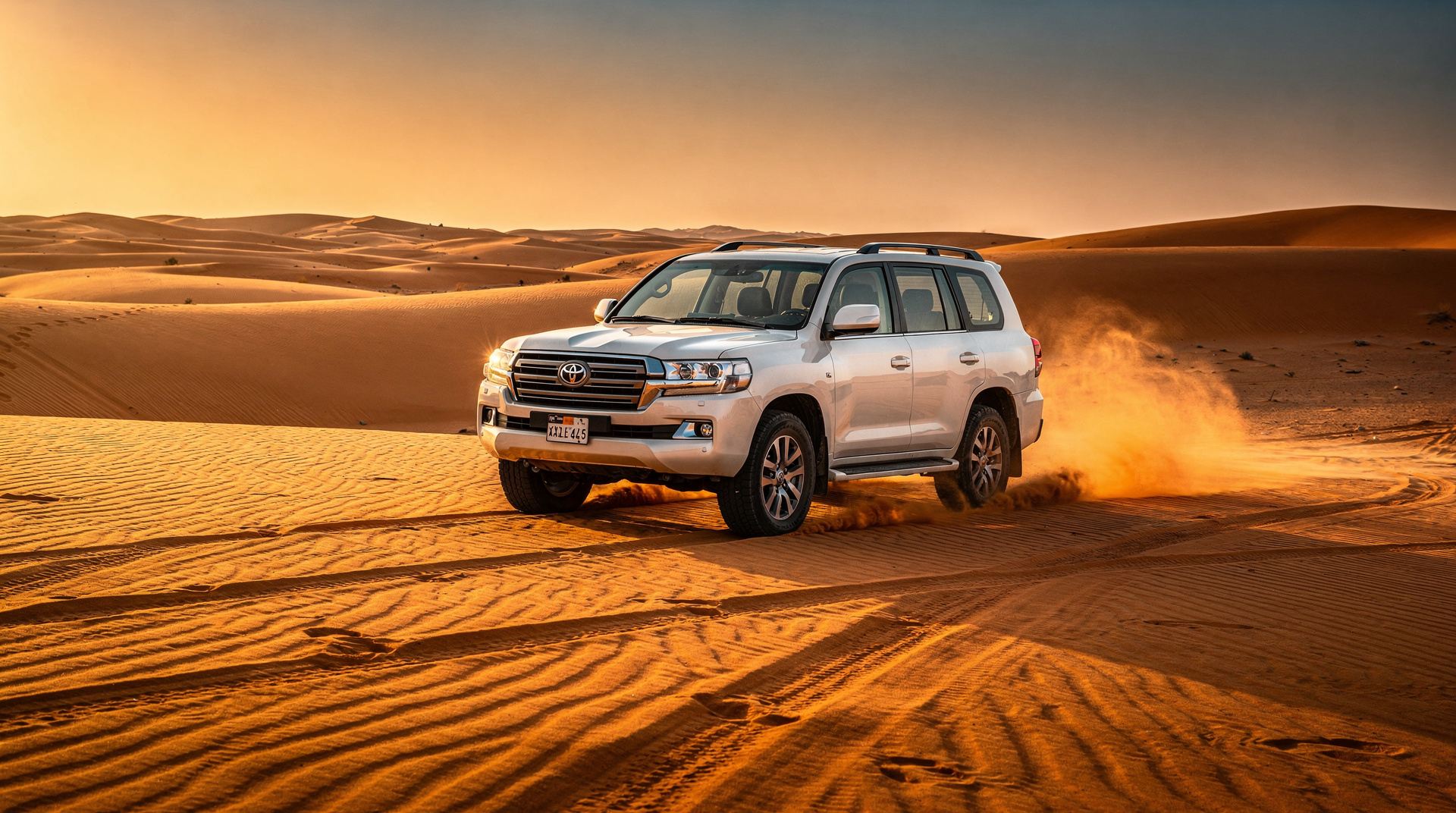
Dune bashing involves driving a 4WD vehicle at speed up and over sand dunes in Wahiba Sands. It combines steep climbs, dramatic drops, and sharp turns that generate genuine adrenaline. Sessions last 45-90 minutes and are included in most Wahiba Sands safari packages.
The Art of Taming Desert Dunes in Oman
Dune bashing is the desert equivalent of white-water rafting — the landscape itself becomes the ride. In the Wahiba Sands of southeastern Oman, you get some of the best conditions in the Arabian Peninsula: high, firm-crested dunes with excellent angles for climbing and descending, experienced local drivers who have grown up reading sand conditions, and a backdrop so spectacular that even between the adrenaline bursts you are stopping to take photographs.
This guide covers the full spectrum — from what dune bashing physically feels like for first-timers, to sandboarding technique, to the self-drive dune buggy experiences that let you take the wheel yourself.
At a glance
| Where | Wahiba Sands (main hub), Al Khod dunes near Muscat, Empty Quarter margin near Salalah |
| Typical cost | Included in most Wahiba Sands desert safaris; dune buggy self-drive around 35-50 OMR/hour |
| Time needed | A 60-90 minute session, or a full day combined with overnight desert camping |
| Getting there | Around 3 hours’ drive from Muscat to Wahiba, or join a tour from the city |
| Best time | October-March for cooler temperatures; avoid midday in summer |
What Actually Happens During Dune Bashing
Before your first session, understanding the mechanics helps manage expectations and reduce anxiety. Here is exactly what happens:
Your driver stops at the entrance to the dune area and deflates the tyres to around 18-20 PSI. This wider contact patch prevents the tyres from sinking into soft sand — try to drive with standard pressures and you will be stuck within 100 metres. The vehicle switches to low-range 4WD. Seatbelts go on and stay on.
The first few dunes are relatively gentle — your driver is reading the sand conditions, checking consistency and firmness, calibrating speed to what the surface will support. Experienced drivers know from subtle visual cues whether a dune face is firm enough to climb at pace or whether it needs careful navigating. They also know wind direction: the windward (gentle) side of a dune is the safe approach, while the leeward (slip face) is steep and used for dramatic descents.
Once the driver is confident in conditions, the proper bashing begins. A typical run involves:
- Approach: Building speed on flat sand between dunes
- Climb: Accelerating up the windward face — the vehicle nose pitches sharply upward, the engine note rises, and passengers slide back into their seats
- Crest: A brief moment of weightlessness at the peak where you can see kilometres in every direction
- Drop: The slip face descends at 30-45 degrees; the vehicle nose drops, brakes are applied lightly, and the slide down is where people scream or laugh or both
Between major dune runs, the driver navigates through natural corridors between dune systems, building anticipation for the next climb. Expert drivers time their traversals so passengers get a constant variety of experiences — steep drops, long sweeping traversals, surprising blind crests.
Sessions typically last 60-90 minutes, during which you cover a circuit of around 20-30 km through the dune field. Most passengers find this is the right amount of time — long enough to get fully immersed, short enough that you are not exhausted or nauseous.
Best Dunes for Bashing in Oman
Wahiba Sands (Sharqiyah Sands)
The premier location and the right answer for almost all visitors. The dunes near the Al Qabil entry offer excellent height (up to 80-100 metres in some areas), consistent sand composition that holds its shape after wind events, and proximity to established camp infrastructure. The 4WD desert safari from Muscat concentrates on this area, with drivers who know these particular dunes intimately.
For self-drive dune buggy adventures, the Wahiba Sands dune buggy experience in Bidiyah puts you in the driver’s seat of a purpose-built dune vehicle for a one-hour self-drive adventure. This is ideal for travellers who want more control than a passenger experience offers.
Al Khod Sand Dunes
Located just 20 minutes from central Muscat, the Al Khod dunes are smaller than Wahiba — more suitable for an afternoon introduction than a full experience. Some operators use these dunes for shorter sessions when time or budget is limited. The backdrop of the Al Hajar Mountains behind the city creates an unusual urban-meets-desert panorama.
Rub Al Khali (Empty Quarter) Edge
For expedition-level dune bashing, the far south of Oman near Salalah provides access to the edges of the Empty Quarter — the world’s largest sand desert. Dunes here are immense but remote, requiring fully equipped expedition vehicles and experienced desert navigators. This is not a day-trip activity; plan for multi-day expeditions with specialist operators.
Sandboarding: Stand Up or Sit Down?
Sandboarding is included in most camp and tour packages and requires zero prior experience. The boards provided by operators are typically basic wooden or fibreglass boards with foot bindings or simple rope handles.
Stand-up sandboarding is the aspirational version. Technique is similar to snowboarding — feet perpendicular to the board direction, upper body facing downhill, weight shifts to control turns. Sand offers significantly more friction than snow, which means slower speeds but more control for beginners. The main challenge is getting enough speed to make it work — you need a steep face. Starting from the wrong spot on a gentle slope just leaves you shuffling along and stopping ten metres down.
On a proper steep face (35+ degrees), stand-up sandboarding works well. Speeds reach 20-30 km/h on the right conditions. Falls are soft — the sand gives way, and injuries are rare beyond the occasional sand-in-every-orifice experience. Wash your face and clear your ears after falls.
Lying down (prone) sandboarding is faster and more accessible for those who find stand-up balancing difficult. Lie flat on the board, grip the front edge with both hands, and launch yourself. Speeds can reach 40 km/h on steep, firm faces. This is the version that produces the most consistent laughter.
Sitting on a board is for those who want the experience without the acrobatics — perfect for older guests or anyone with knee issues. Speed is lower but the descent is still exhilarating enough.
After each run, the climb back up the dune takes 5-8 minutes of solid effort through soft sand. By the third or fourth run, the uphill is the workout most visitors were not expecting. Wear closed shoes or sturdy sandals for this — bare feet on hot sand midday is genuinely unpleasant.
Dune Buggies and Quad Bikes: Self-Drive Options
For those who want to be behind the wheel rather than a passenger, self-drive dune vehicles are an increasingly popular option in the Wahiba Sands area.
Dune Buggies
Side-by-side dune buggies (also called UTVs or RZRs) are two or four-seat vehicles with roll cages, harness-style seatbelts, and wide suspension designed specifically for dune driving. They are significantly safer than open quads and offer a more visceral experience than being a passenger in a Land Cruiser.
The Wahiba Sands dune buggy self-drive experience offers a one-hour session in the dunes with a lead guide ahead and a support vehicle behind. You control the speed and route within a defined safe zone. No previous off-road experience is required — the vehicles are automatic with simple controls — but a full driver’s licence is required.
2026 pricing: approximately 35-50 OMR per buggy per hour (two-person vehicles). This represents one of the better value adventure activities in Oman given the quality of experience.
Quad Bikes
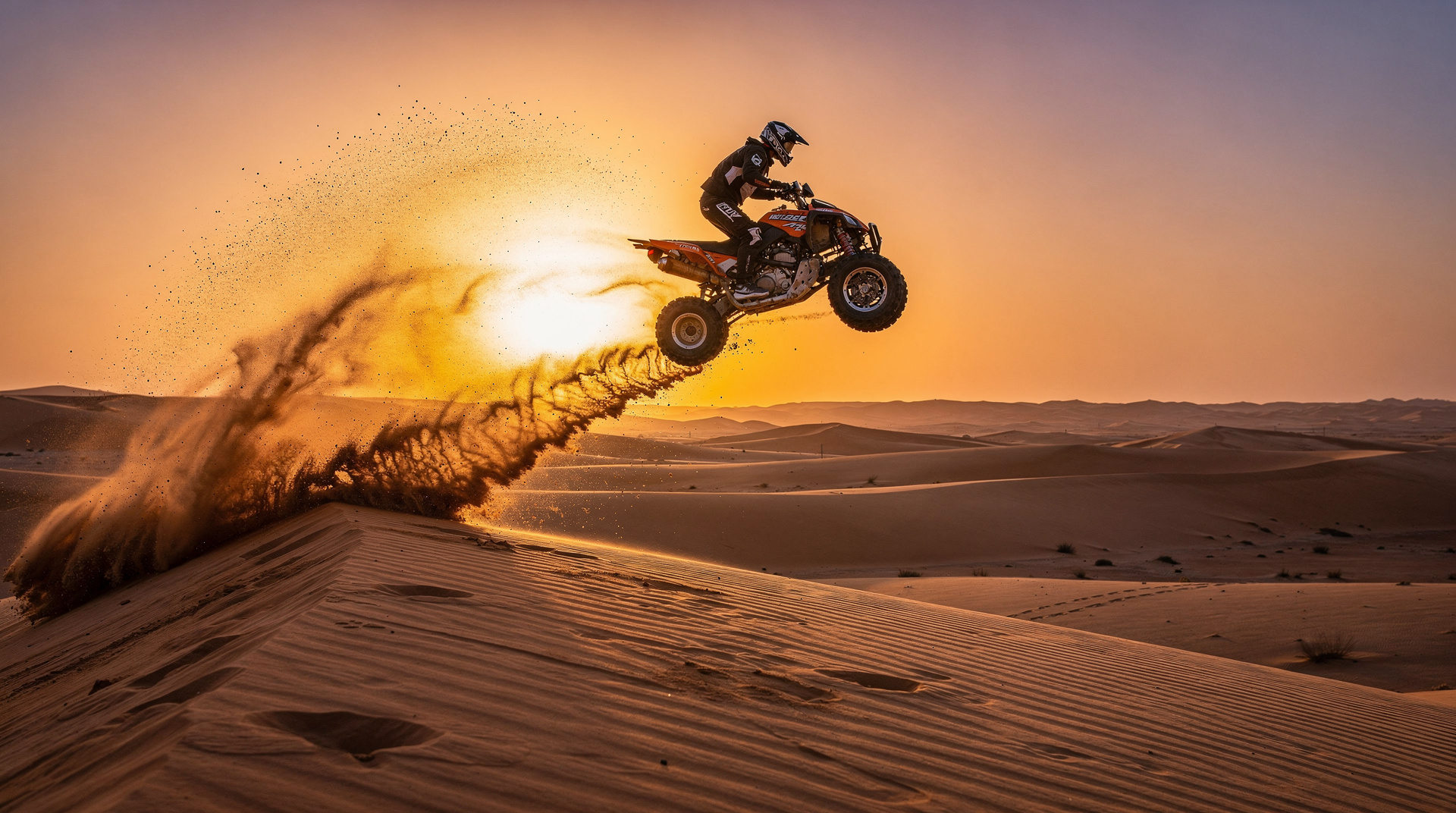
ATVs offer more individual control and a more direct connection with the terrain. Most operators in the Wahiba area run 400cc-650cc quads suitable for most adults. Sessions range from 30-minute introductions to two-hour extended circuits. See the dedicated quad biking in Oman guide for full details on operators, pricing, and the best circuits.
Safety: What You Need to Know
Dune bashing is genuinely safe when done with competent, experienced drivers and properly maintained vehicles. The key risk factors are driver inexperience and mechanical failure — both of which reputable operators manage through regular vehicle maintenance and driver training.
What Good Operators Do
- Pre-drive briefing: Explain what will happen, show passengers how to brace, confirm everyone has seatbelts on
- Tyre deflation: Always done before entering soft sand
- Convoy system: Multiple vehicles travel together so recovery is always nearby
- No rollovers: Expert drivers know the approach angles that keep vehicles from tipping. The danger zone is driving perpendicular to a steep slip face — experienced drivers never do this
- Vehicle recovery equipment: Every professional operator carries tow ropes, sand ladders, and a shovel
What Passengers Should Do
- Keep seatbelts on throughout the session, no exceptions
- Brace with hands on the grab handles inside the vehicle, not the dashboard
- Do not stand up or lean out windows during movement
- Tell the driver immediately if you feel unwell — motion sickness mid-session requires an immediate stop
- Remove and secure loose items including water bottles, phones, and bags before bashing begins
Managing Motion Sickness
Dune bashing is more likely to cause motion sickness than regular driving because of the irregular, multi-directional movement. If you are susceptible:
- Take an anti-nausea medication (dramamine or equivalent) 30-60 minutes before departure
- Sit in the front seat where possible
- Keep your eyes on the horizon and focused on distant dunes rather than the vehicle interior
- Eat lightly before the session
- Ask the driver to take a break if you feel symptoms developing — this is completely normal and drivers are experienced in managing it
What to Wear and Bring
Clothing: Light, close-fitting layers that will not flap dangerously in open windows. Avoid loose scarves that could catch on any surface during movement.
Eyewear: Sunglasses are essential. Wraparound sports glasses are best — regular frames let sand in during open-window driving. Goggles are offered by some operators and worth accepting.
Footwear: Closed shoes only. You will be getting in and out of the vehicle on sand, and climbing dunes for sandboarding. Flip-flops are not suitable.
Electronics: Keep cameras secured by a wrist strap or harness during bashing. The vehicle movement and occasional sudden stops are enough to dislodge an unsecured camera from your hands at exactly the wrong moment. GoPro-style action cameras on helmet or chest mounts are the best solution for recording.
Hair: Long hair should be tied back. The combination of speed and wind creates impressive tangles otherwise.
Combining Dune Bashing with Other Desert Activities
The most satisfying Wahiba Sands days combine dune bashing with at least one other activity to create a fuller desert narrative.
Morning camel ride + afternoon bashing + sunset photography: A slow, quiet start gives way to the adrenaline peak of the day, culminating in golden hour on the dunes. This pacing feels exactly right.
Bashing + sandboarding + camp dinner + stargazing: The full day-to-night desert experience. After the physical activity of bashing and sandboarding, the evening sits around the fire feel genuinely earned.
Wadi swimming + dune bashing: Combining the cool, shaded world of a wadi like Wadi Bani Khalid with the hot, open desert makes both experiences sharper by contrast.
Learn more about planning your desert day in the Wahiba Sands safari guide and the full range of overnight desert camping options.
2026 Pricing Summary
| Activity | Duration | Price Range (OMR) |
|---|---|---|
| Dune bashing (included in safari) | 60-90 min | Included |
| Dune bashing add-on to camp stay | 60 min | 10-20 per person |
| Dune buggy self-drive | 1 hour | 35-50 per buggy |
| Quad biking | 30 min | 15-25 per person |
| Sandboarding (at camp) | Unlimited | Free with camp stay |
| Private 4WD safari from Muscat | Full day | 70-120 per vehicle |
Prices are approximate 2026 rates and subject to variation by operator.
Choosing Between a Group Safari and a Self-Drive Buggy
Most first-time visitors default to the passenger safari, but the choice is worth thinking through. A group 4WD safari from Muscat or a Wahiba camp gives you an experienced driver, no licence requirements, and a longer combined itinerary (often bundled with camel riding, sandboarding, and a sunset stop). A self-drive dune buggy hands you control for a fixed, shorter window inside a supervised zone — better for travellers who specifically want the driving experience rather than the passenger thrill.
If sandboarding is the main draw rather than bashing itself, the Wahiba Sands sandboarding guide covers technique and the best dune faces in more detail. Families with young children, first-time desert visitors, and anyone prone to motion sickness who wants to control their own pace generally do better in a buggy or a gentler introductory safari rather than a long, aggressive bashing circuit. For a broader look at desert options beyond bashing itself, see the Wahiba Sands desert safari guide and, for those wanting to add a night in the dunes, overnight desert camping.
Frequently asked questions about Dune Bashing and Sandboarding in Oman: The Complete Adventure Guide
Do I need any experience to try dune bashing?
No experience is required as a passenger. The driver handles all the technical elements. For self-drive dune buggies, you need a valid driver’s licence. For quad bikes, most operators require a valid licence as well, though some offer instruction for shorter sessions.
Is dune bashing safe for children?
Yes, with age-appropriate precautions. Most operators recommend a minimum age of 6 years for dune bashing. Drivers adjust the intensity when children are in the vehicle. Very young children or babies should not participate. Children should be properly seatbelted throughout.
Can I drive my own rented 4WD in the dunes?
Yes. If you have a 4WD rental, you can drive in Wahiba Sands independently. The critical requirements are deflating tyres before entering soft sand, switching to low-range 4WD, carrying recovery equipment, and knowing your limits. Do not attempt solo dune driving if you have no off-road experience — getting stuck alone in the dunes with no phone signal is a genuinely dangerous situation.
What time of day is best for dune bashing?
Late afternoon (3:00-6:00pm) is ideal for a combination of reasons: temperatures are lower, the light creates better visibility of dune contours for the driver, and the golden-hour photography is spectacular. Early morning (7:00-10:00am) is the second-best option. Avoid midday hours in all but the coolest months.
How does sandboarding compare to snowboarding?
Sand is slower than snow, meaning speeds are lower but also safer. The main differences are: more friction (harder to get moving on gentle slopes), no edges (carving is not possible in the same way), and sand in every possible location after a fall. People with snowboarding experience find it easier to pick up than beginners, but it is accessible to everyone regardless of board sports experience.
What happens if the vehicle gets stuck?
All professional operators carry recovery equipment and drive in convoys. If a vehicle gets stuck, the others stop, the driver assesses the situation, and standard recovery techniques are applied — sand ladders under the drive wheels, a tow from the second vehicle, or manual digging. Stuck situations are common (even experienced drivers get stuck occasionally) and are resolved quickly without danger to passengers.
Is dune bashing available year-round?
Yes, though peak season (October-March) offers the best conditions. Summer months (May-September) see extremely high temperatures that limit the duration of comfortable activity. Operators may adjust session timing to early morning during summer.
Do I need travel insurance that specifically covers dune bashing?
Check your policy before you go. Standard travel insurance usually covers organised dune bashing with a licensed operator as a low-risk adventure activity, but self-drive buggies or quad biking are sometimes classed separately. Confirm cover for off-road driving explicitly if you plan to self-drive.
Is dune bashing suitable for someone who has never been off-road before?
Yes, as a passenger. No off-road experience is needed to enjoy a guided dune bashing session — the driver handles every technical decision. If you are considering the self-drive buggy option instead, basic driving confidence is enough; the guided pace and defined safe zone are designed for first-timers.