Getting Around Oman: All Transport Options Explained
What is the best way to get around Oman?
A rental car is by far the most flexible option. Public buses connect major cities but miss most attractions. Domestic flights are useful for Salalah. Taxis work for Muscat city.
Understanding Oman’s Transport Landscape
Oman is a large country — roughly the size of Italy — with dramatic topography that makes many of its most spectacular destinations accessible only by road. Its public transport network is functional for intercity movement between major towns but does not reach the wadis, mountain villages, desert camps, and coastal spots that define the Oman experience.
Understanding your transport options, their costs, and their limitations will help you build a realistic itinerary. This guide covers every option available: rental cars, intercity buses, taxis and ride-hailing apps, domestic flights, ferries, and guided tour options — with specific costs, routes, and practical advice for each.
At a glance
| Best overall option | Rental car (saloon for highways, 4WD for desert/mountain/wadi tracks) |
| Typical rental cost | Around 15-25 OMR/day saloon; 30-80 OMR/day 4WD depending on size |
| Intercity buses | Mwasalat network; low fares, but stops in town centres only |
| Domestic flights | Muscat-Salalah (~90 min) and Muscat-Khasab (~1 hour) via Oman Air |
| Getting to Musandam | Fly to Khasab, or ferry from Shinas (~1.5-2 hours) |
If you are still shaping the wider trip, our Oman road trip planning guide and the scenic drives in Oman show how the transport choices below fit into real routes.
Rental Car: The Default Choice for Most Visitors
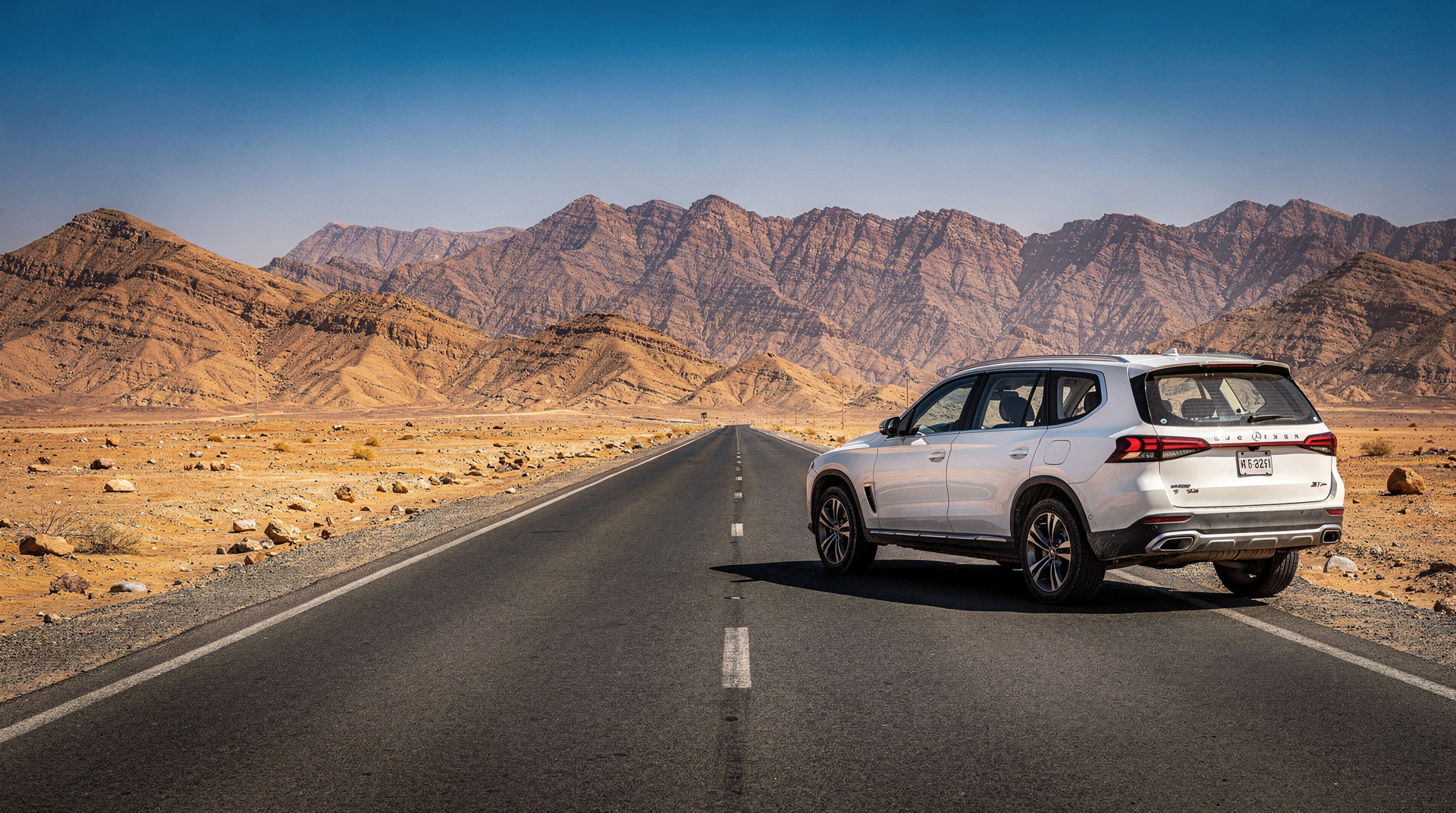
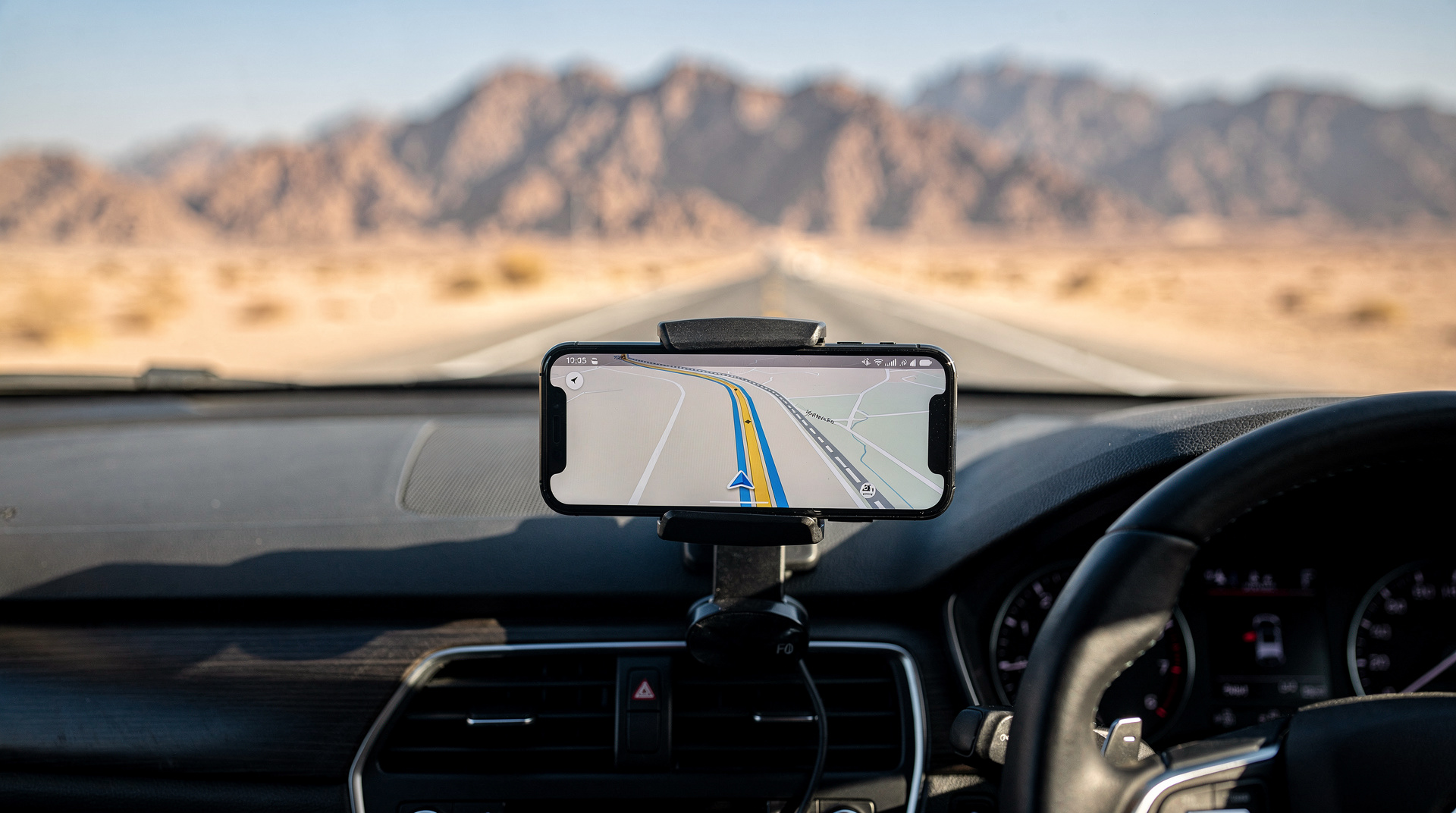
There is no ambiguity here: a rental car unlocks Oman in a way that no other transport mode can match. The freedom to turn off the main road at a fort that catches your eye, to chase a sunset into the desert, to hike a wadi at 7am before the heat builds — none of this is possible on public transport.
Our complete Oman car rental guide covers vehicle choice, insurance, road rules, costs, and the best self-drive routes in detail. Key points:
- 4WD is required for desert, wadi, and mountain off-road routes
- A saloon car handles all paved highways perfectly well
- Fuel is very cheap (approximately 0.18–0.22 OMR per litre — around 0.47–0.57 USD per litre)
- Driving is on the right; roads are generally excellent and signposted in English and Arabic
Fuel costs on a typical road trip: A full northern circuit (Muscat–Nizwa–Jebel Akhdar–Wahiba Sands–Sur–return, approximately 900 km) costs roughly 15–20 OMR in fuel for an average-consumption 4WD. This is remarkably cheap compared to driving costs in Europe or the US.
Road conditions by route type:
- All major highways: excellent tarmac, well-maintained, with petrol stations every 50–100 km
- Mountain roads (Jebel Akhdar, Jebel Shams): paved but steep and winding; standard cars permitted on main roads, 4WD required for side tracks
- Desert tracks (Wahiba Sands interior): unpaved, 4WD essential, sand experience helpful
- Wadi approaches: paved to the wadi mouth, then rocky tracks requiring 4WD
Rental costs by vehicle type:
- Economy saloon (Hyundai i10 or similar): 12–18 OMR per day
- Standard saloon (Toyota Corolla, Nissan Sunny): 15–25 OMR per day
- Compact 4WD (Toyota Prado, Kia Sportage): 30–45 OMR per day
- Full-size 4WD (Toyota Land Cruiser GX): 50–80 OMR per day
The cost of a rental car shared between two to four travellers is very competitive with guided tours, while offering far greater flexibility. Two people sharing a compact 4WD at 35 OMR per day pay just 17.50 OMR each — less than most guided day trips.
Major rental companies at Muscat International Airport include Avis, Hertz, Budget, Europcar, and Thrifty, alongside local operators like Muwafaq Car Rental, which often undercut international rates significantly.
Intercity Buses: Affordable but Limited
Mwasalat (formerly ONTC) operates the national bus network connecting major Omani cities. Buses are air-conditioned, comfortable, and punctual. Fares are low.
Key routes and current approximate fares:
- Muscat to Nizwa: 3 OMR, approximately 2 hours, 4–6 departures daily
- Muscat to Sur: 4 OMR, approximately 3.5 hours, multiple daily
- Muscat to Sohar: 3 OMR, approximately 2.5 hours, frequent service
- Muscat to Ibra: 3.5 OMR, approximately 3 hours
- Muscat to Salalah: 7–8 OMR, approximately 10–12 hours (overnight sleeper buses available)
- Nizwa to Salalah: 6 OMR, approximately 9 hours
- Muscat to Al Buraimi (Oman side of UAE border): 4 OMR, approximately 3.5 hours
The critical limitation: Buses stop in town centres and at bus terminals — not at attractions. They do not go to Wadi Shab, the Wahiba Sands dunes, Jebel Akhdar, Ras al Jinz, Bimmah Sinkhole, or any of the natural and heritage sites between towns. You need additional transport from bus stops to most interesting destinations.
For budget travellers doing a point-to-point itinerary between towns, buses are excellent value. For anyone wanting to explore the country’s natural landscape, they are insufficient as a primary transport mode.
Tickets: Purchase at bus stations or on the Mwasalat app (available on iOS and Android). The main Muscat bus terminal is at Al Wattayah in the Ruwi area — not at the airport. Plan your arrival and departure logistics accordingly; the airport is approximately 30 km from Wattayah bus terminal.
Overnight buses to Salalah: A popular budget option for the Muscat–Salalah run. Departs evening, arrives Salalah morning, saving a night’s accommodation. Comfortable enough for most people — reclining seats, air conditioning, generally on time.
Taxis and Ride-Hailing in Muscat
Within Muscat, taxis and app-based transport are practical for city exploration.
Uber: Operates in Muscat with reliable coverage across the city. Metered transparent pricing, reliable drivers, no negotiation. The most comfortable option for most tourists. Rates are reasonable — typically 2–5 OMR for city trips, 6–10 OMR from the airport to central hotel areas.
Marhaba: The official Muscat taxi app, owned by the national telecom operator Omantel. Book via the app or flag from the street. Metered, transparent pricing, similar to Uber rates.
Oman Taxi: Official metered taxi option available via app or street hail. Coverage across Muscat.
Street taxis: Available throughout Muscat, identifiable by orange markings on white vehicles. Always insist on the meter — if a driver refuses, find another cab.
Airport to city centre: Expect 6–10 OMR by taxi or Uber from Muscat International Airport to major hotel areas, depending on specific destination (25–40 minutes depending on traffic).
For city-only visits: A combination of Uber/taxi and walking covers Muscat’s main tourist areas (Grand Mosque, Old Muscat, Muttrah Corniche) without needing a rental car.
For exploring beyond Muscat, taxis become expensive quickly. A return day trip to Wadi Shab by private taxi from Muscat would cost approximately 35–55 OMR — comparable to a rental car day but without the flexibility to stop anywhere you choose.
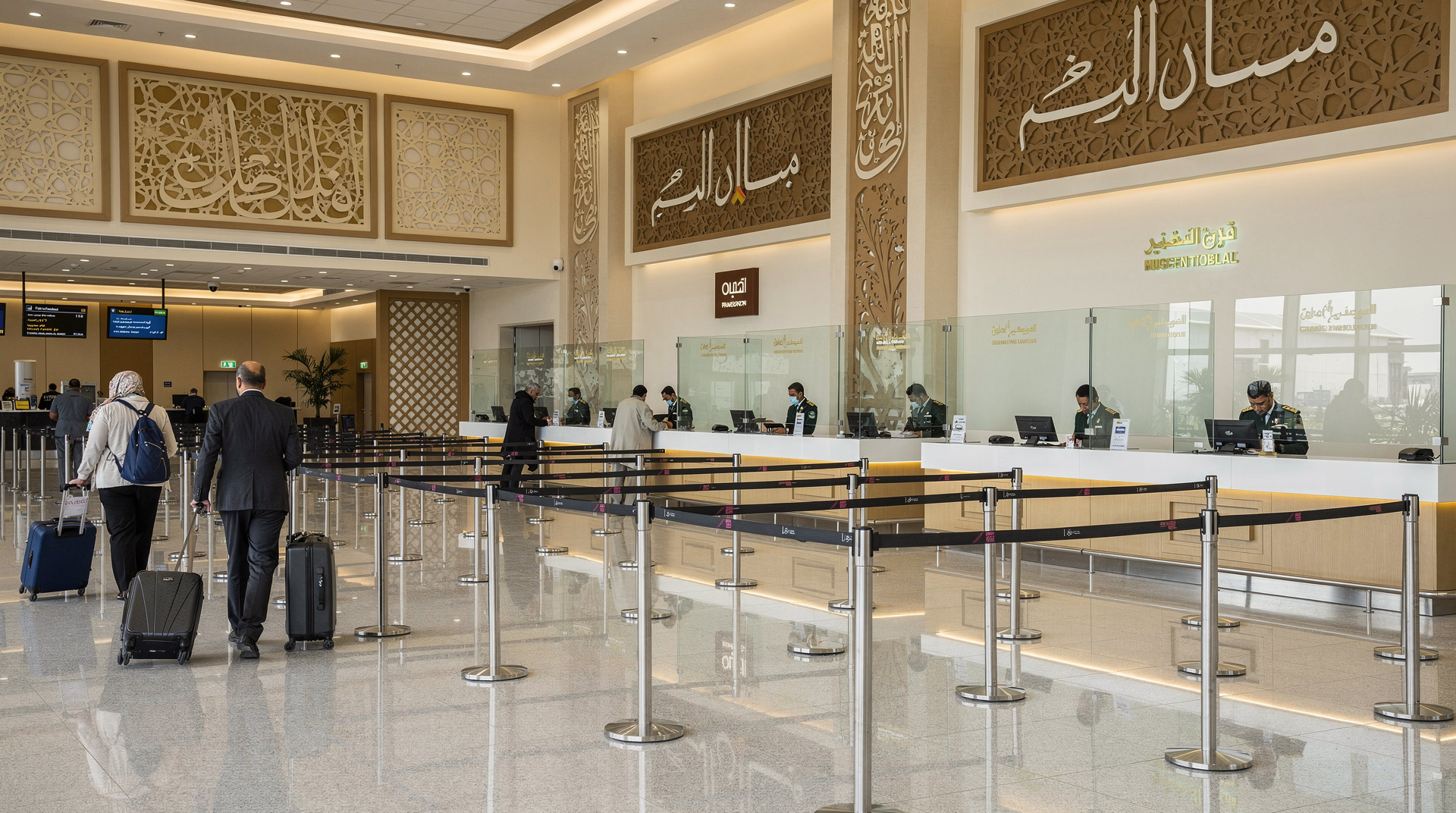
A pre-booked Muscat airport transfer is particularly useful on arrival — your driver waits regardless of how long immigration takes, eliminating the uncertainty of finding a taxi after a long overnight flight.
For a more comprehensive private transfer service that covers all Muscat hotels (not just the airport), the Muscat Airport private transfer to and from all Muscat hotels ensures door-to-door service regardless of where you are staying in the capital.
For travellers heading directly to Jebel Akhdar or Jebel Shams from the airport or Muscat without wanting to hire a full rental car for the journey, the private transfer from Muscat or the airport to Jebel Akhdar or Jebel Shams is a practical alternative — a dedicated vehicle takes you directly to the mountain, removing the need to navigate the Nizwa highway and mountain road independently.
Once you are in the capital, our Muscat city guide and the where to stay in Muscat guide help you choose a base that keeps taxi rides short, and the Muttrah souq guide is a good example of a sight that is easy to reach on foot once you are on the Corniche.
Comparing Transport Modes for a Typical Route
| Route | Rental car | Bus | Domestic flight | Guided tour |
|---|---|---|---|---|
| Muscat to Nizwa | ~2 hours, full flexibility | ~2 hours, 3 OMR, town centre only | Not applicable | Day-trip option available |
| Muscat to Wahiba Sands | ~3-3.5 hours, 4WD needed for final stretch | Not practical (no direct service to dunes) | Not applicable | Common, especially for sand-driving novices |
| Muscat to Salalah | ~10-12 hours drive | ~10-12 hours, overnight sleeper option, 7-8 OMR | ~90 minutes, ~25-60 OMR | Multi-day tours available |
| Muscat to Khasab (Musandam) | Not direct (crosses UAE) | Not available | ~1 hour, ~40-80 OMR | Ferry-based tours from Shinas |
Use this table as a starting point, not a fixed rule — a rental car nearly always wins on flexibility, while flights and organised tours win on time saved for the longer or more logistically complex routes.
Domestic Flights: Muscat to Salalah and Khasab
Oman Air operates domestic flights between Muscat and Salalah, and less frequently to Khasab (Musandam).
Muscat to Salalah
- Flight time: approximately 90 minutes
- Drive time alternative: 10–12 hours
- Frequency: Multiple daily departures with Oman Air
- One-way fares: approximately 25–60 OMR depending on booking timing and season
- Khareef season (July–August) sees the highest demand and prices — book 6–8 weeks ahead
When a flight makes sense: Almost always for the Salalah trip unless you specifically want to experience the dramatic landscape change on the highway drive through Oman’s empty interior. The 90-minute flight versus a full day’s drive is an easy choice for most visitors. Many travellers fly down to Salalah, rent a car locally for the Dhofar region, then fly back — a well-structured combination.
Book through: Oman Air website (omanair.com) directly for the best rates, or comparison platforms like Skyscanner, Google Flights, or Booking.com.
For more detail on routes and booking, see our domestic flights in Oman guide, and for what to do once you land, the Salalah destination page and the Muscat to Salalah drive guide for anyone tempted by the overland option.
Muscat to Khasab (Musandam)
- Flight time: approximately 1 hour
- Frequency: Several weekly departures, not daily — check schedule carefully
- Fares: approximately 40–80 OMR one-way
The Khasab flight is often the most practical way to reach Musandam for visitors whose itinerary does not include driving through the UAE. See the Musandam section below for the full picture.
Ferry: Muscat to Khasab (Musandam)
The Musandam peninsula — Oman’s detached northern enclave separated from the rest of the country by UAE territory — is home to some of the most dramatic fjord scenery in the Arabian world.
By ferry: National Ferries Company operates passenger and vehicle ferry services between Shinas (a port approximately 2 hours north of Muscat, near the UAE border) and Khasab, the capital of Musandam. Journey time: approximately 1.5–2 hours. Service runs several times weekly (schedules vary seasonally — verify current timetable before planning).
Fares: approximately 5 OMR per person for a passenger ticket. Vehicles can also be transported for approximately 30–50 OMR.
By plane: Oman Air flies Muscat to Khasab in approximately 1 hour. More convenient than the ferry but requires getting to Shinas first if taking the ferry option.
By road through UAE: Technically possible to drive through the UAE to reach Musandam, crossing two UAE/Oman border checkpoints. Requires a valid UAE visa, your rental car must have specific cross-border permission (most UAE rental companies prohibit this without a special permit), and your Oman e-visa must allow multiple entries if you have already entered Oman.
Practical recommendation: For most visitors, fly Muscat–Khasab (1 hour), rent a car locally in Khasab for 2–3 days, and fly back. The ferry from Shinas is useful if you are already travelling the UAE–Oman northern route and want to include Musandam without doubling back to Muscat.
Our Musandam destination page and the Musandam and Khasab guide cover what to do once you arrive.
Guided Tours and Day Trips
For visitors who prefer not to drive independently, guided day trips from Muscat cover most of the major attractions. This is also a practical option for specific activities that benefit from local expertise.
Desert day trip: A Wahiba Sands and Wadi Bani Khalid day trip from Muscat includes transport in a guided 4WD, a driver experienced with sand driving, and guided entry into the dune fields — particularly useful if you are not comfortable driving in sand independently.
Multi-day circuit: A guided multi-day tour covers the classic northern circuit with accommodation, transport, and a knowledgeable guide included. These tours typically cost 150–300 USD per person and represent good value when accommodation and guide expertise are factored in.
City tour: A half-day Muscat city tour with hotel pickup covers the Grand Mosque, Muttrah Corniche, and Old Muscat in a single guided session — the most efficient introduction to the capital for first-time visitors.
For Salalah, a Salalah city and nature discovery tour covers the Khareef landscape highlights including Wadi Darbat, Al Mughsail blowholes, and frankincense sites with local guide context.
Getting Around Muscat City
Muscat is a sprawling, car-dependent city. The main tourist areas are separated by significant distances:
- Muscat International Airport: 30 km west of Muttrah
- Sultan Qaboos Grand Mosque: Central Muscat, 10 km from Muttrah
- Old Muscat (Al Alam Palace area): 2 km from Muttrah
- Muttrah Souq and Corniche: Old town waterfront, 15 km from the airport
- Qurum and commercial district: 15 km from Muttrah
Walking between major Muscat sights is not practical given the distances and heat for most of the year. Taxis, Uber, or a rental car are the practical options within the city.
The Mwasalat city bus network covers Muscat with routes connecting major areas — useful for budget travellers comfortable navigating an unfamiliar bus system in English-Arabic signage. Route maps are available at the main bus terminal and on the Mwasalat app.
Shared Taxis: The Traditional Option
Before app-based transport arrived, shared taxis were the backbone of Omani intercity travel. They still operate on some routes, departing from fixed points when the vehicle is full.
Shared taxis (baisa taxis) are fast and cheap between major towns but unpredictable in timing and not always easy for tourists unfamiliar with the system. They depart from specific roadside spots or informal stations — ask locals for the location. Best used by travellers who are comfortable with uncertainty and have time flexibility.
For the southern route from Nizwa toward Salalah, long-haul shared taxis are still used by local residents and some budget travellers. The Mwasalat overnight bus is generally a better option for tourists.
Choosing Transport for Your Itinerary
Muscat city only (2–3 days): Taxis/Uber plus one guided city tour. No rental car needed. Budget approximately 15–25 OMR for transport per day.
Muscat plus day trips (4–5 days): Either book guided day trips (20–40 USD per trip) or rent a car for excursion days only (15–25 OMR per day for a saloon).
Northern circuit road trip (7–10 days): Rental car is essential. A 4WD strongly recommended for Jebel Akhdar side tracks, Wahiba Sands, and wadi approaches. Budget 30–45 OMR per day for a compact 4WD.
Muscat plus Salalah (10–14 days): Domestic flight for the Salalah leg (25–60 OMR one way), rental car in each region separately. This is the most time-efficient structure.
Muscat plus Musandam (7–10 days): Fly or ferry to Khasab, local rental car there, rental car for northern circuit. Or combine with a northern circuit and cross into Musandam by road through UAE (requires careful planning of visas and car permissions).
For connectivity during your road trip, see our Oman SIM card and eSIM guide for the best mobile data options. For cost planning across transport types, our Oman budget guide has specific daily transport cost breakdowns. Travellers still deciding between a fully self-driven trip and a structured plan should also see our 7-day classic Oman itinerary and best time to visit Oman guide, since road conditions and driving comfort vary meaningfully by season.
Frequently asked questions about Getting Around Oman: All Transport Options Explained
Is there public transport from Muscat to Nizwa?
Yes. Mwasalat buses run from Muscat to Nizwa for approximately 3 OMR, taking about 2 hours. However, from Nizwa you need additional transport to reach Jebel Akhdar, wadi hikes, and other nearby attractions. A rental car supplements the bus effectively, or book guided day trips from Nizwa town.
Can I get a taxi from Muscat to Salalah?
Technically possible but impractical — the drive is 10–12 hours and a private taxi for this distance would cost 80–130 OMR. The domestic Oman Air flight is faster (90 minutes), typically cheaper, and far more practical. Book the flight.
Is Uber available in Oman?
Yes, Uber operates in Muscat and covers the main city areas, including the airport, Grand Mosque, Muttrah, and all major hotel zones. It does not serve rural areas or intercity routes. For Muscat city transport, Uber is reliable, English-language friendly, and reasonably priced.
How long is the drive from Muscat to the Wahiba Sands?
Approximately 3–3.5 hours from Muscat to the main desert camp area near Bidiyah. The route is mostly paved highway through Ibra, with the final 5–15 km on desert tracks requiring 4WD. Download offline maps before leaving tarmac — signal drops in the dune interior.
Are there Uber or taxi alternatives in Salalah?
Uber operates in Salalah but with more limited coverage than Muscat. Regular taxis are available but less standardised — agree on a price before getting in. Renting a car in Salalah is strongly recommended for exploring the Dhofar region independently, as the waterfalls, mountains, and frankincense routes are all spread out.
Can I take a bus to Jebel Akhdar?
Buses reach Nizwa, the nearest major town (3 OMR from Muscat, 2 hours). From Nizwa, the road up Jebel Akhdar is a single paved route with a police checkpoint partway up. Taxis from Nizwa can take you up, but a rental car is far more flexible for exploring the plateau. Saloon cars are permitted on the paved Jebel Akhdar main road; 4WD is required for side tracks.
How do I get from Muscat Airport to the city centre?
Taxis, Uber, and pre-booked transfers are all available from Muscat International Airport. The fare to central Muscat hotel areas runs approximately 6–10 OMR by metered taxi or Uber. A pre-booked airport transfer is the most convenient option on arrival — particularly late at night or after a long flight when you want guaranteed transport waiting.
Do I need a 4WD for the whole trip, or just some days?
Most itineraries do not need a 4WD every day. A common and cost-effective approach is renting a standard saloon for city and highway days, then either upgrading to a 4WD for specific days (desert, Jebel Akhdar, wadi approaches) or booking guided 4WD day trips for those legs only. This can meaningfully reduce total rental cost on a longer trip. See the renting a car in Oman guide for more on vehicle choice by route.