Muscat City Guide: Everything You Need to Know
How many days do you need in Muscat?
Two full days covers the essential highlights: the Grand Mosque, Muttrah Corniche and Souq, Old Muscat, and the National Museum. Three to four days allows a more relaxed pace.
At a Glance
| Where | Capital of Oman, on the Gulf of Oman coast |
| Getting there | Muscat International Airport (MCT), around 30-40 minutes from Muttrah by taxi |
| Cost | Free highlights (Grand Mosque, Corniche, palace views); ticketed museums around 1-5 OMR |
| Time needed | 2 full days for the essentials, 3-4 for a relaxed pace with day trips |
| Best time | October through April, with early mornings recommended year-round for outdoor sights |
Welcome to Muscat: Arabia’s Most Civilised Capital
Muscat is not like other Gulf capitals. It has no skyline of competing skyscrapers, no artificial islands or climate-controlled indoor ski slopes. Instead, it has been deliberately kept low-rise, white-walled, and architecturally coherent — a decision made by the late Sultan Qaboos that has given the city a dignity and visual harmony rare in the region.
The result is a capital that rewards walking, sitting, and slowing down. The white forts on the hilltops above the old Portuguese harbour have a genuinely ancient quality. The souq smells of frankincense and rose water. The Grand Mosque is one of the most beautifully designed pieces of Islamic architecture built in the modern era. And the seafood, eaten overlooking the Gulf of Oman at sunset, is exceptional.
Muscat is the logical entry point for any Oman trip, and it deserves more than a quick overnight stop.
Understanding Muscat’s Geography
Muscat is a sprawling, low-rise city extending some 60 km along the Gulf of Oman coast, hemmed between the Hajar Mountains and the sea. It is made up of distinct districts, each with its own character. Understanding them makes navigation much simpler.
Old Muscat (Al Muscat): The original Portuguese harbour town — the oldest part of the city. The Sultan’s Al Alam Palace, the Portuguese forts of Mirani and Jalali, and the foreign embassy zone occupy this compact, beautiful area.
Muttrah: The historic commercial district immediately west of Old Muscat. The Corniche, the souq, and the traditional harbour. This is where most visitors want to spend significant time.
Ruwi: The old CBD of Muscat — now more of a commercial district with banks, government offices, and the central bus terminal.
Qurum: Upmarket residential and hotel district. Al Qurum Beach, restaurants, and cafes.
Madinat Sultan Qaboos and Al Khuwair: Modern residential and office districts, including many embassies and mid-range hotels.
Al Seeb: Furthest west, closest to the airport. Less tourist interest but good value accommodation options.
The Sultan Qaboos Grand Mosque
The Grand Mosque is the undisputed highlight of Muscat for most visitors, and it deserves the superlatives it receives. Built over six years and completed in 2001, it is one of the largest mosques in the world and one of the most beautiful pieces of Islamic architecture of the modern era.
The main prayer hall carpet — hand-woven in Iran over four years by 600 weavers — is the second largest hand-knotted carpet in the world, covering 4,343 square metres. The Swarovski crystal chandelier above it weighs 8 tonnes and has 35,000 light bulbs. The white marble courtyard, fountains, and ablution halls are all executed to an extraordinary standard.
Visiting information:
- Open to non-Muslims Saturday to Thursday, 8am–11am
- Closed Fridays
- Dress code strictly enforced: women must wear abaya and cover hair (abayas can be borrowed at the entrance); men need long trousers and covered shoulders
- Entry is free
- Photography allowed in outer areas; check before photographing inside the prayer hall
- Allow 1.5 to 2 hours
Go early. The marble can become very hot by mid-morning. Early arrival also means better light for photography and fewer crowds.
For more on the building itself, its design and how to prepare, see the dedicated Sultan Qaboos Grand Mosque guide. If you are unsure what to wear, the Oman dress code guide explains what is expected in mosques and in everyday settings.
Muttrah Corniche and Souq
The Muttrah Corniche is one of the most pleasant waterfront walks in the Gulf region — a palm-lined promenade along the old harbour, with traditional wooden dhows moored offshore and the pink-white houses of old Muttrah rising behind.
Walk the full length (approximately 2 km) in the early morning or evening. At the eastern end, climb the small hill for views over the harbour and the twin Portuguese forts framing the Old Muscat bay beyond.
Muttrah Souq is the most atmospheric traditional market in Oman — a labyrinth of covered alleys selling frankincense, rose water, khanjar (traditional curved daggers), silver jewellery, textiles, and an extensive selection of tourist goods alongside items bought by Omani residents. The smell alone — frankincense smoke drifting through cool, dim passageways — is worth the visit.
Allow 1.5–2 hours to explore properly. Bargaining is expected for handicrafts and jewellery — start at 50–60% of the asking price and negotiate respectfully. Do not start bargaining unless you intend to buy.
What to buy: Omani frankincense (several grades, with Hojari being the finest), rose water, silver khanjar (both genuine antiques and new productions), woven textiles, and traditional ceramic incense burners.
The souq is most atmospheric in the evening, when the light softens and more locals are present. It is also busiest then — daytime visits are less crowded.
The Muttrah Souq guide goes deeper into the alleys and what to look for, and the Oman souvenirs and shopping guide helps you decide what is worth carrying home. If the frankincense catches your interest, the story behind it is told in Frankincense: White Gold.
Old Muscat: Al Alam Palace and the Portuguese Forts
The small district of Old Muscat — enclosed by hills on three sides with the sea on the fourth — was the original heart of the city under Portuguese occupation (1507–1649) and the subsequent Omani imams and sultans.
Al Alam Palace: The Sultan’s ceremonial palace dominates the bay, flanked by two sweeping wings in blue and gold. It is not open to the public, but the seafront road in front of it provides excellent views and photo opportunities. Security is present but unobtrusive.
Mirani and Jalali Forts: The two Portuguese forts flank the entrance to the Old Muscat bay on opposite headlands. Jalali is still used as a state prison and is not visitable; Mirani occasionally opens for special events. Both can be photographed from the water and from the palace road.
Old Muscat walk: The heritage walking trail through Old Muscat passes the palace, the old city gate (Bab al Kabir), and through the narrow streets behind the waterfront. The area between the sea and the mountain is atmospheric and largely car-free — an excellent 45-minute walk.
The National Museum of Oman
Opened in 2016, the National Museum of Oman is one of the finest museums in the Gulf — modern, well-curated, and genuinely engaging even for visitors with limited interest in history. The collection covers Oman’s 10,000 years of civilisation, from the Bronze Age Umm an-Nar culture through the frankincense trading kingdoms, the Islamic period, the Portuguese occupation, and the modern state.
Highlights include the extraordinary collection of Omani silver jewellery, a full-scale dhow model, bronze age burial artefacts, and the Quran room’s rare illuminated manuscripts.
Visiting information:
- Open Tuesday to Sunday, 9:30am–5pm
- Closed Monday
- Entry: 5 OMR for adults, 1 OMR for children
- Allow 2–3 hours for a thorough visit
Bait Al Zubair Museum
A smaller, more intimate alternative to the National Museum, the Bait Al Zubair is a heritage house museum in Old Muscat displaying the personal collection of a prominent Omani family: traditional weapons, silver jewellery, textiles, and household items spanning centuries of Omani domestic life.
The courtyard is a peaceful place to sit. The collection is beautifully presented. Worth 1.5 hours if you have historical interest.
The Royal Opera House Muscat
Built in 2011, the Royal Opera House is the flagship of Oman’s cultural ambitions — a stunning building combining traditional Islamic architectural motifs with modern acoustics and facilities. It seats 1,100 in the main opera hall.
Guided tours of the building are available when there is no performance scheduled. The building’s foyer, gardens, and ornate interiors are worth seeing even without a performance. For evening performances — from opera to orchestral concerts to touring performers — booking through the opera house website well in advance is essential. A fuller picture of the building and its programme is in the Royal Opera House Muscat guide.
Day Trips from Muscat
Muscat is an excellent base for day trips, with several spectacular destinations within 2–3 hours:
Bimmah Sinkhole and Wadi Shab (2.5 hours): The iconic eastern coast day trip. Start early for the best wadi conditions. See our full wadi guide for details.
Nakhal Fort and Wadi Bani Awf (2 hours to Nakhal): Head west along the Batinah coast to the dramatic Nakhal Fort, then up into the mountains via the spectacular snake canyon drive. Requires 4WD.
Nizwa and Bahla (2 hours): The old capital of Oman with its famous round fort and Friday livestock market. Combine with Jabrin Castle for a full heritage day.
Joining an organised Wahiba Sands desert day trip from Muscat covers the most dramatic desert experience without needing a 4WD rental.
Getting Around Muscat
Muscat is a car-dependent city. Uber and app taxis (Marhaba) work well for moving between districts. A pre-booked airport transfer is the easiest arrival option.
For sightseeing, a half-day Muscat city tour covers the Grand Mosque, Old Muscat, and Muttrah in one efficient session — ideal on arrival day to orientate yourself before exploring independently.
Where to Stay in Muscat
The where to stay in Muscat guide compares districts and hotel styles in more detail than the overview below.
Luxury: W Muscat, Shangri-La Al Husn, Al Bustan Palace (Ritz-Carlton) in a spectacular clifftop bay outside the city. The Grand Hyatt Muscat is centrally located with excellent facilities.
Mid-range: Crowne Plaza Muscat OCEC, Bowshar area hotels, Qurum hotels. Comfortable, well-located options in the 40–70 OMR range.
Budget: Several smaller guesthouses in Ruwi and along the Batinah coast offer rooms from 15–25 OMR. Quality varies significantly — read recent reviews.
Eating in Muscat
Muscat’s dining scene is excellent, mixing Omani traditional cuisine with South Indian, Levantine, and international options. For specific places to book, see the best restaurants in Muscat, and for the wider picture of Omani cooking, the Omani food guide is a good companion.
Don’t miss:
- Shuwa — lamb slow-cooked in an underground pit, the traditional Omani celebration dish. Try it at Bait Al Luban.
- Mashuai — whole kingfish rubbed with spiced rice paste and cooked on charcoal. A Muscat speciality.
- Halwa — Omani sweet, cooked with rose water, saffron, and cardamom. Buy it in the souq.
Breakfast: Karak tea (spiced milky tea) and flatbread at local canteens. Shawarma for a quick lunch. Fresh juice stalls throughout Muttrah.
Muscat for Different Kinds of Travellers
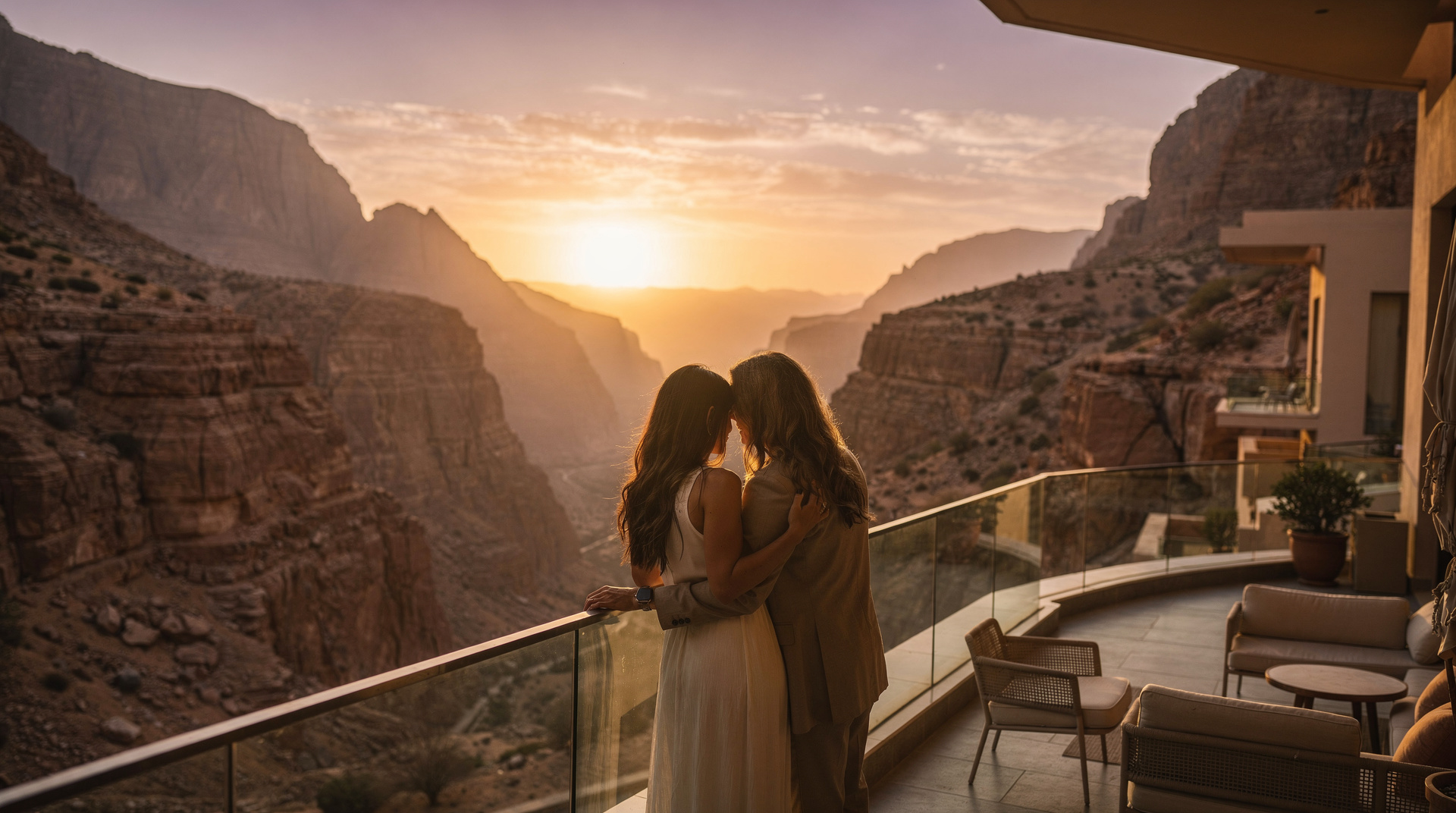
Muscat suits a wide range of travel styles, but the ideal base and pace differ depending on who is visiting. Couples tend to prefer Qurum or the clifftop resorts near Al Bustan Palace for a romantic, restaurant-heavy stay — see the Oman for couples guide for destination-specific recommendations beyond Muscat itself.
Families find Qurum Beach and the air-conditioned malls a useful counterbalance to heritage sightseeing on hot afternoons, and the Oman with kids guide covers pacing and activity ideas suited to children. Solo travellers generally find Muscat very easy and safe to navigate independently, with taxis and ride-hailing apps removing most of the friction of getting between districts.
For visitors renting a car to continue beyond Muscat, picking up the vehicle on the final day in the city rather than the first avoids paying for days spent walking Muttrah and Old Muscat, where a car is more hindrance than help. The renting a car in Oman guide covers the practicalities of hire, insurance, and driving norms.
Extending Your Stay: Nizwa and the Interior
Visitors with more than four days in Muscat, or those using the city as a base rather than a one-way starting point, should strongly consider a night or two inland rather than only day-tripping. Nizwa in particular rewards an overnight stay — the fort and souq are far less crowded in the early morning before the day-trip buses arrive from Muscat, and the drive back the following afternoon can take in Bahla Fort or the villages of Al Hamra without the time pressure of a single compressed day. The Nizwa fort and souq guide has full details on timing this well.
Planning More Time in and around Muscat
If your schedule is tight, the 3-day Muscat express itinerary lays out a ready-made order for the sights above, and the Muscat weekend itinerary suits a shorter stay. For the wider destination overview, see the Muscat destination page. Travellers who enjoy the water may also like a sunset dhow cruise along the coast.
Getting to the Coast: Wadi Shab and Bimmah Sinkhole
The single most popular full-day excursion from Muscat is the run down the eastern coast to Wadi Shab and Bimmah Sinkhole. Leaving Muscat by 7am avoids both the midday heat on the wadi walk and the tour buses that arrive from mid-morning onward. The wadi walk itself takes 45 minutes to an hour each way over rocky terrain with several water crossings, ending in a swim into a hidden cave — water shoes make a real difference to comfort. The full Wadi Shab complete guide covers the walk, the boat crossing, and what to bring in detail.
Frequently asked questions about Muscat City Guide: Everything You Need to Know
How many days should I spend in Muscat?
Two full days covers the essential highlights. Three to four days allows a more relaxed pace plus day trips to Wadi Shab or Nizwa. If Muscat is your only stop, two days is sufficient; it is also an excellent base for road-tripping further into the country.
Is Muscat walkable?
Muttrah and Old Muscat are very walkable — the Corniche, souq, and Old Muscat bay area can all be done on foot. Between districts (Muttrah to Qurum to the Grand Mosque), distances are too large to walk comfortably, especially in heat. Use taxis or Uber.
What is the best area to stay in Muscat?
Qurum or Shati al-Qurum for beaches and restaurants. Muttrah for atmosphere and proximity to the souq and old town (fewer hotel options here). Near the airport (Al Seeb) for early departures. For luxury, Al Bustan Palace is incomparably located but remote from city sights.
Is Muscat expensive compared to Dubai?
Muscat is moderately cheaper than Dubai for comparable hotel quality. Dining out is often significantly cheaper, especially at local restaurants. Transport costs are similar. Shopping for international brands is similar pricing. Muscat’s advantage is that its best experiences — forts, wadis, the souq — are free or very cheap.
What is Muscat like in summer?
Very hot — up to 42°C with high humidity in July and August. Outdoor sightseeing is only comfortable in early morning (before 8:30am). The city remains fully operational — air-conditioned malls, indoor museums, hotels — but outdoor Muscat in summer requires heat management. Hotel rates drop significantly in summer.
Can I visit the Grand Mosque for free?
Yes. Entry to the Sultan Qaboos Grand Mosque is free for non-Muslims during visiting hours (Saturday–Thursday, 8–11am). The dress code is strictly enforced. Photography is allowed in most areas. This is one of the most extraordinary free experiences in the Gulf region.
What is the Muttrah Souq famous for?
Muttrah Souq is famous for frankincense (Oman is one of the world’s main producing countries), rose water, Omani silver jewellery (particularly khanjar daggers), handwoven textiles, and traditional ceramics. It is one of the most atmospheric traditional markets in the Arabian Peninsula — worth visiting even if you do not intend to buy anything.
Is there a beach in Muscat?
Yes. Al Qurum Beach is the main public beach in Muscat — a long, clean stretch of sand suitable for swimming. The Shangrila resort area and Al Bustan Palace have more secluded beaches. There is also the Blue Water Beach Club, a pay-entry beach with facilities. The water is warm and calm for most of the year.
Do I need a car to get around Muscat?
Not for Muttrah and Old Muscat, which are walkable, but a car or taxi is needed to move between the wider districts (Qurum, the Grand Mosque, the airport area) since distances are too large to walk comfortably, especially in heat. Uber and the local Marhaba app work well throughout the city, so a hire car is not essential unless you are continuing on to Nizwa or the coast afterward.
Is Muscat a good base for day trips, or should I move hotels?
Muscat works well as a fixed base for day trips of up to about 2.5 hours each way, covering Wadi Shab, Bimmah Sinkhole, and Nizwa comfortably in a single day out and back. For destinations further afield, such as Jebel Akhdar or an overnight desert camp in Wahiba Sands, moving accommodation for a night or two is more comfortable than a very long round trip from Muscat.