Luxury Desert Camps in Oman: The Ultimate Guide to Premium Desert Stays
What are the best luxury desert camps in Oman?
The Wahiba Sands hosts Oman's top luxury desert camps, including Desert Nights Camp and 1000 Nights Camp. For the most exclusive experience, private overnight desert safari packages from Muscat offer full customisation.
Sleeping Beneath a Billion Stars
At a Glance
| Where | Wahiba Sands (Sharqiyah Sands), a 2-3 hour drive from Muscat |
| Cost | Shared luxury camp tents roughly 80-180 OMR/night; private overnight safari higher, on request |
| Time needed | 1 night minimum, 2 nights recommended to settle into the desert pace |
| Getting there | Sealed road from Muscat then a short 4x4 track to most camps; camps arrange final directions |
| Best time | November-February for the most comfortable temperatures; avoid summer entirely |
There is a particular quality of silence that exists only deep in the desert, far from any road or settlement. It is not the absence of sound — the wind still moves through the dune grass, a camel may call in the distance, sand shifts almost imperceptibly — but rather the absence of human noise, of the constant background hum of cities, of the insistent interruption of modern life. This silence is one of the most profound and rarely experienced sensations available to contemporary travellers, and it is the foundation upon which Oman’s luxury desert camp experience is built.
The Wahiba Sands — known formally as the Sharqiyah Sands — cover approximately 12,500 square kilometres of the Omani interior, stretching from the foothills of the Hajar mountains to the fringes of the Arabian Sea coast. The dunes here are extraordinary: red-orange in the early morning and late afternoon light, shifting in height from gentle undulations to crests exceeding 100 metres, and supporting a more diverse ecosystem than their desolate appearance suggests. Oryx, Arabian gazelle, sand cats, various lizard species, and a community of specialist desert plants and insects inhabit the dunes, well adapted to the extreme conditions.
Into this landscape, a carefully selected group of luxury camp operators has built — and continues to develop — some of the most extraordinary accommodation experiences available anywhere in the Arabian Peninsula.
What Makes a Great Luxury Desert Camp
The concept of luxury camping — often called glamping — has proliferated globally, and the standards vary enormously. In Oman, the best operators understand that genuine desert luxury is not about replicating a hotel room in a tent; it is about creating an experience that is authentically rooted in the desert environment while eliminating the physical discomforts that would otherwise prevent guests from fully relaxing.
The best Omani desert camps share several characteristics. First, the tents — Arabian-style pavilions, Bedouin-influenced structures, or canvas pavilions on raised wooden platforms — are positioned with care for privacy and orientation, ensuring each guest has an unobstructed view of the dunes without neighbouring structures in the sightline.
Second, the beds are genuinely comfortable, with high-quality mattresses and linens appropriate to the temperature (air conditioning is provided, but the best camps also design their structures to exploit natural ventilation). Third, the food is taken seriously — campfire cooking in the desert has become an art form at the top-tier operators, with Omani-influenced menus prepared by skilled chefs rather than the institutional catering that characterises lesser camps.
Fourth, and perhaps most importantly, the best camps employ guides who genuinely know the desert: its ecology, its history, its navigational challenges, and its beauty. The difference between walking into the dunes with a knowledgeable naturalist who can identify animal tracks, name the plants, and explain the geology, versus walking alone or with an uninformed escort, is the difference between two entirely different experiences.
Desert Nights Camp: The Standard-Bearer
Desert Nights Camp, located in the heart of the Wahiba Sands, is consistently ranked as the leading luxury desert camp in Oman by independent travel reviewers and industry awards. The camp’s 30 villas and tents are positioned across the dune landscape with enough separation to create a sense of genuine isolation while maintaining access to the central dining and social areas.
The tents are large — genuinely spacious living spaces with private bathroom, proper beds, and either air conditioning or ceiling fans depending on tent category. The premium tents include private decks from which the dune view is unobstructed in three directions. Sunrise and sunset from these decks, when the low light transforms the sand into something extraordinary, are routinely described by guests as among the most beautiful sights they have ever witnessed.
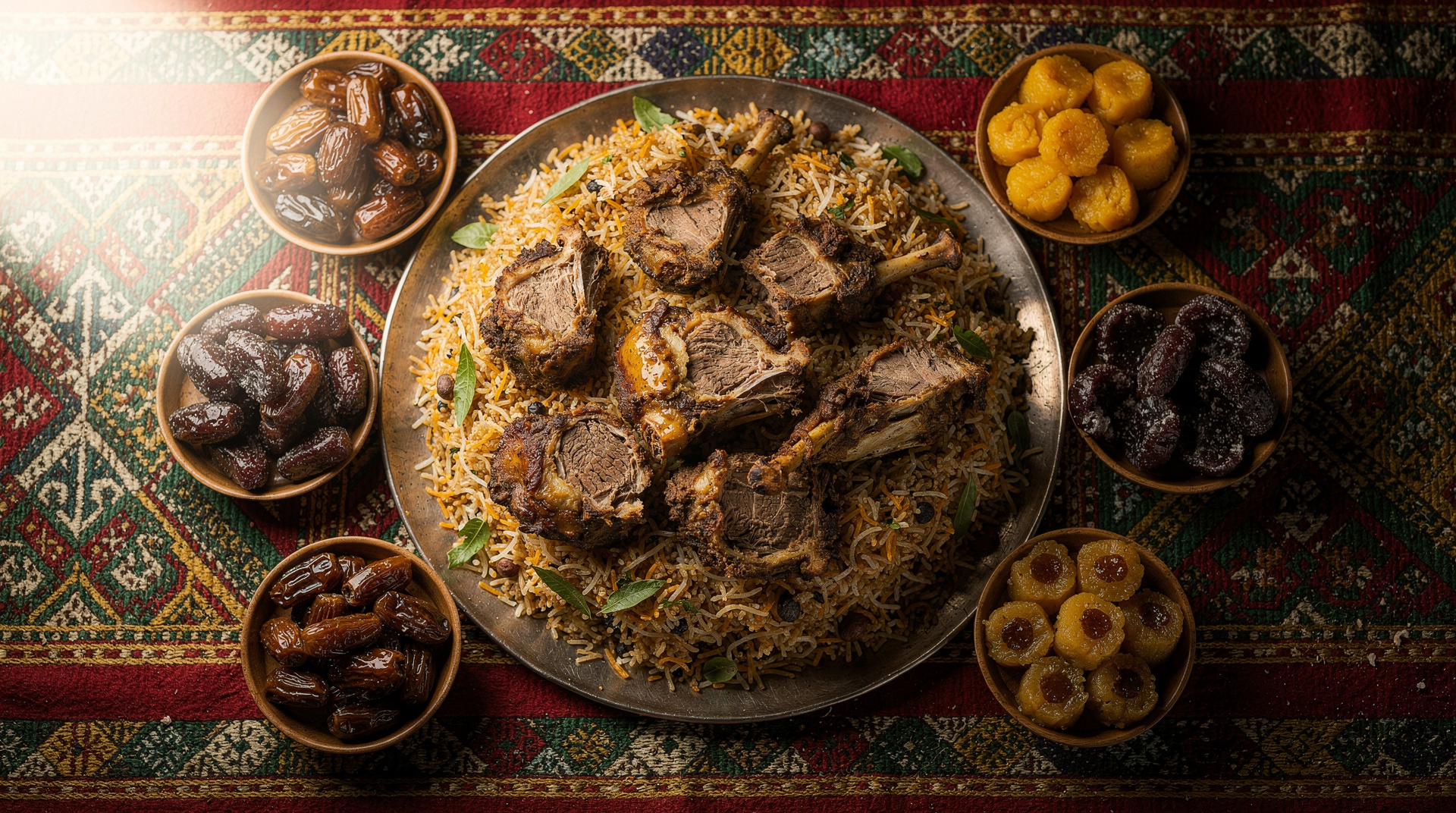
The dining experience at Desert Nights Camp takes Omani and regional cuisine seriously. Dinner is served in the open-sided dining pavilion or — for private groups — around campfire settings in the dunes, with a menu that incorporates traditional Omani dishes including slow-cooked meats, saffron-rice preparations, and freshly baked bread alongside more international options. The halwa and dates served with post-dinner coffee are house-made and of genuine quality.
1000 Nights Camp: Intimate Luxury
For those who prioritise intimacy over facilities, 1000 Nights Camp offers a smaller, more personal alternative at the southern edge of the Wahiba Sands. With fewer than 20 tents, the camp maintains a house-party atmosphere that allows guests to genuinely connect with the guides and other visitors. The setting is beautiful — a natural bowl between high dune ridges that creates a feeling of being completely surrounded by the desert landscape.
The activities programme at 1000 Nights Camp is particularly strong: dune walks at dawn, camel treks, sandboarding, quad biking on designated areas, and star-gazing with a resident astronomy guide who can identify constellations and explain their significance to Arabian navigational traditions. These activities are most meaningful when conducted with genuine expert guidance, which this camp consistently provides.
Private Desert Safari: The Most Exclusive Option
For those seeking the most exclusive and personalised desert experience available in Oman, a private overnight desert safari from Muscat offers complete customisation. The Private Desert Safari with Overnight Camping from Muscat includes personalised transport, a dedicated guide, a private campsite in the Wahiba Sands with premium tent accommodation, a full Omani dinner cooked at camp, and a guided morning dune walk — all designed exclusively for your group with no shared facilities.
This format suits couples celebrating special occasions, small family groups, or independent travellers who value privacy and the ability to dictate their own schedule entirely. The private format also allows for complete flexibility on timing, activities, and meal preferences in a way that shared camp facilities cannot accommodate.
Beyond the Wahiba: Desert Experiences in Other Regions
While the Wahiba Sands is the primary focus for desert camp experiences, other desert regions of Oman also offer compelling overnight possibilities.
The Empty Quarter (Rub al Khali) touches the southern edge of Oman in the Dhofar region, and several specialist operators run multi-day expeditions into this vast, genuinely remote wilderness. These are more adventure than luxury — the scale and remoteness of the Empty Quarter demands a different mindset — but the landscape is without parallel anywhere on earth.
The gravel desert plateau of the Huqf, between Muscat and Salalah, is increasingly being explored by overland operators as an alternative to the more popular Wahiba dunes. The flat, stone-strewn landscape has a completely different character from the sand dunes — vast, silent, and haunted by the distant shapes of mountains on every horizon.
Practical Information: Planning Your Desert Camp Visit
The optimal seasons for desert camping in Oman are October through April, when temperatures are manageable and nights are genuinely comfortable. Summer temperatures in the Wahiba Sands regularly exceed 45 degrees Celsius during the day and rarely drop below 30 at night — conditions that make camping uncomfortable even with air conditioning and are genuinely hazardous without it.
November through February is peak season for desert camp bookings, when temperatures are most pleasant (daytime highs around 25 to 30 degrees, nights cool enough for a light jacket) and the desert wildflowers and animal activity are at their best. Book two to three months in advance for this period.
The drive from Muscat to the Wahiba Sands entry points takes approximately two to three hours, with the road surfaced throughout and the final approach to most camps on graded gravel tracks that are manageable in a standard 4x4. Camp operators generally provide detailed directions and are available by phone for navigation support.
What to pack: light clothing for daytime, a warm layer for nights between November and February, comfortable closed shoes for dune walking, high-SPF sun cream, sunglasses, and a personal torch for the camp walkways at night. Personal electronic devices will find limited charging facilities at most camps — this is often a feature rather than a problem.
Stargazing: The Desert’s Greatest Luxury
Perhaps the most compelling argument for spending at least one night in the Omani desert is the night sky. At distances of 150 to 200 kilometres from any significant light source, the Wahiba Sands offers one of the darkest skies accessible by road in the entire Middle East and North Africa region.
On clear nights — which constitute the overwhelming majority of nights from October through May — the Milky Way is visible in its full extent, the Magellanic Clouds are visible near the horizon (a sight impossible from most of Europe), and the sheer density of visible stars can be disorienting after a lifetime of light-polluted urban skies. Several camps now employ astronomy guides or provide telescope facilities for guided star-gazing sessions, and the luxury resort guides for nearby properties note the sky quality as a significant draw.
Luxury Camps Versus Other Desert Options
Not every desert night in Oman needs to be a five-star one. Budget and mid-range operators run simpler camps and overnight desert camping trips in the same Wahiba dunes at a fraction of the cost, with shared bathrooms and simpler meals — a reasonable trade-off for travellers prioritising the dune and stargazing experience over comfort.
At the other end, wild camping in Oman with your own 4x4 and gear is possible for experienced self-drivers but requires navigation skill and full self-sufficiency that most visitors should not attempt without local knowledge. For dune activity without an overnight stay, a day trip focused on sandboarding in Wahiba Sands covers the daytime highlights without the accommodation commitment.
Choosing Between the Main Camps
| Camp | Best for | Character |
|---|---|---|
| Desert Nights Camp | First-time visitors wanting the fullest facilities | Larger, polished, strong dining programme |
| 1000 Nights Camp | Couples and small groups wanting intimacy | Fewer tents, house-party feel, strong guided activities |
| Private overnight safari | Special occasions, full flexibility | Fully custom, most expensive, no shared facilities |
Frequently asked questions about Luxury Desert Camps in Oman: The Ultimate Guide to Premium Desert Stays
How far in advance should I book a luxury desert camp in Oman?
For November through February, the peak season for Wahiba Sands camping, bookings two to three months in advance are recommended for the most popular camps. Outside this period, last-minute bookings are often possible, but it is always safer to book ahead. For the private overnight safari experience, which has limited availability due to its exclusive nature, booking six to eight weeks in advance is advisable for peak season.
Are luxury desert camps suitable for children?
Yes — desert camps are excellent for children, particularly those aged six and above who can participate in activities. Sandboarding and dune walking are perennial favourites. Younger children benefit from the experience but may find the long drive and the lack of structured facilities more challenging. Ask your camp operator about family-specific accommodation configurations and activity options.
What is the minimum stay at a desert camp?
Most camps require a minimum one-night stay, which is the most common booking. However, two nights is strongly recommended to truly settle into the desert rhythm — the first evening is often taken up with arrival and orientation, and the second day allows for longer explorations and a more relaxed relationship with the landscape.
Is the desert actually cold at night in winter?
Yes — during December, January, and February, nights in the Wahiba Sands can be genuinely cold, with temperatures dropping to 10 to 15 degrees Celsius before dawn. A warm layer or jacket is essential for evening and early morning outdoor activities during these months. This is also when the desert is most beautiful, with cool, crisp air and extraordinary clarity of visibility.
Can I see wildlife at the desert camps?
Desert wildlife is genuinely present but requires patience and knowledge to find. Arabian oryx are frequently seen at dawn at several Wahiba Sands locations — a moving sight, given this species’ near-extinction in the wild and subsequent recovery through Omani conservation efforts. Arabian gazelle are also present, as are various lizard species visible during the day. The desert fox and striped hyena are nocturnal and rarely seen. Ask your guide specifically about wildlife — their knowledge of local animal activity is often excellent.
What level of physical fitness is required for desert activities?
Dune walking requires moderate fitness — the soft sand provides resistance that makes even gentle slopes more demanding than they appear. Most activities are highly adaptable to individual fitness levels, and there is no requirement to engage in anything physically demanding. Camel riding, stargazing, and sitting on the dune crest to watch the sunset require no physical exertion whatsoever and are fully accessible to visitors with limited mobility.
How much does a luxury desert camp cost compared to a standard one?
Luxury Wahiba Sands camps typically run roughly 80-180 OMR per night per tent depending on category and season, versus considerably less for basic shared-facility camps. The difference buys larger private tents, proper bathrooms, higher-end dining, and better guiding — worthwhile for comfort-focused travellers, less essential for those mainly after the dunes and stars.