Omani Food Guide: Everything You Need to Know About Omani Cuisine
What is traditional Omani food like?
Omani cuisine is aromatic and slow-cooked, built around rice, lamb, and spices like saffron, dried lime, and rose water. It reflects Indian Ocean trade history with African, Indian, and Persian influences.
A Cuisine Shaped by the Indian Ocean
Omani food is the product of a civilisation that sat at the crossroads of the ancient world’s greatest trade network. For a thousand years, Omani merchants sailed the Indian Ocean from East Africa to the Malabar Coast, from Zanzibar to Gujarat, carrying frankincense, dates, pearls, and copper outward, and returning with spices, rice, silk, and culinary ideas that profoundly shaped how Oman cooks and eats.
The result is a cuisine unlike anything else in the Arab world — recognisably Middle Eastern in its hospitality traditions and love of slow-cooked meats, but inflected with Indian spice complexity, East African influence, and a coastal seafood culture that reflects the country’s maritime heritage. Understanding this context transforms the experience of eating in Oman from a series of pleasant meals into a form of culinary history.
This guide covers the essential dishes, the key ingredients and flavours, the dining traditions you should know, and the best ways to find authentic Omani food whether you are eating in a five-star hotel in Muscat or being hosted in a village home.
| At a glance | |
|---|---|
| Where to eat | Home invitations (best), traditional restaurants in Mutrah, local food courts outside Muscat |
| Cost | Around 3-8 OMR for a casual local meal; more at hotel restaurants |
| Must-try dish | Shuwa, if timing allows; otherwise majboos or biriani Omani |
| Spice level | Aromatic, not chilli-hot, in most traditional dishes |
| Dietary notes | Heavily meat-centred traditionally; Indian restaurants are the most reliable vegetarian option |
The Flavours of Omani Cooking
Omani cooking is defined by a set of aromatic ingredients that appear throughout the cuisine in varying combinations. Understanding these building blocks is the key to understanding why Omani food tastes the way it does.
Dried limes (loomi) are perhaps the most characteristic single ingredient. These small, blackened citrus fruits, dried in the sun until they rattle when shaken, are added whole to stews, soups, and rice dishes, imparting a distinctive sour, slightly fermented flavour that is quite different from fresh citrus. The flavour of loomi is the taste of the Gulf and the western Indian Ocean coastline — familiar to anyone who has eaten in a Zanzibari or Bahraini kitchen as well as an Omani one.
Saffron appears with striking frequency — not just in sweets and drinks (as in much of the Middle East) but in savoury rice dishes, where it imparts both colour and a delicate floral flavour. Oman produces no saffron of its own; the spice has been imported from Persia and from Kashmiri traders for centuries, a tangible reminder of the trade routes that shaped the cuisine.
Cardamom, cloves, cinnamon, cumin, coriander, black pepper, and dried ginger form the spice base of most Omani meat dishes. These same spices, deployed in different proportions, are found throughout the Indian Ocean rim cuisine — in biriani from India, in pilau from East Africa, in the Persian khoresh — and their presence in Omani cooking reflects the same historical connections.
Rosewater and its partner ingredient, distilled kewra (pandanus) essence, appear in sweets, drinks, and some rice dishes, adding a perfumed sweetness that is immediately distinctive and unmistakably associated with the cuisine of this coast.
The Essential Dishes: A Complete Overview
Shuwa
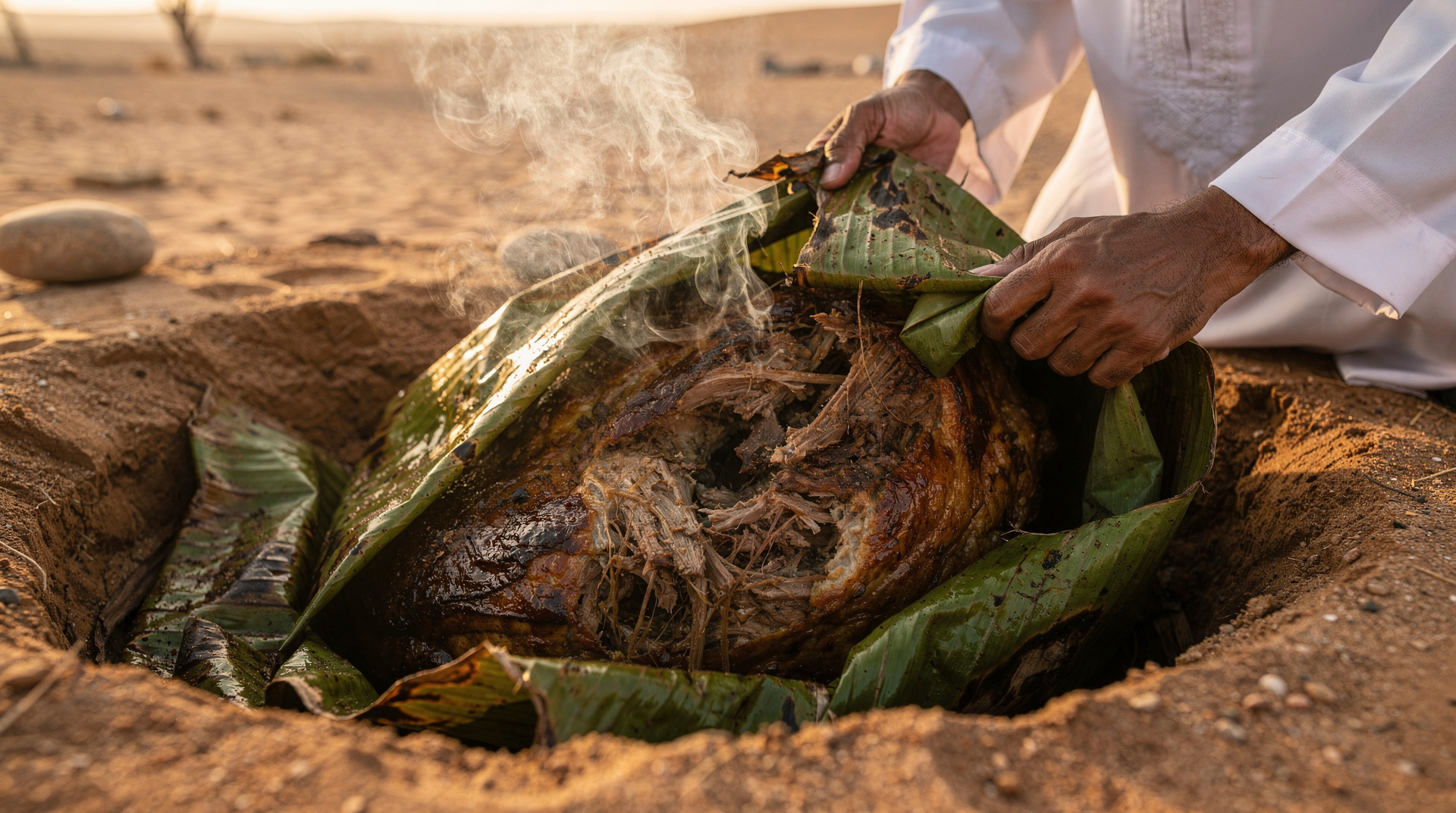
The most iconic dish in the entire Omani repertoire, shuwa is a preparation that requires commitment — typically a full 24 to 48 hours from start to plate. Whole legs or shoulders of marinated lamb or goat are wrapped in banana leaves or palm fronds, packed into a clay pot or metal container, and buried in an underground pit with smouldering embers. The slow, indirect heat cooks the meat to a state of extraordinary tenderness while the spice marinade penetrates every fibre. The full shuwa guide explores this remarkable dish in detail.
Shuwa is traditionally prepared for major celebrations — weddings, Eid al Adha, national holidays — and eating it in the context of a large family gathering, surrounded by the ceremony of the pits being uncovered, is one of the great food experiences of Arabia.
Harees
Harees is comfort food in its most elemental form: whole wheat and meat (usually chicken or lamb) slow-cooked together until both have dissolved into a smooth, porridge-like paste, seasoned with salt, black pepper, and often a pour of clarified butter. It is eaten with a spoon, and its comforting, filling character makes it the ideal food for breaking the Ramadan fast or feeding a crowd without fuss. Similar dishes exist across the Arab world, from Yemen to Lebanon, but Oman’s version tends to have a slightly coarser texture and a more pronounced meat flavour than its relatives.
Mashuai
This is arguably the most sophisticated Omama home-cooking preparation: whole roasted kingfish (also called seer fish or wahu) served alongside saffron-scented rice called Omani rice. The fish is typically stuffed with onion, coriander, and spices before roasting. The rice, cooked in fish stock and finished with saffron and rosewater, is a preparation of real elegance — fragrant, golden, and slightly sweet in character. Mashuai is particularly associated with coastal cities like Muscat, Sur, and Sohar, where fresh kingfish has been the prestige fish for centuries.
Biriani Omani
Omani biriani is emphatically not the same dish as Indian biryani, though it shares a common ancestry in the spiced rice preparations of the Indian subcontinent. The Omani version is typically cooked all in one pot — meat (chicken, lamb, or fish) layered with par-cooked rice and slow-steamed until the two meld together — and it is more subtly spiced than its Indian counterpart, with saffron, dried lime, and rosewater playing a prominent role.
Majboos
Majboos (also spelled machboos) is the everyday rice dish of the Gulf — chicken, lamb, or seafood cooked with rice in a spiced broth, the whole preparation seasoned with a spice blend called bezar that varies from household to household but typically includes cumin, coriander, cinnamon, black pepper, and dried lime. It is honest, filling food at its best, the kind of dish that a grandmother cooks from memory without measuring anything and that always tastes somehow better in someone’s home than in a restaurant.
Samak Mashwi
Grilled fish is the most casual and universally available food in coastal Oman. The fish — typically kingfish, emperor fish, or snapper — is cleaned, scored, rubbed with a paste of turmeric, coriander, garlic, and chilli, and grilled over charcoal until the skin is crisp and the flesh just cooked through. Served with bread and a salad of raw onion and tomato, it is simple food of the highest order. The fish stalls along the Muscat Corniche and in the souk areas of coastal towns are the best places to experience it.
Omani Bread: The Unsung Foundation
Bread in Oman is not the flatbread of the Levant or the heavy leavened loaves of Egypt. The most characteristic form is khubz Omani — a soft, thick round that is slightly leavened and cooked on a flat griddle called a tawa. It is designed for tearing and scooping, the ideal vehicle for the stews, dips, and salads that accompany main dishes.
Raqaq is a paper-thin flatbread made from a liquid batter spread on a smooth iron plate — the Omani equivalent of an Indian dosa. In the mornings, raqaq is served with honey and clotted cream, or with eggs and spiced meat, and it is one of the most distinctive breakfast textures in Arab food — crispy at the edges, slightly chewy in the centre.
Khubz al kharaz are small, dense circular breads baked in a traditional clay oven, sometimes flavoured with fennel seeds or cumin. They keep well and are the traditional accompaniment to coffee and dates when receiving guests.
Fish and Seafood: The Coastal Heritage
Oman’s 3,165-kilometre coastline ensures that fish and seafood have always been central to the national diet, particularly in coastal cities and fishing villages. The variety of seafood available in Oman’s markets is genuinely impressive — kingfish, hammour (a local grouper), barracuda, snapper, cuttlefish, squid, octopus, lobster, and various prawn species are all common.
The Mutrah Fish Market in Muscat, operating from pre-dawn until mid-morning, is one of the most atmospheric food markets in the Arabian Peninsula. Rows of glistening fish laid out on ice, fishermen in dishdasha discussing the night’s catch, traders in animated negotiation — it is an experience that connects you viscerally to the maritime culture that has defined Muscat for centuries.
A half-day Muscat city tour that includes Muttrah Souq and the Old Town is a good way to combine the market experience with the broader historic district in one morning.
Oman’s most beloved fish preparations are deceptively simple. The best food in the country tends to be the fish that was in the sea yesterday, treated with minimal interference — grilled, baked, or fried, with good bread and a squeeze of lime.
Eating Culture and Hospitality Traditions
No food guide to Oman is complete without addressing the extraordinary hospitality culture that surrounds food here. In Oman, an invitation to eat is an act of genuine significance — a declaration of welcome and trust. Declining food or drink when offered, in any context, is considered mildly rude. Accepting even a small amount is the respectful response.
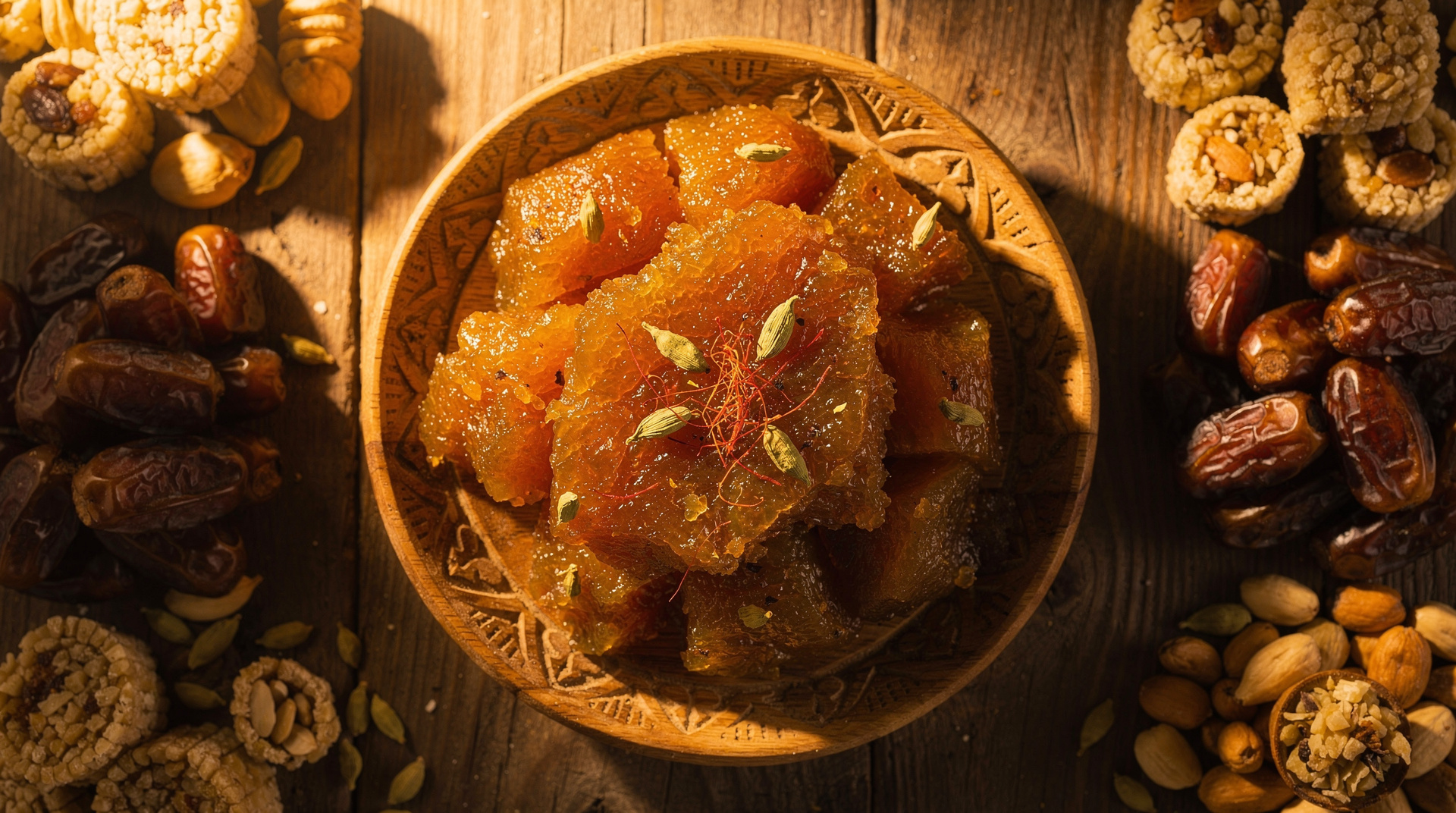
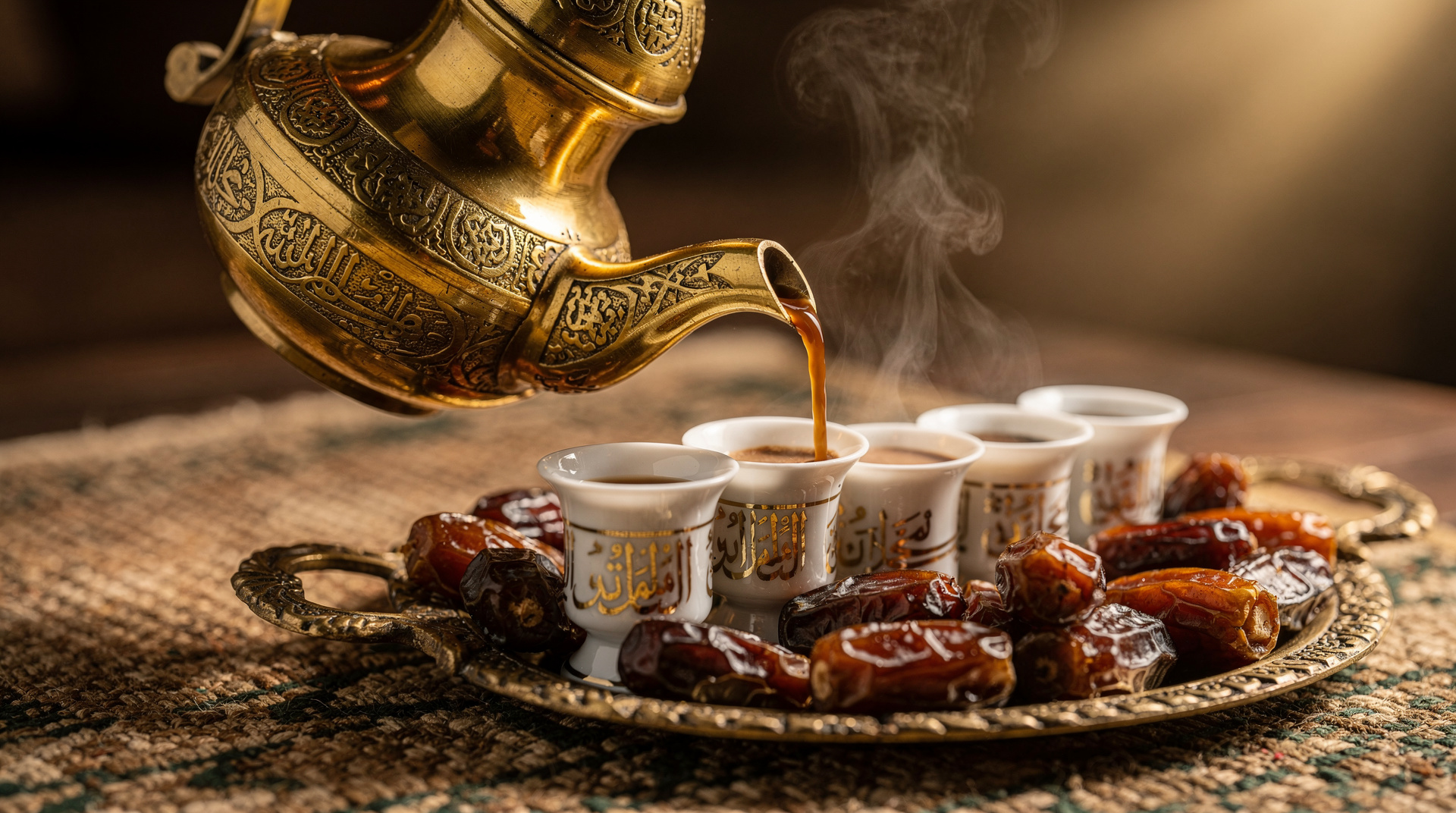
The sequence of hospitality — dates and Omani coffee (kahwa) first, always, followed by food if a meal is offered, and by Omani halwa and more coffee to conclude — is observed throughout the country with remarkable consistency from north to south. Understanding this sequence, and participating in it graciously, is one of the most rewarding ways to connect with Omani culture.
Traditional Omani meals are eaten communally — large dishes placed in the centre of a low table or a cloth spread on the floor, with everyone eating from shared platters using bread or the right hand. The convention of generosity means that the food provided will always significantly exceed what the group can eat; leaving food is not wasteful, it is polite evidence that the host has provided more than adequately.
Regional Food Variations Worth Seeking Out
Omani food shifts noticeably by region, and travellers who move beyond Muscat will notice real differences. In Salalah and the wider Dhofar region, East African influence is stronger — coconut appears more often, and the Yemeni-influenced flavours of the south differ subtly from the Persian-inflected cooking of the north. Frankincense-smoked dishes and a distinct grilling style also set Dhofari food apart.
Interior towns such as Nizwa retain some of the most traditional cooking in the country, with date-based dishes and slow-cooked preparations that reflect an oasis agricultural economy rather than the coastal seafood focus of Muscat or Sur. The Muttrah Souq area in Muscat remains the best single place to sample a cross-section of regional specialities in one visit, from spice stalls to small halwa and coffee shops.
Where to Find Authentic Omani Food
The best Omani food is not always found in restaurants. Home cooking, wedding feasts, and informal celebrations produce food of a quality and authenticity that restaurants rarely replicate. If you are lucky enough to receive a home invitation, accept it.
For restaurant dining, the best restaurants in Muscat guide covers the top options for authentic Omani cuisine in the capital, from traditional establishments in the Mutrah area to the refined Omani menus at leading hotels.
Outside Muscat, the most authentic local food experiences are in the food courts and small family restaurants in town centres throughout the country. Nizwa, Sohar, Sur, and Salalah all have thriving local dining scenes that cater primarily to Omanis rather than tourists, and these are the places to eat well and cheaply in authentic surroundings.
Frequently asked questions about Omani Food Guide: Everything You Need to Know About Omani Cuisine
Is Omani food spicy?
Omani food is aromatic and well-spiced but not typically hot in the chilli-heat sense that, say, Indian or Thai food might be. The dominant flavours are fragrant rather than fiery — saffron, dried lime, rosewater, cardamom, and cumin are more characteristic than chilli. Certain dishes, particularly the fish preparations of the Batinah coast, do incorporate fresh green chilli, but this is the exception rather than the rule. The cuisine is generally very accessible for visitors who are not spice-tolerant.
Can vegetarians eat well in Oman?
Vegetarian options are improving rapidly in Oman, particularly in Muscat, where international restaurants and an increasing number of Omani establishments offer substantial vegetable-based options. Traditional Omani cuisine is, however, heavily meat-centred, and finding genuinely interesting plant-based Omani food can require some searching. Indian restaurants — of which there are excellent examples throughout Muscat — are the most reliably good option for vegetarians. Hummus, fattoush, and vegetable-based mezze are widely available across all restaurant types.
What should I order first to try Omani food?
Start with Omani biriani (rice and meat cooked together, subtly spiced), followed by machboos if you want something more casual, and shuwa if you have the opportunity to attend a celebration or find a restaurant that makes it authentically. For dessert, Omani halwa is a mandatory experience. Wash everything down with kahwa (Omani coffee) and you will have a solid foundation for understanding the cuisine.
Is it acceptable to eat with your hands in Oman?
In a home or traditional setting, eating with the right hand from shared communal dishes is entirely normal and expected. In restaurants, cutlery is always provided. There is no social pressure to eat with your hands in any context, but doing so in a home setting is a gesture of respect for the traditional eating culture that Omani hosts genuinely appreciate.
Where can I take an Omani cooking class?
Several hotels in Muscat offer cooking classes focused on Omani cuisine, including the Shangri-La Al Husn and various boutique hotel kitchens. Some guesthouses in the interior, particularly in Nizwa and Jebel Akhdar, offer informal cooking experiences where guests can participate in preparing traditional dishes with local families. These are among the most rewarding cultural experiences available to food-focused visitors.
What is Omani fast food?
The most ubiquitous quick-food option throughout Oman is the shawarma — Lebanese-style meat wrapped in flatbread — which is available from small restaurants throughout every town. Grilled chicken shops serving whole or half-roasted birds are also ubiquitous and excellent value. For authentic Omani fast food, look for small restaurants serving harees, machboos, or fried fish with bread in the local food court areas of souks and town centres.
Are there any food souvenirs worth taking home?
Absolutely. Omani halwa in its sealed containers travels well and makes an excellent gift. Bags of Omani spice mix (bezar or baharat) are widely available and add an unmistakable flavour to any home cooking. Dried Omani limes pack flat and are invaluable for recreating the characteristic sour depth of Gulf cooking. Jars of Omani honey — particularly the variety from Jebel Akhdar — are considered among the finest in Arabia and make a memorable and practical souvenir.
Does Omani food differ much between Muscat and the rest of the country?
Yes, noticeably. Muscat’s dining scene is the most cosmopolitan, blending traditional Omani restaurants with international options. Salalah’s food carries stronger East African and Yemeni influence, particularly around coconut and grilling styles. Interior towns like Nizwa lean more on date-based and slow-cooked oasis cooking than the seafood-heavy dishes of the coast. Travelling beyond the capital is the best way to taste the full range.
Is street food safe to eat in Oman?
Generally yes. Oman maintains high food safety standards, and street stalls and small local restaurants serving shawarma, grilled chicken, or fried fish are popular with Omanis themselves, which is usually a good sign of quality and turnover. As anywhere, choose stalls with visible turnover and fresh preparation, and carry basic stomach medicine as a precaution, as noted in the food guide above.