Nizwa Day Trip from Muscat: The Complete Guide to Oman's Ancient Capital
Is Nizwa worth a day trip from Muscat?
Absolutely — Nizwa is Oman's most rewarding single day trip, combining a spectacular 17th-century fort, one of the best souks in Arabia, Jabreen Castle, and access to the mountain scenery of Jebel Akhdar in one memorable excursion.
Why Nizwa Is the Essential Omani Day Trip
Every country has a place that, more than anywhere else, captures its essential character in concentrated form. In Oman, that place is Nizwa. For a thousand years, this ancient city in the Dhakhiliyah region of the interior served as the capital of the Imamate of Oman — the spiritual and political centre of a country that shaped the entire Indian Ocean world through its maritime ambition and commercial genius. Today, Nizwa is a living city of 70,000 people, its old city largely intact, its fort and souk still functioning in ways that connect the present directly to the past.
Located approximately 165 kilometres southwest of Muscat, Nizwa is comfortably reachable as a day trip on the modern dual-carriageway highway that links the capital with the interior. The drive takes roughly two hours in each direction — long enough to feel like a genuine journey into a different landscape, but not so long as to dominate the day. The scenery along the route is beautiful: the coastal plain gives way to rugged mountain foothills, the distinctive outline of the Hajar range appears on the horizon, and the final approach into the Wadi Bahla plain reveals Nizwa’s famous fort rising above a green oasis of date palms.
What follows is everything you need to plan a perfect day in Nizwa — what to see, what to eat, how to get there, and the best tour options for those who prefer a guided experience.
| At a glance | |
|---|---|
| Where | Nizwa, Dhakhiliyah region, around 165 km southwest of Muscat |
| Cost | Entry fees apply at Nizwa Fort and Jabreen Castle (check current prices locally); the souk is free |
| Time needed | A full day (leave by 7-7.30am, back by early evening) |
| Getting there | Self-drive on the Muscat-Nizwa highway (~2 hours) or a guided day tour |
| Best time | Friday morning for the livestock souk; October-April for cooler temperatures |
Getting to Nizwa from Muscat
The most comfortable way to travel between Muscat and Nizwa is by private vehicle on the excellent Muscat-Nizwa highway, which is dual-carriageway throughout and well maintained. From central Muscat, the drive takes 1 hour 45 minutes to 2 hours depending on traffic and start point. The highway passes through the dramatically beautiful mountain landscape of the Hajar foothills and the oasis town of Fanja before descending to the interior plateau.
For visitors who prefer not to drive independently — or who want the enrichment of professional commentary — two excellent guided tour options are available.
The Full Day Tour to the Enchanting Forts of Nizwa and Jabreen from Muscat is a comprehensive guided day trip combining Nizwa Fort, the souk, and Jabreen Castle — the three essential Nizwa region sites — in a single well-organised excursion with return transport.
For those who want to include the mountain scenery of Jebel Akhdar alongside the Nizwa sites, the Nizwa Fort, Souq, and Jebel Akhdar Tour from Muscat extends the itinerary to include the dramatic mountain plateau above the city, adding a stunning natural dimension to the cultural highlights.
Public transport between Muscat and Nizwa is available via ONTC buses, which depart from Muscat’s Rusayl bus station several times daily. However, the bus schedule limits flexibility and requires independent navigation within Nizwa, making it less convenient than a private vehicle or guided tour.
Nizwa Fort: A 17th-Century Masterpiece
Nizwa Fort is one of the finest examples of military architecture in the entire Arab world and the most visited single sight in Oman. Built primarily in the 1650s during the reign of Imam Sultan bin Saif al Ya’arubi — the leader who expelled the Portuguese from Oman after a century of coastal occupation — the fort represents the peak of Omani military engineering before the age of gunpowder made traditional fortifications obsolete.
The fort’s defining feature is its enormous circular tower: at 36 metres in height and 40 metres in diameter, it was the largest round tower in Arabia at the time of construction and remains extraordinary in scale. The tower’s walls are up to 4.5 metres thick — sufficient to absorb cannon fire — and the cannon openings in the tower walls cover 360 degrees of approach. The inner architecture of the tower is a maze of staircases, trap rooms, and defensive passages designed to delay and disorient any attacker who succeeded in breaching the outer gates.
The defensive ingenuity of the fort’s architects is remarkable in detail. Trap passages lead to rooms that exit nowhere. False doorways conceal real ones. Narrow staircases force ascending attackers into single file, where they can be engaged one at a time by defenders above. The main gate is designed so that anyone who forced it open would find themselves facing additional barriers and covered from multiple murder holes above. The fort was never successfully taken by force.
The interior of the tower has been thoughtfully restored and is fully accessible to visitors. Climbing to the roof — which requires navigating the internal staircase system — provides spectacular views over the old city, the date palm oasis, and the surrounding Hajar mountains. The view is worth the effort of the climb in any light, but particularly in the golden hour before the day’s heat intensifies.
The lower areas of the fort complex include galleries explaining the history of the Imamate period, displays of traditional weapons, and reconstructed domestic spaces that provide context for how the fort functioned as both a military and administrative centre.
Plan at least 90 minutes in the fort to do it justice. The fort opens early (around 8 am) and the best light for photographs — and the least crowded conditions — are in the first two hours after opening.
Nizwa Souk: Arabia’s Most Atmospheric Market
Immediately adjacent to the fort, connected by a short covered walkway, the Nizwa Souk is one of the most authentic and rewarding traditional markets in the Arabian Peninsula. Unlike some Gulf souks that have been heavily touristed and commercialised, Nizwa’s market remains primarily a working local market where Omani residents from across the region come to buy, sell, and socialise.
The souk is divided into distinct sections, each with its own character.
The livestock market — held on Friday mornings from dawn to approximately 10 am — is one of the most vivid and authentic market experiences in Oman. Cattle, goats, and occasionally camels are brought to the market by farmers from across the Dhakhiliyah region, and the trading is animated, knowledgeable, and conducted in the shadow of the fort walls with the intensity of genuine commerce. If your visit coincides with a Friday, arriving at the livestock market by 7 am is highly recommended.
The silver and copper section of the souk contains some of the finest traditional Omani metalwork available in the country. The silver craftsmen of Nizwa have a centuries-old reputation for excellence in producing khanjar daggers (the curved daggers that are the symbol of Omani national identity), silver jewellery, ceremonial belts, and domestic items. Buying silver directly from Nizwa craftsmen, rather than from tourist shops in Muscat, typically means better quality and more honest pricing.
The date and food souk is a sensory experience of considerable power: sacks of dates in dozens of varieties stacked in profusion, the smell of fresh halwa from the adjacent halwa shops, dried fish and spices in heaped baskets, and the soft sounds of Arabic conversation between vendors and buyers. This is where Omani families shop for the food products that they cannot produce at home.
The pottery section features the traditional Nizwa pottery style — unglazed, functional, and produced using techniques that have changed little in centuries. The large water jars and cooking pots are produced locally from the terracotta clay of the Nizwa region, and buying directly from potters whose workshops adjoin their market stalls is an appropriately direct form of commerce.
Allow at least an hour for the souk, more if the livestock market is operating. Bargaining is expected for non-food items; opening prices in the silver and craft sections are generally negotiating positions rather than fixed values.
Jabreen Castle: A Palace of Extraordinary Beauty
Located approximately 12 kilometres southwest of Nizwa, Jabreen Castle is a very different architectural experience from the military severity of Nizwa Fort. Built in the late 17th century by Imam Bil’arab bin Sultan al Ya’arubi as a palace and centre of learning, Jabreen is one of the finest examples of traditional Omani palatial architecture surviving anywhere in the country.
The castle’s interiors are remarkable: elaborately painted ceilings in geometric and botanical patterns, carved wooden doors and screens, decorated plasterwork on walls and archways, and a series of interconnected audience halls, private chambers, teaching rooms, and domestic spaces that convey the sophistication and cultural ambition of the Imamate court.
The ground floor stables, where the Imam’s horses were kept, contrast with the upper floor grandeur in a way that illuminates the vertical social organisation of the palace — animals and practical functions at ground level, private royal apartments and reception rooms above, and the grand ceremonial spaces at the highest levels with their decorated ceilings and views over the surrounding date palm gardens.
Jabreen has been carefully restored and is considered one of the best-preserved historical palace interiors in Arabia. The ceilings in particular are outstanding — sophisticated geometric patterns in red, blue, and gold that demonstrate a visual intelligence and craft mastery quite equal to the best North African or Andalusian work of the same period.
Allow approximately 90 minutes at Jabreen to properly explore all levels of the building.
Bahla Fort and the Potters’ Town
Between Nizwa and Jabreen, the town of Bahla rewards a brief stop. Bahla Fort — a UNESCO World Heritage Site — is one of the largest mudbrick fortifications in the world, its walls extending for kilometres through the oasis town and its associated date palm plantations. The fort itself is partially restored and accessible to visitors (a modest ticket applies); the sheer scale of the mudbrick construction is impressive even in partial ruinous state. Jabreen Castle itself is covered in more depth in our Jabreen Castle guide, and for how Nizwa’s fort compares with Oman’s other major forts, see the complete guide to Oman’s forts.
Bahla town is the historic centre of Omani pottery production, and the workshops of active potters are visible throughout the old town. The town’s association with pottery dates back centuries; the traditional unglazed terracotta of the Bahla potters was traded throughout Oman and the wider Gulf coast.
Bahla also carries a local reputation for being associated with traditional magic and the jinn world — a reputation taken seriously enough by some Omanis to avoid the town after dark. The background story adds an interesting folkloric dimension to an already architecturally interesting stop.
Jebel Akhdar: The Mountain Extension
For visitors with the energy and inclination for a full day, adding the Jebel Akhdar mountain plateau to a Nizwa day trip creates a genuinely comprehensive experience of the Dhakhiliyah region.
The road from Nizwa to the Saiq Plateau climbs steeply through dramatic mountain scenery, gaining over 1,500 metres of altitude in approximately 25 kilometres. The checkpoint at the base of the mountain road requires a 4x4 vehicle — this is strictly enforced, and standard saloon cars are turned back regardless of conditions.
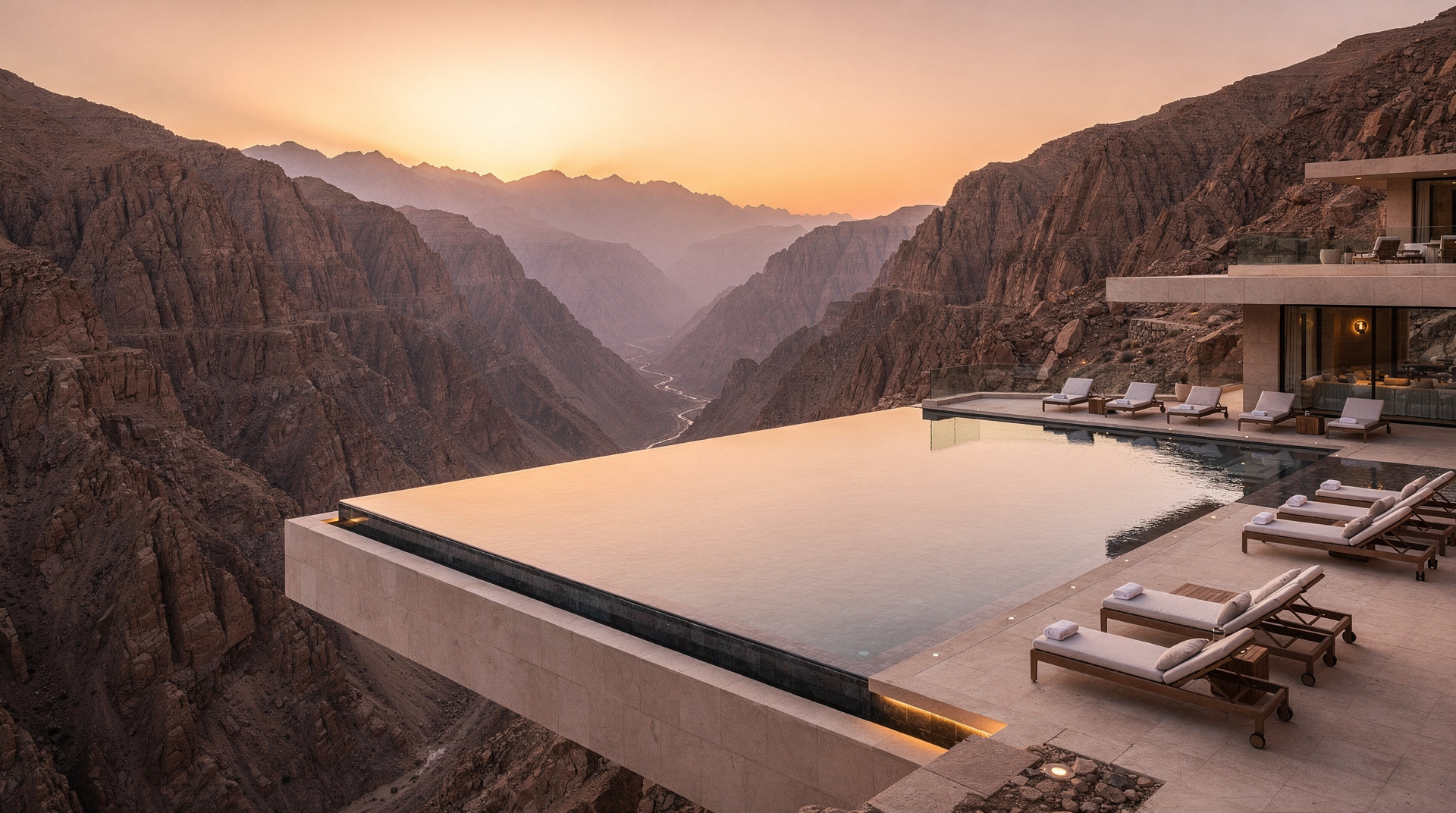
From the plateau rim above, the views into Wadi Nakhar — the deep canyon that Alila Jabal Akhdar overlooks — are extraordinary. The drive along the plateau edge road, with the canyon visible through pull-outs and viewpoints, is one of the most scenic short drives in Oman.
The village of Al Ayn, accessible by a short trail from the main road, is an excellent introduction to the plateau’s ancient agricultural tradition. If you are visiting between late February and mid-March, the rose garden terraces below the village may be in full bloom.
What to Eat in Nizwa
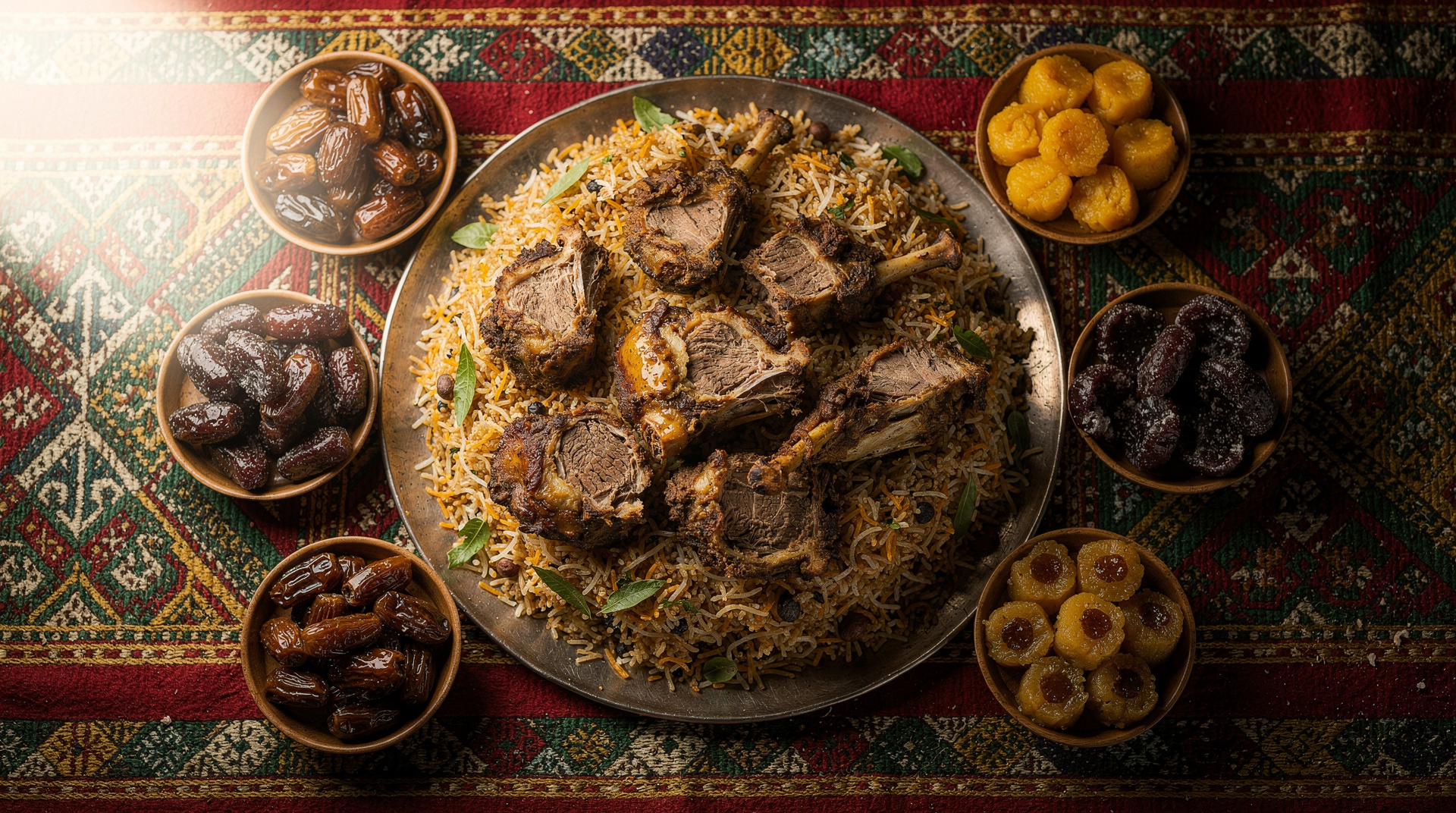
Nizwa’s food scene is centred on practical, unpretentious Omani cooking served to local residents and workers rather than to tourists. Several small restaurants in the souk area serve excellent mashkak (small skewers of spiced grilled meat) and samak mashwi (grilled fish) alongside the standard machboos and harees.
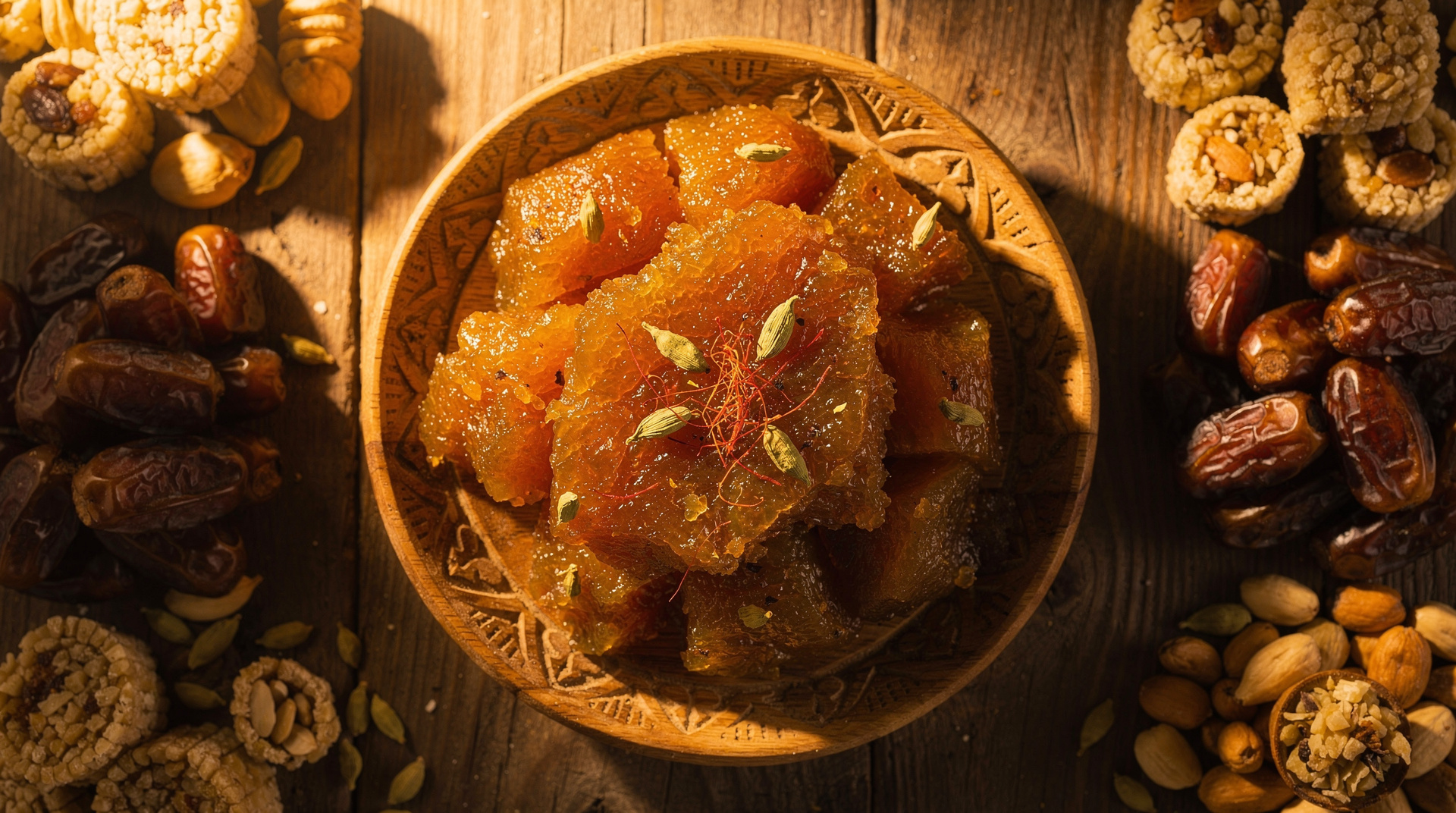
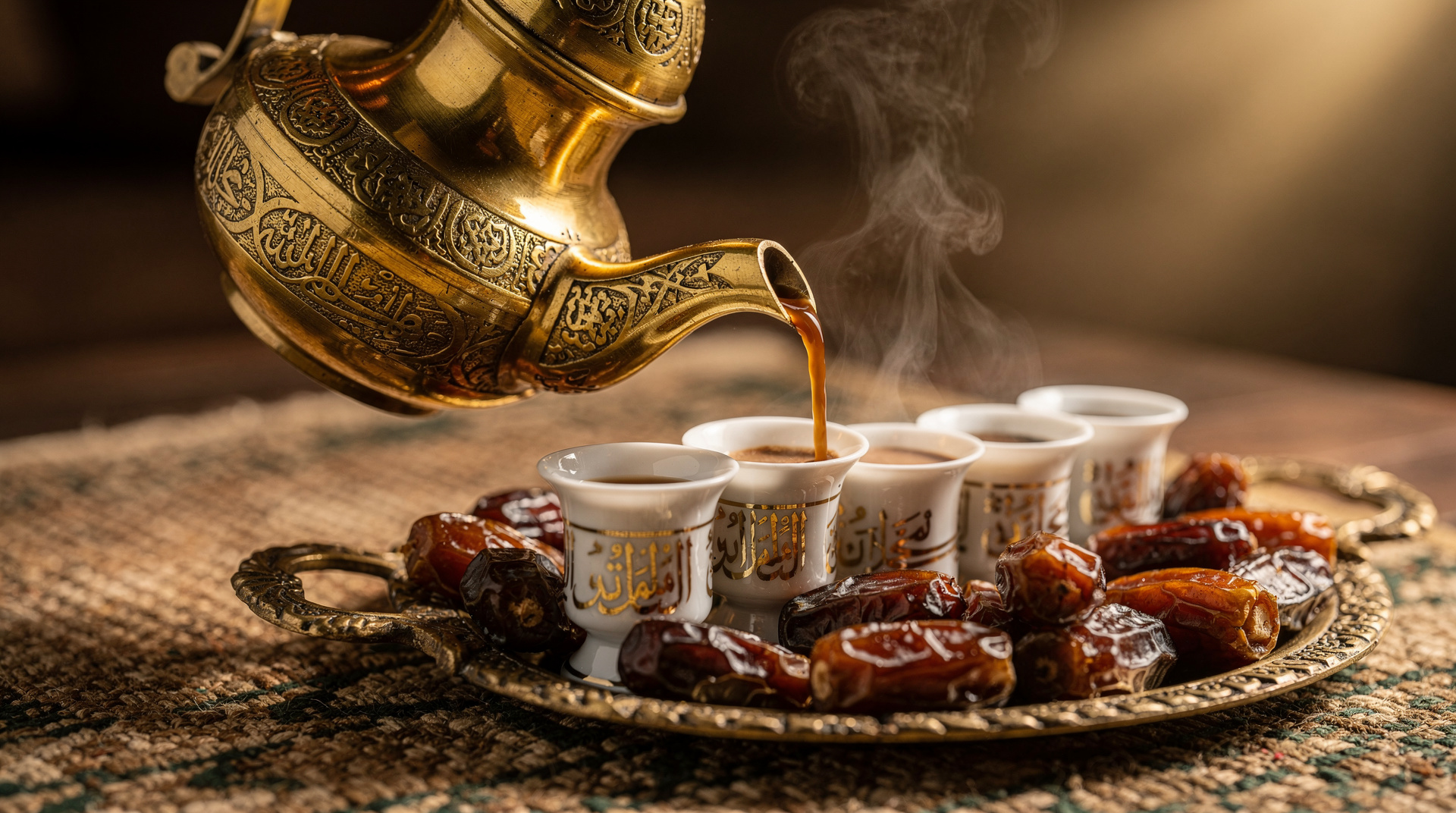
For halwa and coffee, the shops adjacent to the main souk produce Nizwa’s distinctive dark, date-syrup-sweetened halwa. Buying a quantity to take home is strongly recommended — Nizwa halwa has a regional reputation and is considered by many Omanis to be among the finest in the country. The guide to Omani halwa and sweets provides more context on what to look for.
Water and snacks are available throughout the souk. The long drive back to Muscat in the afternoon calls for adequate hydration, so stock up before leaving.
Extending the Trip: Al Hamra and Misfat Al Abriyeen
Travellers with a second day, or the stamina to add another 45 minutes of driving beyond Jabreen, should consider the living mud-brick villages of Al Hamra and Misfat Al Abriyeen. Both are still inhabited, built into the mountainside with ancient aflaj irrigation channels still running through them, and offer a quieter, more contemplative counterpoint to the fort and souk crowds. See the Al Hamra and Misfat villages guide for walking routes and guided options. The aflaj irrigation UNESCO guide explains the centuries-old water system that makes the whole Nizwa oasis, and villages like these, possible.
Renting a Car for the Day vs Joining a Tour
Self-driving to Nizwa is straightforward on the highway itself, but the calculus changes for the Jebel Akhdar extension, which legally requires a 4x4 past the Birkat Al Mouz checkpoint. If you plan to combine Nizwa with the mountain plateau, either hire a 4x4 for the day or join one of the guided tours above rather than attempting the checkpoint in a standard sedan — see the renting a car in Oman guide for vehicle options. For the Friday livestock market specifically, our dedicated Nizwa goat market guide has arrival timing and etiquette notes worth reading beforehand.
Practical Tips for the Nizwa Day Trip
Timing: Leave Muscat by 7 or 7.30 am to arrive at Nizwa Fort before the heat intensifies. Aim to be at the livestock souk by 8 am on Friday mornings. Plan to be heading back toward Muscat by 3 or 4 pm at the latest to avoid the worst of the return traffic approaching Muscat.
Dress code: Conservative dress is required throughout Nizwa, particularly in the souk and near the mosque. Women should have a light scarf to cover the hair when entering Islamic monuments. Shorts are acceptable for men outside monuments but a full-length trouser is more culturally appropriate.
Driving: The Muscat-Nizwa highway is excellent but speeds are high and overtaking trucks requires judgment. The road is significantly busier on weekends (Thursday evening to Saturday in Oman). Friday morning is often the quietest time on the highway.
Photography: The fort and castle are happy for photography. In the souk, ask permission before photographing individuals — most will agree readily, but asking first is basic courtesy.
Frequently asked questions about Nizwa Day Trip from Muscat: The Complete Guide to Oman’s Ancient Capital
How long does it take to get from Muscat to Nizwa?
The drive is approximately 165 kilometres on the Muscat-Nizwa highway and takes 1 hour 45 minutes to 2 hours under normal traffic conditions. Friday mornings and Monday afternoons tend to be the lightest traffic periods. Weekend afternoons approaching Muscat can be significantly slower.
Do I need a guided tour or can I visit Nizwa independently?
Independent visiting is straightforward for confident self-drivers — Nizwa Fort and the souk are extremely easy to navigate, Jabreen Castle is well-signposted, and the highway is simple to follow. A guided tour adds context, cultural explanation, and the convenience of not driving, and is particularly worthwhile for first-time visitors who want to understand the historical significance of what they are seeing. For the Jebel Akhdar extension, a guide is more valuable given the mountain terrain and the need for a 4x4.
Is there an entrance fee for Nizwa Fort?
Yes — a modest entrance fee applies to Nizwa Fort. As of 2026, the fee is approximately 1 Omani Rial per person for non-Omani adults. Jabreen Castle has a similar fee structure. The Nizwa Souk itself is free to enter and explore.
Can I visit Nizwa as a half-day trip?
Technically possible but not recommended. Nizwa Fort and the adjacent souk alone warrant at least three hours, and the drive each way is two hours — meaning a half-day trip from Muscat leaves very little time in Nizwa itself. If time is genuinely limited, prioritise the fort and souk over Jabreen Castle, which requires a separate drive. Alternatively, allow a full day and do everything properly.
What should I buy in the Nizwa Souk?
The silver khanjar daggers and silver jewellery are the most distinctive and high-quality purchases available in the Nizwa silver souk — quality significantly above what is available in Muscat tourist shops. Omani halwa, dried limes, and local spice blends make excellent and practical food souvenirs. Traditional pottery from the Bahla workshops is available in the souk. Frankincense resin in its natural form (lumps of dried resin, not incense sticks) is available and genuinely representative of the region’s most important historical product.
Is Nizwa suitable for children?
Yes — Nizwa is an excellent day trip for children with appropriate stamina for the drive. The fort is intrinsically exciting for children — the defensive trap passages, the murder holes, the views from the top, and the sheer scale of the construction all engage naturally. The livestock market on Friday mornings is particularly memorable for children who have no frame of reference for the scale and vitality of a traditional Arabian livestock market.
What is the Friday livestock souk like?
The Friday morning livestock market is held in a purpose-built area adjacent to the main souk. From approximately 6 am to 10 am, farmers and dealers bring cattle, goats, and occasionally camels to the market, where they are inspected, assessed, and traded with considerable animation. The market is an entirely local affair — tourists are present in small numbers but do not dominate the atmosphere. The sounds, smells, and colour of the market are vivid in a way that any agricultural fair would be, but with the additional dimension of the traditional dishdasha-clad traders and the backdrop of the fort walls.
Can I combine Nizwa with Jebel Akhdar in one day?
Yes, but it makes for a long day and requires a 4x4 vehicle for the mountain section. A more relaxed alternative is to treat Nizwa as its own day and add Jebel Akhdar as a separate excursion, or to book one of the combined tours that handle the logistics for you.
Is Nizwa Fort or Jabreen Castle more worth visiting if I only have time for one?
Nizwa Fort, for most travellers — its scale, the climbable tower, and the adjoining souk make it the more complete single stop. Jabreen Castle is the better choice for visitors specifically interested in decorative art and interiors rather than military architecture. With a full day, both are easily achievable together.