Sandboarding in Wahiba Sands: Ride Oman's Red Dunes
Do I need experience to try sandboarding in Wahiba Sands?
No experience needed. The dunes offer beginner slopes and steep expert runs. Boards are provided by most desert camps and require no prior boarding skills.
Where the Dunes Are Red and the Rides Are Fast
There is a particular kind of joy in standing at the top of a hundred-metre dune with a board under your arm, looking down a slope of deep red sand that falls away at thirty degrees, and committing. Sandboarding is not technically complex, not expensive, and does not require a lifetime of practice. What it does require is a willingness to get sand in places you did not anticipate, and a dune worth riding.
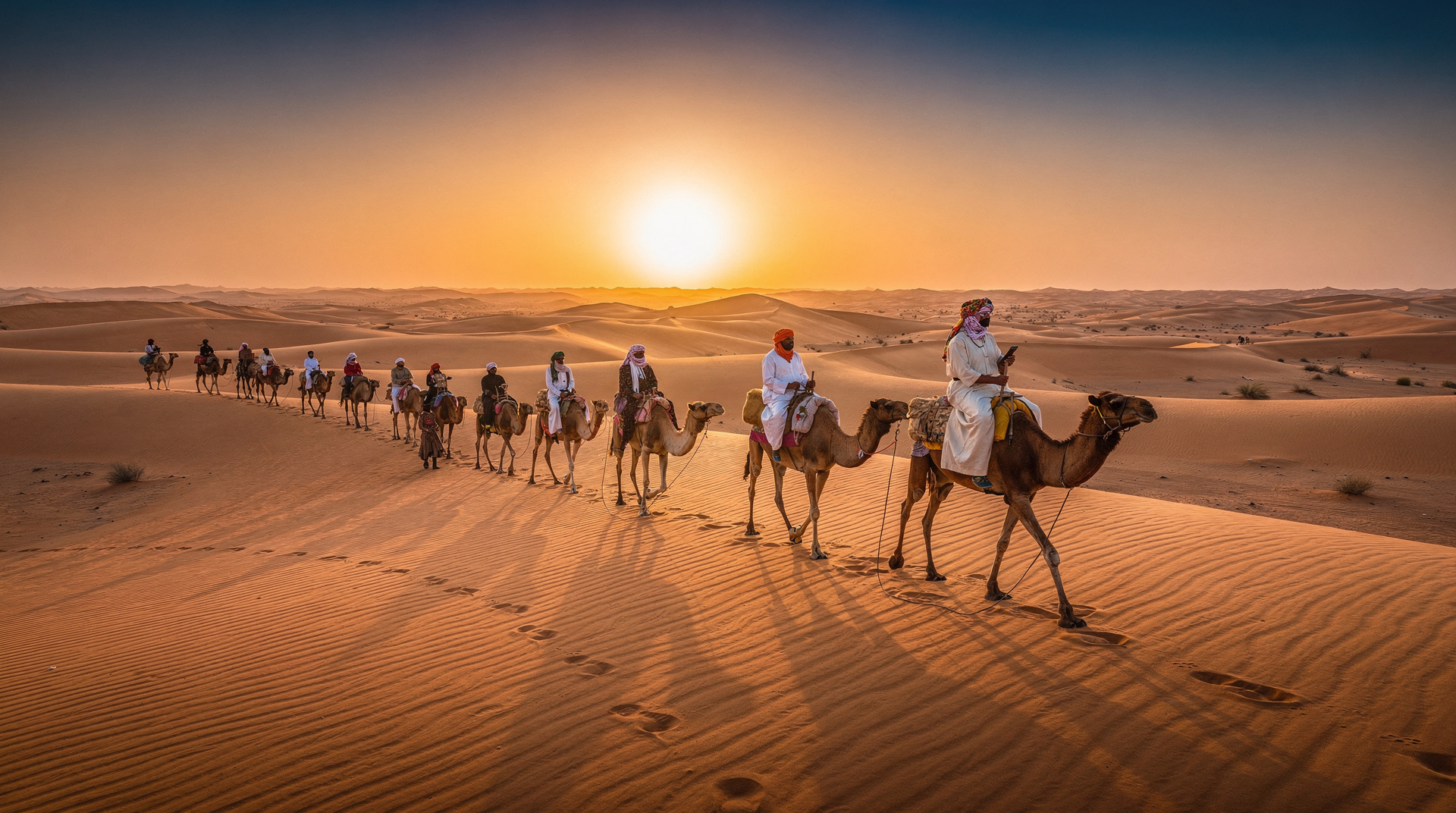
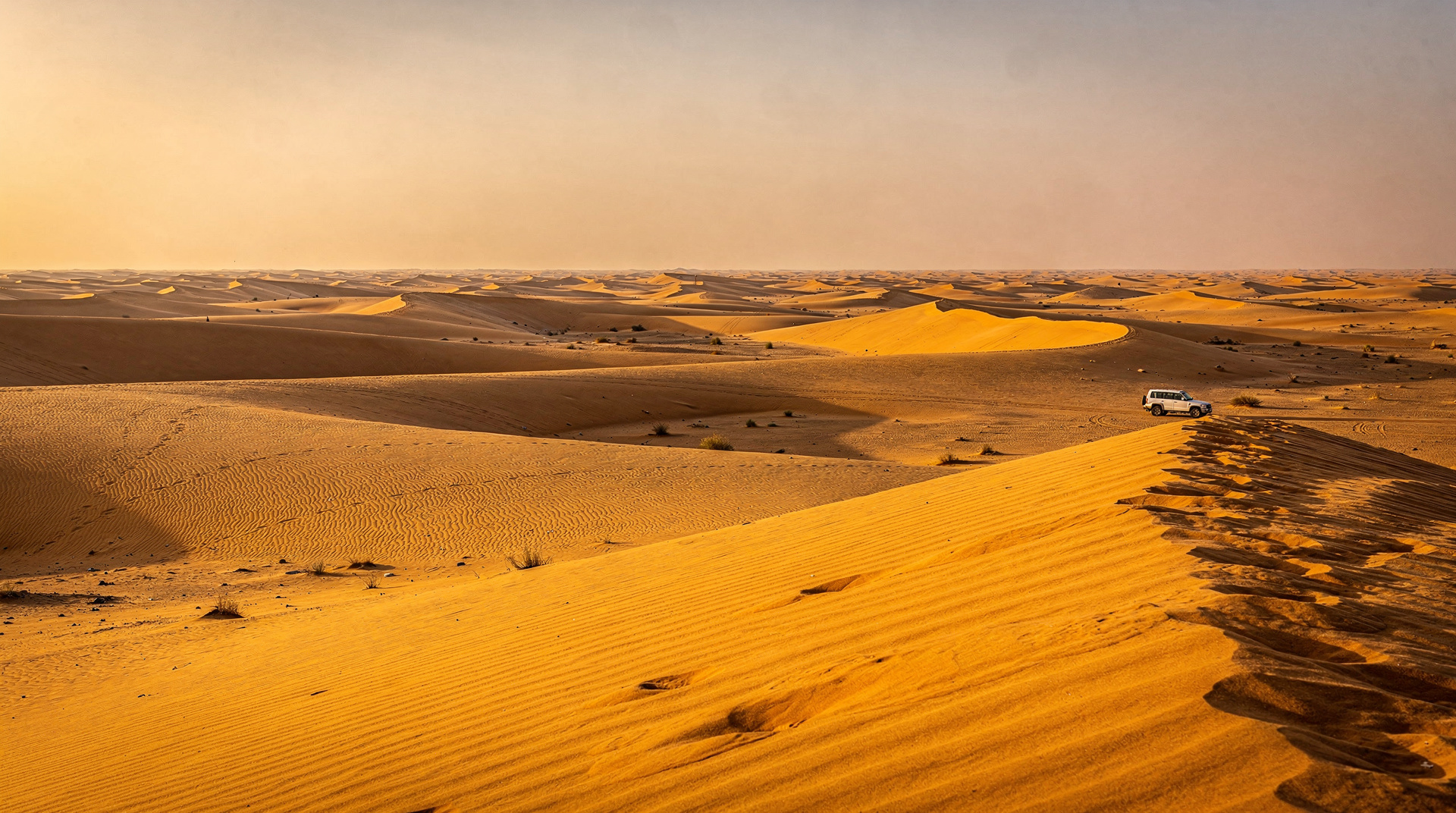
Wahiba Sands — officially the Sharqiyah Sands, though the older name persists — provides the dunes. The sand sea east of the Hajar Mountains contains some of the highest and most consistent dunes in Oman, coloured by iron oxide into shades that shift from pale gold in the early morning to deep burnt orange and red as the sun climbs. The main access corridor through Al Wasil on the western margin of the sands leads to dunes that are sandboarding-ready within ten minutes of leaving the camp.
This guide covers everything from choosing the right slope to protecting your camera from the fine red dust that penetrates everything. It is the complete guide to sandboarding in Wahiba Sands.
| At a glance | |
|---|---|
| Where | Wahiba Sands / Sharqiyah Sands, accessed via Al Wasil, roughly 2.5-3 hours southeast of Muscat |
| Cost | Usually included free with a desert camp stay; standalone board hire around OMR 5-15 where offered separately |
| Time needed | Around 1-2 hours for a proper session; a half-day if paired with a dune safari or camel ride |
| Getting there | Self-drive via Ibra (2WD to the paved edge, 4WD for the final sand track) or an organised day trip from Muscat |
| Best time | October-March, first two hours after sunrise for the coolest sand and best light |
Understanding the Dunes
Wahiba Sands covers approximately 22,000 square kilometres. The dune types vary considerably across this area, with the most dramatic star dunes and linear megadunes concentrated in the central and southern sections. For sandboarding, the most accessible and practical dunes are the transverse and barchan dunes along the western margin, where the main desert camps are concentrated.
The western dunes typically range from 40 to 100 metres in height with slopes of between 25 and 35 degrees on their slip faces — the steep, downwind side. These slopes have the fine-grained, loose sand that runs fast under a board. The windward side of the same dunes is more compacted and shallower — good for climbing but not for riding.
The highest dunes in the sandboarding zone reach approximately 120 metres near the central camp area. These are the prestige runs — a long, steep slide with enough length to get the board moving to speeds that require active braking at the bottom. They are accessible to anyone with reasonable balance, but the first run down is always a recalibration of what is actually steep.
Sandboarding Techniques
Starting Out: the Seated Run
The most accessible entry point for sandboarding is the seated position — sitting on the board with legs extended forward, gripping the sides, and sliding down. This is slower and more controllable than standing, provides a lower centre of gravity for stability, and allows first-timers to feel the surface behaviour before attempting anything more committed.
Seated runs on a 40-metre dune are the appropriate introduction. They are also genuinely fast and fun — do not let the simplicity suggest this is only for children.
Standing: the Core Technique
Standing sandboarding is closer to snowboarding than to surfing — the body is sideways on the board, weight distributed between the front foot (pointing roughly toward the fall line) and the back foot (controlling the board’s angle). Unlike snowboarding, where the boot is locked into a binding, sandboards are usually ridden with loose foot straps or simply with bare feet pressed onto a waxed board surface.
Weight on the front foot accelerates the board. Weight on the back foot slows it by digging the tail into the sand. Turning is accomplished by shifting weight toward the heelside or toeside edge of the board and pressing the corresponding edge into the sand. The technique is learnable on a first session — it rewards practice but does not punish beginners severely.
The primary difference from snowboarding is that sand is far slower to release a caught edge. Where a snowboard edge catching means an immediate, sharp fall, a sandboard edge catching typically produces a more gradual deceleration and topple. Falling on sand is also considerably more forgiving than falling on snow or ice, provided the slope does not have rocks.
Waxing
Sandboard performance is dramatically affected by the wax applied to the base. A cold candle wax or a dedicated sandboard wax applied generously to the board’s base before each run reduces friction and allows speeds that an unwaxed board simply cannot reach. Most desert camps that provide boards also provide basic wax.
The application technique is simple: rub the wax vigorously across the entire base, covering all areas that will contact sand. Re-wax every three to five runs, as the wax transfers to the sand with each descent.
The Best Slopes in Wahiba Sands
The Camp Dunes
Most Wahiba Sands desert camps are positioned at the foot of or adjacent to rideable dunes. These are the most accessible and most used — convenient for multiple runs during a camp stay but also the most trafficked.
The camp dunes are ideal for first-timers. Guides are present, the surface is well-known, and the base of the slope is flat sand without hazards. For a first session covering an hour of riding, the camp dunes are perfectly adequate.
The Back Dunes (Intermediate)
A fifteen to thirty-minute drive by 4WD from the main camp concentration leads to a section of larger and less-visited dunes. These back dunes offer more varied terrain, longer slip faces, and fewer other visitors. The solitude changes the experience meaningfully — there is something specific about standing on an empty dune with no other footprints and nothing visible in any direction but sand.
These dunes are best reached with a guide or driver familiar with the area. Navigation in the sands without GPS and experience is genuinely disorienting.
The Central Megadunes (Advanced)
The largest dunes in the sandboarding zone require a longer 4WD approach of forty to sixty minutes from the main access point. Star dunes here reach 120 metres or more, with multiple slip faces at different orientations offering rides in varying directions depending on the recent wind pattern.
The climb to the crest of a large star dune takes twenty to thirty minutes of strenuous hiking in soft sand — good pole technique (or simply crouching and pushing) helps considerably. The view from the top across the sand sea is rewarding regardless of whether the subsequent ride meets expectations.
These dunes are for confident, experienced sandboarders who have completed multiple runs on intermediate terrain and are comfortable with high speeds and the falls that accompany them.
When to Go Sandboarding in Wahiba Sands
Optimal Season
October through March provides the most comfortable conditions. Air temperatures range from 18 degrees Celsius at night to 28 degrees in the afternoon, the sand temperature is manageable barefoot in the morning, and the physical exertion of climbing and riding is not complicated by dangerous heat.
December and January are peak months when the cool air makes even the tallest dune climbs pleasant. The clear skies of this period also provide the best photography light, particularly in the magic hours around sunrise and sunset.
Early Morning Rides
The best time of day for sandboarding is the first two hours after sunrise. The sand temperature is at its lowest, the light is extraordinary, and the dune surfaces are in optimal condition — the night’s slight humidity firms the sand just enough to improve rideability while maintaining the loose texture that makes runs fast.
By 10:00 from November through February, and by 08:00 from April through October, the surface sand begins to heat enough that barefoot use becomes uncomfortable. Footwear is strongly recommended for afternoon riding.
Summer Considerations
From June through August, daytime temperatures in Wahiba Sands regularly exceed 45 degrees Celsius. Sand surface temperatures are higher still and will cause burns on bare skin within seconds of contact. Sandboarding in these conditions is only possible in the first thirty to forty minutes after sunrise and requires serious heat management. The experience is fundamentally compromised, and the summer months are genuinely not recommended for this activity. The Wahiba Sands in winter guide and the Oman in December guide cover the peak-season desert experience in more depth.
Season at a Glance
| Months | Daytime temp | Sand condition | Crowds |
|---|---|---|---|
| Dec-Jan | 25-28°C | Firm, cool, ideal for barefoot riding | Peak — book camps ahead |
| Oct-Nov, Feb-Mar | 28-33°C | Good, warms by mid-morning | Busy but manageable |
| Apr-May | 33-40°C | Hot by 8am, footwear needed | Light |
| Jun-Aug | 42-48°C+ | Only safe first 30-40 min after sunrise | Very light — not recommended |
Fitness, Safety and Family Considerations
Sandboarding itself is low-impact, but climbing a soft dune repeatedly is genuinely tiring — expect a real workout for the legs and lungs, more demanding than the boarding itself for most first-timers. Pace yourself, especially on the taller back and central dunes, and treat the first climb as a gauge of how many runs you have in you.
Heat and hydration are the real risks, not the falls. Carry more water than feels necessary, wear sun protection (a hat, sunglasses, and reef-safe sunscreen reapplied after sweating), and avoid the exposed midday hours entirely outside the cooler months. Falls on sand are forgiving, but sunstroke is not.
Families with young children should stick to the gentle camp dunes and seated runs — most desert camps are set up for exactly this, with staff on hand to help. Anyone with knee, back, or cardiovascular conditions should treat the dune climbs with the same caution as a moderate hike, and consider requesting the smaller camp dunes rather than the central megadunes. The family desert experience guide and Oman with kids guide cover broader planning for desert days with children.
For those staying overnight, the overnight desert camping guide and luxury desert camps guide compare camp standards, and the Oman packing list flags the sun and sand protection worth bringing specifically for a dune day.
Equipment Guide
Boards
Dedicated sandboards are wider and flatter than snowboards, with a base material designed to reduce sand friction. Most are 150 to 165 centimetres long. Desert camp equipment is typically functional if not high-performance — the boards have seen heavy use and the bases may not be freshly waxed.
If you are a serious boarder or planning multiple sessions, bringing a purpose-built sandboard is worthwhile. These are available from specialist suppliers online. They do not qualify as oversized luggage on most airlines.
Alternatives include specially designed sand sleds (effective but less manoeuvrable) and heavy-duty plastic sheets (cheap, basic, and widely available at Omani hardware stores for around two Rials each). The plastic sheet is unglamorous but genuinely functional for seated runs.
Footwear
Light shoes or sandals that can be removed easily for boarding but protect feet during the dune climb are ideal. Some experienced sandboarders ride in thick socks, which provides grip on the board surface while protecting against heat. Barefoot riding is possible in cool morning conditions on freshly shaded sand.
Goggles are worth having for windy conditions. Desert dust and sand particles at speed are uncomfortable against unprotected eyes. Standard ski goggles work perfectly.
Protecting Your Electronics
Wahiba Sands’ fine red sand penetrates everything. Camera bags should be closed between shots. Phones kept in trouser pockets will accumulate sand in the charging port over a single session. A small silicone cover for the charging port and a sealed bag for the phone during rides are sensible precautions.
Memory cards and USB connectors are particularly vulnerable. Keep them sealed until needed.
Combining Sandboarding with Other Desert Experiences
The richest desert day in Wahiba Sands combines sandboarding with the full range of what the landscape offers. A typical day itinerary for those staying at a desert camp would begin with a camel ride at dawn before the heat rises, transition to sandboarding through the late morning, include a 4WD dune safari in the afternoon, and close with sunset watched from a high dune crest before dinner at the camp.
For those on a day trip from Muscat, the combined Wahiba Sands and Wadi Bani Khaled excursion described in the guide to camel riding in Oman covers the desert and oasis elements of the east. A wadi off-road drive through the mountains adds geological variety to a wider itinerary.
Those who want to add a motorised dimension to the dune experience should look at the Wahiba Sands dune buggy self-drive adventure — a 1-hour session on the same dunes that sandboarders descend on foot, covering more ground at higher speed.
For a full-day guided option from Muscat that combines desert dunes with the turquoise pools of Wadi Bani Khaled, the Wahiba Sands and Wadi Bani Khaled desert safari day trip is an organised alternative for those without their own vehicle.
For those wanting to push deeper into the desert experience, the guide to the Empty Quarter expedition covers what lies beyond the Wahiba in the deep south. The hot air balloon guide explains how to see the same dune landscape from above at sunrise — the perfect complement to a sandboarding session from ground level.
Getting to Wahiba Sands
From Muscat, the drive to the main access point at Al Wasil takes approximately two and a half to three hours via the inland highway through Ibra. The road is fully paved and unremarkable until the desert camps become visible on either side. Most camps provide basic GPS coordinates that avoid the wrong turns that plagued early desert travellers.
The final approach to any camp is on sand tracks that require 4WD and low-range gearing. Independent travellers with a 2WD vehicle should park at the paved road edge and arrange collection with the camp.
Fuel and food should be stocked in Ibra, the last significant town before the desert. Water should be carried in quantities that exceed what seems reasonable.
Frequently asked questions about Sandboarding in Wahiba Sands: Ride Oman’s Red Dunes
Is sandboarding hard to learn?
The fundamentals of sandboarding — seated sliding and basic standing runs — are accessible within the first session for most people. Carving, speed control on steep runs, and stylish technique take longer to develop. Children generally learn faster than adults. Previous snowboarding or skateboarding experience helps but is not required.
What age is appropriate for sandboarding?
Most operators set a minimum age of around six to eight years old for riding independently. Younger children can participate in seated sled-style runs with a parent. Upper age limits are rarely set — physical fitness is the relevant factor, and the dune climbing is more demanding than the actual boarding for many older participants.
Will sand damage my camera?
Wahiba Sands’ ultra-fine red sand will find its way into any unsealed camera eventually. Weather-sealed camera bodies cope best. Lens changes should be avoided in the field. Lens cloths and a blower are essential for removing sand before it scratches optics. The colours of the dunes in good light are extraordinary and absolutely worth the protection effort.
Do camps provide wax for sandboards?
Most camps provide boards and basic wax. The quality varies. If performance matters to you, bring a dedicated block of sandboard wax (available online) or ordinary paraffin candles, which work nearly as well. Waxing your own board before runs makes a significant difference to speed.
Can I sandboard at night under stars?
Yes, and it is a memorable experience. Moonlit sandboarding is possible during the bright phases of the lunar cycle — the white moonlight on red sand creates a surreal landscape. Speed perception is different without full visual depth cues, which adds an element of excitement. Headlamps are useful for the dune climb. Most camps can arrange this on request for guests staying overnight.
Can I sandboard without an overnight desert camp stay?
Yes. Day-trip access to the western dune margin near Al Wasil is possible without an overnight stay, either self-driving with your own board or joining an organised desert safari that includes a sandboarding stop. An overnight stay does give more flexibility on timing — you can catch both the cool early-morning session and the sunset session on the same visit — and it is the easiest way to arrange transport into the dunes.
Desert Camp Culture Around the Sandboarding Areas
The infrastructure that has grown around Wahiba Sands sandboarding is primarily the desert camp network. These camps range from genuinely basic — a few canvas tents, a fire, and simple food — to elaborate luxury operations with air-conditioned tents, infinity pools fed by tanker trucks, and fine dining menus created by trained chefs. The sandboarding itself is roughly the same experience across all camp standards; what differs is the accommodation surrounding it.
For sandboarding specifically, the camps that position themselves adjacent to the best boarding dunes offer the most convenient access. The better-resourced camps typically own a small fleet of sandboards in multiple sizes and have guides who can provide instruction and accompany guests on longer dune traverses. Asking the camp about their sandboarding setup when booking avoids disappointment.
The social culture of desert camps adds a dimension to the sandboarding experience that an isolated day trip misses. The evening fire, the shared meal, the conversation with other guests from different countries, and the collective experience of falling repeatedly down the same dune and improving gradually together over the course of an afternoon — these are the components of the full desert experience that overnight camp stays provide.
The Science of Dune Formation
A sandboarding session becomes more interesting with some understanding of why the dunes look the way they do. The Wahiba’s distinctive dune forms — the linear dunes running north-south in the eastern section, the star dunes of the central area, and the barchan crescents of the western margin — each reflect different wind regimes and sand supply conditions.
Linear dunes form under bidirectional winds of roughly equal strength — the two dominant winds in the Wahiba’s annual cycle create the parallel ridges that look, from the air, like corrugated iron. Star dunes require multidirectional winds — they are the architecturally complex forms that develop where multiple wind regimes meet, and their asymmetry means they offer slip faces in multiple directions depending on recent wind patterns. Barchans are the classic crescent forms that develop where sand supply is limited and the wind blows predominantly from one direction — the crescents migrate downwind, and fresh barchans can move several metres per year.
The slip face of a sandboard run — the steep, avalanching face — is the angle of repose of dry sand: approximately 34 degrees. This angle is remarkably consistent regardless of grain size, which is why sandboard runs are technically predictable even on unfamiliar dunes. What varies is the grain size itself, which affects speed: finer sand runs faster; coarser, damp, or compacted sand runs slower. The deep red Wahiba sand is fine-grained and dry — optimal for fast runs when properly waxed.
Understanding this also helps with photography: the same low, raking light that makes the dune ridges legible for a photographer is the light in which the sand grain and the steepest slip faces are easiest to read for a rider. The photography guide to Oman covers camera settings and timing for the dunes in more detail.