Empty Quarter Expedition: Crossing the Rub' al Khali from Oman
Can tourists visit the Empty Quarter (Rub' al Khali) from Oman?
Yes. The Salalah region offers day trips and guided multi-day expeditions into the Rub' al Khali, including the Lost City of Ubar and sunset desert safaris.
Into the World’s Largest Sand Desert
The Rub’ al Khali — the Empty Quarter — is not simply a large desert. It is the largest continuous sand sea on earth, covering approximately 650,000 square kilometres across Saudi Arabia, the UAE, Yemen, and Oman. The numbers barely communicate the reality. The dunes at the heart of the Empty Quarter reach 250 metres in height. The distances between any reliable water source stretch to hundreds of kilometres. Before the 20th century, no European had crossed it and survived to report back. Among the few who did, Wilfred Thesiger’s account remains the benchmark against which all desert travel writing is measured.
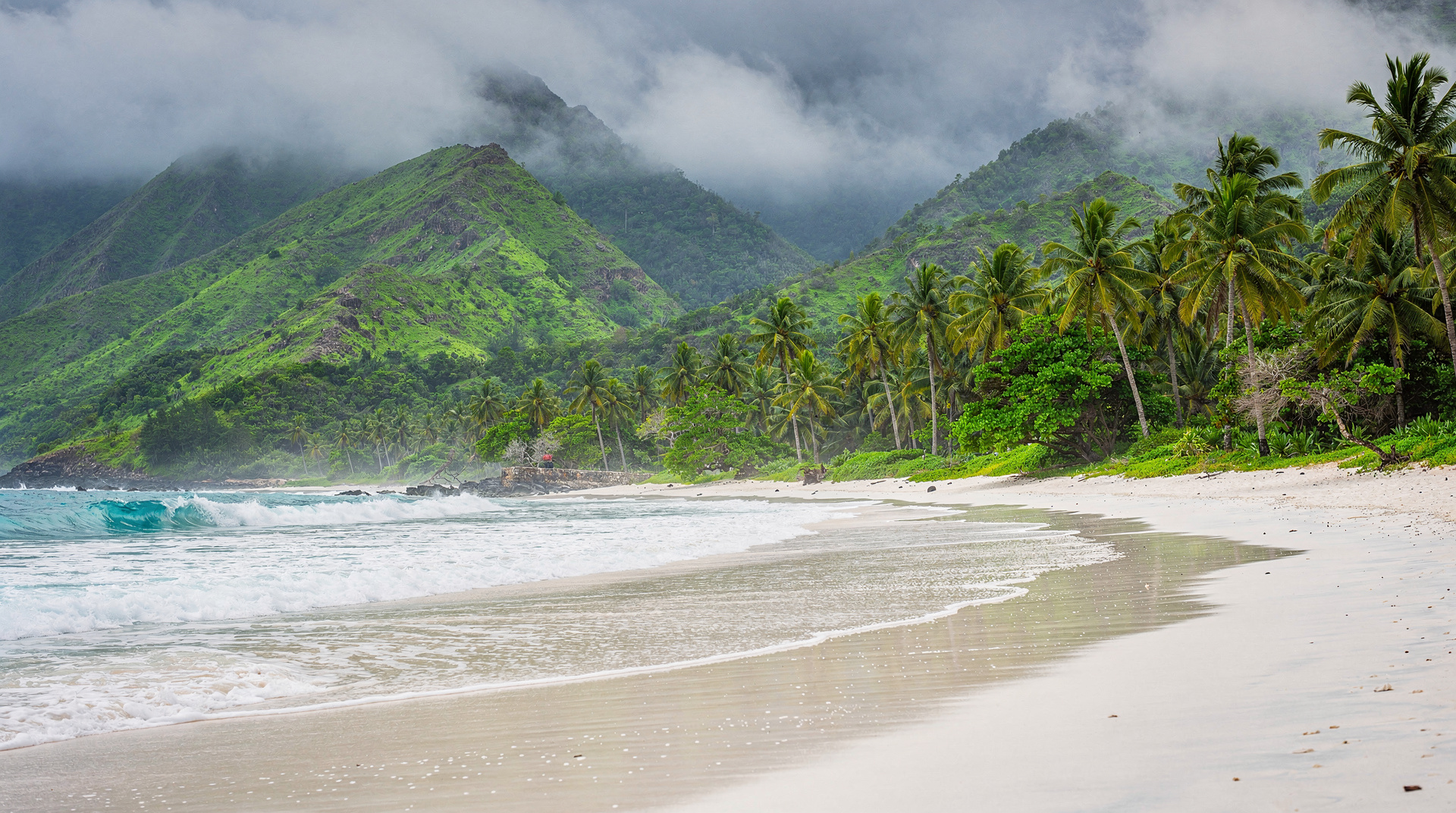
From Oman’s Dhofar region, the Empty Quarter is both accessible and genuinely wild. The Salalah region sits at the desert’s southern margin, where the landscape transitions from the extraordinary green hills of the Khareef monsoon to the merciless dunes of one of the most inhospitable environments on the planet within a matter of kilometres. This adjacency — lush coast and lethal desert in the same day’s drive — is what makes the Dhofar approach to the Empty Quarter so compelling.
This guide covers the full range of Empty Quarter experiences accessible from Salalah, from half-day excursions to the ancient lost city of Ubar to multi-day camel caravan expeditions across genuine wilderness.
At a glance
| Where | Desert margin northeast of Salalah, roughly 100-200 km from the city |
| Typical cost | Full-day Lost City and desert excursions and overnight camping trips are ticketed tours; multi-day expeditions cost considerably more and need a specialist operator |
| Time needed | A half-day sunset safari, a full day for Shisr and the desert margin, or several days for a genuine multi-day expedition |
| Getting there | Around 2-2.5 hours’ drive from Salalah on paved road to Shisr; deeper desert access needs an experienced guide |
| Best time | November-February for manageable daytime temperatures |
The Empty Quarter from Oman: Context and Access
Oman shares approximately 500 kilometres of border with the Saudi Arabian section of the Rub’ al Khali in the north of the country, but the accessible and logistically practical entry point for tourism is the Dhofar region in the south. From Salalah, the main entry corridor runs northeast toward the desert via the ancient frankincense route — the same road that connected the Dhofar coast to the interior trade networks for thousands of years.
The landscape changes abruptly after the last Dhofar towns. The Nejd plateau, a vast gravel plain, precedes the sand desert by a hundred kilometres or more. The transition from Nejd to Rub’ al Khali proper is dramatic — the gravel surface ends, and the dunes begin with very little transition, rising from nothing to forty metres in height within a few kilometres.
Most tourist access to the Omani Empty Quarter occurs in this transition zone, which offers the visual drama of the great dunes without requiring the logistical complexity of deep desert penetration. The genuine heart of the Rub’ al Khali — the megadunes and absolute emptiness of the central basin — is accessible only on multi-day expeditions with full desert camping equipment and experienced guides.
Shisr and the Lost City of Ubar
The most historically significant site near Oman’s Empty Quarter entry is Shisr, a town in the Dhofar interior that was identified in 1992 as the probable location of Ubar — the legendary city described in pre-Islamic Arabic texts as the “Iram of the Pillars,” a great trading centre that supposedly sank into the desert as divine punishment.
The archaeological evidence is striking. An ancient fortress sits above a collapsed sinkhole caused by the dissolution of a limestone cave beneath the site — lending literal substance to the legend of a city swallowed by the earth. Excavations revealed trade goods from across the ancient world: Roman pottery, Chinese porcelain, bronze weights used in commerce. The frankincense caravans that sustained the Silk Road era passed through or near this site.
Full-day excursions from Salalah to the Lost City and the Rub’ al Khali cover the Shisr archaeological site and the dune landscape of the desert margin in a single day trip. These tours provide the context and navigation that makes the site meaningful rather than a roadside stop.
For those wanting to combine the desert experience with an overnight stay in the dunes, the overnight desert camping experience with pickup from Taqah city provides a complete night under the Empty Quarter stars — transport, camp setup, dinner and breakfast included.
For those who want to combine the desert with the lost city of Ubar in a single expedition, the Empty Quarter and Lost City of Ubar with overnight camping tour covers both the Shisr archaeological site and a night in the Rub’ al Khali, making it one of the most historically and geographically complete desert experiences available in Oman.
The drive to Shisr from Salalah takes approximately two and a half hours on paved road. The archaeological site itself has basic signage and a small museum. The surrounding dunes are walkable and provide the immediate contact with the desert landscape that the drive builds anticipation for.
Desert Sunset Safaris
For those with a single afternoon to dedicate to the Empty Quarter, the sunset desert safari from Salalah is the most efficient introduction to what makes this landscape extraordinary.
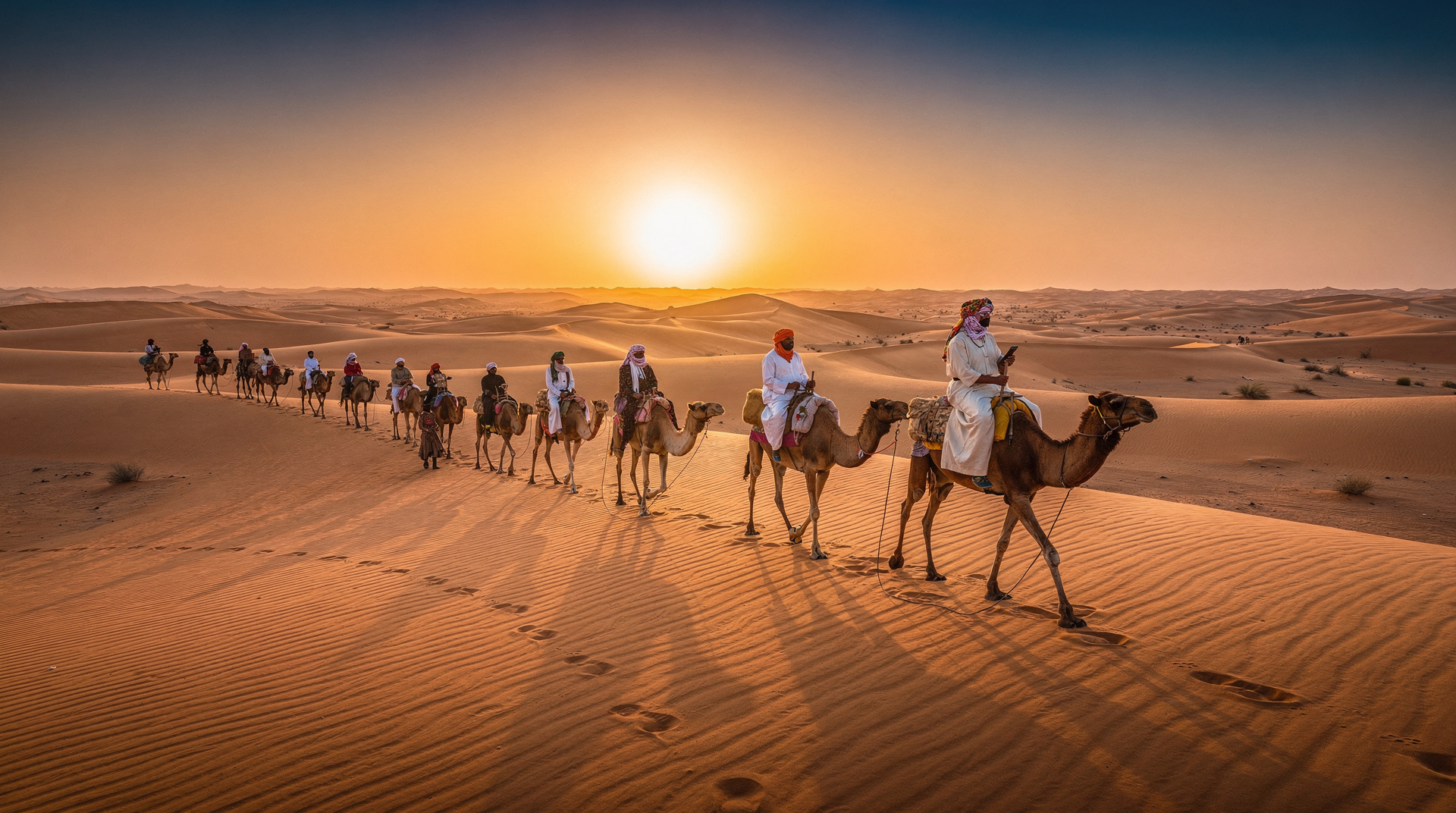
Sunset desert safaris into the Rub’ al Khali from Salalah typically depart in the mid-afternoon, reaching the desert in time for the light to shift through its most dramatic phase. The dune driving is exhilarating — the guides are experienced in reading the sand and reading the conditions, which change daily with wind and temperature. Traditional tea and dates at the summit of a high dune as the sun drops is the kind of simple experience that photographs cannot replicate.
The return is typically after dark, which offers clear desert skies of exceptional quality — the Salalah region has minimal light pollution in the desert direction and a Milky Way that is genuinely visible as a structure in the sky.
Multi-Day Expeditions into the Deep Desert
For those with more time, genuine commitment to desert experience, and physical preparation for demanding conditions, multi-day expeditions into the deeper Empty Quarter represent some of the most extraordinary travel experiences available in the Arabian Peninsula.
These expeditions require a minimum of three to four vehicles, an experienced guide with deep knowledge of the specific area, satellite communication equipment, full water and fuel reserves for the planned route plus substantial emergency margin, and desert camping gear capable of handling 45-plus degree temperatures.
The rewards are proportionate to the commitment. The megadunes of the central Rub’ al Khali are a different category of landscape from anything accessible on a day trip. Silence in the deep desert is complete in a way that is genuinely disorienting at first — no wind, no insects, no aircraft, nothing. The stars are extraordinary. The dawn light on undisturbed dune crests, before the wind rises, is one of those sights that lands permanently in memory.
Several Salalah-based adventure tour operators offer properly equipped multi-day expeditions. Planning should occur months in advance. Permit requirements vary and should be confirmed with the operator, as access to some sections near the Saudi and Yemeni borders requires advance approval.
The Frankincense Trail: Desert and History Combined
The ancient frankincense trade route that connected Dhofar’s coast to the interior and ultimately to the Mediterranean world passes through the same desert landscape that leads to the Empty Quarter. Incorporating the frankincense heritage sites into an Empty Quarter itinerary adds historical depth that transforms the journey from landscape appreciation to something with civilisational weight.
The key sites along this route include Sumhuram, an ancient frankincense storage and trade city on the Khor Rori inlet outside Salalah; Al Baleed, the UNESCO World Heritage Site that was medieval Dhofar’s main port; and the wild frankincense trees of the Dhofar hills, which are the source of the resin that drove one of the ancient world’s most significant long-distance trade networks.
The complete Salalah regional guide covers all of these sites in depth — see the guide to Salalah and the Dhofar region for the full picture.
Wildlife in the Empty Quarter Margins
The apparent emptiness of the Rub’ al Khali is somewhat misleading. The desert supports life that has adapted to its extremes, and attentive desert travellers encounter it regularly.
Arabian oryx were reintroduced to the Omani desert after a successful captive breeding programme and can be seen in the Jiddat al Harasis desert in the central Oman interior. Though not technically in the Rub’ al Khali itself, these ancient inhabitants of the Arabian desert represent one of the great conservation success stories in the region.
Sand cats — tiny, pale, and extraordinarily elusive — inhabit the dune margins and are occasionally glimpsed in the headlights of desert night drives. They are one of the few felid species capable of surviving without surface water, obtaining all moisture requirements from their prey.
Cape hares, sand gazelles, and various lizard species including the large, prehistoric-looking desert monitor complete the desert fauna picture. The birdlife is sparse but distinctive — cream-coloured coursers, sand partridges, and various lark species are reliably present, with houbara bustards in less-disturbed areas.
Physical and Safety Preparation
The Empty Quarter demands more preparation than most travel experiences, even on guided day trips. The primary risks are heat, dehydration, and disorientation.
Heat Management
Air temperatures in the Omani Empty Quarter exceed 40 degrees Celsius from April through October. Sand surface temperatures are routinely 60 to 70 degrees and higher. Any direct contact with the sand — including sitting, bare foot contact, and falling — causes burns in seconds at these temperatures.
Even outside summer, the afternoon desert heat requires serious management. Lightweight, full-coverage clothing is not optional — it is the mechanism that keeps sweat on the skin and maintains evaporative cooling. Shade from a vehicle or umbrella is the alternative when stationary.
Water Requirements
The minimum water requirement in summer desert conditions is one litre per hour of exposure. This figure surprises most visitors, who significantly underestimate how rapidly the body loses fluid in a hot, dry environment. Guided tours carry far more water than the planned requirement as a margin for vehicle breakdown, route extension, or medical need.
Independent travellers should carry a minimum of five litres per person plus a substantial emergency reserve in each vehicle.
Navigation
GPS navigation has transformed desert safety, but it has not eliminated the risk of disorientation. Mobile phone GPS requires signal to download map tiles but will navigate offline once maps are cached. Dedicated GPS units with downloaded maps are more reliable. The fundamental rule remains: never travel in the deep desert alone, and always ensure someone outside the expedition knows the planned route and expected return time.
The Best Season for Empty Quarter Expeditions
November through February is optimal. Daytime temperatures in the desert margin near Salalah are typically 25 to 32 degrees Celsius, dropping significantly at night. The light is clearer than in summer, dust haze is minimal, and the physical demands of desert travel are manageable.
March and October are acceptable shoulder months. April through September in the desert proper is only for those with extensive experience and exceptional preparation.
The Khareef season from June through September creates an unusual situation in Dhofar specifically — while the coastal areas of Salalah are cool, green, and ideal for tourism, the inland desert just 50 kilometres north experiences no monsoon benefit and maintains its full summer extremity. The contrast between stepping from monsoon coastal landscape into 45-degree desert is startling and illustrates the Empty Quarter’s total indifference to the climate systems that moderate the rest of the world.
Combining the Empty Quarter with Broader Oman Travel
Most visitors to the Oman Empty Quarter approach from Salalah, which deserves several days of exploration in its own right. The Dhofar region’s combination of monsoon landscape, ancient history, dramatic coastline, and desert access makes it the most varied single destination in Oman.
For a broader desert context, the guide to Wahiba Sands in the north covers the other great Omani sand desert — smaller and more accessible from Muscat, but similarly compelling. The guide to camel riding in Oman covers the animal that made the desert traversable for the Bedu who knew these routes before any map existed.
Planning the wider journey around the desert
A desert day or night works best when the rest of the trip is planned around it. The Oman road trip planning guide and the guide to renting a car in Oman help you decide how you will reach Dhofar, while the Muscat to Salalah drive and domestic flights in Oman cover the two realistic ways to get south. Once there, the getting around Oman guide explains how transfers and tours fit together.
If you are hesitating over the overnight option, the overnight desert camping guide describes what a night in the sand is actually like, and the luxury desert camps guide is the place to look if comfort matters more than remoteness. Travellers who prefer to compare desert styles can read dune bashing in Oman and sandboarding in Wahiba to see how the northern dunes differ from the wild margin described here.
Timing and clothing deserve a second look before you book. The best time to visit Oman guide puts the desert season in the context of the whole country, the Oman packing list covers what to bring, and the dress code guide explains what is appropriate when you pass through villages on the way. For the green side of Dhofar that sits so close to these dunes, see the Salalah in khareef guide and the frankincense trail around Salalah. Photographers will find useful pointers in the photography guide to Oman, and anyone building a longer route can look at the 10-day grand tour or the adventure road trip itinerary.
Frequently asked questions about Empty Quarter Expedition: Crossing the Rub’ al Khali from Oman
Is a permit required to visit the Rub’ al Khali in Oman?
Day trips to the desert margin near Salalah require no special permit. Multi-day expeditions into remote areas near the Saudi or Yemeni borders may require advance permission from Omani authorities. Any reputable expedition operator will handle permit requirements as part of their service. Confirm this explicitly before booking.
What is the best vehicle for Empty Quarter exploration?
A minimum of a full-size 4WD with low-range gearing and good ground clearance. Toyota Land Cruiser and Nissan Patrol are the standard choices and the easiest to find spare parts for in the region. Tyres should be appropriate for sand — wider is generally better, and pressures are typically reduced significantly when driving on sand to increase the tyre’s contact patch. Never attempt Empty Quarter travel in a road car or small 4WD.
Can I camp independently in the Empty Quarter?
Technically yes for most accessible areas, but independently camping in remote desert areas without significant experience and preparation is genuinely dangerous. The recommended approach is to camp with a guided operator who carries emergency equipment, full water reserves, and satellite communication. Experienced independent desert campers with proper equipment and route knowledge do camp independently and do so safely with appropriate planning.
How far is the Empty Quarter from Salalah city?
The first significant dunes of the Rub’ al Khali margin are approximately 100 kilometres from Salalah city, which translates to about two hours of driving on a mix of paved road and graded track. The Shisr archaeological site is approximately 200 kilometres from Salalah.
How does the Empty Quarter compare to Wahiba Sands for a first desert experience?
Wahiba Sands is smaller, closer to Muscat, and better set up for day trips and overnight camps with established infrastructure — it suits most first-time visitors. The Empty Quarter margin near Salalah is more remote and historically weighted (the Lost City of Ubar, the frankincense trail), and the deep desert beyond the margin is genuine expedition territory. Travellers doing both regions in one trip often find Wahiba the easier, more comfortable introduction and the Empty Quarter the more dramatic, harder-earned experience. See the Wahiba Sands desert safari guide for the comparison in practice.
What should I read before visiting the Empty Quarter?
Wilfred Thesiger’s Arabian Sands (1959) is the essential account — his two crossings of the Empty Quarter with Bedouin companions in the late 1940s remain among the great desert travel narratives. Jonathan Raban’s Arabia Through the Looking Glass provides a more recent and more complicated view of the Arabian Peninsula. Tim Mackintosh-Smith’s Travels with a Tangerine, while primarily about North Africa, illuminates the mediaeval Arab world that the frankincense trail connected.
Oman’s Empty Quarter in Film and Literature
The Rub’ al Khali has attracted writers, film crews, and adventurers in numbers disproportionate to its accessibility, which speaks to the power the landscape holds over the imagination. Beyond Thesiger, the Empty Quarter appears in Bertram Thomas’s Arabia Felix (1932) — the account of the first documented crossing by a Westerner, which Thesiger later acknowledged as essential preparatory reading. Thomas crossed from south to north, starting from the Dhofar coast and ending in Qatar, a route that in reverse roughly follows the trajectory of Oman’s own Empty Quarter approach.
The landscape has featured in several documentary productions and one major feature film — several scenes of Lawrence of Arabia were filmed in Wahiba Sands rather than the actual Empty Quarter, as the Wahiba’s accessibility made it a practical alternative for a production that needed desert landscape without the logistics of deep desert operations.
Contemporary travel literature on Oman regularly circles back to the Empty Quarter as the defining geographical fact that shapes how the country thinks about itself. The desert is not simply terrain in Omani culture — it is the element against which everything else — the coast, the mountains, the cities — is measured.
The Dhofar Rebellion and the Modern History of the Interior
The interior desert region of Dhofar was the setting for one of the 20th century’s lesser-known conflicts — the Dhofar Rebellion, which ran from 1965 to 1975. Supported initially by the People’s Democratic Republic of Yemen and the Soviet Union, the insurgency challenged the rule of Sultan Said bin Taimur and was defeated by a combination of his son Sultan Qaboos (who came to power in 1970) and British military assistance, including the Special Air Service.
The rebellion’s geography — guerrilla operations in the Dhofar jebel and the desert interior — overlaps directly with the tourist routes to the Empty Quarter and the Shisr area. Several villages passed through on the desert road have their own histories from this period. The conflict is discussed openly in Omani historical accounts and provides essential context for understanding the rapid modernisation that Sultan Qaboos drove from 1970 onward — a transformation shaped partly by the urgency of demonstrating that his government could deliver development rather than armed resistance.
The Mirbat battle of 1972 — a celebrated engagement in SAS regimental history — occurred on the coast east of Salalah and is marked by a small monument at the site. Those interested in this history can add a Mirbat stop to the Salalah itinerary covered in the guide to Salalah and Dhofar.
Choosing the Right Empty Quarter Experience for Your Trip
The three main ways to experience Oman’s Empty Quarter suit different travellers. A half-day sunset safari is the right choice for anyone with limited time who wants the visual drama without commitment — it slots easily into a Salalah city stay. A full-day Shisr and desert margin excursion adds the archaeological weight of the Lost City of Ubar and suits travellers who want history alongside landscape. A multi-day expedition is for those with genuine time, budget, and appetite for physical discomfort in exchange for the deep-desert silence that no day trip can replicate.
Families with young children and anyone with limited heat tolerance are generally better served by the sunset safari or a short excursion rather than an overnight camp in summer-adjacent months. Those wanting a gentler desert introduction first might prefer the camel riding guide or the more accessible Wahiba Sands desert safari before attempting the more remote Dhofar desert.