5-Day Oman Highlights: Muscat, Nizwa, Desert & Wadi Shab
Five Days to Discover Oman’s Soul
If you have one week in Oman and want to experience everything that makes this country extraordinary — ancient forts, dramatic mountain wadis, living Bedouin desert, and world-class snorkeling — this five-day itinerary is the answer. It covers four of Oman’s most compelling regions in a logical loop from Muscat, combining self-drive days with optional guided tours.
The route covers approximately 700 km in total, split across four driving days. All roads are paved and suitable for a standard rental car — no 4WD is needed, though one is recommended if you want to drive into the Wahiba Sands dunes rather than joining a guided trip from the edge.
Daily driving summary:
- Day 1: Muscat (no driving needed)
- Day 2: Muscat to Nizwa — 165 km / 2 hours
- Day 3: Nizwa to Wahiba Sands via Wadi Bani Khaled — 180 km / 2.5 hours
- Day 4: Wahiba Sands to Muscat via Wadi Shab — 220 km / 3 hours
- Day 5: Muscat (departure or rest day)
Best season: October through April. Wadi Shab is swimmable year-round; desert temperatures are most pleasant November through February.
At a Glance
| Region covered | Muscat, Nizwa/interior, Wahiba Sands, Wadi Shab coast |
| Total driving | around 700 km over 4 driving days |
| Vehicle | standard rental car; 4WD only needed for driving into the dunes |
| Rough budget | around 370-555 OMR per person, mid-range |
| Best time to go | October to April; avoid May-September heat |
| Pace | one region per day — moderate, not rushed |
For a deeper look at seasonal trade-offs across the year, see our best time to visit Oman guide.
Day 1: Muscat — Grand Mosque, Muttrah Corniche
Arrive in Muscat and use Day 1 to recover from travel and absorb the capital. Start with the undisputed highlight of the city.
Sultan Qaboos Grand Mosque
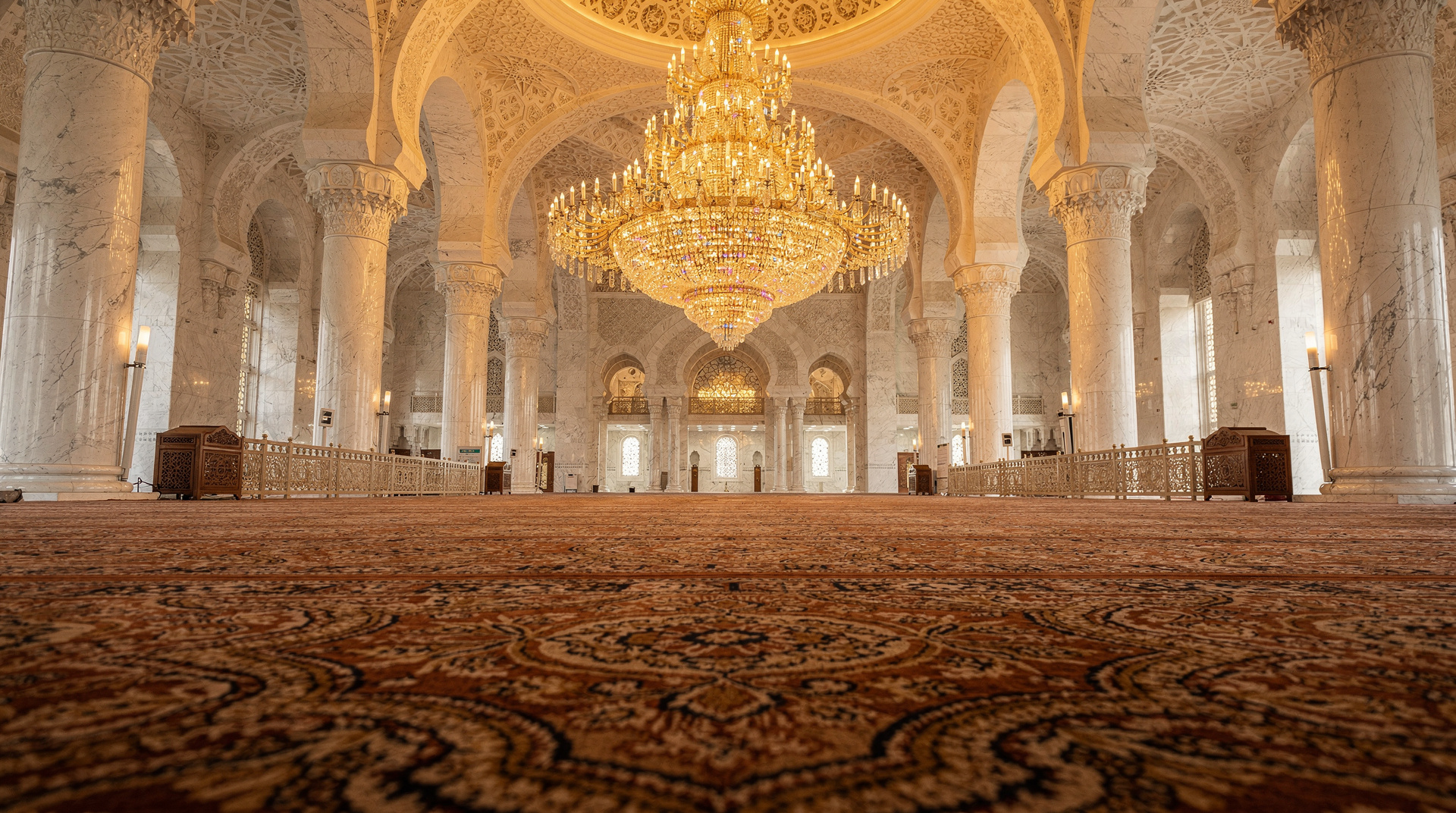
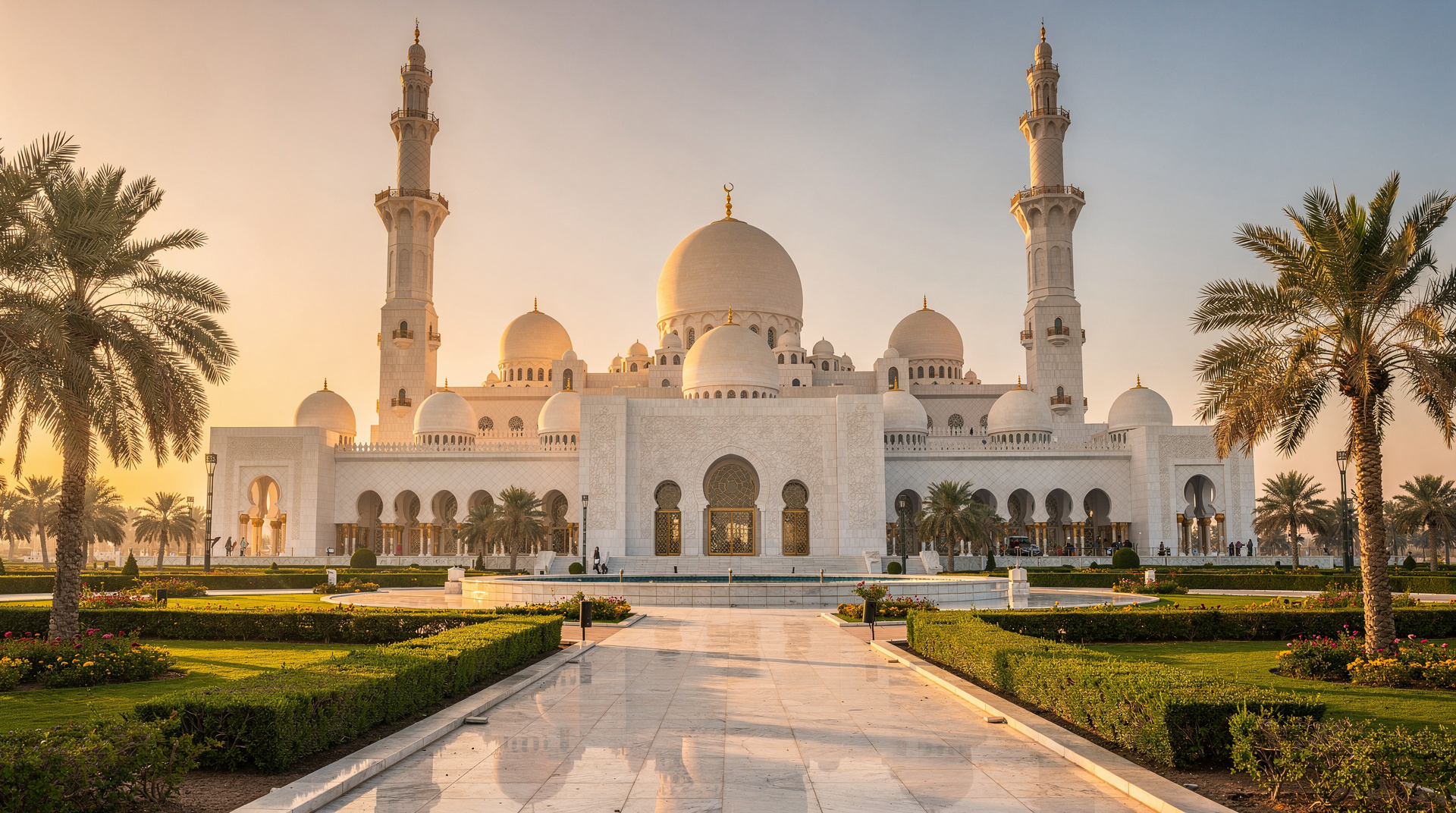
The Sultan Qaboos Grand Mosque is open to non-Muslim visitors Saturday through Thursday, 8 AM to 11 AM. Arrive early. The main prayer hall houses one of the world’s largest hand-knotted Persian carpets and a Swarovski crystal chandelier of extraordinary scale. Entry is free; modest dress is mandatory. Plan 90 minutes here.
Muttrah Souq and Corniche
In the afternoon, drive to Muttrah, Muscat’s old harbour district. Walk the Corniche along the bay, then lose an hour in the covered souq, hunting for frankincense, silver, and Omani spices. The fish market is equally worth seeing.
For a structured introduction to Muscat, consider the guided half-day city tour: Half-Day Muscat City Tour — Old Town, Muttrah and Palaces (from 20 USD in 2026).
Evening
Dinner at Ubhar Restaurant in Al Khuwair for elevated Omani cuisine (15–20 OMR per person), or the more casual Kargeen Caffe near Al Mouj for grilled mezze in a garden setting (6–10 OMR).
Stay: Crowne Plaza Muscat OCEC (45–65 OMR/night) or Hormuz Grand Hotel (40–55 OMR/night).
Day 2: Muscat to Nizwa — Forts, Souq and the Hajar Mountains
Morning Drive: Muscat to Nizwa (165 km, 2 hours)
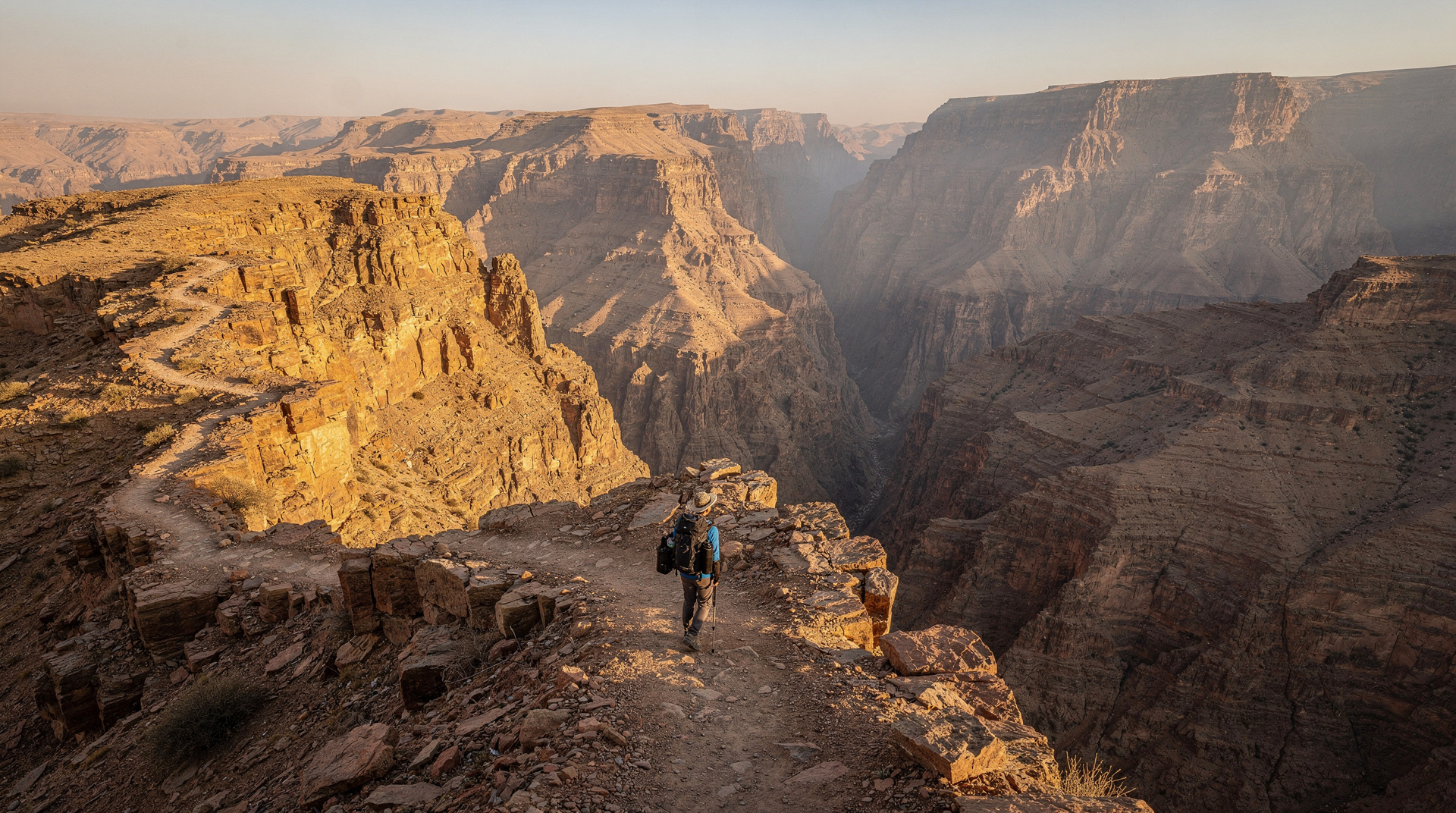
Set out by 7:30 AM to reach Nizwa before the midday heat. The drive along Route 15 through the Al Hajar mountains is spectacular — wide valleys, ancient aflaj irrigation channels, and terraced date palm plantations appearing as you descend into the interior.
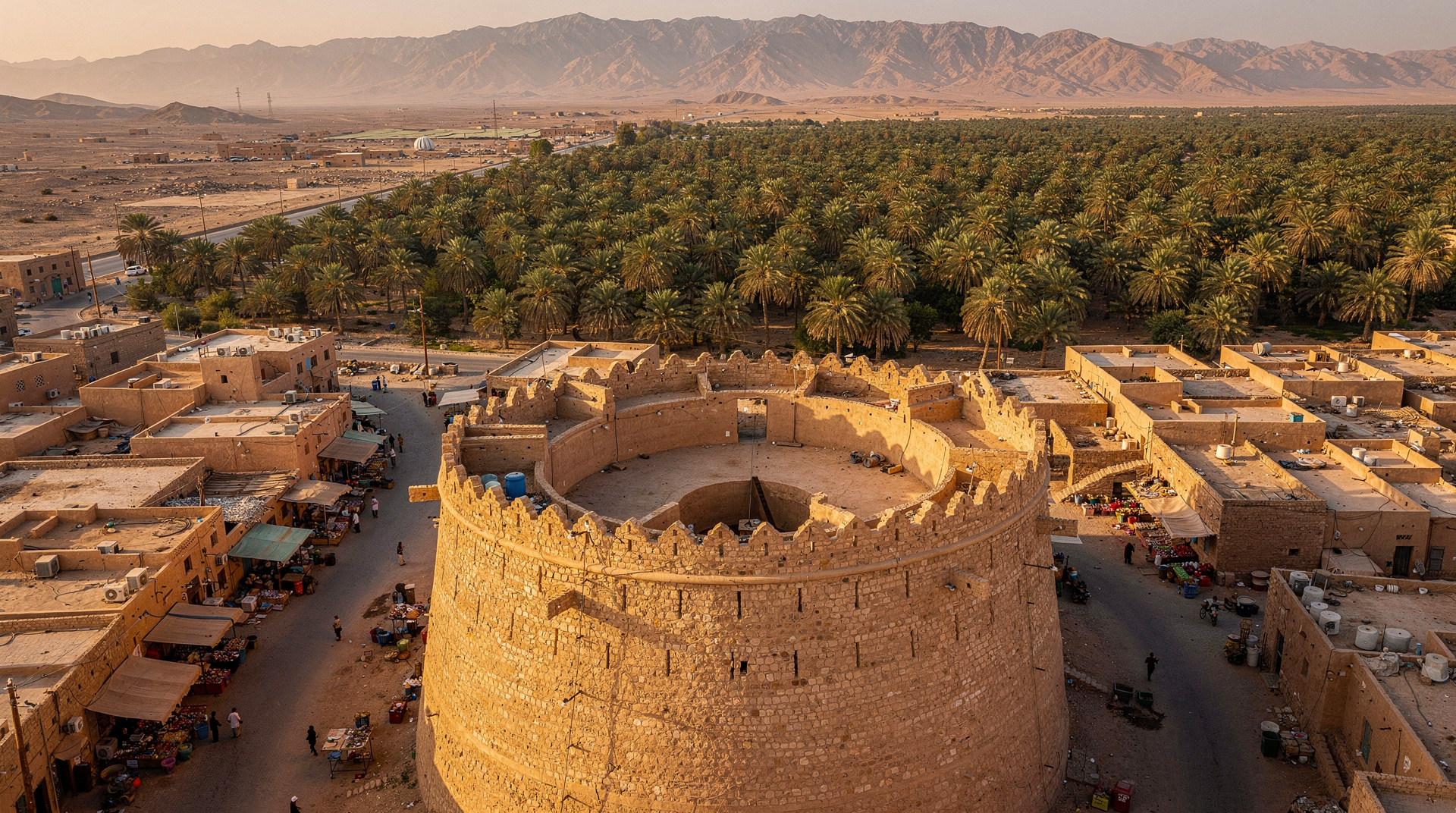
Nizwa Fort is the first stop. Built in the 17th century, its enormous circular tower is the defining landmark of Omani military architecture. Climb to the top for views over the oasis and the old city. Entry is 5 OMR.
Nizwa Souq
Immediately adjacent to the fort is Nizwa Souq, the liveliest traditional market in Oman. Friday mornings bring the famous goat market, where Bedouin farmers trade livestock in the ancient manner — a remarkable sight if your timing aligns. The covered section of the souq specializes in silver jewelry, traditional Khanjar daggers, and copper goods. Haggling is expected and prices are significantly lower than Muscat.
Guided Fort Tour Option
For both Nizwa Fort and the nearby Jabreen Castle (a 30-minute drive southwest), consider the full-day guided tour from Muscat: Full-Day Tour: Enchanting Forts of Nizwa and Jabreen (from 55 USD per person in 2026, including transport from Muscat).
Jabreen Castle Detour
If driving independently, the detour to Jabreen Castle (35 km southwest of Nizwa) is highly recommended. Built in the 1670s as a palace-fort hybrid, Jabreen is the most ornate of all Oman’s fortifications — its painted ceilings, decorated arches, and intimate rooms feel genuinely inhabited compared to the austere fort at Nizwa. Entry is 5 OMR.
Afternoon: Bahla Fort and Pottery Village
Return through Bahla, a UNESCO-listed town 40 km west of Nizwa famous for its ancient mudbrick fort (currently under restoration) and its traditional pottery workshops. The potters of Bahla have worked the same red clay for centuries — you can watch them throw pots on foot-powered wheels and buy pieces directly from the workshop floor for 2–8 OMR.
Evening in Nizwa
Stay: Nizwa Hotel (30–40 OMR/night, solid mid-range option with pool and good location near the fort). Alternatively, the newer Noor Arjaan by Rotana Nizwa (55–75 OMR/night) offers more comfort.
Dinner: The hotel restaurants serve reliable Omani fare. For something more local, the cluster of small restaurants around the souq entrance serve grilled chicken, rice dishes, and fresh juices for 2–4 OMR.
Day 3: Nizwa to Wahiba Sands via Wadi Bani Khaled
Morning: Wadi Bani Khaled
Leave Nizwa at 7 AM and drive east toward the Sharqiyah region. The road east (Route 23 then Route 35) takes you through dramatic mountain passes before descending to the coast plains. After 120 km (about 90 minutes), turn off toward Wadi Bani Khaled, one of Oman’s most beautiful wadis.
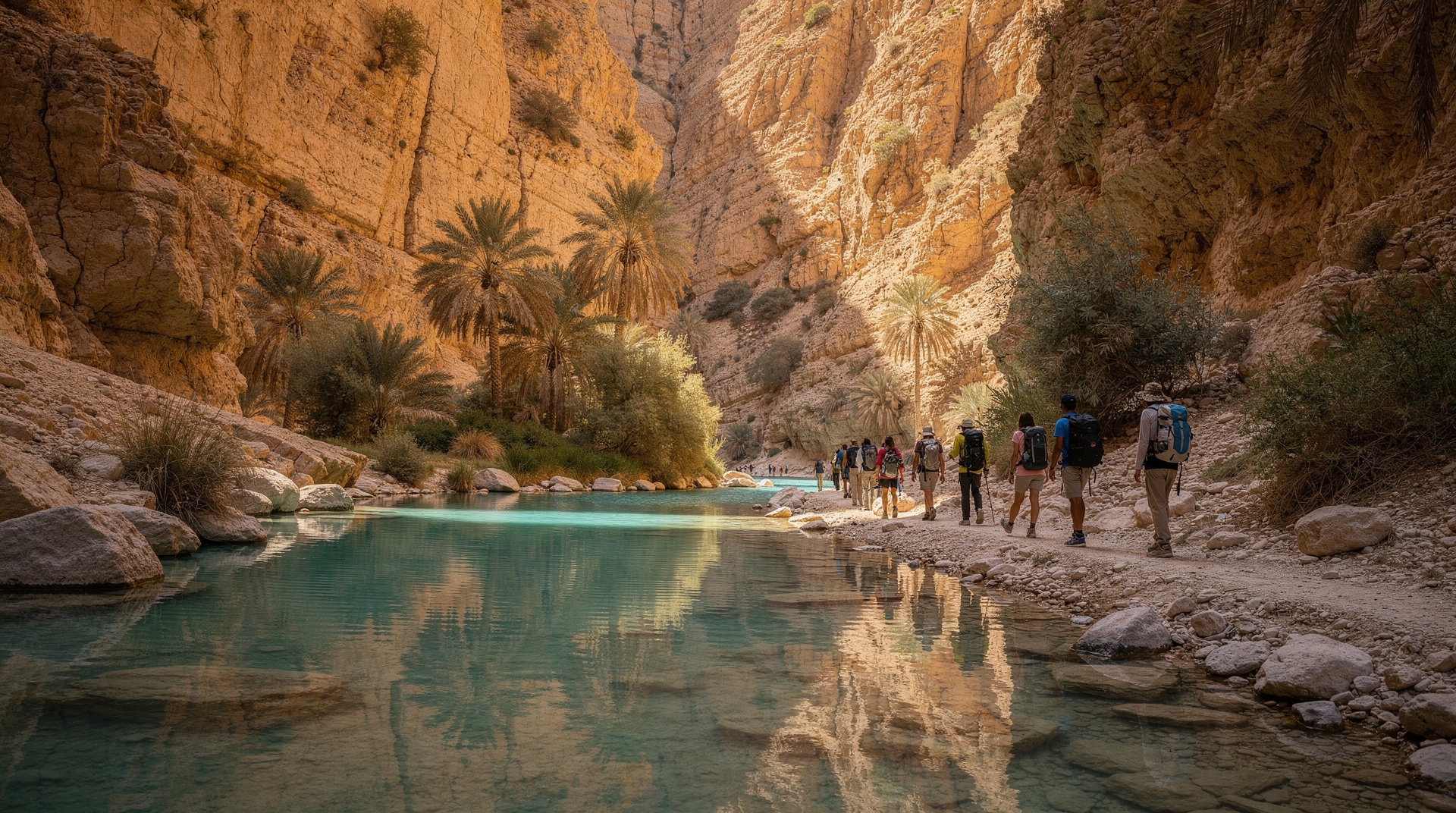
Year-round freshwater pools of vivid turquoise fill the wadi, surrounded by towering rust-red canyon walls and dense palm groves. The main pools are an easy 10-minute walk from the car park and are safe for swimming. Deeper in the wadi (30 minutes walk) are more secluded pools. Entry is free; small fees apply for parking (1 OMR).
Early Afternoon: Wahiba Sands Desert
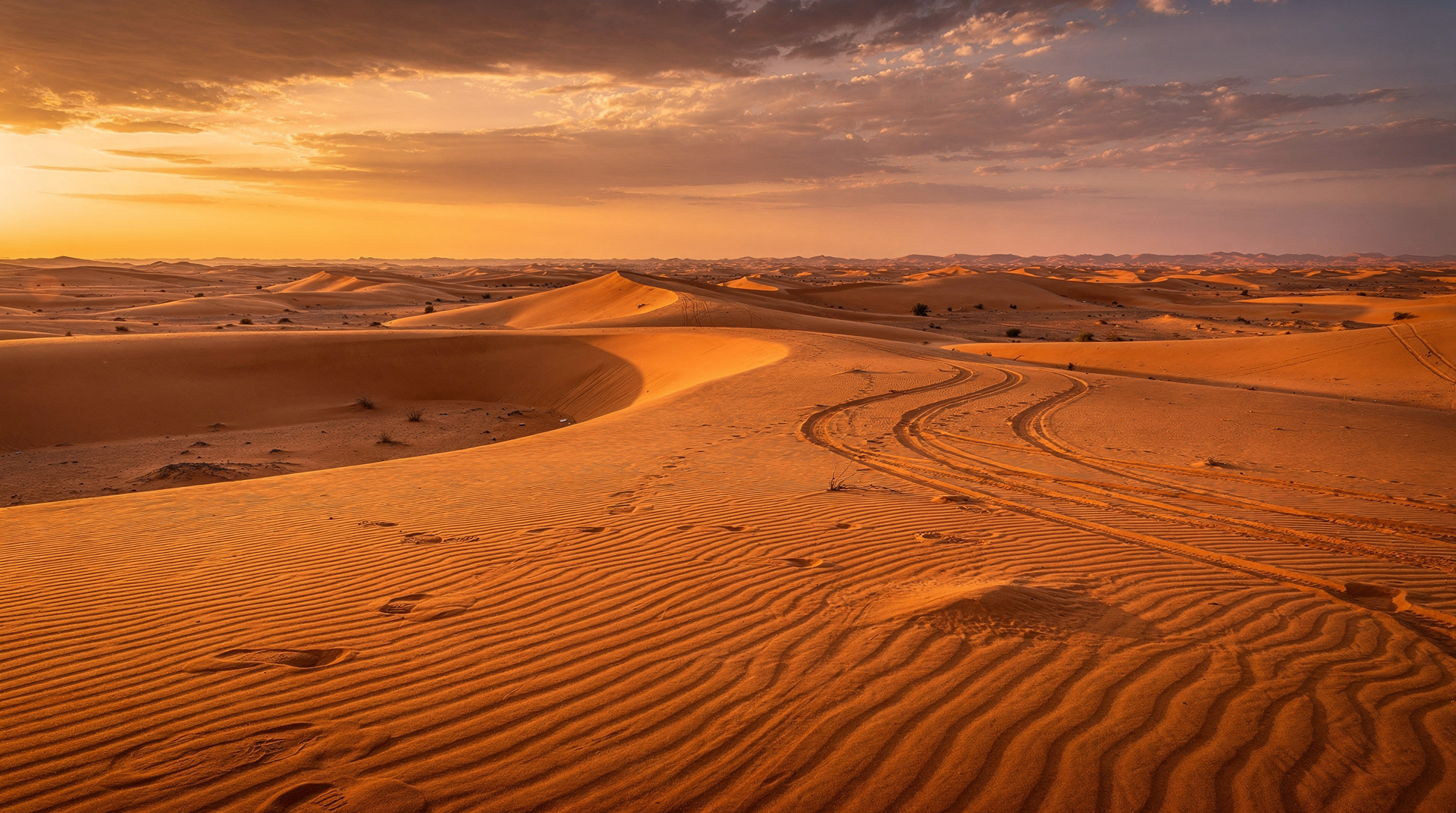
From Wadi Bani Khaled, it is 60 km south to the edge of the Wahiba Sands (also called Sharqiyah Sands), a sea of terracotta dunes extending 180 km from north to south and 80 km east to west. The sands are inhabited by Bedouin communities who have navigated them for generations.
The combined Wahiba Sands and Wadi Bani Khaled experience is also available as a guided day trip from Muscat: Wahiba Sands and Wadi Bani Khaled Day Trip — Desert Safari (from 60 USD in 2026). The guided trip includes dune bashing, a camel ride, and a traditional Bedouin camp dinner.
Afternoon and Evening: Desert Camp
1000 Nights Camp at the edge of the sands is the benchmark mid-range experience (75–120 OMR per night including dinner and breakfast), offering private Bedouin-style tents with proper beds, air conditioning, en-suite bathrooms, and an impressive spread of Omani dishes at dinner. Alternatives include Desert Nights Camp and Sama Al Wasil at similar price points.
The classic desert afternoon runs: dune bashing in 4WDs (provided by camp), sandboarding, camel ride at sunset, and then a stargazing session after dinner under one of the darkest night skies in the Arab world. The lack of light pollution in the Wahiba Sands is extraordinary — on clear nights you can see the Milky Way clearly.
Day 4: Wahiba Sands to Muscat via Wadi Shab and Bimmah Sinkhole
Morning: Departure from the Desert
Have breakfast at camp and watch the dunes change color in the early light — they shift from deep orange at sunrise to pale gold by mid-morning. Check out by 9 AM and begin the drive north toward the coast.
Mid-Morning: Wadi Shab
The route north from Wahiba Sands brings you to the coast road, where Wadi Shab awaits — arguably the single most spectacular wadi in Oman. The wadi is a narrow canyon cut through limestone mountains, filled with a series of emerald green pools connected by a short river walk.
From the car park, a short boat crossing (1 OMR, takes 2 minutes) delivers you to the start of the wadi walk. Follow the path through the canyon floor, crossing the shallow river several times via stepping stones. After 45–60 minutes of easy walking, you reach the main pools — deep, cold, intensely green water perfect for swimming. The most adventurous continue to a hidden cave at the far end that contains a waterfall accessible by swimming through a narrow passage.
For a guided version including transport from Muscat: Wadi Shab and Bimmah Sinkhole Full-Day Tour from Muscat (from 45 USD in 2026).
What to bring: Water shoes or old trainers (the riverbed is slippery), a dry bag for your phone, sunscreen, and plenty of water. The walk is rated easy to moderate — no technical skills required, though some scrambling over rocks is involved.
Lunch: Fins Village
A 20-minute drive south of Wadi Shab brings you to Fins, a small coastal village with an excellent and largely empty beach. Several basic seafood restaurants here serve fresh catch for 3–5 OMR — simple, excellent, unmissably local.
Afternoon: Bimmah Sinkhole
Back on Route 17 heading north toward Muscat, stop at Bimmah Sinkhole (also called Hawiyat Najm Park), approximately 20 km north of Wadi Shab. The sinkhole is a collapsed limestone cavern, now filled with brackish turquoise water and connected underground to the sea. Steps lead down into the sinkhole and swimming is permitted. Entry is 1 OMR. The colors are extraordinary — it photographs like something photoshopped.
Return to Muscat (130 km, 1.5 hours from Bimmah)
Arrive back in Muscat by late afternoon. Stay: Same hotel as Day 1, or try The Chedi Muscat for a luxurious final night (120–200 OMR/night, with legendary pool and restaurant).
Day 5: Departure or Optional Extras
Day 5 is a buffer for late flights, a second souq visit, or any activity missed earlier. Options include:
- Daymaniyat Islands snorkeling (full morning, 45 USD — see the 3-day Muscat itinerary for details)
- Royal Opera House Muscat morning tour
- Bait Al Zubair Museum — the finest museum of Omani heritage in the capital, 5 OMR entry
- Shopping for frankincense, dates, and silver at Lulu Hypermarket or Muscat Grand Mall
For an early flight, most hotels offer 5 AM checkout with breakfast boxes on request. Muscat International Airport is 30 minutes from the city center.
Budget Overview (per person, mid-range)
| Category | Cost |
|---|---|
| Accommodation (4 nights) | 160–240 OMR |
| Car rental (5 days) | 75–125 OMR |
| Fuel | 15–20 OMR |
| Tours and entrance fees | 60–90 OMR |
| Food (all meals) | 60–80 OMR |
| Total | 370–555 OMR (960–1440 USD) |
For full destination details, see our Muscat guide and Jebel Shams guide for side-trip ideas if extending your trip.
Car Rental Guide for First-Time Oman Drivers
Driving in Oman is one of the pleasures of the trip — roads are excellent, signage is bilingual in Arabic and English, and traffic outside Muscat is light. Here is what you need to know:
Licence: Most nationalities can drive in Oman with their home country licence. An International Driving Permit (IDP) is recommended alongside your national licence and is required by some rental companies. Check with your specific operator.
Insurance: Always take the Collision Damage Waiver (CDW) and third-party liability insurance. The additional daily cost (approximately 4–8 OMR/day) is worth it on mountain roads. Confirm what the excess is before signing.
Fuel: Petrol costs approximately 0.19 OMR per litre as of 2026 — remarkably cheap. Fill up before entering mountain or desert areas as stations can be 50–80 km apart. The Wahiba Sands camps will advise you on the last petrol station before the dunes.
Speed limits: 120 km/h on highways, 100 km/h on dual carriageways, 60–80 km/h on other roads, 40 km/h in towns. Speed cameras are common and fines are strict. Do not exceed limits.
Road conditions: All routes in this itinerary are paved. Wadi crossing points may be flooded after heavy rain — never attempt to drive through fast-moving water, regardless of depth. Turn back and wait or find an alternative route.
Night driving: Avoid driving at night in rural areas. Camels, donkeys, and goats roam freely on roads without any lighting — a camel collision at speed is fatal. If you must drive after dark on rural roads, drive at 60 km/h maximum.
Oman Visa Information (2026)
e-Visa online: Available at evisa.rop.gov.om for most nationalities. Processing takes 24–72 hours. Cost: 20 OMR for a single entry tourist visa (30 days). Multiple entry options available at 50 OMR.
Visa on arrival: Available at Muscat International Airport for many nationalities including UK, USA, EU countries, Australia, Canada, Japan, South Korea. Cost: same as e-visa (20 OMR). Queue times vary — applying online beforehand saves 15–30 minutes.
Visa-free: GCC nationals (Saudi Arabia, UAE, Kuwait, Bahrain, Qatar) enter Oman without a visa.
Extension: Visas can be extended for 20 OMR at any directorate of expatriates and borders. Most tourist visas are 30 days with the option for one extension.
Oman Cultural Etiquette
Oman is a Muslim-majority country with a deeply rooted culture of hospitality and respect. Visitors who engage with this culture positively — rather than treating it as an obstacle to navigate — have a fundamentally better experience.
Dress: In Muscat, the dress code for tourists is more relaxed than in other Gulf countries. Shorts and sleeveless tops are accepted in resort and beach areas. However, in souqs, mosques, and government buildings, cover shoulders and knees. In rural areas and smaller towns, more conservative dress is always appropriate and appreciated.
Ramadan: If visiting during Ramadan (dates shift by approximately 10 days earlier each year; consult a calculator for 2026–2027 dates), eating, drinking, and smoking in public during daylight hours is prohibited for Muslims and discouraged for non-Muslims. Restaurants may operate limited hours. The evenings after iftar (breaking of the fast) are particularly festive and lively.
Photography: Always ask permission before photographing Omani people, particularly women. Photographing government buildings, military installations, and airports is prohibited. Landscapes, architecture, and general scenes are freely photographable.
Greetings: The standard Omani greeting is “As-salamu alaykum” (peace be upon you), with the response “Wa alaykum as-salam.” A handshake between men is common; between men and women, wait for the woman to initiate. Many Omani men will not shake hands with women who are not related to them — this is not rudeness.
Hospitality: If offered Arabic coffee (kahwa) and dates, accept graciously — refusing is considered impolite. Arabic coffee is lightly flavored with cardamom and saffron, served in small cups without handles. Hold the cup in your right hand.
Oman in Numbers (2026)
- Population: Approximately 4.9 million (including expatriates who make up roughly 45% of residents)
- Capital: Muscat
- Language: Arabic (official); English is widely spoken in tourism, business, and government
- Religion: Islam (Islam is the state religion; Oman practices Ibadhi Islam, a moderate denomination distinct from both Sunni and Shia)
- Currency: Omani Rial (OMR) — one of the world’s most valuable currencies. 1 OMR = approximately 2.60 USD
- Time zone: GMT+4 (no daylight saving)
- Electricity: 240V, British-style three-pin plugs (same as UK)
- Emergency services: 9999 (police), 9888 (ambulance), 9994 (fire)
- International dialling code: +968
Oman is consistently rated as one of the safest countries in the Arab world for tourists. The 2026 Global Peace Index ranks it among the top 15 safest countries in the Asia-Pacific region. Crime against tourists is exceptionally rare.
Is This Itinerary Right for You?
Frequently asked questions about 5-Day Oman Highlights
Is five days enough to see Oman?
Five days is enough for a well-paced introduction covering Muscat, the interior forts, one desert night, and the coastal wadis — the country’s core highlights. It is not enough to add Salalah, Musandam, or a serious mountain hike like Jebel Shams; for those, the 10-Day Grand Tour or 14-Day Ultimate Oman itineraries give more room.
Do I need a 4WD for this specific route?
No. Every road on this five-day route is paved and manageable in a standard rental car, including the drive to the edge of the Wahiba Sands. A 4WD only becomes useful if you want to drive into the dunes yourself rather than being driven in by camp staff, or if you extend the trip to Jebel Shams or Wadi Bani Awf.
Related Itineraries and Destination Guides
Use the three days in Muscat as the gateway to understanding the capital before heading inland. The Grand Mosque visitor guide provides the full context for Day 1’s most important site. For the mountain sections, see the Jebel Akhdar destination guide for the Green Mountain’s villages and canyon views.
The Jebel Shams hiking route detailed in the Balcony Walk guide is the most commonly requested extension to this five-day itinerary — it slots in as an optional Day 3 alternative between Muscat and Nizwa.
For shorter stays, the 3-Day Muscat Express covers the capital plus Daymaniyat Islands snorkeling. For longer stays, the 7-Day Classic Oman circuit extends the route to Sur and the turtle reserve. Adventure travelers should consult the 7-Day Adventure Road Trip for Snake Canyon canyoning and the full off-road experience. Families have a dedicated Family Oman itinerary with age-appropriate activities throughout.