Nizwa Fort and Jebel Akhdar Combo Tour: Review and Booking Guide
Muscat: explore Nizwa Fort and Souq + Jebel Akhdar
Duration: 10 hours
- Free cancellation
- Hotel pickup
- English guide
What to expect across two iconic landscapes
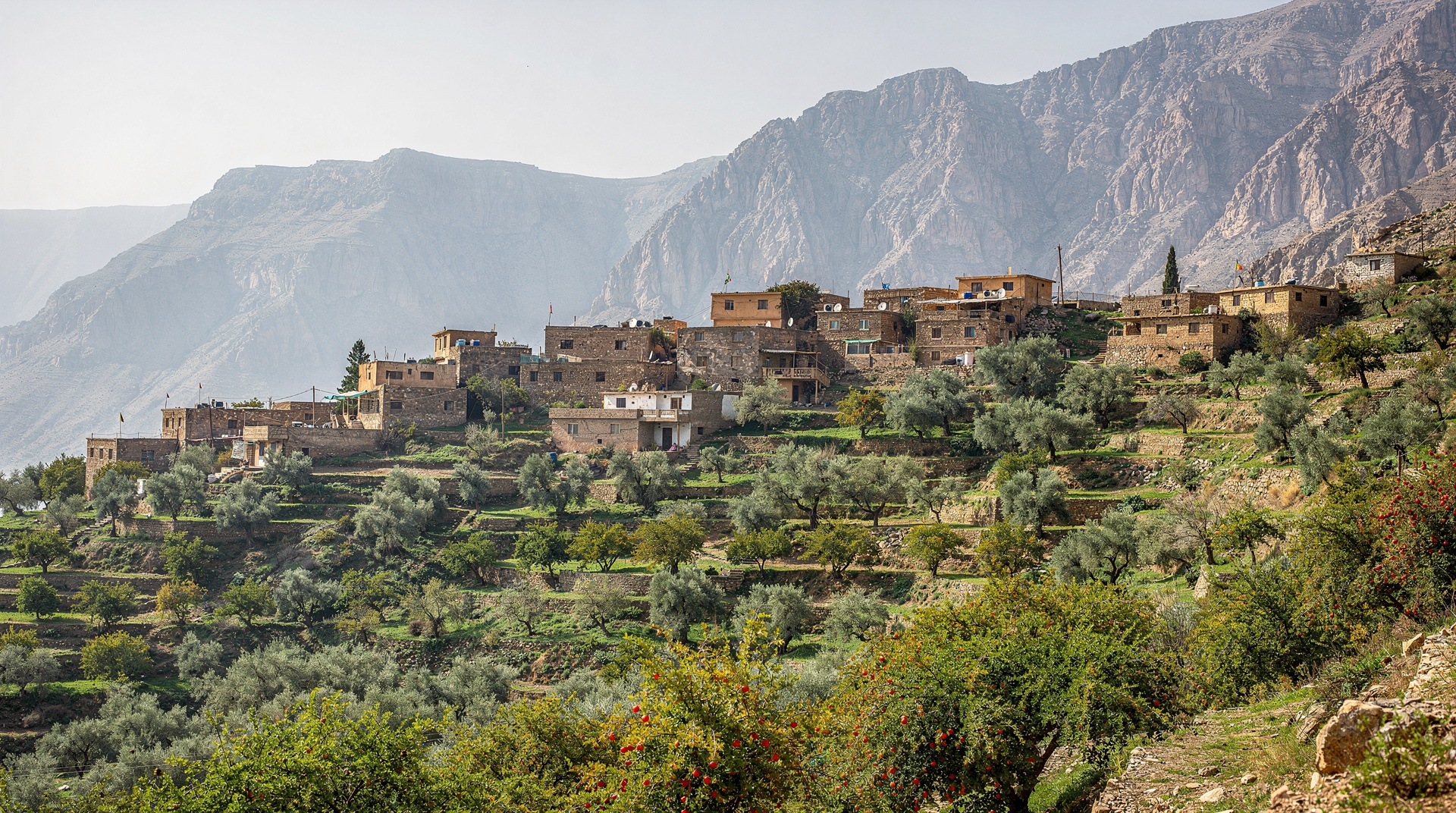
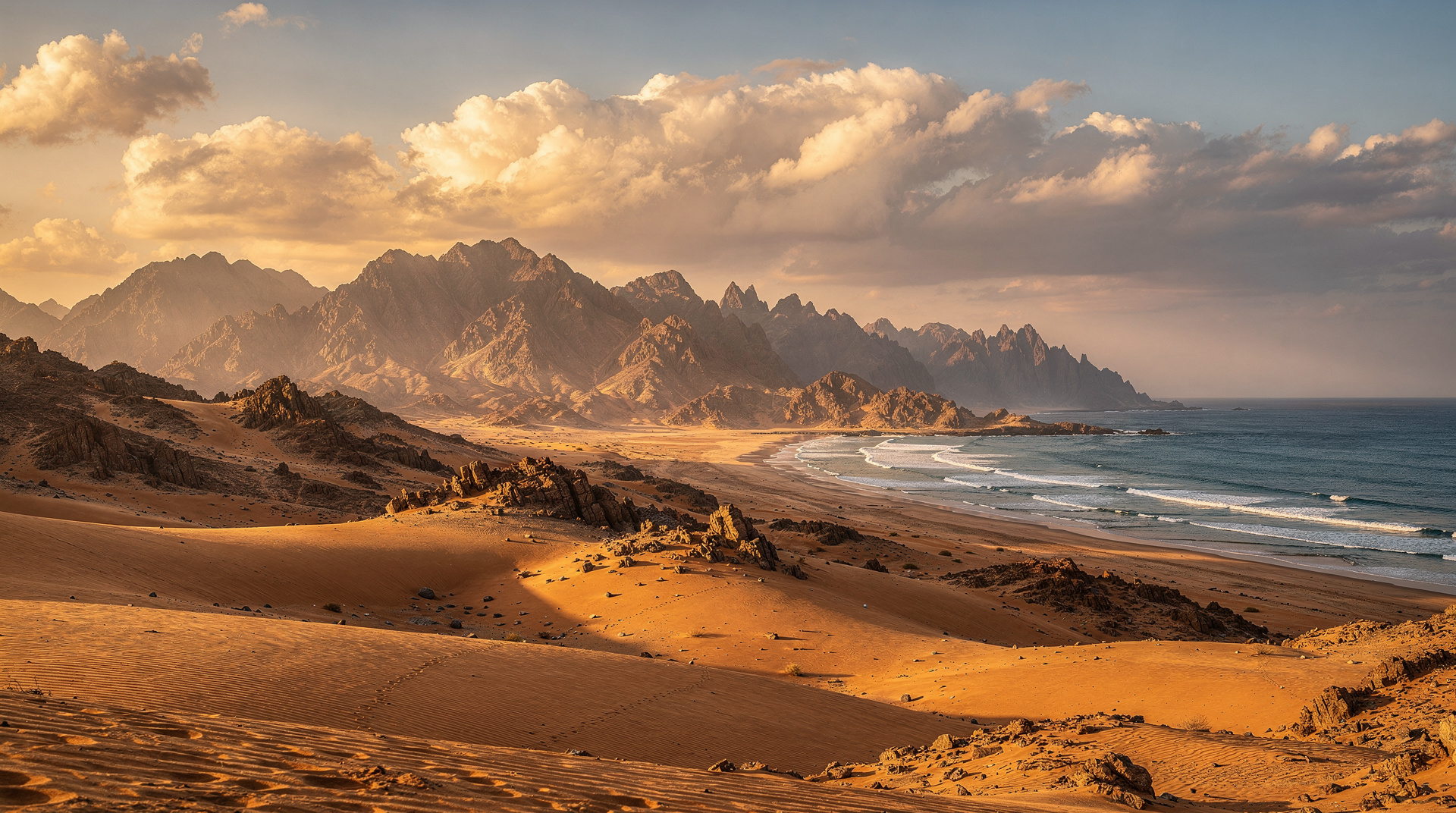
The drive southwest from Muscat into Oman’s interior follows a route that has connected coast to mountain for centuries, and even now — in a modern air-conditioned 4WD — there is a sense of crossing a genuine threshold when the urban sprawl of greater Muscat gives way to the rocky emptiness of the Hajar Mountains. The landscape here is austere and beautiful: limestone ridges striped in ochre and rose, dry wadis that carry torrents in the brief rainy season, and scattered villages of mud brick that seem to have grown out of the rock rather than been built on it.
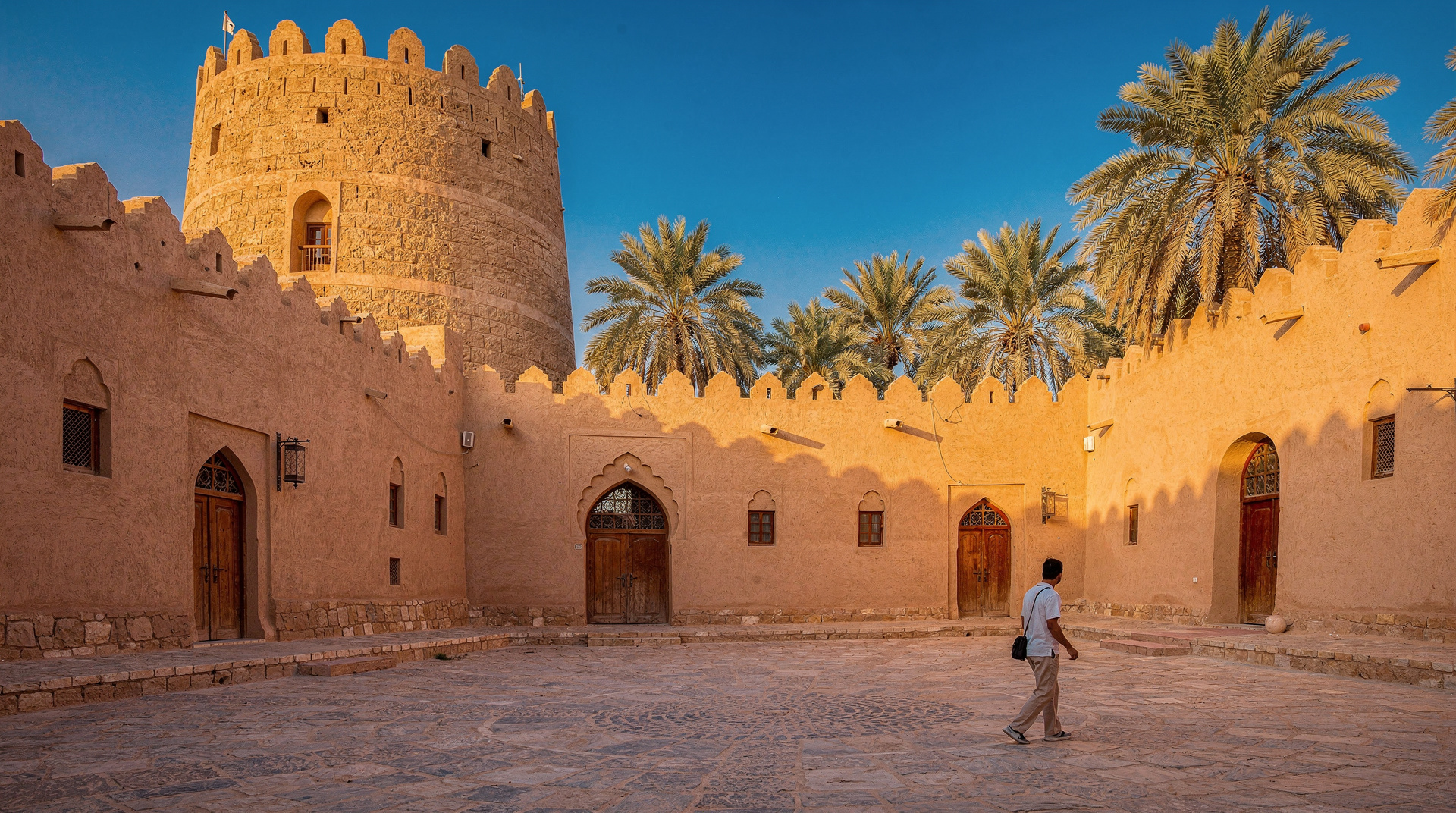
Nizwa announces itself with a forest of date palms before the city appears, and the fort is visible from the approach road — a massive cylindrical tower of smooth mud and stone that was the seat of Ibadi Islamic scholarship and tribal power for centuries. Inside, the fort reveals its defensive ingenuity: multiple gateways designed to disorient attackers, holes in the ceiling through which defenders could pour boiling date syrup on invaders, and a rooftop that commands the entire oasis and surrounding hills.
The old souq adjacent to the fort sells silver jewellery, khanjar daggers, handwoven fabrics, frankincense burners, and the kind of spices that fill the air with a complexity that is the olfactory signature of Arabia. This is not a tourist-sanitised reconstruction — Omani families shop here, Bedouin women examine silver with professional eye, and the livestock market on Fridays brings a level of authentic chaos that no staged cultural attraction can replicate.
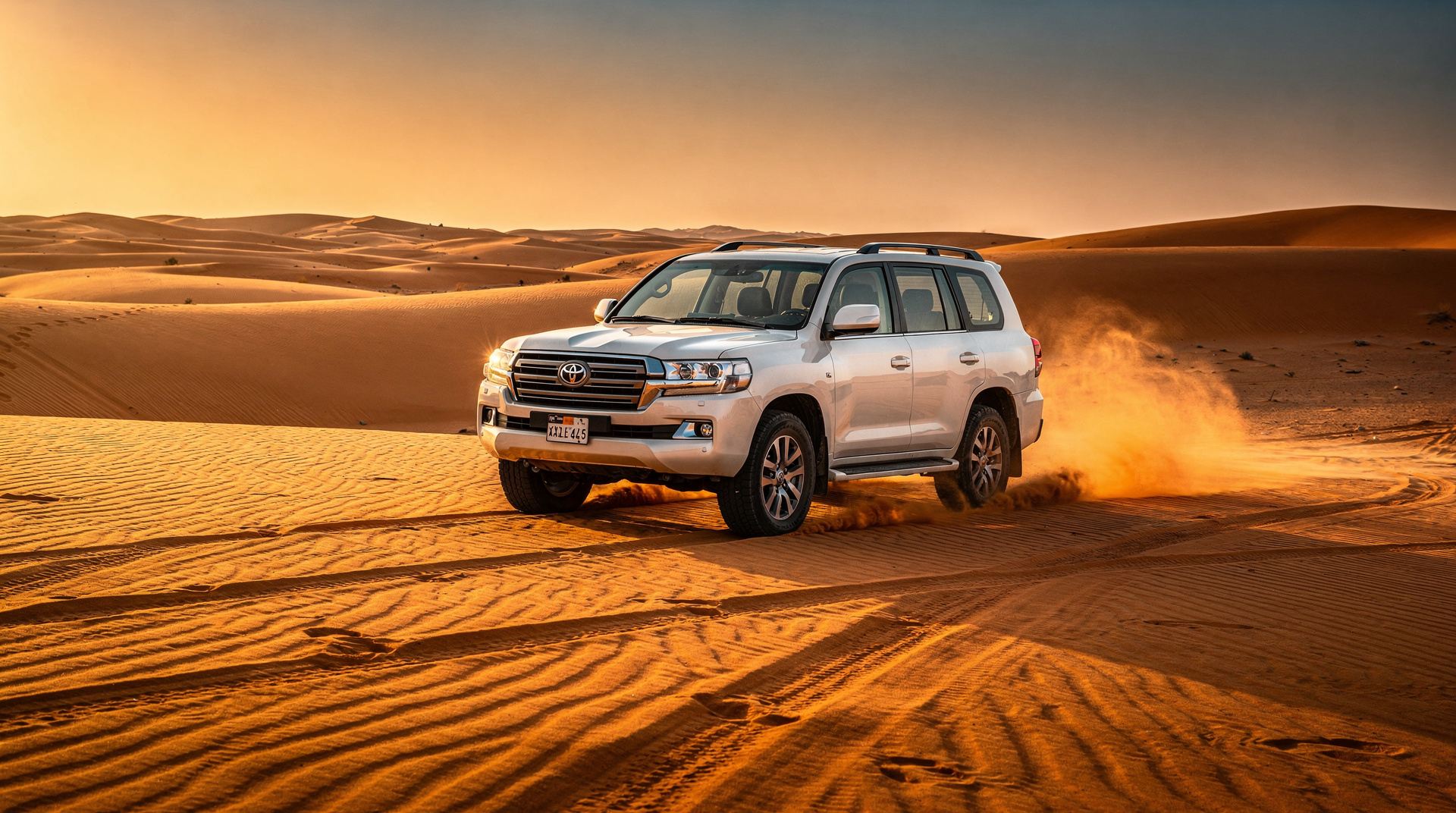
From Nizwa, the 4WD convoy climbs the switchback road to Jebel Akhdar. The checkpoint at the base of the mountain requires proof of 4WD capability, and the road beyond justifies the requirement — narrow, steep, with sheer drops that inspire a respect for altitude even in those who claim not to be afraid of heights. At the top, the temperature drops immediately and dramatically: what was 32°C below becomes 18°C on the plateau, and the air carries the faint scent of rose water and damp soil.
Why book this specific tour
The nizwa-jebel-akhdar-combo tour at $95 is the most efficient way to cover both sites in a single day without the complexity of self-driving (the 4WD road to Jebel Akhdar is not navigable in a rental car, and Nizwa is far enough from Muscat that the full-day commitment makes sense whether you drive yourself or take a tour).
The operator carries 654 reviews at 4.7 stars, indicating consistent quality over a large sample size. The English-speaking guide adds genuine value at Nizwa Fort where the historical context transforms the visit from an impressive ruin to a comprehensible story of Omani political and religious history.
For travellers who want a deeper focus on Nizwa’s historical context — including the falaj irrigation system and the regional museum — the private Nizwa fort, souq, falaj and museum tour at $110 covers more ground more thoroughly at the cost of the Jebel Akhdar mountain component.
And for those who primarily want Jebel Akhdar, the Jebel Akhdar Green Mountain tour at $85 focuses exclusively on the plateau villages and viewpoints with more time at altitude.
Itinerary and timeline
- 7:00 AM — Hotel pickup from Muscat
- 9:00 AM — Arrive Nizwa; visit Nizwa Fort with guide (1.5 hours)
- 10:30 AM — Traditional souq walk; time to explore silver, spice, and handicraft sections
- 11:30 AM — Local lunch at a Nizwa restaurant (Omani cuisine)
- 12:30 PM — Drive toward Jebel Akhdar; 4WD checkpoint
- 1:30 PM — Arrive on the Jebel Akhdar plateau; visit Diana’s Point viewpoint
- 2:00 PM — Walk to the terrace gardens and rose water distillery (seasonal: best March–May)
- 2:45 PM — Visit ancient village of Wadi Bani Habib
- 3:30 PM — Begin descent from Jebel Akhdar
- 5:30 PM — Return drive to Muscat through the interior valleys
- 7:00 PM — Drop-off at Muscat hotels
What to bring
- Warm layer (fleece or light jacket): mandatory for Jebel Akhdar even in the warmest months
- Comfortable walking shoes — Nizwa Fort has steep internal stairs and the plateau village paths are uneven
- Sunscreen and hat for the open sections of the fort rooftop
- Camera with a wide-angle lens — the views from Diana’s Point are the best in inland Oman
- Small amount of Omani rials for souq purchases and optional soft drinks at roadside stops
- Water bottle — the interior is dry and the drive long
Who this tour suits
History and culture enthusiasts will find Nizwa Fort genuinely absorbing. Mountain lovers who cannot manage a challenging physical hike will appreciate that Jebel Akhdar’s dramatic landscapes are accessible from the 4WD road and viewpoints without strenuous walking. The combination makes for one of the most geographically and historically diverse day trips available from Muscat.
Who should look elsewhere
Travellers who prioritise beach or water activities will find this day too dry and land-based. Anyone specifically interested in Oman’s southern forts (Bahla, Jabreen) should consider the historical day trip to Nizwa, Jabreen Castle and Bahla Fort at $85 instead. Those who want to hike on Jebel Akhdar rather than just view it should look at the via ferrata option which offers a technical climbing route on the mountain’s limestone face.
Real prices and what’s included
| Item | Nizwa + Jebel Akhdar combo | Private Nizwa tour | Jebel Akhdar only |
|---|---|---|---|
| Hotel pickup | Yes | Yes | Yes |
| Nizwa Fort entry | Yes | Yes | No |
| Nizwa souq | Yes | Yes | No |
| Jebel Akhdar plateau | Yes | No | Yes |
| Lunch | Yes | Depends | Yes |
| English guide | Yes | Yes | Yes |
| 4WD vehicle | Yes | Yes | Yes |
| Group size | ~15 | Private | ~15 |
| Price (per person) | ~$95 | ~$110 | ~$85 |
Best time to do it
Nizwa and Jebel Akhdar are rewarding year-round, but two windows stand out. October to February offers the clearest mountain air on Jebel Akhdar with dramatic cloud formations rolling over the plateau rim. March to May is the rose season, when the terraced gardens produce the Damascus roses distilled into rose water — the most atmospheric time to visit the village distilleries. Summer (June–August) is manageable thanks to the altitude cooling Jebel Akhdar, but the drive through the interior before the mountain can be extremely hot.
How to book
Book at least 48–72 hours ahead for the standard season, and at least a week ahead during the rose season in March–April when tours to Jebel Akhdar reach peak demand. The Friday morning departure aligns best with Nizwa’s livestock souq for the full experience.
Book the Nizwa Fort and Jebel Akhdar combo tour — free cancellation, hotel pickup, English guide included.
Compare alternative tours
| Tour | Duration | Rating | Price | Highlights | |
|---|---|---|---|---|---|
| Muscat to Nizwa: private fort, souq, falaj and museum tour | 8 hours | ★ 4.8 (178) | From $110 | Private tour · Hotel pickup · Free cancellation | Check |
| From Muscat: Jebel Akhdar the Green Mountain tour | 10 hours | ★ 4.7 (1123) | From $85 | Free cancellation · Hotel pickup · Best seller | Check |
| Historical day trip: Nizwa, Jabreen Castle, Bahla Fort | 9 hours | ★ 4.6 (287) | From $85 | Free cancellation · Hotel pickup · Small group | Check |
Frequently asked questions
How far is Nizwa from Muscat?
Nizwa is approximately 165 km southwest of Muscat, about a 1.5 to 2-hour drive on the dual carriageway through the interior. Most tours reach Nizwa by 9 AM with a 7 AM departure.Is a 4WD vehicle required to visit Jebel Akhdar?
Yes. The road to Jebel Akhdar's upper plateau passes through a military checkpoint that requires proof of a 4WD vehicle. All tour operators providing the Jebel Akhdar experience use certified 4WD vehicles.What is the altitude of Jebel Akhdar?
Jebel Akhdar (the Green Mountain) reaches 2,980 metres at its highest point. The standard viewing areas visited on day trips sit at 1,800–2,200 metres, where temperatures are noticeably cooler than Muscat.Is there a Friday souq at Nizwa?
Nizwa's famous livestock and traditional souq operates most intensively on Friday mornings, when Bedouin traders bring goats, cattle, and silver. Many tour operators time Friday departures to coincide with souq activity.What is grown on Jebel Akhdar?
The mountain's terraced gardens produce pomegranates, apricots, peaches, walnuts, and roses — the Damascus rose that is distilled into Oman's famous rose water. The rose harvest in late March and April is a spectacular time to visit.How cold is it on Jebel Akhdar compared to Muscat?
The temperature on the Jebel Akhdar plateau is typically 10–15°C cooler than Muscat. In winter (December–February), it can be close to 0°C at night and 8–12°C during the day. A warm layer is essential year-round.Can I combine Nizwa and Jebel Akhdar in a single day trip?
Yes, and this is exactly what the `nizwa-jebel-akhdar-combo` tour does in 10 hours. It is a full day but the distances are manageable with an experienced driver.What is the best viewpoint on Jebel Akhdar?
Diana's Point (Sharaf Al Alamayn) is the most famous, offering views down nearly 2,000 metres into the valley. The ancient village of Al Ain and the terraced gardens above Wadi Bani Habib are also excellent.Is the Nizwa Fort worth visiting?
Yes. Nizwa Fort is one of Oman's most impressive historical monuments — a 17th-century circular tower with a maze of underground passages, trap doors, and a rooftop cannon platform with panoramic views of the date palm oasis.