Swimming in Oman's Wadis: A Complete Guide
The Blue Pools of Arabia
One of the greatest surprises for first-time visitors to Oman is the water. Not the sea — though Oman’s coastline is exceptional — but the inland water. The wadis: seasonal riverbeds carved through limestone mountains over millions of years, fed by underground springs and periodic rainfall, holding clear pools of blue-green water that feel completely improbable in a desert country.
Swimming in an Omani wadi is one of the defining travel experiences in the Arabian Peninsula. There is nothing quite like floating in a cool pool of turquoise water at the base of a canyon, surrounded by date palms and the absolute silence of the Hajar Mountains, knowing that the nearest tourist crowd is hours away.
This guide covers the best wadi swimming spots, what to expect, and the safety rules that should never be ignored.
| At a glance | |
|---|---|
| Where | Hajar Mountains (Wadi Shab, Bani Khalid, Tiwi, Bani Awf) and around Salalah (Wadi Darbat) |
| Cost | Free to enter most wadis; small boat crossing or entry fees (around 1-3 OMR) at Wadi Shab, Bani Khalid and Bimmah Sinkhole |
| Time needed | Half a day for Wadi Shab (boat crossing plus roughly 45-minute hike each way); a couple of hours for Bani Khalid |
| Getting there | A rental sedan reaches Wadi Shab and Bani Khalid car parks; a 4x4 is needed for Wadi Bani Awf and further exploration — see our 4x4 rental guide |
| Best time | October to April for comfortable hiking; the khareef season (roughly July-September) for Wadi Darbat near Salalah |
What Is a Wadi?
A wadi is a dry riverbed that flows with water only seasonally — during and after rainfall. In Oman, the geology of the Hajar Mountains creates a system of deep, dramatic gorges through which rainwater flows rapidly before disappearing into the desert. But in many wadis, permanent springs and underground water sources maintain pools of clear water year-round, even in the driest months.
These permanent pools are what make wadi swimming possible in Oman throughout the year. The water in them tends to be cool (refreshing rather than cold), clear, and surprisingly clean given their remoteness.
The colour of wadi water is often startlingly vivid. The blue-green tones come from the mineral content of the limestone rock, which gives the water an almost Caribbean quality that seems completely at odds with the surrounding desert.
The Best Wadis for Swimming
Wadi Shab: The most famous and most visited wadi in Oman, and for good reason. Located about three hours southeast of Muscat on the coastal road toward Sur, Wadi Shab begins with a short boat crossing over a lagoon, followed by a 45-minute hike along a narrow gorge with increasingly spectacular pools. The final destination — accessed by swimming through a narrow cave opening — is a pool inside a cave where a waterfall drops through a hole in the ceiling. It is extraordinary.
The hike is not technically difficult but it involves multiple river crossings and some swimming through the gorge itself. Waterproof bags for phones and cameras are essential. The experience is at its best on weekday mornings before the crowds arrive.
Guided day trips from Muscat covering Wadi Shab and the nearby Bimmah Sinkhole are an excellent option: Full-Day Tour from Muscat to Wadi Shab and Bimmah Sinkhole.
For a guided experience focused on the wadi hike and swim itself, the Explore Wadi Shab: Hike and Swim in Paradise tour (from 35 USD, 2026) provides a knowledgeable guide who leads the full canyon walk and knows the swimming conditions on the day.
Wadi Bani Khalid: The most accessible of Oman’s swimming wadis, Wadi Bani Khalid is about two hours from Muscat and a popular weekend destination for Omani families. Unlike Wadi Shab, there is no significant hike involved — the pools begin almost immediately at the end of the access road. The water is extraordinary: intensely blue-green, surrounded by date palms and smooth rock. Small fish dart through the shallower sections.
There is a small entrance fee (around 1 OMR) and basic facilities including changing rooms and a small cafe. Weekdays are significantly quieter than weekends. For a convenient guided visit combining Wadi Bani Khalid with a desert experience, the Wadi Bani Khalid and Desert Group Tour (from 45 USD, 2026) handles transport and guide logistics from Muscat.
Wadi Tiwi: Running parallel to Wadi Shab along the southeastern coast, Wadi Tiwi is less visited and arguably more beautiful in some stretches. The road through the wadi passes a series of villages clinging to the canyon walls, terraced gardens irrigated by ancient falaj channels, and pools of clear water. It is possible to drive partway in and hike further. The experience feels wilder and more remote than Wadi Shab.
Wadi Bani Awf: More of an adventure than a swim, Wadi Bani Awf is a dramatic gorge through the Hajar Mountains that requires a 4WD and confidence on rough tracks. The drive through the wadi — sometimes in the riverbed itself, sometimes on steep gravel switchbacks — is among the most spectacular off-road routes in Oman. There are pools in the lower sections suitable for swimming. The payoff is extraordinary scenery and almost no other tourists.
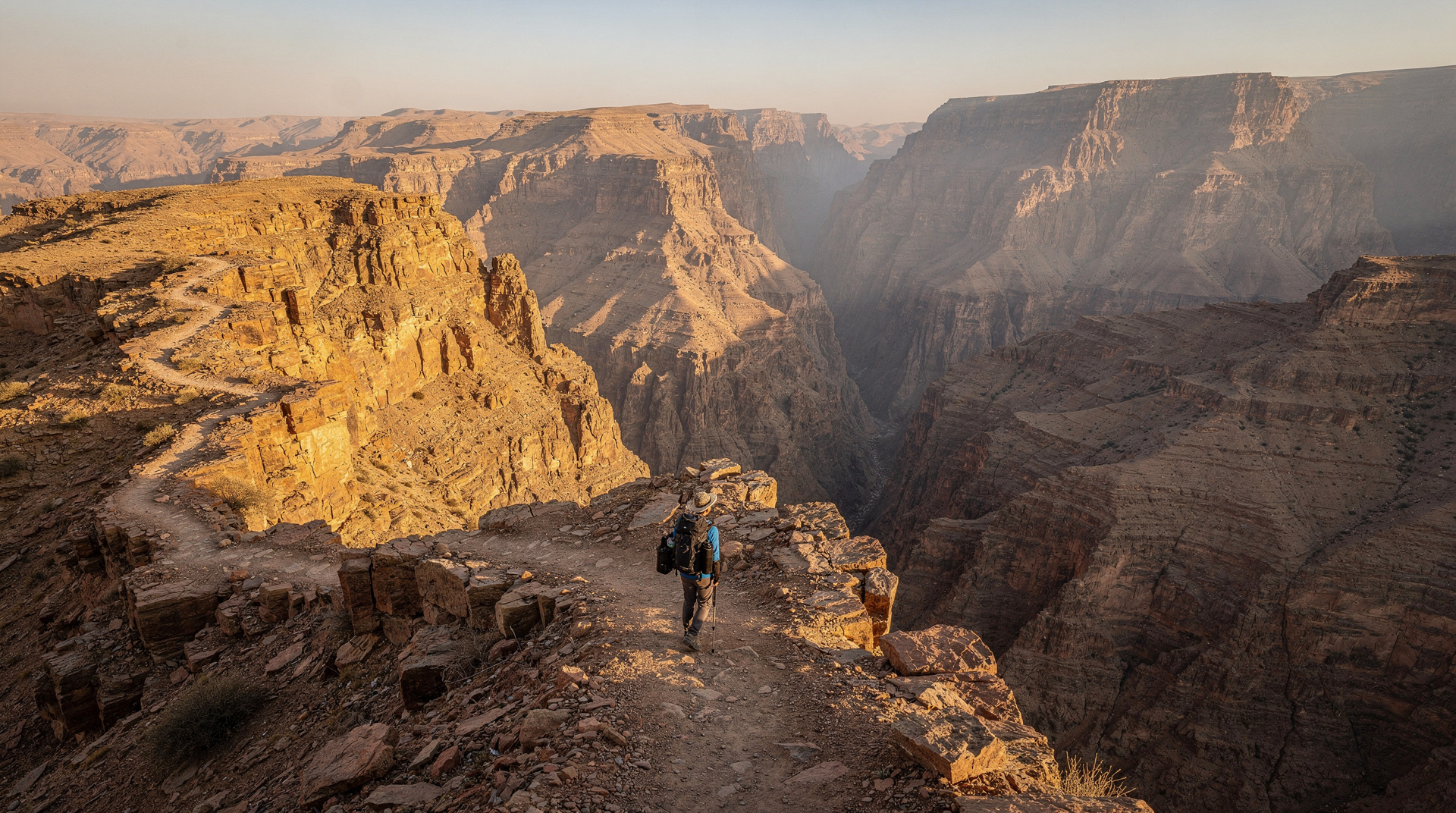
Wadi Ghul: Near Jebel Shams in the interior, Wadi Ghul is sometimes called the Grand Canyon of Arabia. While the wadi floor itself is largely dry, the scale of the rock walls — dropping up to 1,000 metres on either side — is breathtaking. There are small pools in sections accessible on foot from the road above.
Wadi Darbat (near Salalah): During the khareef season in summer, Wadi Darbat in the Dhofar region fills with water and becomes one of the most beautiful landscapes in the country. A seasonal waterfall feeds a lake in the valley below, and the surrounding hills are green with monsoon grass. Swimming is possible at several points in the wadi during the season.
Essential Safety Rules
The number one rule of wadi swimming in Oman is one that must not be treated lightly: never enter a wadi if there is any possibility of rain, even rain that is happening far away in the mountains.
Flash floods in Omani wadis are sudden, violent, and lethal. A wadi that is completely dry can fill with a wall of fast-moving water within minutes if heavy rain falls on the mountains upstream — rain that may not be visible or audible from the wadi floor. People have died in Omani wadis because they did not take this risk seriously.
Before entering any wadi, check the following:
- Weather forecasts for the entire surrounding mountain area, not just the wadi itself
- Ask locally — guesthouse owners, hotel staff, and local people know when conditions are dangerous
- Look at the sky upstream. Dark clouds over distant mountains are a warning sign
- Check for signs of recent flooding — debris lines on the canyon walls, fresh mud, unusual water levels
If in doubt, do not enter. The wadis will be there on a clear day.
Other safety points:
- Wear water shoes or sandals with grip. The rocks in and around wadi pools are often slippery.
- Take more water than you think you need — dehydration in the heat is easy and the walks can be longer than expected.
- Keep valuables in waterproof bags or cases. Phones dropped into wadi pools are gone.
- Let someone know your plans — which wadi, when you expect to return.
- Do not swim alone, particularly in deep sections or when visibility underwater is limited.
- Respect the wildlife. Some wadis have freshwater crabs, small fish, and occasional snakes. Give wildlife space.
What to Bring
- Swimwear and a quick-dry towel
- Water shoes or grippy sandals
- At least 2–3 litres of water per person
- Snacks for longer hikes
- Sunscreen — the reflection off water intensifies UV exposure
- A dry bag or waterproof case for your phone and documents
- Cash — some wadis charge small entrance fees and there are often small snack vendors near popular spots
Modesty in and Around Wadis
Oman is a conservative country and the dress code matters, particularly around wadis that attract Omani families as well as foreign visitors. Swimwear is appropriate in the water but cover up when walking through access roads, car parks, and any nearby villages. Women should wear swimwear that is reasonably modest by international standards — a rash guard over swimwear is an excellent option and also provides sun protection.
Changing facilities are available at the more popular wadis. At less-visited spots, use your car for changing.
When to Go
October through April is the ideal season for wadi swimming — temperatures are comfortable, the light is beautiful, and the water levels in permanent pools are typically good. May and June are transitional — hot but manageable with early morning starts.
July and August in the northern wadis are challenging: air temperatures above 40°C make the approach hikes deeply unpleasant, though the water itself feels glorious. If visiting in summer, start before 7am and be out by noon.
The Salalah wadis are best during or just after the khareef (July to September), when water levels are highest.
| Period | Water & weather | Crowds |
|---|---|---|
| Oct-Apr | Comfortable air temperatures, permanent pools full and clear | Weekends busy at Wadi Shab and Bani Khalid; weekdays quiet |
| May-Jun | Hot but manageable with an early start | Lower — outside peak season |
| Jul-Aug (northern wadis) | Very hot (40°C+); water still cool and pleasant | Lowest — best for solitude if you can handle the heat |
| Jul-Sep (Dhofar/Wadi Darbat) | Khareef monsoon greens the hills, water levels rise | Busy with domestic tourism during khareef |
Which Wadi Suits Your Trip
If you only have time for one, Wadi Shab is the obvious choice — it delivers the boat crossing, the cave swim, and the classic photographs, though it also draws the biggest crowds. Families or anyone short on time tend to prefer Wadi Bani Khalid, since the pools sit right at the end of the access road with no real hike required. Travellers who have already done Wadi Shab and want something wilder should head to Wadi Tiwi or, with a 4x4, Wadi Bani Awf. For a detailed side-by-side of routes and driving times, see our wadi comparison guide.
Many visitors combine a wadi swim with the Bimmah Sinkhole or a stop at the turtle reserve at Ras al Jinz on the same coastal loop out of Muscat, turning a single wadi visit into a full day of the Sharqiya coast.
The Experience Worth Having
There is a particular kind of peace available in an Omani wadi on a quiet morning. The canyon walls cut the wind. The water is cool and clear. The only sounds are the occasional drip from a rock face and distant birds. The blue-green of the pool reflects the sky and the limestone above it.
Wadi swimming in Oman is not an extreme adventure sport. It is a serene, beautiful, and utterly memorable experience — the kind that becomes the defining memory of a trip. Find a quiet weekday, pack your bag, and go early. The wadis will do the rest.
Combining Wadis with the Rest of Your Itinerary
Wadi visits pair naturally with other elements of an Oman road trip. Wadi Bani Khalid sits conveniently between Muscat and Sur on the coastal road, making it a logical stop on the way to the turtle beaches at Ras al Jinz. Wadi Shab is close to Bimmah Sinkhole — another swimming spot worth combining in a single day.
From Muscat, any of the major wadis can be reached as a day trip with an early start. Combining a wadi morning with a fort or coastal village in the afternoon makes for a full and deeply satisfying day. The wadis are generally at their best in the morning before wind picks up and before any weekend crowds arrive.
For those travelling as part of an organised tour from Muscat, the GetYourGuide Wadi Shab trip linked above is one of the most popular and well-reviewed day excursions from the capital — it handles the driving logistics and ensures you reach the wadi entrance at the right time of day without the navigation uncertainty of going independently for the first time.
Frequently Asked Questions
Can you swim in Omani wadis year-round? Yes, the permanent spring-fed pools hold water year-round, but conditions vary. October to April is most comfortable; July and August are extremely hot in the northern wadis, though the water itself stays refreshing.
Do you need a guide to visit Wadi Shab? No — Wadi Shab is easily done independently, with a marked trail and a small boat that ferries visitors across the initial lagoon. A guided tour simply removes the logistics and driving for those without a rental car.