Daymaniyat Islands — Oman's Marine Crown Jewel
Discover the Daymaniyat Islands: Oman's best snorkeling, pristine coral reefs, green turtles, and a protected marine reserve. Full 2026 guide.
Quick facts
- Best time to visit
- September to May
- Days needed
- 1 day (day trip from Muscat)
- Getting there
- 45 to 60 min by boat from Muscat waterfront or Al Sawadi Beach
- Budget per day
- USD 60 to 150 (including tour)
The Best Snorkeling in Oman, Thirty Minutes from Muscat
Nine small islands arranged in a loose arc off the Al Batinah coast, 15 kilometres from the Omani mainland, the Daymaniyat Islands are the finest marine reserve in the Arabian Peninsula and one of the best snorkeling destinations in the Indian Ocean region. The water is clear. The coral is healthy. The fish are numerous and unafraid. And green sea turtles — magnificent animals, some approaching a metre in length — share the same reef with you.
The islands have been a protected nature reserve since 1996, which is exactly why they look the way they do. No fishing, no anchoring on coral, strictly enforced boat access. The protection has worked: reef systems here are in markedly better condition than most Gulf and Arabian Sea equivalents, and the turtle population nesting on the island beaches is stable and growing.
The practical facts make this an easy decision: boats depart from Muscat and Al Sawadi Beach on the Batinah coast regularly, the crossing takes under an hour, and trips return in time for dinner. This is not an expedition. It is a day trip with the kind of underwater scenery that most people travel to the Maldives or Red Sea to find.
| At a glance | |
|---|---|
| Where | Nine islands off the Al Batinah coast, around 15km from the mainland |
| Cost | Around USD 65-70 for a standard snorkeling tour; from around USD 100 for a two-tank dive package |
| Time needed | 1 day trip (around 5-6 hours door to door); overnight camping possible outside nesting closures |
| Getting there | Boat only, around 45-60 min from Muscat waterfront or around 30-40 min from Al Sawadi Beach |
| Best time | September to May; avoid June-August when nesting closures restrict access |
The Marine Reserve: What Makes the Daymaniyat Different
The Daymaniyat Islands Nature Reserve covers 100 square kilometres of sea and islands. The protected zone extends well around the islands, covering the reef systems that surround them. Within the reserve:
No fishing permitted. This single rule has allowed fish populations to recover to densities rarely seen in the Arabian Sea. You will encounter Napoleon wrasse, parrotfish, grouper, moray eels, lionfish, octopus, and schools of reef fish in numbers that would make a diver in the Red Sea pause in appreciation.
No anchor drops on coral. Boats moor on buoys placed specifically to protect the reef. This has prevented the scraping destruction that kills coral systems in unprotected marine areas.
Limited visitor numbers. Seasonal restrictions (June to August) limit access entirely during peak turtle nesting, allowing the beaches and shallow waters to function without disturbance. The reserve authority issues permits to licensed tour operators controlling the number of visitors.
Result: Coral coverage and health that is exceptional by regional standards. Live corals — branching acropora, massive porites, table corals — in good condition at depths from 1 to 20 metres.
What You Will See Underwater
Coral reefs: The reef systems around the northern and southern tips of the island chain are the most biodiverse. Shallow areas (2 to 5 metres) are ideal for snorkelers. Drop-offs on the seaward side reach 20 to 30 metres and are the domain of divers.
Green sea turtles (Chelonia mydas): The defining experience of the Daymaniyat. Green turtles nest on the islands between May and October, with peak nesting in July and August — precisely when human access is restricted. From September onward, post-nesting turtles are still present in the waters around the islands, feeding on seagrass and resting on the reef. Encounters with turtles while snorkeling are frequent — these animals are accustomed to human presence and will often continue feeding a metre away from a stationary snorkeler.
Hawksbill turtles are less common but also present, particularly around the deeper reef edges.
Whale sharks are occasional visitors in the autumn months (September to November), typically in the deeper water to the seaward side of the island chain. Not guaranteed, but confirmed sightings by tour operators occur several times each season.
Dolphins: Spinner and bottlenose dolphins are frequently encountered on the crossing from the mainland and occasionally within the reserve itself.
Birds: The islands are important breeding sites for several seabird species, including the Sooty Tern and Bridled Tern. During breeding season, the island vegetation near the beaches is dense with nesting activity.
Organised Snorkeling Trips
The most straightforward way to reach the Daymaniyat Islands is an organised tour from Muscat. Boats depart from the Al Qurm or Muscat waterfront area and from Al Sawadi Beach on the Batinah coast (closer to the islands, shorter crossing).
The Daymaniyat Islands Snorkeling Trip from Muscat is the standard format: boat transfer, two to three snorkeling stops around the island reef systems, equipment provided, return to Muscat. Duration is typically five to six hours. In 2026, prices start around USD 65 per person. The tour visits the best snorkeling spots based on conditions on the day — operators know the reef intimately and adjust stops accordingly.
For the specifically turtle-focused experience, the Muscat: Daymaniyat Island Snorkeling with Turtles Tour targets the seagrass beds and turtle feeding areas specifically, with an experienced guide who can locate turtles reliably. The tour is designed to maximise turtle encounter probability while maintaining the respectful distance the reserve regulations require. From USD 70 per person. Best booked for September through May when turtles are actively feeding (rather than nesting on restricted beach areas).
For visitors wanting to combine multiple water activities in one day, the Muscat: Daymaniyat Island Snorkeling, Try-Dive and BBQ Lunch packages snorkeling with a supervised introductory dive experience and a full BBQ lunch at sea — an excellent all-inclusive day for mixed groups where some want to try diving without certification. From USD 110 per person.
For a kayak-focused alternative that brings you close to the turtles at a slower pace, the Muscat: Snorkel and Kayak with Turtles at Daymaniyat combines sea kayaking around the island perimeter with dedicated turtle snorkeling stops — the kayak element allows quiet, engine-free access to shallower areas where turtles feed undisturbed.
For the most immersive experience of all, the Overnight Camping at the Daymaniyat Islands allows you to stay on the islands themselves — experiencing the reserve at dawn before day-trip boats arrive, with evening snorkeling in conditions no day-trip visitor can access. Available outside the turtle nesting season restrictions.
Scuba Diving at the Daymaniyat
For certified divers, the Daymaniyat Islands offer some of the finest diving in the Arabian Peninsula — a claim backed by genuinely healthy reef systems, good visibility (10 to 25 metres typically, best in the cooler months), and diverse marine life.
The Daymaniyat Islands Scuba Diving Trip typically includes two tank dives at different sites around the island chain, with equipment provided and a dive master guiding the group. Certification is required (Open Water minimum). In 2026, pricing starts at approximately USD 100 per person for a two-dive package. This represents excellent value compared to equivalent Red Sea diving packages.
Key dive sites:
The Pinnacles (north of Island 4): A series of rocky outcrops from 10 to 25 metres, covered in coral and consistently populated with pelagic fish — trevally, barracuda, and occasionally eagle rays circling beneath. One of the best dive sites in Oman.
Island 5 south wall: A gentle slope from 5 metres to 20 metres with excellent coral coverage and high likelihood of turtle encounters. Good for novice divers and strong snorkelers in shallower sections.
Island 8 channel: A passage between two smaller islands where currents carry nutrients that attract large fish numbers. Best at incoming tide. Experienced divers only.
For non-certified visitors interested in trying diving, some operators offer PADI Discover Scuba Diving experiences at the islands — supervised shallow dives with no certification required. Prices from USD 120 per person. The Qantab Beach Discover Scuba Diving Experience is also worth considering for beginners — a sheltered introductory dive at Qantab Beach near Muscat that provides a comfortable first experience before committing to an open-water dive at the Daymaniyat. From USD 75 per person.
Best Time to Visit the Daymaniyat Islands
September to November: Excellent. Post-monsoon clarity, warm water (27 to 29°C), turtles actively feeding after nesting season, possibility of whale shark encounters. Least crowded period.
December to February: Good visibility, cooler water (22 to 24°C), wetsuits recommended for longer snorkeling sessions. Comfortable air temperatures. Busiest season due to Muscat tourism peak.
March to May: Good conditions, water warming (24 to 27°C). Turtle activity increasing as nesting season approaches. Visibility remains good.
June to August: The reserve access is restricted during peak turtle nesting season. Some areas are completely closed. If you travel during this period, check current seasonal restrictions with your tour operator before booking. Some boat trips to limited areas still operate.
The Al Sawadi Alternative: A Closer Launch Point
For visitors staying on the Al Batinah coast (between Muscat and Sohar), Al Sawadi Beach is the closest mainland access point to the Daymaniyat Islands — approximately 30 to 35 kilometres from the nearest island, versus the 50 to 60 kilometres from central Muscat. The crossing from Al Sawadi takes around 30 to 40 minutes.
Al Sawadi Beach Resort is the main accommodation option in the area, with its own dive centre offering certified trips to the Daymaniyat. The resort is about 80 kilometres northwest of Muscat and makes sense as a base for those who want to combine the islands with the Batinah coast.
The slower road from Muscat to Al Sawadi passes through the coastal towns of Barka (with its restored fort and traditional bull-fighting events on Friday mornings) and As Sawadi. Both are worth a brief stop if you are driving yourself.
Responsible Snorkeling and Diving: Reserve Rules
The Daymaniyat Islands Nature Reserve has specific rules that are actively enforced. Understanding them before arrival makes the visit better for everyone:
Do not touch coral. Even brief contact can kill polyps that took decades to grow. Maintain neutral buoyancy and keep fins away from the reef.
Do not chase or approach turtles from above. Let the turtle come to you or approach slowly from the side. If a turtle swims away, do not follow. A relaxed turtle will often circle back; a disturbed one will not.
Do not feed fish. Feeding disrupts natural feeding behaviour and attracts species that can unbalance the reef ecosystem.
Do not stand on coral. Enter and exit the water carefully. If you need to stop, hold a fixed buoy or a rock — never coral.
No plastic on boats. Most reputable operators prohibit single-use plastic on their boats and provide refillable water containers. Follow their lead.
Respect seasonal closures. If an area is buoyed off or a guide says a section is closed, it is closed. The reasons are usually active turtle nesting.
Photography Underwater
The Daymaniyat Islands are a genuine underwater photographer’s destination. Recommended setup:
For snorkelers: a waterproof action camera (GoPro or similar) on a float or wrist mount is sufficient for good turtle and fish shots. Get close but not too close — 50 to 80 centimetres gives better images than arm’s length.
For divers: a mirrorless camera in a dedicated housing with a wide-angle lens gives the best results. The fish at the Daymaniyat are not shy, and turtles regularly pose. A red filter is useful at depths below 5 metres to correct the blue cast.
Natural light is sufficient to 5 to 6 metres during midday. Below that, a dive torch or video light significantly improves colour reproduction.
Combining Daymaniyat with Muscat
Most visitors to the Daymaniyat Islands base themselves in Muscat and take a day trip. The logistics work well — boats depart morning and return by mid-afternoon, leaving time for Muttrah Souq or a sunset dhow cruise on the same day if energy permits.
The Muscat hotels closest to the waterfront departure points (Al Qurm area) are most convenient. Shangri-La Muscat at Qantab, with its own marina, is the smoothest option for guests wanting to combine resort facilities with Daymaniyat access — the hotel can arrange private boat charters to the islands.
For a multi-activity day combining Daymaniyat snorkeling with dolphin watching (the crossing itself often passes dolphin pods), the morning schedule works well: depart 07:30, dolphin encounter on the crossing, two snorkeling stops at the islands, return 13:30, afternoon free in Muscat.
Accommodation Near the Islands
Al Sawadi Beach Resort: The closest hotel to the Daymaniyat launch point. Mid-range positioning, beachfront location, on-site dive centre. Rooms from USD 120 per night. Convenient for early morning departures to the islands.
Muscat-based hotels with dive and snorkel access:
Shangri-La Muscat (Al Bandar) is the premium choice — private marina, beach, and water sports. From USD 320. Their watersports desk organises Daymaniyat trips.
Crowne Plaza Muscat OCEC includes access to diving equipment rental and can arrange transport to the departure points. From USD 110.
For budget accommodation, Muscat Hills Guest House in Ruwi at USD 40 per night is 25 minutes by taxi from the main waterfront boat departure areas.
Practical Tips for the Daymaniyat Islands
Seasickness: The crossing from central Muscat takes 45 to 60 minutes across open water. If you are sensitive to motion, take medication beforehand (antihistamine-based tablets work well taken 30 minutes before departure). The crossing from Al Sawadi is shorter and often smoother.
Sun protection: Six hours on the water with sun reflection from the surface is intense UV exposure. High-factor sunscreen (SPF 50), a long-sleeved rash vest, and a hat are not optional items. Apply sunscreen before getting on the boat and reapply after each snorkeling session.
Water temperature: Ranges from 22°C in February (a full wetsuit is comfortable) to 32°C in August. For the main visitor season (October to May), a 3mm shortie wetsuit or rash vest is comfortable. Most tour operators provide wetsuits if needed.
Visibility: Best in autumn (September to November) and early winter (December to January), when it can reach 20 to 25 metres. Drops slightly in late February to April but remains good for snorkeling purposes.
What to bring: Towel, change of clothes, snacks (operators provide water; food is sometimes included, check when booking), waterproof bag for phone and valuables, sea-sickness tablet if needed, reef-safe sunscreen (standard sunscreen chemicals damage coral and are prohibited in the reserve).
Daymaniyat vs Other Oman Water Days
The Daymaniyat is not the only option for a marine day out from Muscat, and it is worth knowing how it compares before you book.
| Option | Best for | Travel time from Muscat | Notes |
|---|---|---|---|
| Daymaniyat Islands | Turtles, coral, best snorkeling in Oman | 45-60 min boat | Permit-controlled reserve, seasonal closures June-August |
| Wadi Shab | Freshwater swim, hidden cave, hiking | Around 2 hrs by road | No boat needed, but a short local boat crossing at the wadi mouth |
| Dolphin watching off Muscat | Shorter trip, easier for families with young kids | 20-30 min boat | See the dolphin watching guide |
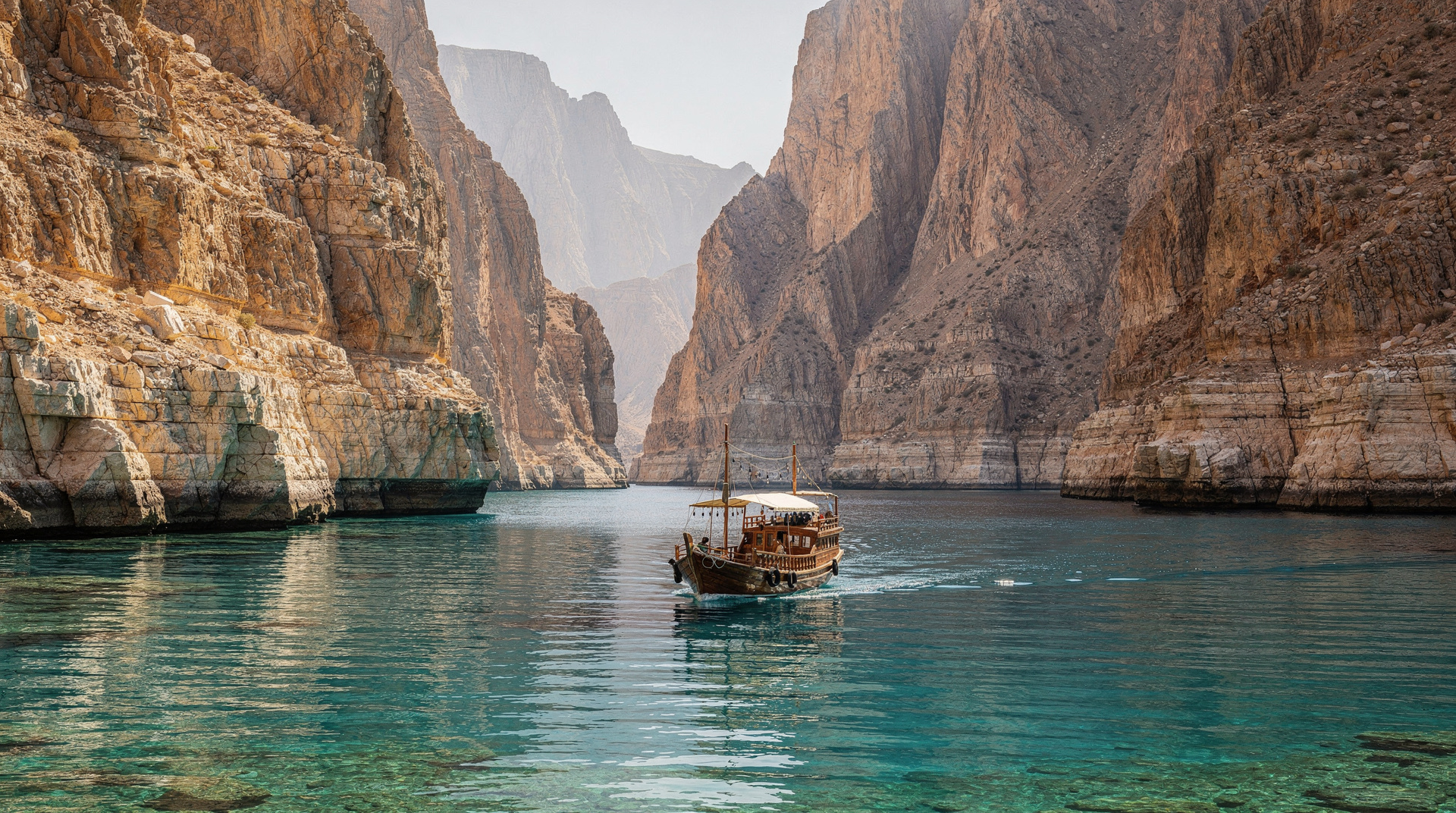
| Musandam fjords | Dramatic scenery over marine life | Separate trip (drive or flight) | Best combined with a dhow cruise, not a Daymaniyat add-on |
If your priority is turtles and reef health in a single half-day trip, the Daymaniyat wins outright. If you want a broader look at Oman’s marine life, pairing it with a wadi swim later in your trip rounds out the picture.
Combining Daymaniyat with the Rest of the Coast
Visitors with more than a day on the Batinah or Muscat coast can build a genuinely varied water-focused stay around the Daymaniyat trip. Kayaking at Bandar Khayran, just south of Muscat, offers a calmer, self-paced alternative for a second day on the water, with its own sheltered coves and mangrove-lined inlets. Divers who want to extend their underwater time beyond the Daymaniyat should look at the broader Oman diving guide, which covers other sites around Muscat suitable for additional dives on the same trip.
For travellers arriving from the UAE or combining Oman with a wider Gulf trip, it is worth noting the Daymaniyat sits well outside the itineraries built around Musandam and Khasab in the far north — the two are not practically combinable in a single day, so plan them as separate legs of an Oman trip.
Related Guides and Destinations
- Muscat travel guide — the main base for Daymaniyat day trips
- Musandam fjords — alternative marine experience in northern Oman
- When to visit Oman: water sports seasons
- Complete Oman diving guide: sites, operators, and certification
- Best day trips from Muscat
FAQ: Daymaniyat Islands Questions
Do I need to be a strong swimmer to snorkel at the Daymaniyat?
Comfortable basic swimming ability is sufficient — you do not need to be a strong swimmer, as life jackets and flotation belts are available on all reputable tours. The snorkeling areas are sheltered from strong currents and are suitable for beginner snorkelers. Children from around 6 to 8 years with basic swimming ability can participate safely with appropriate flotation assistance.
Are turtle encounters guaranteed?
No tour operator can guarantee a specific wildlife encounter. However, turtle sightings at the Daymaniyat Islands are among the most reliable in Oman. From September through April, encounter rates on turtle-focused tours run at approximately 85 to 90 percent based on operator reports. The seagrass beds where turtles feed are well-known, and experienced guides know exactly where to look. Your best chance is booking a tour that specifically targets turtle sites rather than a general snorkeling trip.
Is scuba diving certification required?
Standard scuba diving trips require Open Water certification (or equivalent from any recognised agency). PADI, SSI, BSAC, and CMAS certifications are all accepted. Non-certified adults and older teenagers can participate in PADI Discover Scuba Diving sessions — shallow, supervised dives with no prior certification required. Children under 10 are generally restricted to snorkeling.
How do I reach the Daymaniyat Islands from Muscat without an organised tour?
You can hire a private boat from the Muscat waterfront or from Al Sawadi. Negotiate with local fisherman operators directly at the harbour — a private full-day charter for a small group (up to 8 people) costs approximately OMR 80 to 120 (USD 208 to 312). This gives you more flexibility over timing and stops. You will need to obtain a day permit for the marine reserve, which the boat operator arranges. The entry fee is OMR 5 per person.
What is the entry fee for the Daymaniyat Islands?
OMR 5 per person (approximately USD 13) for access to the nature reserve. This is usually included in organised tour prices — confirm when booking. For independent visitors, the permit is purchased through the licensed boat operator who files the documentation with the Ministry of Environment.
Can I visit the Daymaniyat Islands in summer?
Partially. The reserve applies seasonal restrictions from June to August to protect nesting turtles. Some areas of the island chain are completely closed during this period. Boat trips to the allowed areas still run. The sea is warm (30 to 32°C), visibility is reasonable, and the coral is vivid — but you will not have access to the best turtle areas. For the complete experience, visit between September and May.
How does the Daymaniyat compare to diving in the Maldives or Red Sea?
The Daymaniyat is genuinely competitive for marine biodiversity and reef health, which surprises many visitors who expect a diminished experience by comparison. The coral coverage and fish populations are better than most Indian Ocean sites outside strict marine parks, and the turtle encounter rates exceed most Red Sea destinations. The main differences: fewer dramatic large species (no mantas or sharks regularly), smaller overall footprint, and less developed dive tourism infrastructure. For a day’s outstanding snorkeling from a major city, few places in the world match what the Daymaniyat offers at this distance from an international hub.
Can I combine the Daymaniyat with Wadi Shab in the same trip?
Not on the same day — the Daymaniyat is a boat trip north of Muscat while Wadi Shab is a road trip south along the coast toward Sur, and each needs the best part of a day on its own. Most visitors do the Daymaniyat as a day trip from Muscat and Wadi Shab as a separate stop on a longer coastal itinerary.
Is the Daymaniyat trip suitable if I can’t swim well?
Yes, with the right tour. Reputable operators provide life jackets and flotation belts, and the main snorkeling areas are in sheltered, current-free water. If you are a nervous swimmer, mention this when booking so the guide can keep you close to the boat and in the calmest sections.