Salalah Complete Guide: Oman's Green South
When is the best time to visit Salalah?
October through May for beach and outdoor activities. June through September for the unique Khareef monsoon season when the landscape turns vivid green.
Arabia’s Most Surprising City
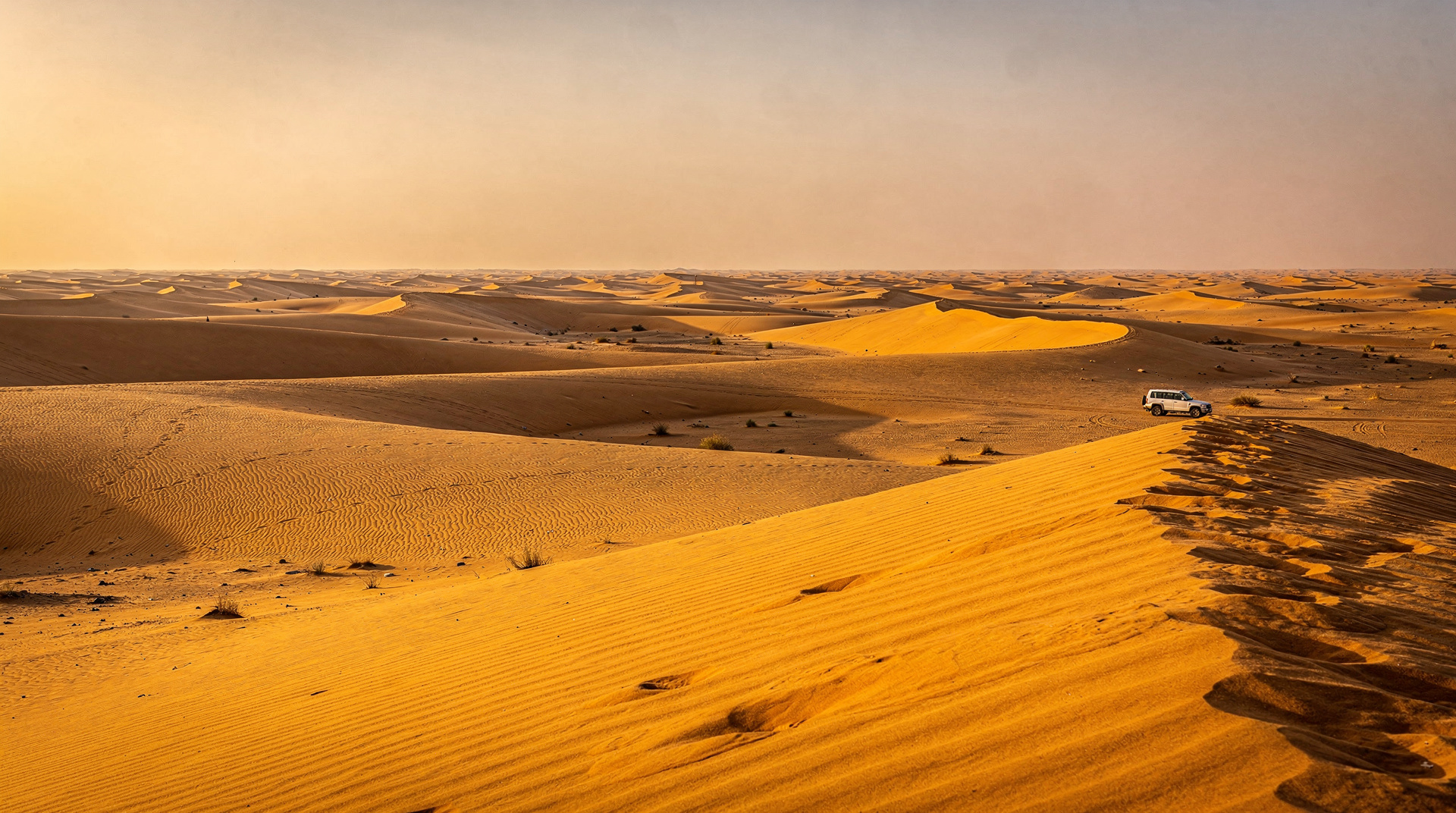
Salalah does not fit the mental image of an Arabian city. The surrounding hills are green — sometimes brilliantly, impossibly green during the monsoon months. The air in June carries moisture that would not disgrace a Scottish hillside. Cattle graze on slopes thick with tropical vegetation. And then you drive twenty kilometres inland and the last green shrub disappears and the Empty Quarter begins.
This extreme contrast, compressed into such a small geographic space, defines what makes Salalah extraordinary. It is the only city in Arabia that experiences a genuine monsoon, and that climatic anomaly has shaped everything about the region — its ancient history as the world’s primary frankincense source, its distinctive culture rooted in the Dhofari ethnic identity distinct from the Omani north, its food, its architecture, and the rhythm of its social life.
Salalah is a city of 190,000 people, the capital of the Dhofar Governorate, and Oman’s second-largest urban centre. It sits roughly 1,000 kilometres from Muscat by road — a fact that explains why many visitors arrive by the 90-minute direct flight rather than the ten-hour drive, though the drive through Oman’s varied interior has its own considerable rewards.
| At a glance | |
|---|---|
| Where | Dhofar Governorate, southern Oman, around 1,000 km from Muscat |
| Cost | Budget-friendly compared to Muscat; a modest fee applies at Al Baleed and most ticketed heritage sites |
| Time needed | 3-4 days for the main sites; add a day for an Empty Quarter excursion |
| Getting there | 90-minute direct flight from Muscat (multiple daily) or a 10-12 hour drive |
| Best time | October-May for beaches and clear skies; June-September for the khareef monsoon |
The Khareef Season: Monsoon Magic
The southwest Indian Ocean monsoon, called the Khareef (literally, “autumn” in Arabic), strikes Dhofar from mid-June and retreats by mid-September with remarkable seasonal consistency. During these three months, Salalah receives between 50 and 100 millimetres of rainfall distributed across dozens of misty, drizzling days. This is not the dramatic tropical downpour of Southeast Asian monsoons — it is persistent mist, occasional steady rain, and the kind of damp that greens everything it touches.
The transformation is extraordinary. The brown, arid Dhofar hills become thick with grass and low shrubs. Cattle and camels that spent the rest of the year grazing on sparse pasture find themselves knee-deep in new growth. Waterfalls appear on cliff faces that are bone-dry in April. The roads through the mountains above Salalah run through green tunnels of vegetation dense enough to give the impression of an English country lane.
For Omani families, the Khareef is Salalah’s peak tourist season — the city fills with visitors from northern Oman, the UAE, and Saudi Arabia escaping the brutal heat of those regions for the cool, humid air of Dhofar. Hotels book up months in advance. The corniche fills with families every evening. It is a festive, social, energetic version of a city that is quieter and more accessible the rest of the year.
For international visitors, the Khareef offers a genuinely unique atmospheric experience. But the swimming beaches are closed (dangerous surf), the landscapes are misty rather than clear, and the crowds are real. October through May is quieter, clearer, and better for most tourist activities.
Salalah Month by Month
| Period | Weather | Crowds | Notes |
|---|---|---|---|
| Oct-Dec | Warm, dry, clear skies | Moderate | Good all-round conditions for beaches and day trips |
| Jan-Mar | Mild, pleasant | Lower | Comfortable hiking and sightseeing weather |
| Apr-May | Warming up, still dry | Lower | Beaches and historical sites at their quietest |
| Jun-Sep (khareef) | Cool, misty, humid | Very high | Peak Gulf tourist season; swimming largely off-limits; see the khareef season guide for details |
Al Baleed Archaeological Park and the Frankincense Trail
UNESCO inscription says something about a place. The Land of Frankincense — a cluster of Dhofar heritage sites that includes Al Baleed and the frankincense trees of Wadi Dawkah — was inscribed in 2000, recognising the region’s extraordinary importance to the ancient trading world.
Al Baleed was the main port of medieval Dhofar, a walled city on the edge of the ocean that received ships from India, East Africa, China, and the Arabian Gulf. At its peak, Al Baleed was one of the most significant trading cities in the western Indian Ocean. The ruins visible today — mosque walls, tower footings, residential structures covering several square kilometres — give a sense of the scale. The museum on-site contextualises the history with artefacts, trade goods, and an impressive physical model of the ancient city.
The site is open daily except Friday. Entry is modest. Allow two to three hours for both the ruins and the museum.
Wadi Dawkah, fifty kilometres inland from Salalah, contains the frankincense trees — Boswellia sacra, the species whose resin built the ancient trading world. The trees are gnarled, pale-barked, and unprepossessing at a distance. Up close, the incisions in the bark and the hardened resin beads are clearly visible. The smell when a branch is broken is the fundamental reference point for frankincense — sharper and greener than the processed incense, intensely aromatic.
For the full story of the resin, its grades, and how it travelled the ancient routes, the guide to the frankincense trail around Salalah goes deeper, and the blog essay on frankincense as white gold places it in a wider history of Arabian trade.
The Beaches of Dhofar
Mughsail and the Blowholes
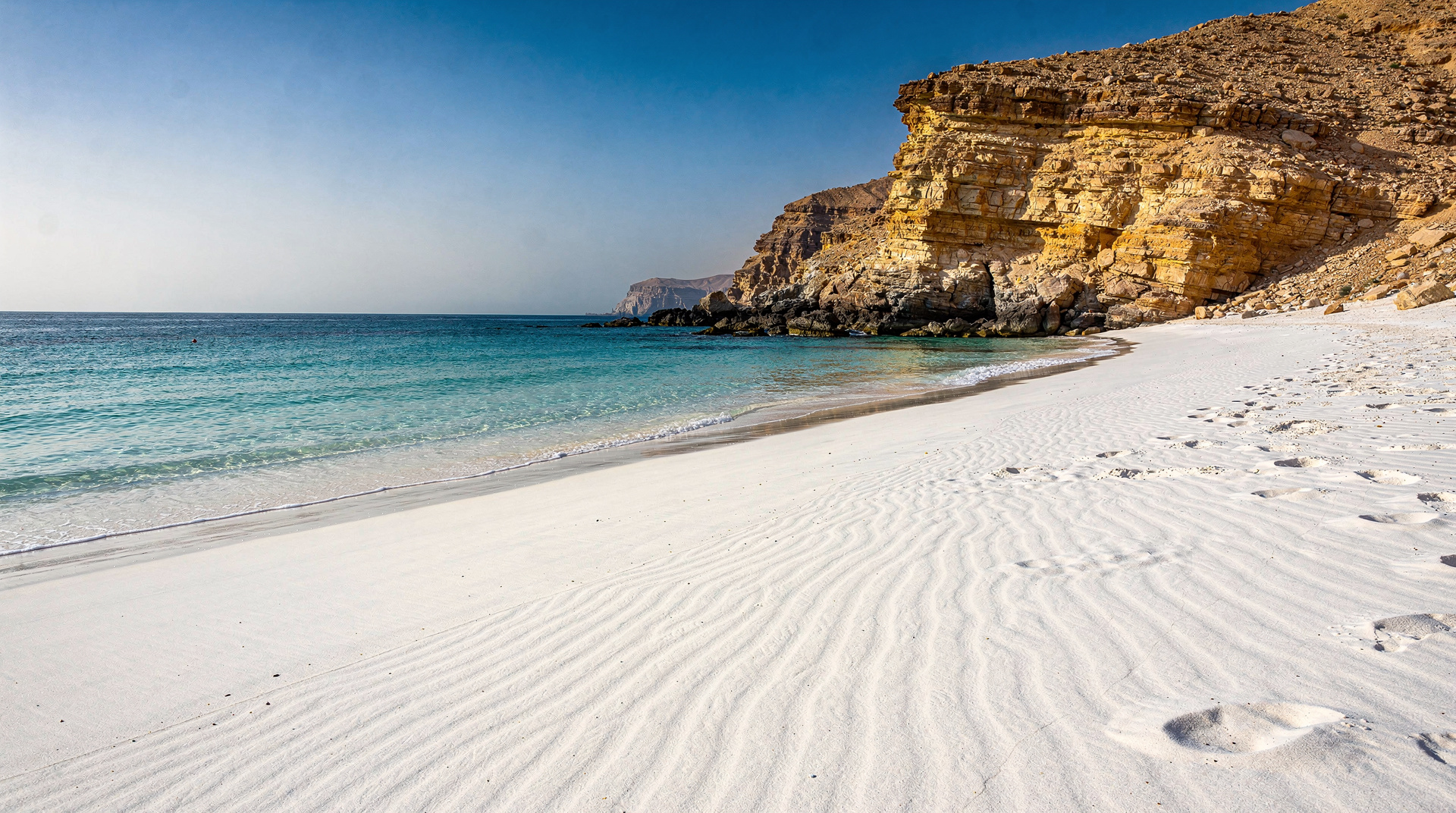
Mughsail Beach, fifty kilometres west of Salalah, is the flagship natural attraction of the Dhofar coast. A long, white beach at the base of towering limestone cliffs, Mughsail faces the full force of the Indian Ocean. The blowholes in the headland rock — channels through which compressed air and water are forced by incoming swells — create spectacular geysers on swell days, throwing water ten to fifteen metres into the air with a sound like a cannon report.
Swimming at Mughsail is prohibited during the Khareef season due to genuinely dangerous surf. Outside the monsoon, the beach is swimmable in calm conditions and extraordinarily beautiful in any conditions.
Guided tours from Salalah combining Fazayah Beach, Mughsail, and the frankincense trees cover the major western coastal and heritage sites in a single day, providing transport and local context for those without a rental vehicle.
For the eastern Dhofar landscape, the East Salalah Wadi Darbat waterfall and mountain safari tour focuses on the dramatic eastern side of the Dhofar jebel — particularly Wadi Darbat with its seasonal waterfall and the mountain plateau — providing a completely different landscape from the western coastal route.
Those who want to cover both sides of Salalah efficiently should consider the Salalah East and West combination tour, which links the Mughsail blowholes and western coast with Wadi Darbat and the eastern sites in a single day — the most comprehensive single-day introduction to Dhofar’s geography available.
For visitors with three days, the 3-day Salalah package covering east, west, and desert safari structures all three main Dhofar experiences — the western coastal route, the eastern mountain and wadi circuit, and a desert safari toward the Empty Quarter — into a complete and well-paced short itinerary.
Fazayah Beach
Beyond Mughsail, the road continues west through increasingly dramatic cliff scenery to Fazayah — one of the most remote and spectacular beaches in Oman. The track, passable only in 4WD, descends to a vast bay enclosed by white limestone cliffs. No facilities, no other visitors in most seasons, no noise but wind and waves. It is among the finest beach experiences in the country.
Haffa Beach
The city beach of Salalah sits at the eastern end of the bay. Clean, well-maintained, and easily accessible from the city centre, Haffa Beach is where local families congregate on evenings from October through May. The sunset over the Indian Ocean from this beach is reliable and beautiful. During the Khareef, the beach is spectacular for the wrong reasons — the surf is dramatic and the mist gives the setting a moody, northern quality.
Khor Rori and Sumhuram
The ancient frankincense city of Sumhuram sits on a promontory above Khor Rori — a coastal lagoon east of Salalah that was once a sheltered harbour. The ruins here are less impressive in size than Al Baleed but older, dating to approximately the 3rd century BCE. The stone walls and towers are partially excavated and partially restored, and the Italian archaeological team that has been working here for decades has produced significant new understanding of the site’s function and connections.
The lagoon below is beautiful and holds populations of migratory birds in season. The walk from the parking area to the ruins along the lagoon shore, with flamingos or herons feeding in the shallows, is a pleasant addition to the historical visit.
The Dhofar Mountains
The jebel — the Dhofar mountain range — rises immediately behind Salalah and provides some of the most dramatic landscape in the region. Accessible by paved road in under thirty minutes from the city, the summit plateau sits at 800 to 1,000 metres elevation and feels like a different country from the coast.
During the Khareef, the summit roads run through thick mist and past grazing camels on lush green slopes. Outside the monsoon, the plateau is drier but the views are clearer — on good days, the Indian Ocean is visible far below, and the transition from green agricultural plateau to brown desert interior is visible in a single wide-angle view.
The town of Thumrait on the southern edge of the Nejd plateau is the last fuel and supply point before the interior desert. The road from here toward Shisr and the Empty Quarter is covered in the guide to the Empty Quarter expedition.
Salalah’s Markets and Food Culture
The Salalah souq in the old market area is smaller and less touristy than Muscat’s Muttrah Souq but more authentic in character. The frankincense trade that sustained this city for millennia is still visible here — bags of various grades of resin, incense burners in brass and ceramic, and the distinctive smell of burning frankincense that wafts through the covered sections.
Visitors who enjoy the sweeter side of Omani hospitality will find the Omani halwa guide and the Omani coffee culture guide useful companions, since both traditions are part of any Dhofari welcome.
The food culture of Salalah reflects its Dhofari identity, distinct from the northern Omani cuisine that most visitors encounter in Muscat. Shuwa — slow-cooked lamb or goat marinated in spices and cooked underground in a sealed clay vessel for up to two days — is the signature Dhofari dish, typically served on special occasions. The everyday food of Salalah includes distinctive rice dishes flavoured with dried lime and cinnamon, grilled fish fresh from the fishing fleet, and a rich variety of flatbreads.
The Haffa Souq area near the beach has the densest concentration of restaurants serving traditional food. Breakfast of ful (spiced fava beans) with fresh bread and sweetened tea is the local morning ritual, found in tiny shops that open before dawn.
Getting to and Around Salalah
By Air
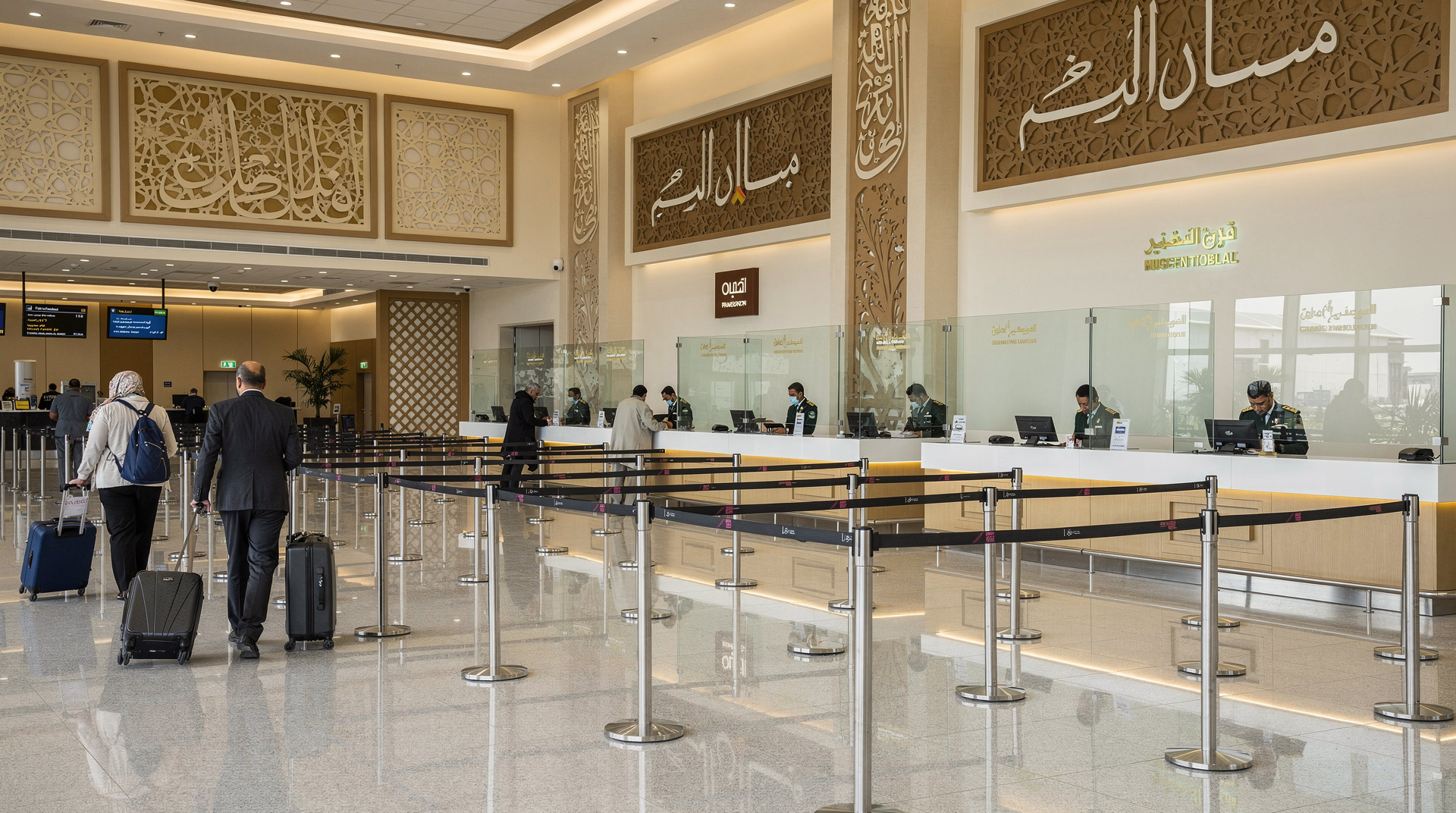
Salalah International Airport receives direct flights from Muscat on Oman Air (90 minutes, multiple daily) and from several regional airports including Dubai, Abu Dhabi, and Kuwait. The airport is seven kilometres from the city centre. Taxis are metered and affordable.
By Road
The 1,000-kilometre drive from Muscat takes ten to twelve hours on the main inland highway. The road is excellent throughout. Many Omanis make this drive in a single long day; international travellers are better served by breaking it in Nizwa, Duqm, or at one of the basic roadside hotels in the interior. The scenery in the central section, crossing the vast gravel plains and occasional mountain passes, has a stark, planetary quality that rewards the sustained attention of a road journey.
Getting Around Salalah
A rental car is strongly recommended for exploring Dhofar fully. The city itself is navigable by taxi, but reaching Mughsail, Fazayah, the mountains, or the Empty Quarter requires independent transport. For practical advice on booking and driving, see the guides to renting a car in Oman and getting around Oman. Car rental is available at the airport and through all major agencies. A 4WD is necessary for Fazayah and the desert routes; a regular car suffices for the city, Mughsail, and Al Baleed.
Where to Stay
Salalah has a broader range of accommodation than many visitors expect. The major international chains are present — Hilton, Marriott, and Crowne Plaza all have established properties here. These are the dominant choice for business travellers and offer reliable standards.
For a more immersive experience, several smaller boutique properties in the Haffa area offer proximity to the beach and local souq at considerably lower prices. During the Khareef season, prices at all properties rise significantly and booking months in advance is necessary.
Choosing between the beachfront area, the city centre, and quieter spots depends on whether you want sea views, souq access, or easy driving routes. The dedicated guide on where to stay in Salalah compares the options, and the Salalah destination page offers a wider overview of the area.
Frequently asked questions about Salalah Complete Guide: Oman’s Green South
How many days should I spend in Salalah?
Three to four days covers the main sites comfortably — one day for the coastal west including Mughsail and Fazayah, one day for the historical sites (Al Baleed, Khor Rori), one day for the mountains and interior, and a day for the city itself including the souq and frankincense heritage. Those wanting an Empty Quarter excursion should add at least one additional day.
Is Salalah worth visiting if I am not coming during the Khareef?
Absolutely. The historical sites, beaches, Empty Quarter access, and mountain scenery are all more comfortable and often more spectacular outside the monsoon months. The Khareef is a unique atmospheric experience but it is not the only reason to come.
Can I fly from Dubai or Abu Dhabi directly to Salalah?
Yes. Oman Air and flydubai both operate regular direct routes between the UAE and Salalah. This makes Salalah a practical standalone destination rather than requiring Muscat as an entry point.
Is the drive from Muscat to Salalah worth doing?
For those with the time, yes. The interior of Oman between the two cities is vast and sparsely populated, with a geological grandeur that the coastal routes do not capture. Breaking the drive at Wahiba Sands, Duqm, or both creates a genuinely memorable overland journey. For more context see the guide to Duqm as an interesting stop en route.
What is the frankincense of Dhofar and why is it special?
Boswellia sacra trees in Dhofar produce a resin — frankincense — that has been harvested and traded for at least 5,000 years. Dhofari frankincense, particularly the Royal Hojari grade characterised by its clarity and green-white colour, is the most valued in the world and commands premium prices in Gulf markets. The trees grow only in specific limestone soil conditions found in Dhofar and adjacent Yemen — the unique terroir of what was once the most valuable commodity on earth.
The Dhofar Bird Life: An Unexpected Draw
For species lists and tips across the whole country, the birdwatching in Oman guide is the natural next read. Birdwatchers have discovered Dhofar relatively recently, and the region now has a reputation in the global birding community as one of the most rewarding spots in the Middle East. The combination of monsoon-influenced habitat, position on an important flyway, and proximity to the African and Asian avifaunal zones creates an unusual mix of species that occurs nowhere else in Arabia.
During the Khareef, the green Dhofar hills attract species typical of the African highlands — African paradise flycatcher, Bruce’s green pigeon, and African scops owl all breed in the Dhofar jebel. These species are entirely absent from the rest of Oman and require a Salalah visit to observe.
The coastal wetlands around the lagoons and ports hold flamingos, spoonbills, and concentrations of waders during migration. The Jabal Samhan nature reserve east of Salalah protects some of the most intact Dhofar habitat and holds breeding Arabian leopard — a critically endangered subspecies with fewer than 200 individuals thought to remain — though encounters are extremely rare.
The dry Nejd plateau north of the jebel holds Arabian partridge, Spotted sandgrouse, and various larks and wheatears in species and numbers that reward a day’s exploration.
Safety and Health in Salalah
The main practical health consideration for Salalah visitors is the transition between the Khareef season’s cool, humid air and the extreme desert conditions just inland. Visitors moving between the coast and the interior desert in the same day should carry significantly more water than feels necessary and be aware of the temperature change — the Nejd plateau in summer can be 18 degrees hotter than the coastal Salalah city even in the heart of the monsoon season.
Road safety on the Salalah coastal road requires attention during and immediately after Khareef rains, when wet limestone road surfaces become extremely slippery. The accident rate on Dhofar mountain roads rises significantly during and after rain. Drive at reduced speeds and with increased following distance on any wet surface in this region.
Emergency medical services in Salalah are adequate for most routine needs — Sultan Qaboos Hospital serves the governorate. For serious or specialised medical issues, evacuation to Muscat is the practical answer. Travel insurance with medical evacuation coverage is strongly recommended for all Oman travel. The Oman travel insurance guide explains what to look for, and the broader Oman safety tips cover everyday precautions.
Day Trips from Salalah
Salalah is well-positioned as a base for day trips that cover the full range of Dhofar’s attractions. Beyond the coastal sites described earlier, several destinations within a two-hour radius reward a full day’s exploration.
Mirbat, fifty kilometres east of Salalah, is a small historic coastal town with an old Portuguese fort and a magnificent beach that faces the open Indian Ocean. The town is best known in Oman for the Battle of Mirbat in 1972, a significant engagement of the Dhofar Rebellion — a history covered in detail at the small local museum.
Taqah, closer to Salalah, is another historic coastal town with a traditional castle and a beach that is calm and swimmable for most of the year. The Taqah Castle museum covers Dhofari history from a different angle than Al Baleed, focusing more on the tribal and social history of the region.
The inland village of Sadah, high on the Dhofar jebel, offers a striking perspective on the monsoon landscape — situated above the cloud layer during the Khareef, with the valleys below filled with mist, the village feels isolated in the sky in a way that the coastal view cannot prepare you for.
For the Empty Quarter and the routes to Shisr and the desert interior, all logistics and site descriptions are covered in the guide to the Empty Quarter expedition.
Planning Your Time: A Realistic Pace
Salalah rewards a slower pace than the tight day-trip logic that works in Muscat. Distances within Dhofar are larger than they first appear on a map, and the western coastal route (Mughsail, Fazayah), the eastern circuit (Wadi Darbat, Khor Rori, Mirbat), and the mountains each comfortably fill a full day rather than a half-day. Trying to combine two of these zones in a single day is possible but rushed, and it is easy to end up spending more time driving than exploring.
For travellers arriving by the direct flight from Muscat, a common and effective structure is: day one for the city, souq, and Al Baleed; day two for the west coast; day three for the east coast and Khor Rori; and a fourth day either resting on the beach or venturing toward the Empty Quarter. Those who also want the Wadi Darbat waterfall at its best should time that visit for the early morning, before coach tours arrive and while the light is softest.
Comparing Salalah against a Muscat-only trip, or deciding how to split time between the two, is covered in more depth in the guide to Salalah vs Muscat.
Is a guide necessary to visit Salalah’s sites, or can I self-drive everything?
Most of Salalah’s major sites — Al Baleed, Mughsail, Haffa Beach, the souq — are straightforward to visit independently with a rental car and a map. A guide adds value mainly for Wadi Darbat and the mountain routes during khareef, when road conditions and viewpoints change quickly and local knowledge of current access is genuinely useful, and for the Empty Quarter, where 4x4 experience and route knowledge matter more.
How does Salalah compare to Muscat for a first-time Oman visit?
For most first-time visitors, Muscat remains the stronger starting point — it concentrates the Grand Mosque, forts, wadis, and desert access within a smaller radius. Salalah is better suited to a second visit or to travellers specifically drawn to the khareef, frankincense heritage, or a more tropical, laid-back pace. See the Salalah vs Muscat comparison for a fuller breakdown.