Kayaking Bandar Khayran: Oman's Hidden Sea Kayaking Paradise
Is kayaking in Bandar Khayran suitable for beginners?
Yes. The sheltered lagoons have flat water ideal for beginners, while outer channels suit more experienced paddlers. Guided tours include instruction.
Paddling Through Oman’s Most Dramatic Coastline
Forty kilometres southeast of Muscat, where the Al Hajar mountains finally surrender to the sea, a maze of rocky headlands and sheltered inlets forms one of the most spectacular kayaking landscapes in the Arabian Peninsula. Bandar Khayran — the name translates roughly as “the bay of goodness” — is a protected natural harbour that stretches for kilometres in either direction from the main anchorage, its waters so clear that the sandy bottom is visible at depths of five or six metres.
Most visitors to Muscat never discover it. Those who do, often by joining an overnight camping and kayaking excursion from the city, tend to count it among the highlights of their entire Oman trip. The combination of dramatic geology, rich marine life, absolute quiet, and water temperatures that hover between 24 and 30 degrees Celsius through most of the year creates conditions that are genuinely rare anywhere in the world.
This guide covers everything you need to paddle Bandar Khayran independently or with a guide — the best launch points, seasonal timing, marine life you will encounter, and the practical logistics of reaching one of Oman’s best-kept coastal secrets.
| At a Glance | |
|---|---|
| Where | Bandar Khayran bay, around 50 minutes south of Muscat via Qurayat |
| Cost | No entry fee; guided overnight camping and kayaking trips run around 45-70 OMR per person; taxi round trip around 25-40 OMR |
| Time needed | Half a day for the inner lagoon circuit; a full day or overnight for the outer headlands and camping |
| Getting there | Self-drive (regular car manageable, higher clearance more comfortable) or a guided tour with pickup from Muscat |
| Best time | October to April for comfortable temperatures; dawn departures essential May-September |
What Makes Bandar Khayran Special
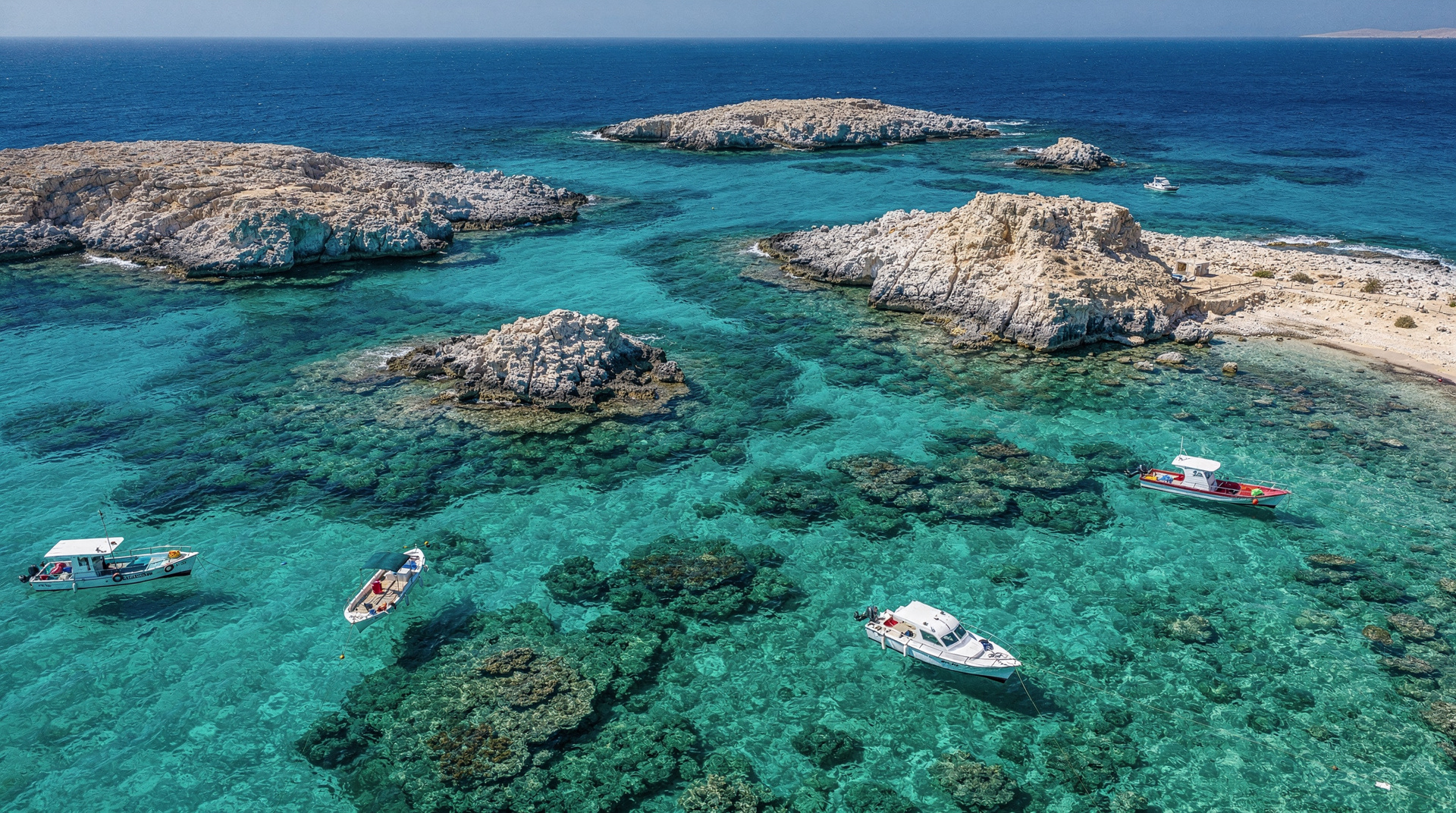
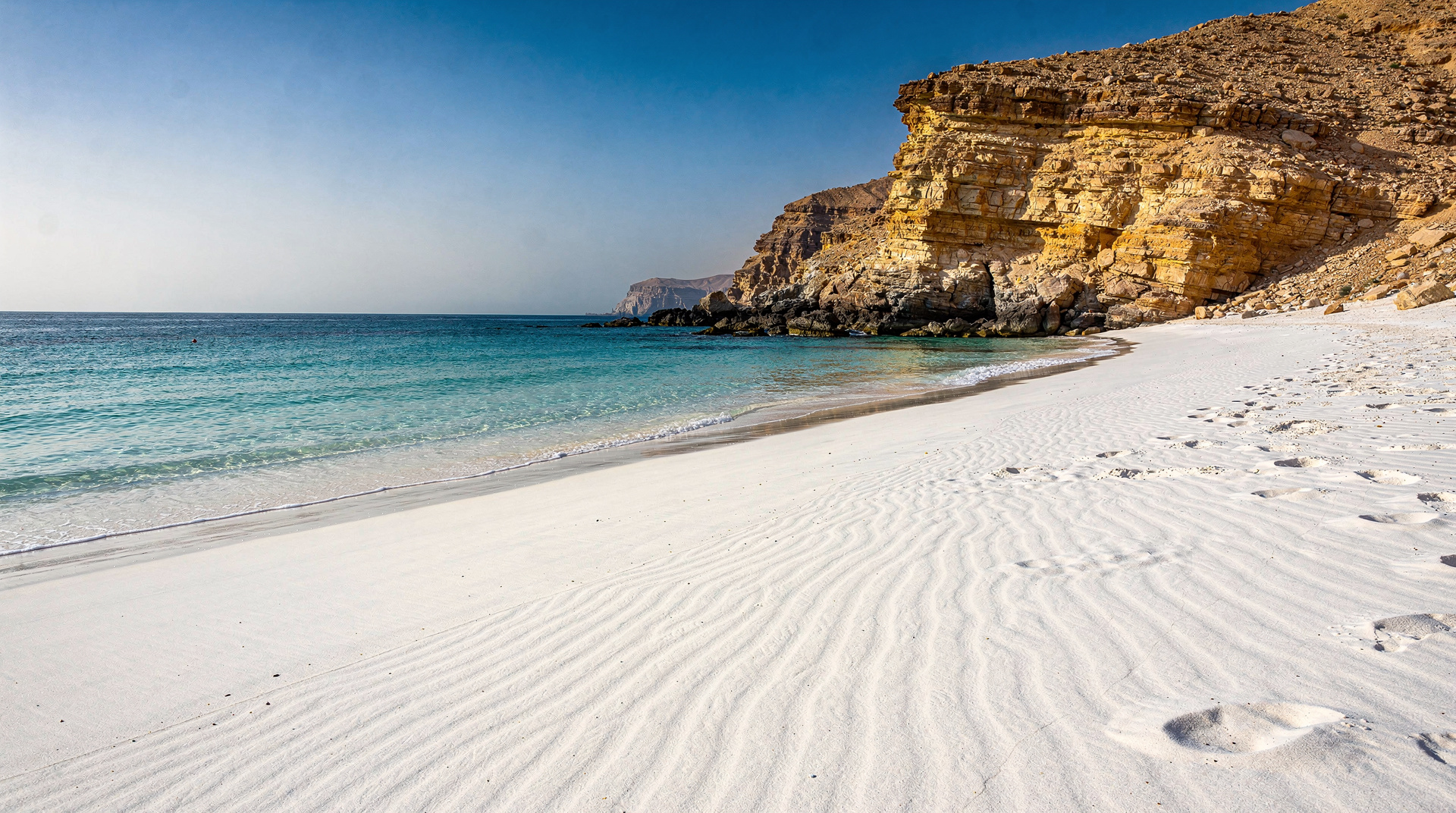
The bay sits at the southern end of the Al Hajar range where a series of rocky peninsulas jut into the Gulf of Oman, creating dozens of sheltered lagoons separated by narrow channels. The rock is ancient limestone carved into fantastical shapes — arches, sea caves, blowholes, and overhangs that glow orange and red in the morning sun. The water between them shifts from deep navy to impossible turquoise depending on depth and angle.
Unlike the Daymaniyat Islands, which require a longer boat transfer, Bandar Khayran is accessible by road to within a kilometre of the water. The main track descends to a small fishing community and a natural boat ramp where local fishermen have worked for generations. From here, a kayak can reach the outer headlands in twenty minutes and be deep inside the lagoon system within an hour.
The sheltered nature of the inner bay means that wind and swell rarely penetrate far enough to create difficult conditions. Even on days when a moderate northerly raises whitecaps in the open Gulf, the inner lagoons remain mirror-calm. This makes Bandar Khayran exceptional for beginners and perfect for those who want to focus on wildlife and photography rather than technical paddling.
Marine Life and Wildlife
Bandar Khayran’s underwater world is as compelling as its surface scenery. The rocky reefs surrounding the headlands support dense populations of Arabian angelfish, surgeonfish, parrotfish, and hawksbill turtles that nest on the beaches from May through September. Snorkelling from a kayak is straightforward — simply tie off to a rock and slip over the side.
Green turtles are common throughout the year. It is not unusual to round a headland and find one surfacing for air just metres away. Kayaks, being silent, approach turtles far more closely than motor vessels, and the animals are largely unbothered by a respectful presence.
Dolphins visit the outer channels regularly, particularly in the early morning. Spinner dolphins are most common, but humpback dolphins — a species more associated with shallow coastal waters — are also sighted throughout the year. In winter months from November through February, whale sharks occasionally patrol the outer bay, though encounters are unpredictable.
Along the cliff faces above the waterline, Socotra cormorants, ospreys, and various tern species nest in cavities and ledges. The osprey population around Bandar Khayran is notably dense — it is common to see three or four birds working the water simultaneously within a short paddle.
The Best Routes on the Water
The Inner Lagoon Circuit
For beginners or those wanting a gentle half-day outing, the inner lagoon circuit covers roughly eight kilometres and stays entirely within the sheltered bay. Launching from the main access point, paddle south along the eastern shoreline, passing beneath the first set of limestone cliffs before rounding into the largest central lagoon. The water here rarely exceeds a metre and a half in depth, and the sandy bottom reflects sunlight in patterns that shift constantly.
At the lagoon’s southern end, a narrow channel connects to a second smaller basin that few visitors reach. The passage requires some manoeuvring around rocks but is entirely navigable at any tide. The reward is a pocket of water entirely enclosed by cliffs on three sides, utterly silent except for the birds, and with an underwater landscape of coral-encrusted boulders.
Return via the western shoreline, keeping an eye for the largest sea cave in the bay — a passage roughly ten metres wide that cuts through a headland and emerges on a small beach on the other side. It can be paddled through at mid to high tide; at low tide, portage is required over a shingle bar inside.
The Outer Headlands Traverse
More experienced paddlers should push through the main entrance channel and around the outer headlands to the south. This route adds another twelve kilometres to the inner circuit and exposes the paddler to open water where conditions can vary. The cliff scenery here is even more dramatic — sheer faces dropping directly into deep water, with natural arches large enough to paddle through and surge channels that require timing and nerve.
The outer coast holds some of the best snorkelling. The reef drops steeply from the cliff base, and the fish diversity is noticeably higher than the sheltered inner areas. Current can run at the headland tips, particularly on the ebb tide, so awareness of tidal timing matters on this section.
Overnight Camping and Kayaking Expeditions
The most memorable way to experience Bandar Khayran is on an overnight camping and kayaking trip that includes pickup from Muscat, an afternoon on the water, camping on a beach accessible only by boat, and a full morning paddle before returning to the city.
This overnight kayaking and beach camping experience from Muscat includes all equipment, tents, sleeping gear, and meals. The guides are experienced watermen who know the bay intimately, and the group sizes are small enough that the experience feels genuinely personal rather than touristic.
Sleeping on a Bandar Khayran beach changes the relationship with the place. After the day visitors return to Muscat and the last fishing boat motors back to the village, the bay reverts to something that feels prehistoric — the stars extraordinary in the absence of city light, the water phosphorescent in the dark, the silence total except for the occasional splash of a ray or the distant bark of a dolphin.
Practical Information for Independent Paddlers
Getting to Bandar Khayran
From Muscat, take the coastal road south through Qurayat. After approximately 35 kilometres, a signed track branches right toward Bandar Khayran. The track is graded gravel for the final 8 kilometres and is passable in a regular car, though a higher clearance vehicle is more comfortable. The drive takes roughly 50 minutes from central Muscat.
There is no kayak rental facility on-site. Independent paddlers must bring their own equipment. Inflatable kayaks are practical given the relatively calm conditions and easy transport.
When to Visit
The optimal season runs from October through April. Water temperatures range from 24 to 28 degrees Celsius, the air is comfortable, and the northerly Shamal wind, while present, is not strong enough to create dangerous conditions in the sheltered inner bay.
Between May and September, temperatures in the bay regularly exceed 38 degrees Celsius with high humidity. The water itself is warm — often 30 degrees — which is pleasant for swimming but demands serious sun protection and very early starts on the water. Dawn departures and a return by 09:30 are the sensible approach in summer.
The Khareef monsoon does not reach Bandar Khayran directly, but the season from June through August can bring hazy conditions and occasional rough weather from remnant storm systems.
| Season | Water & air | Wind | Best for |
|---|---|---|---|
| Oct-Apr | 24-28°C water, comfortable air | Northerly Shamal present but manageable in the sheltered bay | Full-day paddling, camping trips |
| May-Sep | Water often around 30°C, air 38°C+ | Calmer but heat is the main risk | Dawn-only paddling, back by 09:30 |
| Jun-Aug | Warm | Occasional haze and rough weather from Khareef remnants | Checking conditions locally before heading out |
Dolphin and Turtle Watching From the Water
Bandar Khayran’s marine life is one of its biggest draws, and a kayak is arguably the best platform to see it from — silent, low, and unobtrusive. Spinner dolphins are most reliably seen early in the morning in the outer channels, often in pods that pass within a few dozen metres of a paddler without altering course. For a dedicated boat-based dolphin experience elsewhere in the bay, the Muscat dolphin watching guide covers the main operators and best times.
Hawksbill and green turtles surface throughout the inner lagoons year-round, with nesting season running May to September on the more remote beaches. Give any surfacing or nesting turtle a wide, respectful berth rather than paddling directly toward it. For snorkellers who want to compare Bandar Khayran’s reefs with Oman’s other premier marine site, the Daymaniyat Islands snorkelling guide covers the permit-controlled reserve a short boat ride further offshore.
What to Bring
Regardless of season, a full-coverage sun protection strategy is essential. The reflected glare off the water intensifies UV exposure considerably. Wide-brimmed hats, long-sleeve rash guards, high-SPF sunscreen, and polarised sunglasses are not optional — they are the difference between a great day and a genuinely miserable one.
Carry significantly more water than you expect to need. A minimum of two litres per person per hour in summer months, one litre per hour in winter. Dehydration is the most common problem among self-guided paddlers in Oman. The lack of shade on the water means exposure is constant.
A basic first aid kit, a marine whistle, a waterproof bag for electronics and documents, and a basic navigation reference (even a screenshot of the bay from satellite imagery) are worth having.
Tides and Currents
The Gulf of Oman has a mixed tidal pattern with roughly 1.5 metres of range. In the inner bay this creates gentle currents in the connecting channels between lagoons, which are manageable for paddlers of any level. On the outer coast, tidal flow around headland tips can reach 2 to 3 knots on spring tides and deserves respect.
Check tide times before any outing. The Oman Meteorology website publishes daily tide predictions. Aim to be in the outer channels on a flood or ebb that runs in the direction you intend to travel.
Combining Kayaking with Snorkelling
Bandar Khayran’s water clarity and rich reefs make it one of the best snorkelling locations near Muscat. The combination of kayaking and snorkelling in a single outing is natural — the kayak provides a floating platform from which to explore reefs that would be inaccessible from shore.
The best snorkelling sites are at the base of the limestone cliffs along the inner bay’s eastern margin and at two rocky outcrops visible from the main lagoon. These areas support corals, sponges, sea fans, and the fish populations they sustain. Visibility regularly exceeds ten metres on calm days.
For more information on the best snorkelling conditions and sites around Muscat, see the guide to snorkelling in Oman and the full overview of Oman’s best beaches.
Beyond the Bay: Connecting the Coast
Bandar Khayran sits on a coastal road that continues south toward the fishing town of Qurayat and beyond. Paddlers with time and energy sometimes cache a vehicle at a southern takeout point and complete a full coastal traverse of fifteen to twenty kilometres, taking two days with a beach camp in between.
The coastal scenery south of Bandar Khayran maintains the same quality — limestone cliffs, hidden coves, and clear water — for another thirty kilometres before the character of the coast changes near the Qurayat fishing harbour. This multi-day route is suitable for experienced sea kayakers comfortable with open water navigation and basic self-rescue.
For those exploring this part of the coast more broadly, the complete guide to Muscat and the guide to Musandam’s dramatic fjords offer context for the full range of Oman’s coastal experiences.
Responsible Kayaking Practices
Bandar Khayran’s remoteness has helped preserve its ecology, and kayakers have a responsibility to keep it that way. Several practices matter particularly in this environment.
Never land on beaches marked with turtle nesting signs between May and October. Hawksbill and green turtles nest on the more remote beaches and are easily disturbed during laying and hatching. Keep a distance of at least 20 metres from any nesting activity.
Do not stand on or touch coral reefs. The reefs of Bandar Khayran are in substantially better condition than many in the region precisely because access is limited. Fins, knees, and hands damage coral that takes decades to recover.
Pack out everything brought in. The beaches accessible only by kayak are among the few genuinely litter-free places in Oman — maintaining that requires every visitor to carry out their own waste and, ideally, any they find.
Before heading out for a day or overnight paddle, the Oman packing list is a useful cross-check for sun protection and general trip essentials beyond the kayaking-specific gear listed above.
Frequently asked questions about Kayaking Bandar Khayran: Oman’s Hidden Sea Kayaking Paradise
Do I need previous kayaking experience to visit Bandar Khayran?
No previous experience is necessary for the inner lagoon areas, which have flat, sheltered water suitable for complete beginners. Guided tours include basic instruction before departure. The outer headlands and open coast require intermediate skills and experience in reading water conditions.
Can I rent a kayak near Bandar Khayran?
There is no on-site rental facility at Bandar Khayran itself. Guided tour operators from Muscat provide all equipment as part of their packages. Independent paddlers need to bring their own kayaks, which can be transported on car roof racks or brought as inflatable models.
Is snorkelling possible directly from a kayak at Bandar Khayran?
Yes, and it is one of the best ways to snorkel the area. Simply anchor the kayak to a rock or buoy, put on mask and fins, and slip over the side. The water clarity regularly exceeds ten metres and the reef beneath the limestone cliffs is particularly rich.
Are there facilities at Bandar Khayran such as toilets or food?
There are essentially no facilities at the main access point beyond a basic boat ramp used by local fishermen. Bring all food, water, and supplies. There are no toilets — follow leave-no-trace principles. The nearest shops and petrol stations are back in Qurayat town.
Is Bandar Khayran safe for swimming and kayaking year-round?
The inner bay is safe year-round. In summer months, the primary risk is heat and sun exposure rather than water conditions. Jellyfish occasionally appear in numbers during late spring — check locally before entering the water. There are no dangerous marine animals to worry about, though maintaining respectful distance from turtles is important.
What is the closest accommodation to Bandar Khayran?
There is no accommodation at the bay itself. The nearest hotels are in Muscat, about 50 minutes by road. Many visitors opt for the overnight camping experience directly on the beach, which is logistically the best way to experience the bay at its most peaceful. For a full accommodation overview, see the guide to staying in Muscat.
How do I get to Bandar Khayran without a car?
The bay is not accessible by public transport. Options for those without a vehicle include joining an organised tour from Muscat, which includes pickup and return transfer, or hiring a taxi for the day. Negotiate taxi rates in advance — the round trip from central Muscat with a few hours of waiting time typically costs between 25 and 40 Omani Rials depending on the driver and season.
Can I see dolphins while kayaking at Bandar Khayran?
Yes, dolphins visit the outer channels regularly, especially in the early morning, with spinner dolphins the most common sighting. For a dedicated dolphin-watching outing rather than a chance encounter, the Muscat dolphin watching guide covers boat-based tours that specifically target sightings.
How does Bandar Khayran compare to the Daymaniyat Islands for snorkelling?
Bandar Khayran is closer to Muscat, accessible by kayak from shore, and has calmer, more sheltered water, making it more practical for a half-day outing. The Daymaniyat Islands require a longer boat transfer and permit but generally offer clearer water and a greater density of reef fish and coral, since access is more tightly controlled.