Top Snorkeling Spots in Oman: Beyond the Daymaniyat Islands
Where is the best snorkeling in Oman?
Daymaniyat Islands is the top marine reserve, but Bandar Khayran, Musandam fjords, Fins Beach, and the Sur coast offer exceptional alternatives. Visibility is best October through April across all sites.
Oman’s Underwater World: More Than One Island
The Daymaniyat Islands nature reserve is the name that appears in every list of Oman’s top snorkelling destinations, and the listing is deserved — the Daymaniyats have protected their marine ecosystem effectively and the results are visible the moment you put your face in the water. But reducing Oman’s underwater experience to a single archipelago significantly undersells what is available along 3,000 kilometres of varied coastline.
The Gulf of Oman and the Arabian Sea support a marine ecosystem shaped by three distinct oceanographic influences: upwelling from the Arabian Sea that brings nutrients and large pelagic life, the warm and sheltered waters of the Gulf of Oman that support reef communities, and the cooler monsoon-influenced waters of the Salalah coast. Each zone produces different snorkelling experiences. Knowing which areas offer what allows you to match your snorkelling ambitions to your itinerary.
This guide covers ten of the best snorkelling sites in Oman, with practical information on how to access each, what to expect underwater, what equipment to bring, and the best season for each location. Sites are listed from north to south, starting with the Musandam Peninsula.
| At a Glance | |
|---|---|
| Where | Sites from Musandam in the north to Salalah in the south |
| Cost | Around OMR 15-30 for organised boat/snorkel trips; free if self-accessed from shore (own equipment needed) |
| Time needed | Half-day to full-day per site |
| Getting there | Boat trips from Khasab, Barka, or Muscat; self-drive 4WD for shore sites like Fins Beach |
| Best time | October through April at most sites; varies by region (see seasonality table) |
Seasonality by Region
| Region | Best Months | Conditions |
|---|---|---|
| Musandam fjords | November-April | Warm water year-round, best visibility Nov-Apr, hot for full-day boat trips in summer |
| Muscat area (Daymaniyats, Bandar Khayran, Fahal) | October-May | Clearest Nov-Mar; khareef season (Jun-Sep) actually improves northern visibility |
| Sur coast and Fins Beach | October-April | Track to Fins Beach becomes very hot to walk in summer |
| Masirah Island | October-May | Northeast monsoon roughens the north shore in summer |
| Dhofar / Salalah coast | October-May | Khareef monsoon (Jun-Sep) makes the coast rough with poor visibility; whale sharks peak March-May |
1. Musandam Fjords (Khasab Area)
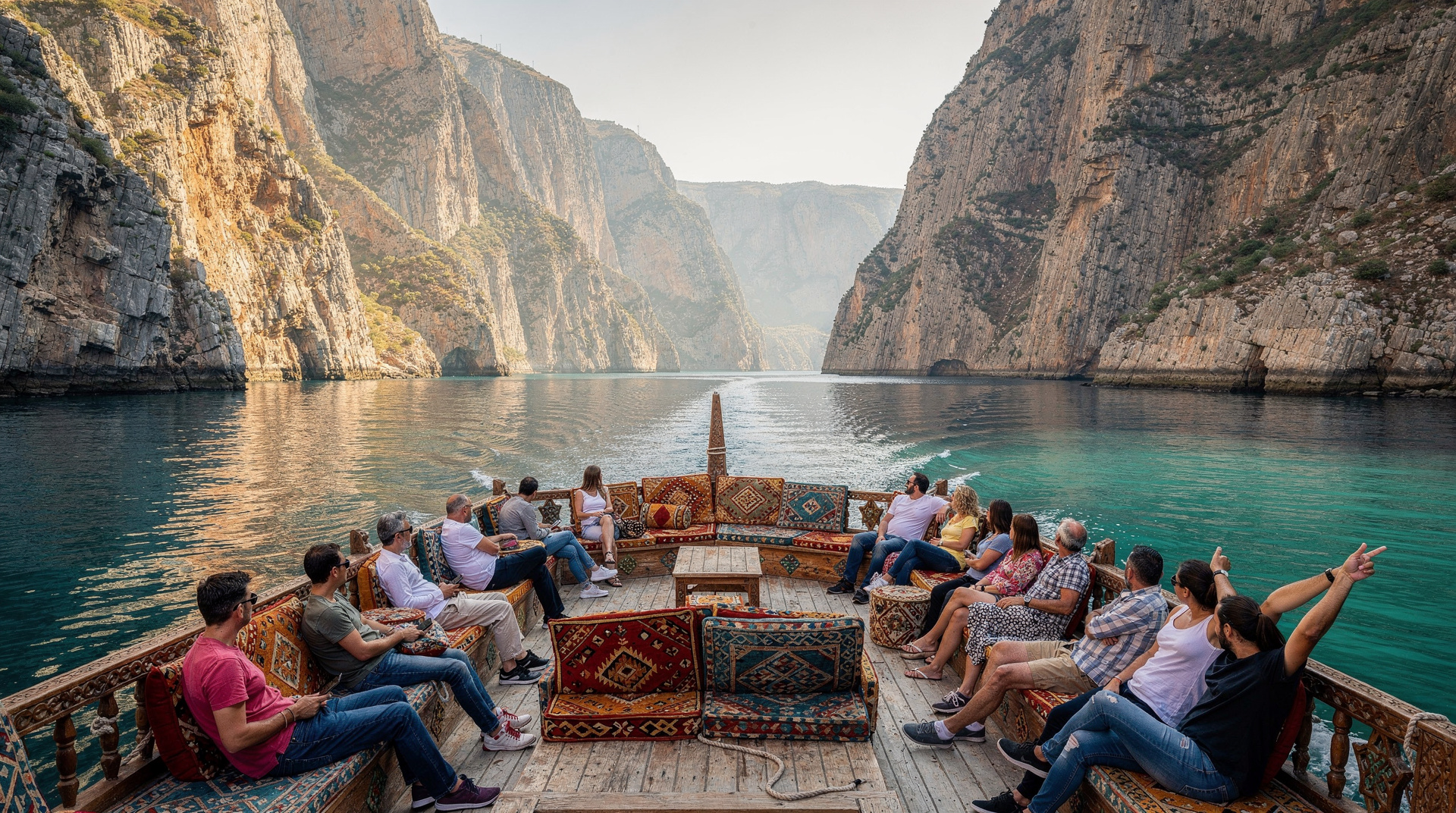
The fjords of Musandam are perhaps the most geographically dramatic snorkelling setting in Arabia. The limestone mountains plunge almost vertically into the narrow inlets (khors), and the water clarity in the sheltered fjord channels is extraordinary — visibility of 15-20 metres is common and 25 metres is achievable in optimal conditions.
The snorkelling here is different from reef snorkelling. There are coral communities at the rocky underwater cliff bases, but the Musandam experience is more about the setting and the possibility of large animal encounters. Bottlenose and common dolphins are regularly present in the fjords. Sea turtles are common. The walls of the fjords drop away into depths that give the underwater landscape a sense of scale comparable to the mountains above.
Access is almost exclusively by dhow — the traditional wooden boat that is the primary means of local transport in the isolated Musandam fishing villages. Day trip dhows from Khasab carry snorkelling equipment and make regular stops at established snorkelling points. The most popular are around Telegraph Island (the site of a Victorian-era British communications relay station) and the Seebi Island area.
Best season: November through April. Summer brings significant heat that makes a full day on a dhow uncomfortable, though the water itself is warm year-round.
What to bring: The dhow tours provide basic snorkelling equipment, but bringing your own mask if you have one (better fit, better seal) improves the experience significantly. Sun protection for the full-day boat trip is essential — the reflection from water amplifies sun exposure. For details on the dhow cruise experience, see the guide to Khasab dhow cruises in the fjords.
2. Daymaniyat Islands Nature Reserve
The benchmark Oman snorkelling site and rightly considered the finest marine environment accessible from Muscat. Nine small limestone islands approximately 20 kilometres offshore from Barka (60 km from Muscat) are protected as a nature reserve, with fishing prohibited and visitor numbers managed to prevent overuse.
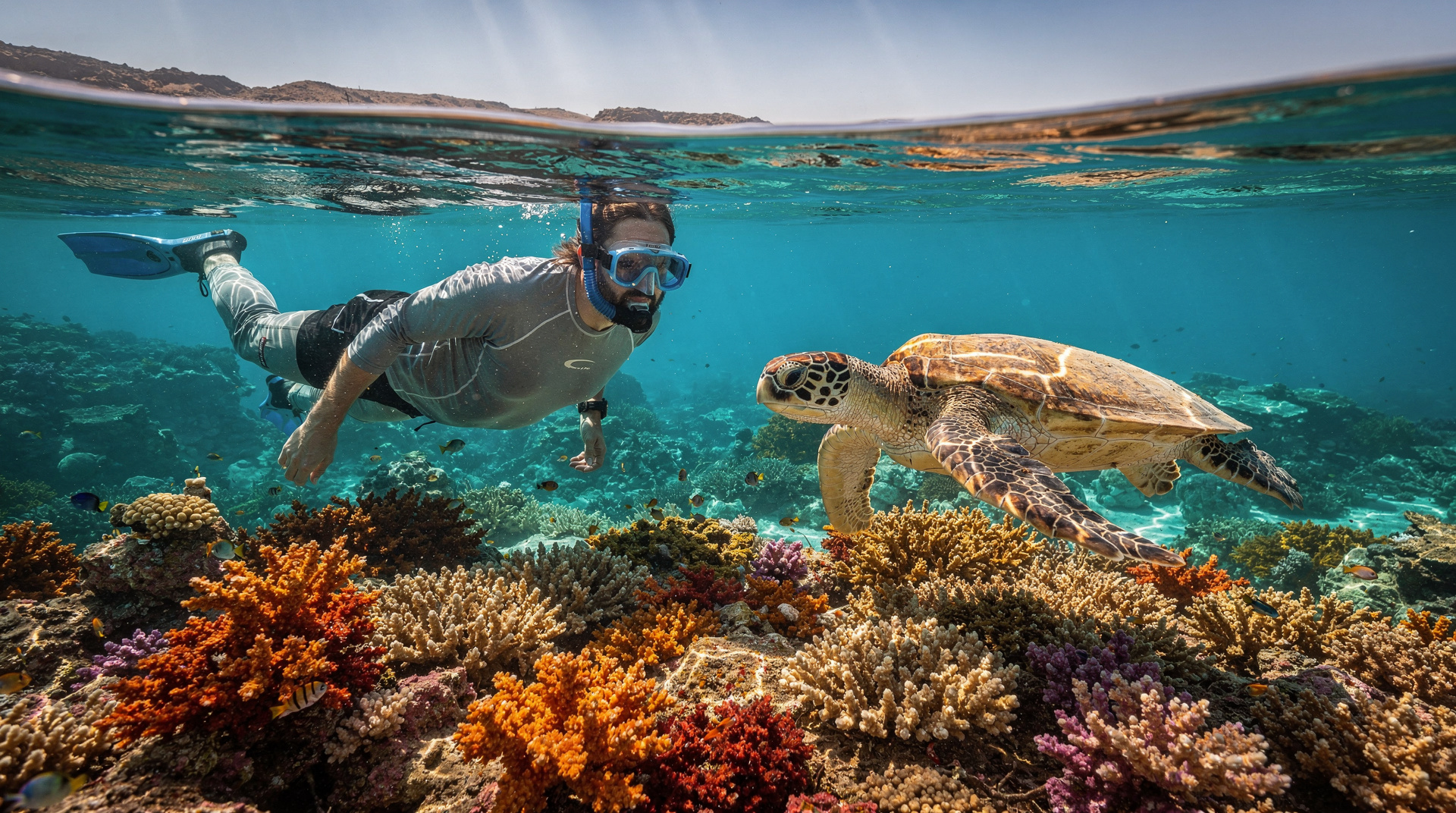
The reef communities at the Daymaniyats are the healthiest in the Muscat region. Hard coral coverage is extensive, soft corals add colour in the deeper sections, and fish populations are dense by Gulf of Oman standards. Species commonly encountered include hawksbill sea turtles (reliable residents), moray eels, various reef sharks (usually reef-tips and blacktips — harmless to snorkellers), eagle rays, parrotfish in abundant variety, and schools of fusiliers and snappers.
The full guide to the Daymaniyat Islands covers the specifics of the reserve. The Daymaniyat Islands snorkelling trip from Muscat is the most organised way to access the reserve, with transport, equipment, and park fee included.
Best season: October through May, with November through March offering the clearest water and most comfortable conditions.
3. Bandar Khayran
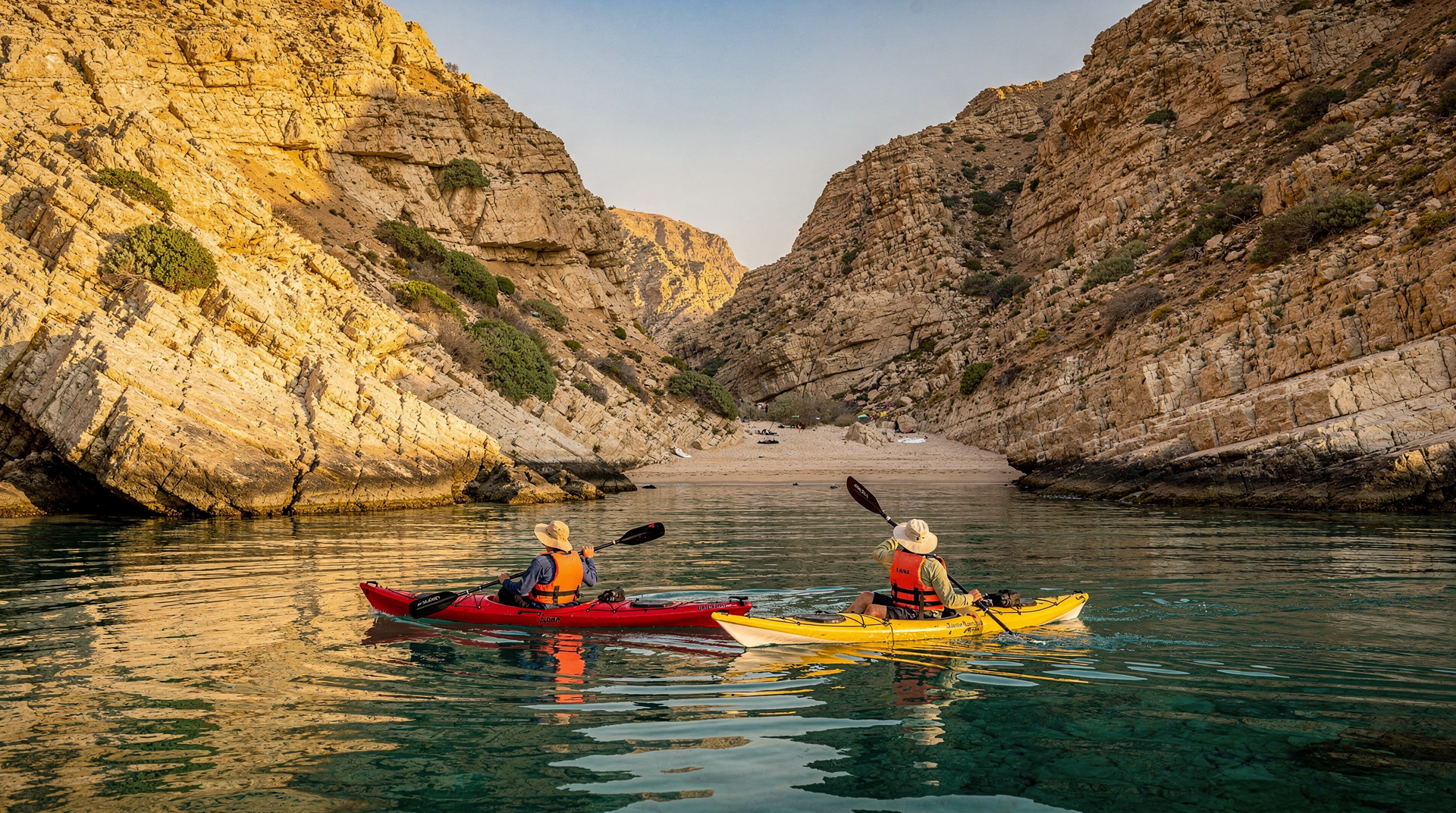
The most accessible high-quality snorkelling alternative to the Daymaniyats for Muscat-based visitors. Bandar Khayran is a complex of bays, headlands, and small islands approximately 40 kilometres south of Muscat, reachable by boat from the main launch point.
The snorkelling conditions vary significantly across the area — the most productive sites are the rocky headlands and submerged shelves between the islands, where currents concentrate fish life. The coral coverage is less extensive than the Daymaniyats but the variety of underwater topography — shallow gardens, deeper channels, caves accessible by snorkelling on one breath — makes for a more exploratory experience.
The Bandar Al Khayran group tour with snorkelling combines a boat tour of the bay system with dedicated snorkelling stops at the best locations — an efficient way to cover the area without needing your own boat. For visitors who want to combine snorkelling with kayaking through the same landscape, the Bandar Khayran kayaking guide covers the self-propelled exploration option.
What makes Bandar Khayran distinctive: The combination of dramatic above-water scenery — arched limestone headlands, sea caves at water level, cliff formations — with the underwater experience creates a complete sensory experience. On a calm day, lying face down in clear water between two limestone arches with fish moving through the dappled light below you is as fine as Omani water sports gets.
Best season: October through April. Summer visits are possible but the heat makes a full boat day extremely uncomfortable.
4. Fahal Island (Shark Island), Muscat
A small, distinctive island visible from the Muscat coast that is surrounded by productive reef. Its common nickname — Shark Island — is slightly misleading; it refers to the island’s silhouette from distance rather than an unusual concentration of sharks, though reef sharks are encountered here.
The snorkelling at Fahal is accessible on calm days without a long offshore run. The reef communities extend from the rocky shoreline down into sand channels, and the fish life is good. It is a shorter, more convenient alternative to the Daymaniyats for visitors with limited time or those who do not want a full-day offshore boat trip.
Access requires a boat — no swimming to the island is practical from shore. Several Muscat water sports operators include Fahal Island as a snorkelling stop on shorter half-day trip formats.
Best for: Visitors who want a quality snorkelling experience without committing to a full day offshore. Divers use Fahal for night dives due to the accessible depth profile; night snorkelling here on a calm, moonlit evening is an unusual experience.
5. Fins Beach and the Sur Coast
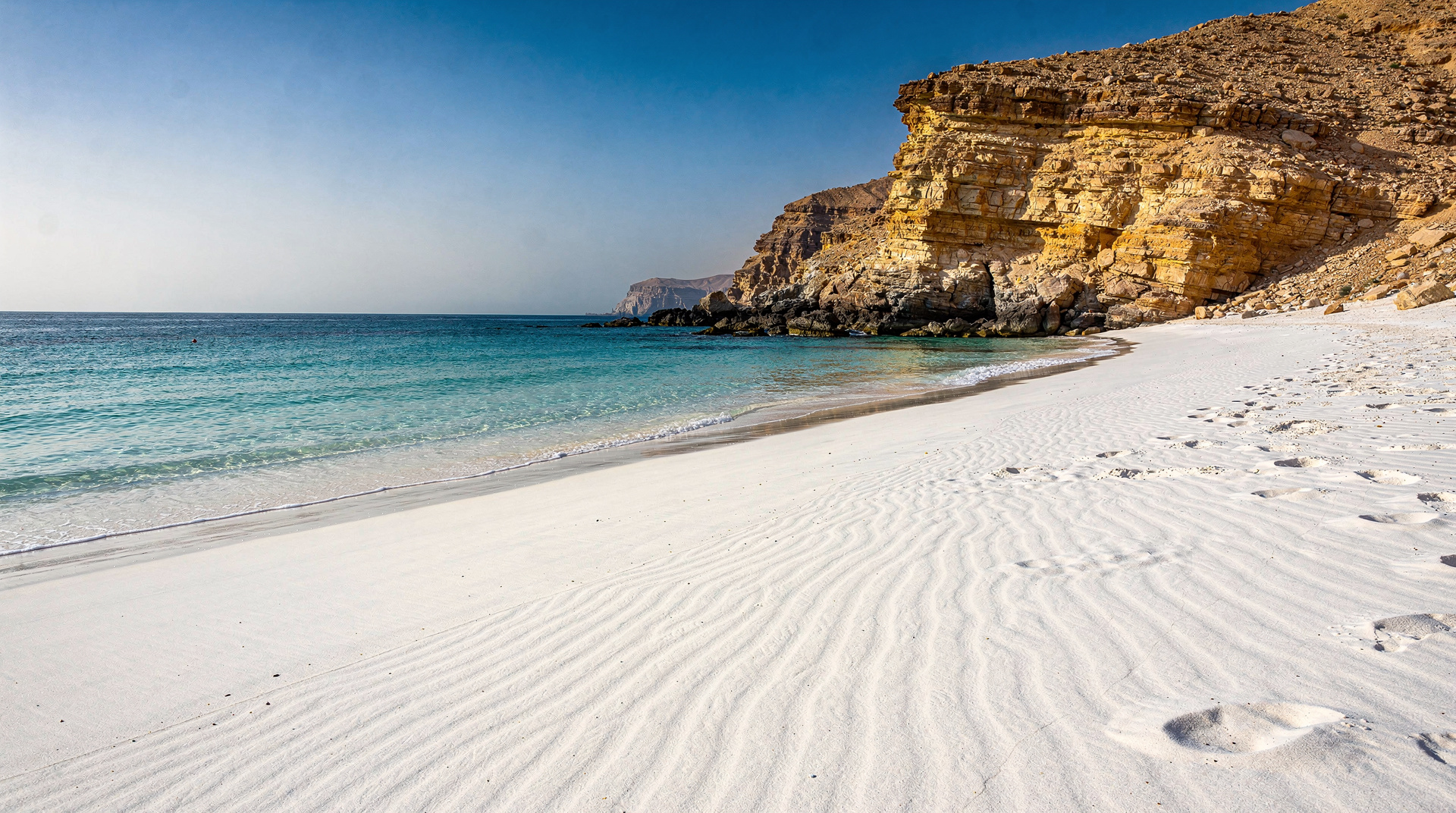
Fins Beach (Al Fins) is known primarily as one of Oman’s most spectacular beaches — a kilometre of white sand enclosed by orange and red limestone cliffs — but its snorkelling along the base of those cliffs is equally exceptional.
The reef running along the cliff face from one end of the beach to the other is in excellent condition, benefiting from the beach’s relative inaccessibility (a dusty 4WD track keeps casual visitor numbers low). Fish populations are less habituated to human presence than at heavily visited sites and are correspondingly less skittish. The clarity is consistently excellent.
The shallow reef section running for 300-400 metres along the cliff base is accessible for confident beginners. The deeper sections beyond the cliff base require swimming ability and comfort in open water. There are no facilities, no boat access, and no rescue services — this is a self-sufficient, experienced snorkeller’s site.
What to bring: Everything you need, plus extra water and a packed lunch. The site is at least 45 minutes from any town by 4WD. The 4WD is required — the track is genuinely rough and steep in sections.
Best season: October through April. The track becomes extremely hot to walk in summer.
6. Ras Al Jinz and the Turtle Coast
The turtle nesting reserve at Ras Al Jinz is famous for its sea turtle population — green turtles nest on the beach at remarkable density — but the inshore snorkelling is correspondingly productive because the turtles that nest on the beach feed in the adjacent marine environment.
Snorkelling directly at Ras Al Jinz requires authorisation from the reserve management and is possible as part of guided reserve visits. The turtles are habituated to calm observer presence and snorkelling with green sea turtles feeding on seagrass in the shallows is one of the genuinely extraordinary wildlife encounters available in Oman.
The coast between Sur and Ras Al Jinz has several smaller beaches with accessible reef snorkelling, some of which see very few visitors. Local boat operators in Sur can arrange half-day coastal snorkelling trips to sites that are essentially visitor-free.
7. Sur Lagoon and Dhow Harbour
The lagoon adjacent to Sur’s old dhow harbour has a sheltered, calm-water snorkelling environment that suits beginners and children. The water is protected from ocean swell, the entry is straightforward, and the marine life includes small reef fish, sea cucumbers, and occasional rays resting on the sandy bottom.
It is not a high-biodiversity or impressive reef site by the standards of the Daymaniyats or Fins Beach — but for families wanting a safe first snorkelling experience in calm conditions, it serves well. The cultural context of snorkelling in sight of the dhow-building yard adds an interest dimension absent at more isolated sites.
8. Masirah Island: The Wild East Coast
Masirah is a separate world from the more visited Oman coast. The island’s exposure to the open Arabian Sea on its eastern shore generates conditions too rough for casual snorkelling, but the north shore and the sheltered western coast between the ferry terminal and the northern tip offer some of the least-disturbed marine environments in Oman.
The lack of development pressure means coral communities in accessible areas have not been subjected to anchor damage or overuse. The fish life is notably abundant by comparison to more visited sites. The trade-off is access — Masirah requires either a ferry crossing or a flight from Muscat, and the infrastructure for tourists (accommodation, equipment hire, boat operators) is minimal.
Bringing your own snorkelling equipment is essential. Finding a local fisherman willing to take you to specific sites by boat is possible with some local enquiry and patience. The reward is snorkelling in conditions that recall what the entire Omani coast was like before organised tourism arrived.
Best season: October through May. The northeast monsoon in summer makes the north shore rough and the ferry crossing uncomfortable.
9. Dhofar Coast (Salalah Region)
The snorkelling environment around Salalah is distinctly different from the north. The Arabian Sea upwelling that cools the Dhofar coast in the summer khareef season also brings nutrients that support a different, more pelagic marine ecosystem — less reef-dependent, more oriented toward open-water encounters.
Whale sharks aggregate in the Salalah offshore area with some regularity, particularly in the spring months (March through May). Local dive operators based in Salalah run whale shark snorkelling trips when the aggregation is confirmed — these are genuinely extraordinary encounters that the north cannot offer.
Inshore snorkelling near Mughsayl Beach (the famous blow holes beach west of Salalah) and at several points along the Dhofar coast offers good conditions in the October through May period when the upwelling is reduced and visibility improves.
10. Al Fahal Al Abyad (White Rock), Daymaniyat Area
Often listed as part of the Daymaniyat reserve experience but technically a separate site, White Rock is a submerged pinnacle rising to within a few metres of the surface at low tide, surrounded by a healthy coral community in clear water.
The site is reached by the same boat journey as the main Daymaniyat Islands and is sometimes incorporated as a stop on multi-site snorkelling trips. The pinnacle format — a raised underwater feature surrounded by open water — concentrates fish life effectively. Schools of bigeye trevally, various snapper species, and the occasional barracuda use the structure as a reference point.
Equipment Guide for Oman Snorkelling
What Operators Provide
Most organised snorkelling trips provide basic mask, snorkel, and fins as part of the package. The quality of provided equipment varies from adequate (rental-grade masks that may not seal perfectly on all face shapes) to good (well-maintained equipment with multiple size options).
For anyone planning multiple snorkelling days, investing in a quality mask before the trip pays immediate dividends. The difference between a mask that seals well with no leaks and one that requires constant clearing is the difference between a relaxed, immersive experience and a frustrating one.
Recommended Personal Equipment
A well-fitting mask (tested in a shop before purchase by pressing it to your face without the strap and breathing in through your nose — it should stay on if it seals correctly), a dry-top snorkel (prevents flooding on small waves), and lightweight fins that fit comfortably over bare feet or thin neoprene socks.
A 3mm wetsuit top or shortie wetsuit is worth considering for extended sessions in October through February, when water temperatures drop to 22-24 degrees Celsius. For the summer months (May through September), the water is warm enough (28-32 degrees Celsius) that a wetsuit is unnecessary.
Reef-Safe Sunscreen
Standard sunscreen products containing oxybenzone and octinoxate are documented to harm coral reef ecosystems. Using reef-safe mineral sunscreen (zinc oxide or titanium dioxide based) at Oman’s marine sites is the environmentally responsible choice. Several brands are available in Muscat pharmacies, and quality international brands can be brought from home.
Conservation and Responsible Snorkelling
The quality of Oman’s snorkelling sites is directly related to conservation effort. The Daymaniyat Islands reserve demonstrates what protection achieves. Visitors contribute to or detract from this through their behaviour in the water.
The core principles:
- Never touch, stand on, or hold coral. Even a brief touch breaks polyps and transmits oils and bacteria that damage coral health.
- Do not chase or pursue marine life. Sea turtles feeding or resting that are approached calmly will often remain; those chased dive and leave.
- Do not collect anything from the marine environment. This is illegal in the Daymaniyat reserve and contrary to Omani marine protection law more broadly.
- Take all waste back to shore. This includes waterproof sunscreen packaging and any food packaging carried on the boat.
Combining Snorkelling with Other Water Activities
Several of the sites above pair naturally with other water sports for a fuller day on the water. Bandar Khayran works equally well for kayaking alongside snorkelling, and the Musandam fjords are usually experienced as part of a broader Khasab dhow cruise that also includes dolphin watching. For travellers whose main interest is marine wildlife rather than reef scenery specifically, the marine life guide covers what species to expect at each site in more depth, and dolphin watching from Muscat is a strong complement to a Bandar Khayran or Fahal Island snorkelling day.
If your trip includes Salalah during the khareef season, note that the monsoon makes the Dhofar coast unsnorkelable — plan any Salalah snorkelling or whale shark trips for the March-May window instead, and see the khareef season guide for how to plan around it.
Frequently asked questions about snorkeling spots in Oman
Do I need to be a strong swimmer to snorkel in Oman?
Confidence in open water is important, but strong swimming ability is less critical than comfort in water. Most snorkelling sites accessible on organised tours involve calm, sheltered conditions. A basic ability to float, tread water, and use fins comfortably is the minimum. Wetsuits increase buoyancy and make floating effortless — a good option for less confident swimmers.
Are there dangerous marine animals to be aware of when snorkelling in Oman?
Lionfish are present in Omani waters — their venomous spines cause significant pain if touched. They are slow-moving and clearly distinctive (feathery fins, ornate striping). Never attempt to touch one. Stonefish rest camouflaged on sandy bottoms and rocky substrates — water shoes during entry and exit over rocky areas prevent accidental contact. Sharks are present but incidents involving snorkellers at the main sites are extremely rare.
Can I snorkel independently or do I need an organised trip?
Bandar Khayran, Fins Beach, and the Sur coast can be visited independently with your own transport and equipment. The Daymaniyat Islands require a boat and are most practically accessed through an organised trip. Musandam requires a dhow trip from Khasab. Assess your own swimming confidence, navigation ability, and equipment before deciding on independent visits to more remote sites.
What visibility should I expect for snorkelling in Oman?
Visibility varies by season and location. In the October to April period at prime sites (Daymaniyats, Musandam, Bandar Khayran), 10-20 metres visibility is typical, with 25 metres achievable in optimal conditions. After summer (September) when upwelling reduces, visibility is at its lowest in some areas — typically 5-10 metres. Rain events can temporarily reduce visibility at coastal sites for 24-48 hours.
Is snorkelling possible during the Salalah khareef season?
The khareef monsoon (June through September) makes Salalah’s coast rough and visibility very poor — snorkelling is essentially impossible during this period at most Dhofar sites. However, the khareef season is the best time for snorkelling in the north (Muscat area) as the northern coast is not affected by the monsoon.
How does Oman snorkelling compare to the Maldives or Red Sea?
Oman’s reef snorkelling is not as visually spectacular as the Maldives in terms of coral density and colour, nor as accessible as the best Egyptian Red Sea sites. What Oman offers is different: less-visited sites with significant wildlife encounters (whale sharks, sea turtles, dolphins), dramatic landscape settings above water, and very competitive pricing. For travellers who have already experienced the Maldives, Oman’s underwater world holds specific appeal in the variety and accessibility of large animal encounters.
What is the minimum age for children to snorkel in Oman?
Most operators accept children from age five or six for snorkelling in calm, shallow conditions with a parent in the water. Children must be comfortable putting their face in the water and able to breathe through a snorkel. Junior-sized masks that fit smaller faces make a significant difference — the provided equipment at some operators may not fit small children well.
Are there night snorkelling opportunities in Oman?
Night snorkelling is offered by some specialist operators at Fahal Island near Muscat and at certain Musandam sites. The nocturnal marine environment is dramatically different — bioluminescent plankton light up disturbed water, sleeping fish rest on coral surfaces, and hunter species (eels, octopus, certain reef fish) become active. This is an unusual and memorable experience for confident open-water snorkellers. For a complete overview of water-based activities beyond snorkelling, the Oman beaches guide covers conditions at each coastal region and links to activity-specific guides.
Do I need a permit to snorkel at the Daymaniyat Islands?
Yes — the Daymaniyat Islands are a protected nature reserve and access requires either an organised tour (which includes the reserve entry fee) or a private permit arranged in advance. Independent, unpermitted access is not allowed. See the Daymaniyat Islands snorkelling guide for current arrangements.
Which snorkelling site is best for spotting sea turtles?
Green and hawksbill turtles are reliable at the Daymaniyat Islands and around Ras Al Jinz, where turtles that nest on the beach feed in the adjacent shallows. Bandar Khayran and the Musandam fjords also see regular turtle sightings, though less predictably than the two dedicated sites above.