Marine Life in Oman: A Guide to the Arabian Sea's Underwater World
What marine life can you see in Oman?
Oman's waters host whale sharks, spinner dolphins, green and hawksbill turtles, manta rays, reef sharks, dugongs, and over 1,000 fish species across well-preserved coral reef systems.
An Ocean of Extraordinary Richness
At a Glance
| Where | Oman’s full 3,165 km coastline, with hotspots at Musandam, the Daymaniyat Islands, Ras al Jinz and Masirah |
| Cost | Boat trips and snorkelling around 20-40 OMR pp; diving trips typically higher including gear |
| Time needed | A half or full day per site; combine several across a longer coastal itinerary |
| Getting there | Most trips depart Muscat, Khasab or Sur by organised boat tour |
| Best time | October-May for northern reefs and whale sharks; June-September for Dhofar’s dolphin aggregations |
Oman sits at the edge of the Arabian Sea — a body of water that, despite its relatively small size compared to the great ocean basins, is one of the biologically richest marine environments on earth. The confluence of several major oceanographic systems, combined with the complex coastline of inlets, headlands, and offshore islands that characterises much of Oman’s 3,165-kilometre shoreline, creates conditions that support an astonishing diversity of marine life.
The Arabian Sea’s productivity is driven by a process called coastal upwelling: the summer monsoon winds push surface water offshore, drawing cold, nutrient-rich water from the deep ocean up to replace it. This surge of nutrients fuels massive plankton blooms that form the base of an extraordinarily productive food web. The result is an ocean that supports large populations of dolphins, whales, whale sharks, manta rays, sea turtles, and seabirds, all feeding on the seasonal abundance generated by the upwelling cycle.
Oman has been both a beneficiary of this natural richness and, in recent decades, an increasingly active steward of it. Marine protected areas cover key reef systems and nesting beaches, and the country’s fisheries regulations, while imperfect, have helped maintain populations that have collapsed elsewhere in the Arabian Sea region.
Dolphins: Oman’s Most Visible Marine Residents
No encounter with Oman’s marine environment is more immediate and accessible than the experience of dolphins riding the bow wave of a boat in the open ocean. Several dolphin species inhabit the waters off Oman year-round, and encounters are genuinely common on any boat trip offshore.
The spinner dolphin is the most visible species — acrobatic, gregarious, and apparently committed to demonstrating its spinning leaping ability to any vessel in the vicinity. Spinner dolphins aggregate in vast schools during the day, often numbering in the thousands in the upwelling-rich waters off Dhofar in summer. Schools of 500 to 1,000 individuals are routine; schools exceeding 10,000 have been documented in the Arabian Sea off Oman.
From Muscat, a Muscat dolphin watching and snorkelling tour is the most direct way to encounter these animals — spinner and bottlenose dolphins are regularly found on open-water crossings to the Daymaniyat Islands.
Common dolphins, Indo-Pacific bottlenose dolphins, and Risso’s dolphins are also regularly encountered. The Musandam fjords in the far north of Oman are one of the most reliably productive sites for dolphin watching in the entire Arabian Peninsula — the narrow inlets concentrate both the dolphins and the fish they feed upon. On boat excursions into the fjords, encountering multiple species simultaneously is common.
Rarer but regularly recorded species include humpback dolphins, Pantropical spotted dolphins, and striped dolphins. The waters off Dhofar during the summer monsoon are among the best in the world for deep-water cetacean species: blue whales, sperm whales, Bryde’s whales, and false killer whales have all been documented by researchers working in this area.
Sea Turtles: Ancient Navigators
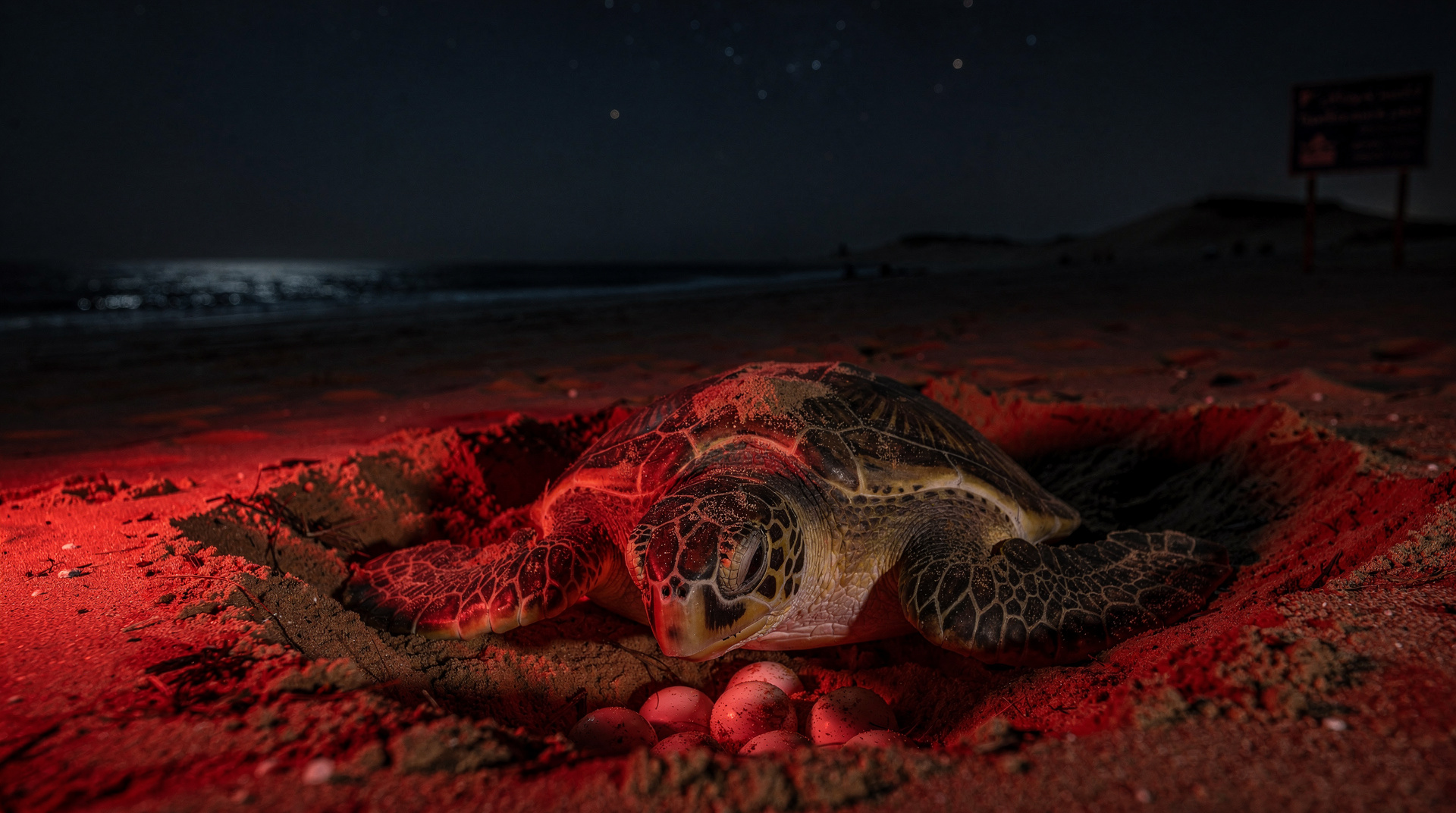
Oman is one of the world’s most important sea turtle strongholds. Five of the seven sea turtle species occur in Omani waters: the green turtle, the hawksbill, the loggerhead, the olive ridley, and the leatherback. Of these, the green turtle is by far the most abundant and the most important in terms of nesting numbers.
The green turtle nesting site at Ras al Jinz, on the eastern cape of Oman, is one of the largest in the Indian Ocean region. The turtle watching at Ras al Jinz guide covers this site in detail. But green turtles are not restricted to Ras al Jinz — they nest on beaches throughout Oman’s eastern coastline and are frequently encountered by divers and snorkellers on the offshore reefs.
Hawksbill turtles are the coral reef specialists: their narrow, pointed beaks allow them to extract sponges, sea anemones, and soft corals from crevices in the reef. They are commonly seen resting on coral ledges or swimming over the reef top at sites across Oman, particularly in the Musandam area and around the Daymaniyat Islands.
The loggerhead turtle’s primary nesting ground on the Arabian Sea coast is at Masirah Island, a large barrier island off the central Oman coast that supports what may be the single largest loggerhead nesting population in the world. Estimates suggest that between 30,000 and 40,000 female loggerheads nest on Masirah’s beaches each year — a number that defies easy comprehension.
Coral Reefs: Stressed but Surviving
Oman’s coral reefs have suffered significantly over the past two decades. A combination of ocean warming events (particularly the severe bleaching associated with the 1998 El Nino and subsequent warming episodes), increased sea surface temperatures driven by climate change, and localised pressures from sedimentation, fishing, and anchor damage have degraded many reef systems across the Arabian Sea.
Despite this, Oman retains coral reef systems of genuine ecological significance. The Daymaniyat Islands, protected as a nature reserve since 1996, host some of the best-preserved reefs in the region, with good coral cover and impressive fish biodiversity. The Musandam Peninsula in the far north — geographically isolated and relatively lightly fished — supports reefs that are considered among the healthiest in the entire Arabian Gulf region.
The Hallaniyat Islands (also called the Kuria Muria Islands) off the Dhofar coast are increasingly recognised as an important reef system and potential future protected area. Remote and rarely visited, they support populations of reef fish that have been depleted from more accessible sites, including large groupers, napoleon wrasse, and various shark species.
Diving these reefs — particularly for visitors willing to make the effort to reach the more remote locations — is genuinely rewarding. For the Daymaniyat Islands diving experience, the guide to whale shark diving provides practical booking information. The Dimaniyat Islands scuba diving trip is a well-established option that includes equipment and a guided underwater experience of the protected reserve.
Whale Sharks and Manta Rays
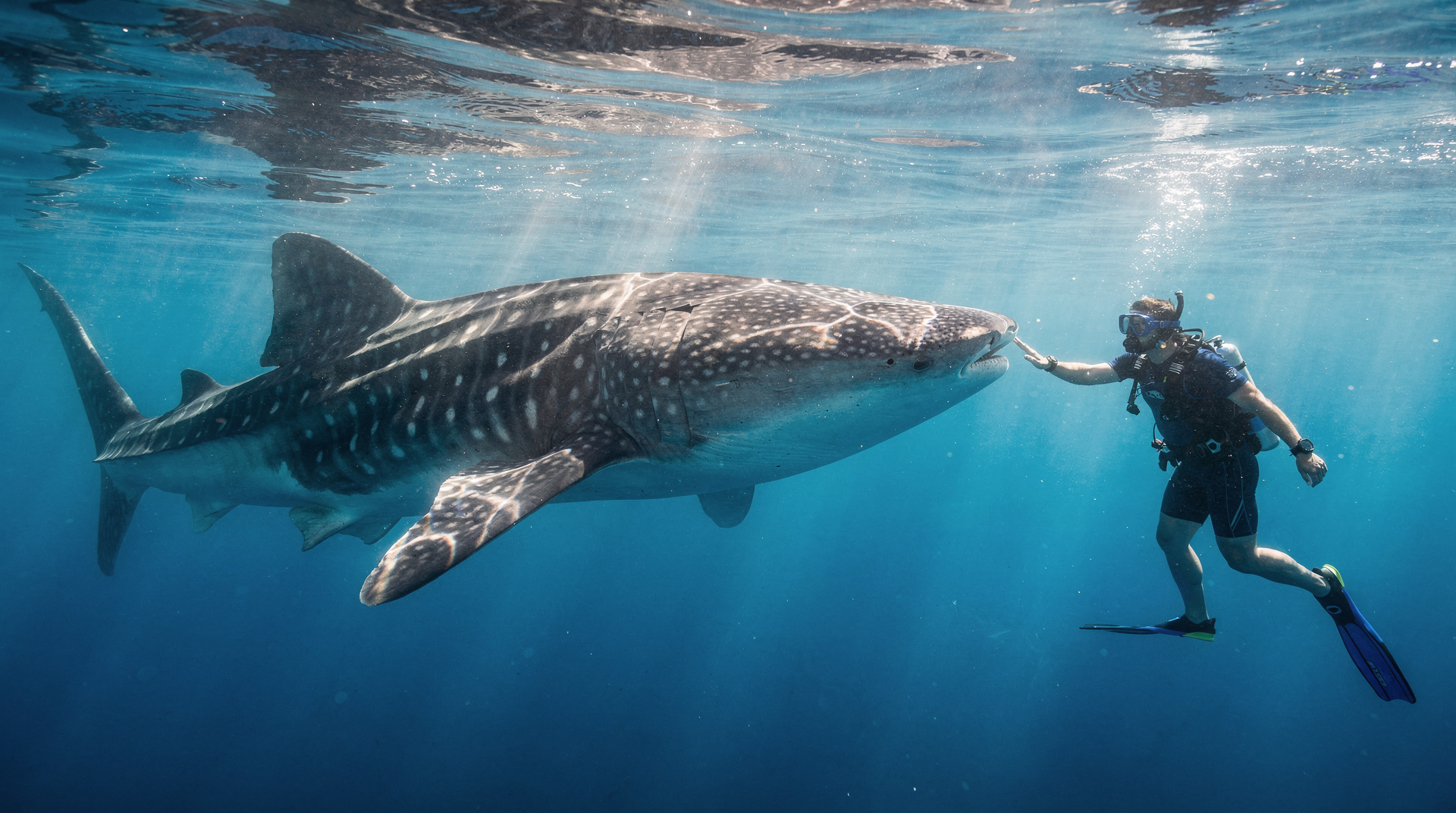
Oman’s nutrient-rich waters support two of the ocean’s most charismatic megafauna: whale sharks and manta rays. Both species are filter feeders that aggregate wherever plankton concentrations are high, making the upwelling zones of the Arabian Sea ideal habitat.
Whale sharks are present in Omani waters year-round but are most reliably encountered at the surface during the cooler, plankton-rich months between October and May. The Daymaniyat Islands are the most accessible site for whale shark encounters, but they are also regularly seen on open-water crossings throughout the Gulf of Oman.
Manta rays — specifically the oceanic manta ray (Mobula birostris), the largest of the ray species — are seasonal visitors to the Daymaniyat Islands and other offshore seamount areas. Peak manta season corresponds with periods of particularly dense plankton blooms, typically in October and April during the transitional periods between monsoon seasons. Encountering a manta — with its wingspan of up to 7 metres — gliding silently overhead is an experience that ranks alongside whale shark encounters in terms of sheer marine spectacle.
Shark Species of Oman’s Reefs
Sharks play a central ecological role in healthy reef systems, and Oman’s protected reef areas retain populations of reef shark species that have been lost from many other Arabian Sea reefs through overfishing.
Whitetip reef sharks and blacktip reef sharks are the most commonly encountered species at reef sites throughout Oman — recognisable by their characteristic white or black fin tips and their tendency to rest on sandy patches between coral bommies. Grey reef sharks are common at the Daymaniyat Islands and patrol the deeper reef edges, sometimes in small groups.
Nurse sharks are frequently seen resting motionless under coral ledges during the day — their sedentary daytime behaviour makes them easy to approach closely and observe in detail. Tawny nurse sharks can reach 3 metres in length and are impressive animals at close range, though they are entirely placid and uninterested in divers.
Hammerhead sharks — both scalloped and great hammerhead — are recorded seasonally at offshore sites, and the pelagic waters of the Arabian Sea support populations of oceanic whitetip and silky sharks. These open-water species are rarely encountered on standard reef dives but are known to researchers working in the deep water zones.
Dugongs: The Arabian Sea’s Sea Cows
The dugong (Dugong dugon) — a large, torpedo-shaped marine mammal related to the manatee — inhabits the seagrass beds of the Arabian Sea coast. Oman has a small but significant dugong population, primarily associated with the seagrass meadows along the Batinah coast and in the bays around the Musandam Peninsula.
Dugongs are shy, slow-moving animals that spend their lives grazing on seagrass beds in shallow coastal waters. They are genuinely difficult to find: their low profile, slow movement, and habit of submerging for several minutes between breaths makes them hard to spot from a boat. However, with patience and knowledge of the right areas — particularly the sheltered bays along the Batinah coast — dugong encounters are possible for persistent searchers.
The Musandam Fjords: A World Apart
The Musandam Peninsula, separated from the rest of Oman by a strip of UAE territory, is geographically and ecologically distinct from the main Oman coast. The peninsula’s dramatic fjord-like inlets (khor) were formed by the same mountain-building processes that created the Hajar range, with the sea flooding deeply into valleys as land levels adjusted over geological time.
The fjords create sheltered, clear-water environments that are excellent for diving and snorkelling, with visibility often exceeding 20 metres. The rich marine life of the fjords includes dolphins (which sometimes use the inlets as calm-water refuges), turtles, reef fish, and the occasional visiting whale shark or manta.
The traditional wooden dhow cruises through the Musandam fjords are one of the iconic Oman experiences — combining dramatic cliff scenery with excellent opportunities for snorkelling and dolphin watching in some of the most beautiful coastal scenery in Arabia. The full range of Musandam cruise formats — half-day, full-day and overnight — is covered in the Khasab dhow cruise guide.
Where to See What: A Site-by-Site Comparison
| Site | Best for | Season |
|---|---|---|
| Musandam fjords | Dolphins, sheltered snorkelling | Year-round, best October-April |
| Daymaniyat Islands | Coral reefs, whale sharks, manta rays | October-May |
| Ras al Jinz | Green turtle nesting | Year-round, egg-laying peaks vary |
| Masirah Island | Loggerhead turtle nesting | June-September |
| Dhofar coast (Salalah area) | Mass spinner dolphin schools, deep-water whales | June-September (Khareef) |
Conservation: Challenges and Progress
Oman’s marine environment faces significant challenges. Climate change is increasing ocean temperatures, leading to more frequent coral bleaching events. Plastic pollution is widespread — marine debris accumulates on remote beaches throughout the coast, and sea turtles and dolphins suffer from plastic ingestion and entanglement. Unsustainable fishing practices, including illegal use of gill nets in protected areas, put pressure on fish stocks and non-target species.
On the positive side, Oman’s network of marine protected areas is expanding, enforcement has improved substantially over the past decade, and public awareness of conservation issues is growing — particularly among young Omanis engaged through environmental education programmes. Research collaborations between Sultan Qaboos University and international institutions have generated important baseline data on key species including green turtles, whale sharks, and dolphins.
The scale of what remains in Oman’s waters is genuinely encouraging. An ocean that supports 10,000-strong dolphin schools, hundreds of nesting whale sharks, and one of the world’s largest loggerhead turtle populations is still, despite everything, a fundamentally healthy marine ecosystem. Sustaining that health is the conservation challenge of the coming decades.
Frequently asked questions about Marine Life in Oman: A Guide to the Arabian Sea’s Underwater World
What is the best place to see dolphins in Oman?
The Musandam fjords in northern Oman are consistently the most reliable location for dolphin encounters, with Indo-Pacific bottlenose dolphins and spinner dolphins frequently encountered on dhow cruises. The offshore waters off Dhofar in summer host truly vast spinner dolphin aggregations. Boat trips from Muscat often encounter dolphins on open-water crossings to the Daymaniyat Islands. For those wanting to combine birdwatching with marine wildlife, the birdwatching guide covers the seabird colonies of the Daymaniyat Islands and the offshore species visible on the same boat journeys.
Is the coral reef diving in Oman worth doing?
Yes — particularly at the Daymaniyat Islands and in the Musandam Peninsula. While Oman’s reefs have suffered bleaching damage in recent decades, the protected areas retain impressive coral cover and fish diversity. The added attraction of whale sharks, turtles, and reef sharks makes Omani reef diving genuinely compelling for both experienced and novice divers.
Are there any dangerous marine animals in Oman?
Oman’s waters contain animals that require respect but are not genuinely dangerous to careful, sensible swimmers and divers. Reef sharks will investigate divers but rarely pose a threat. Stonefish and lionfish are present on reefs and can inflict painful stings — never touch or stand on reef. Stingrays rest on sandy bottoms and can sting if accidentally stepped on. Box jellyfish appear seasonally and can cause significant stings. Moray eels will bite if interfered with. None of these risks are exceptional compared to reef diving anywhere in the tropical Indo-Pacific.
What is the best time of year for marine wildlife in Oman?
October to May is the prime period for most marine wildlife encounters in northern Oman. This period covers whale shark season at the Daymaniyat Islands, peak turtle nesting season at Ras al Jinz, and the best diving visibility on the northern reefs. The summer monsoon season (June to September) is when the Dhofar coast comes alive, with massive dolphin aggregations in the upwelling-rich waters, but diving conditions in the north are affected by increased swell.
Can I snorkel or dive as a complete beginner in Oman?
Absolutely. Several sites in Oman are ideal for beginner snorkelling, including the sheltered bays of the Musandam and the shallow reef areas of the Daymaniyat Islands. Diving courses are offered by several dive schools in Muscat, and PADI Open Water certification can be completed in 3 to 4 days using Muscat’s accessible reef sites. The warm, clear water and relatively gentle conditions at most beginner sites make Oman a pleasant place to learn to dive.
Do I need a permit to dive at the Daymaniyat Islands?
Individual divers do not need a separate permit to dive at the Daymaniyat Islands, but access to the islands is regulated and must be through an authorised tour operator. Operators include the necessary reserve access fees in their tour prices. Diving or anchoring independently within the marine reserve boundaries is not permitted.
Where is the best single trip to combine several marine highlights?
A boat trip from Muscat to the Daymaniyat Islands is the most efficient single outing, often combining dolphin encounters on the crossing with snorkelling or diving on the reef itself, and a seasonal chance at whale sharks or manta rays. For turtles specifically, a dedicated evening visit to Ras al Jinz is the more reliable choice, since nesting activity is a distinct experience from open-water wildlife.