Oman in March: Weather, Things to Do & Travel Tips
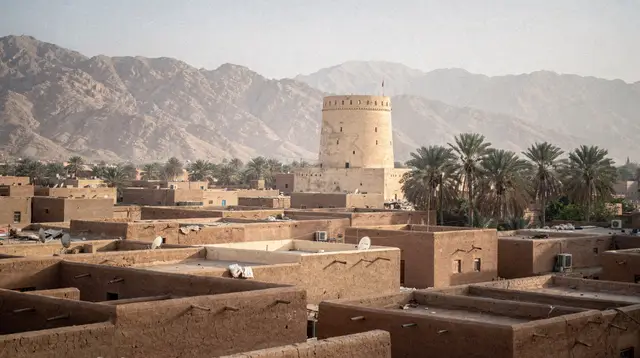
Muscat: explore Nizwa Fort and Souq + Jebel Akhdar
Duration: 10 hours
- Free cancellation
- Hotel pickup
- English guide
Is March a good time to visit Oman?
March is an excellent time to visit Oman. Temperatures are rising but remain comfortable, crowds ease compared to January-February, and prices begin to drop. The mountains and interior are particularly beautiful as spring arrives.
Weather and Conditions in March
| At a glance | |
|---|---|
| Where | Works everywhere — Muscat, Nizwa, Jebel Akhdar, Wahiba Sands |
| Cost | Shoulder-season rates, around 15-25% below January-February |
| Time needed | 7-10 days covers the coast, interior and a mountain night comfortably |
| Getting there | Muscat International Airport (MCT); a rental car or 4x4 for the interior |
| Best time within the month | First half if Ramadan falls late; early mornings for outdoor activity by late March |
March marks the turning point between Oman’s perfect winter season and the onset of warmer temperatures. The transformation is gradual and, in most of the country, entirely pleasant — March is warm and sunny throughout, with conditions that still allow comfortable outdoor activity across all regions.
Muscat and the coast: Temperatures climb through the month, from around 26-28°C at the start to 30-32°C by the final week. Evenings remain comfortable at 22-24°C. Sea temperature reaches 25°C, which is ideal for swimming. Humidity stays relatively low compared to summer, but the warmth of late March signals what is coming.
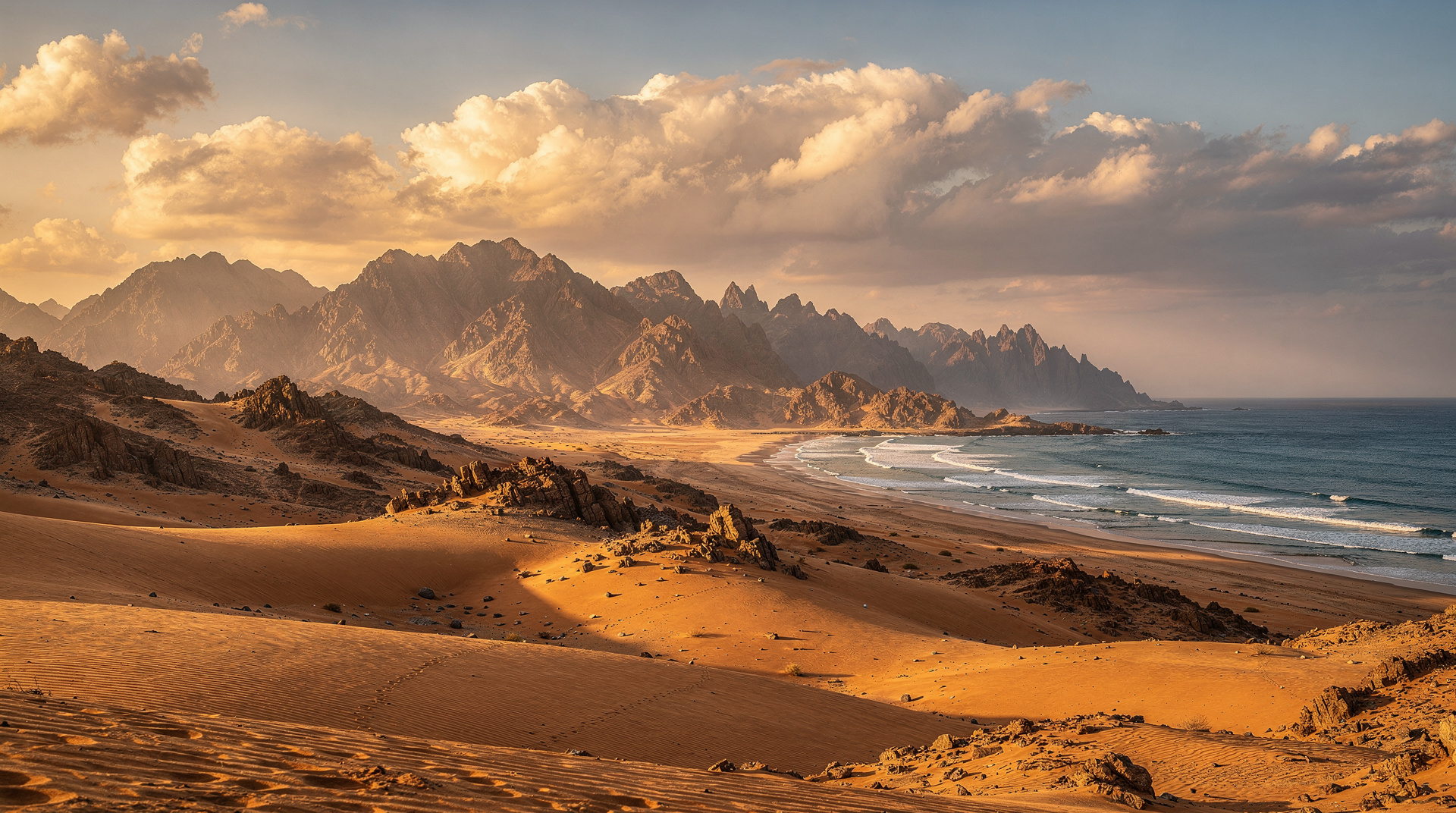
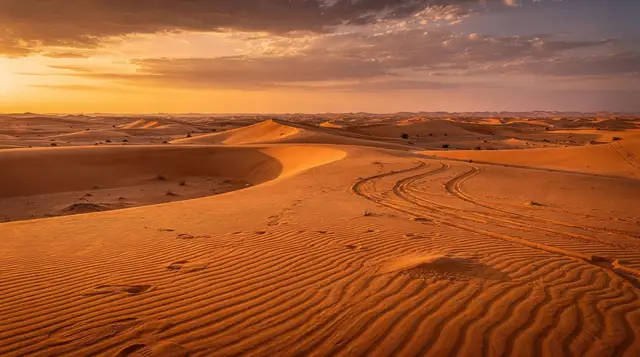
Wahiba Sands: The desert heats up noticeably in March. Early-month conditions (25-30°C) are still comfortable for dune activities; by late March, daytime temperatures of 33-36°C require more careful timing of outdoor activity. Desert overnight camping remains excellent through the first three weeks of the month.
Jebel Akhdar: The mountain wakes up in spring. Daytime temperatures of 15-20°C are very comfortable for walking, and the rose gardens of Jebel Akhdar begin to show new growth — the rose season typically starts in April, but the gardens look vibrant and alive in late March. Mountain nights are still cool at 8-12°C.
Salalah: March in Dhofar is warm and dry at 28-32°C. The landscape is in its pre-Khareef state — arid but with its own austere beauty, particularly along the coast where the frankincense trees and ancient ruins at Sumhuram are worth visiting.
What to Expect from the Crowds and Prices
March represents the transition from peak to shoulder season. The first two weeks still carry some of the January-February crowds — notably school holiday visitors — but from mid-March onward, visitor numbers ease considerably. Popular sites like Muttrah Souq and Wadi Shab are noticeably less busy than in January.
Hotel prices begin dropping in March. Expect to save 15-25% compared to January rates at most mid-range and upscale properties. Desert camp availability improves. Tour operators have more flexibility for custom bookings. Booking 3-4 weeks in advance is generally sufficient for most March travel, though popular desert camps and mountain lodges still benefit from advance reservation.
If Ramadan falls in March (check the Islamic calendar for 2026), the travel dynamic changes. Daytime life slows, restaurants are closed from dawn to dusk, and the pace of the city is different. However, the Iftar (breaking of fast) period from sunset is extraordinary — local restaurants open to full capacity, families gather, and Muscat’s food scene at this hour is as lively and authentic as it ever gets.
Top Things to Do in Oman in March
March’s warming temperatures and easing crowds make it ideal for the Omani interior and mountain experiences:
-
Jebel Akhdar and Nizwa: March is one of the finest months for the mountain-and-fort combination. The Jebel Akhdar terraces are green and active, the air is clear, and the drive up from Nizwa is a pleasure. A Nizwa Fort and Jebel Akhdar combo day tour covers both highlights efficiently.
-
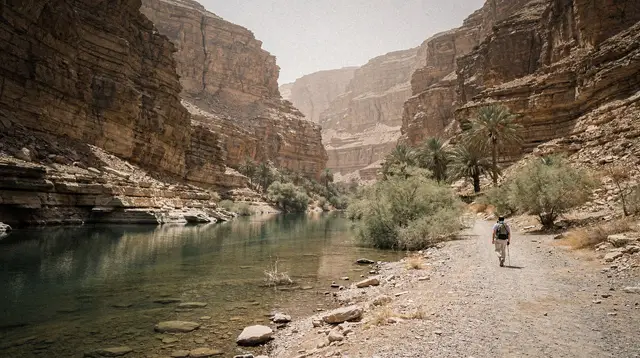
Wadi Shab: The gorge remains excellent in March — water levels are manageable, the canyon walls are lush, and the hike to the cave pool is one of Oman’s great walking experiences. Book a guided Wadi Shab hike and swim and plan to start early.
-
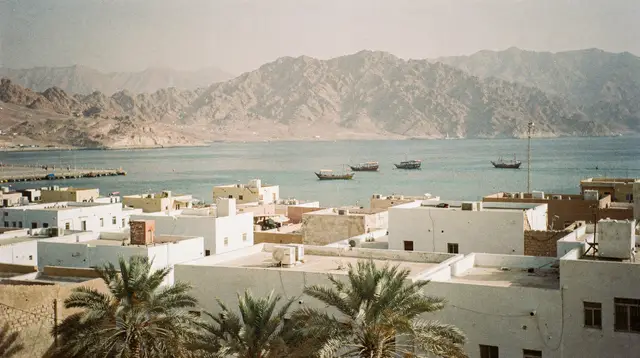
Muscat city tour: March is still excellent for Muscat. The Grand Mosque, Muttrah Corniche, and the new National Museum are all best in the cooler hours of the morning. A half-day city tour of Muscat with hotel pickup makes the morning hours count.
-
Desert camping (early March): The first three weeks of March are still excellent for desert overnight stays at Wahiba Sands. The nights are cooler than April and the days manageable. A Wahiba Sands overnight desert camp from Muscat is highly recommended for early March visitors.
-
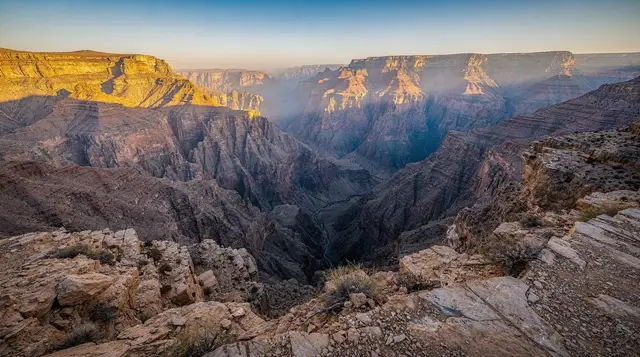
Jebel Shams: The Grand Canyon of Oman is at its most dramatic in March light. The balcony walk offers vertiginous views down into the ancient wadi system. Clear mountain air and comfortable walking temperatures make this a standout experience.
-
Frankincense heritage, Salalah: If Salalah is on your itinerary, March is a good time to explore the frankincense heritage at Al Baleed Archaeological Park and the Land of Frankincense UNESCO site without summer humidity.
Where to Go in Oman in March
Jebel Akhdar — March is the transitional month before the famous rose season (April-May), and the mountain is beautiful and accessible. The cooler temperatures and quieter visitor numbers make it ideal for proper exploration of the terraces, villages, and walking trails.
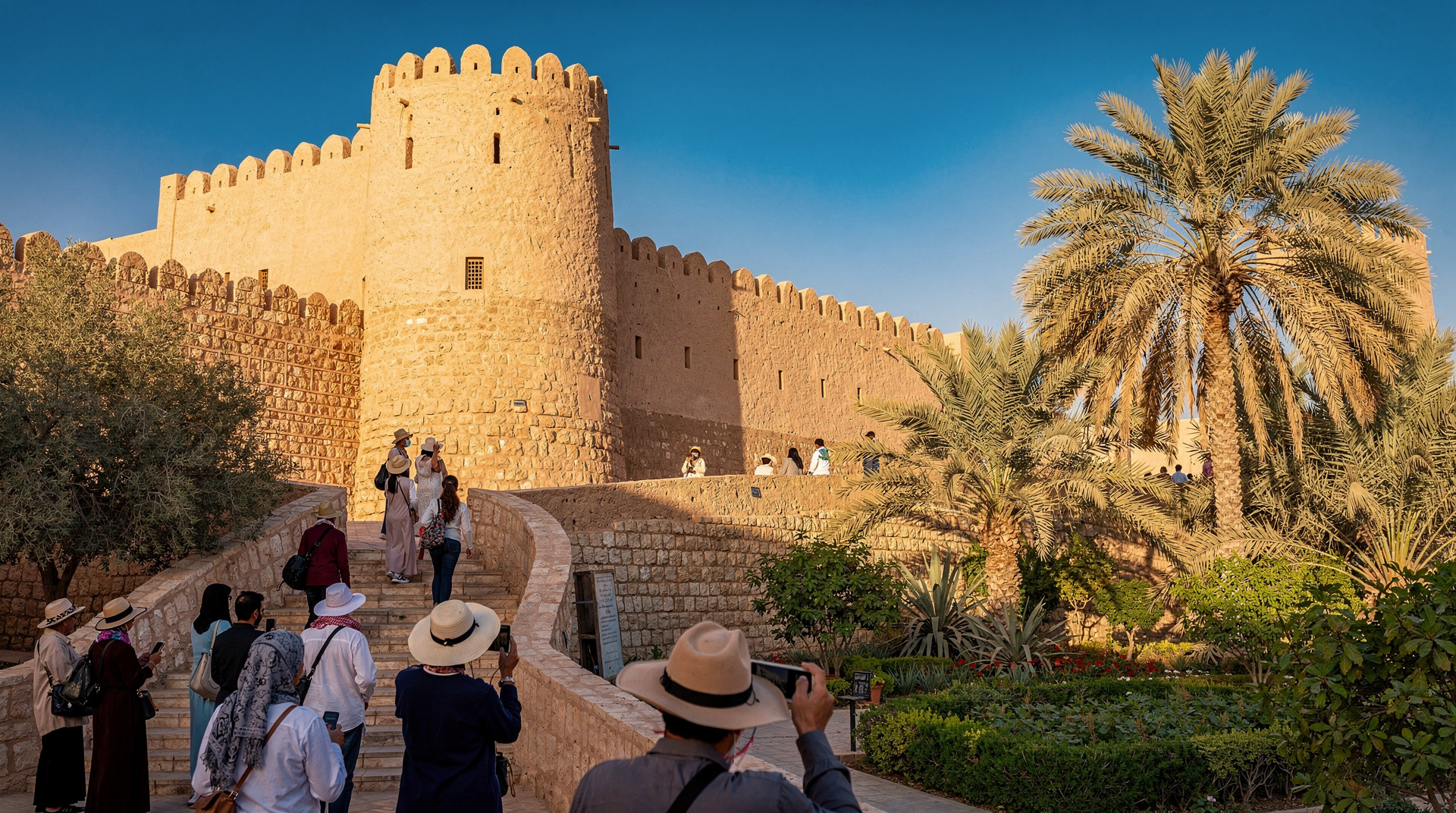
Nizwa — The Friday souq continues year-round and the fort is superb in any season. March’s moderate temperatures make the drive from Muscat comfortable and the fort worth a full morning rather than a rushed visit.
Wahiba Sands — Early March is excellent for desert camping. Dune driving, camel riding, and overnight stargazing are all comfortable and accessible without the extreme heat of later months.
Muscat — Still excellent in March, particularly in the morning and evening. The sea is warm enough for snorkeling and dolphin watching. The city is slightly less crowded than February and good-value hotels are more available.
What to Pack for Oman in March
March packing sits between the full winter kit and the light summer essentials:
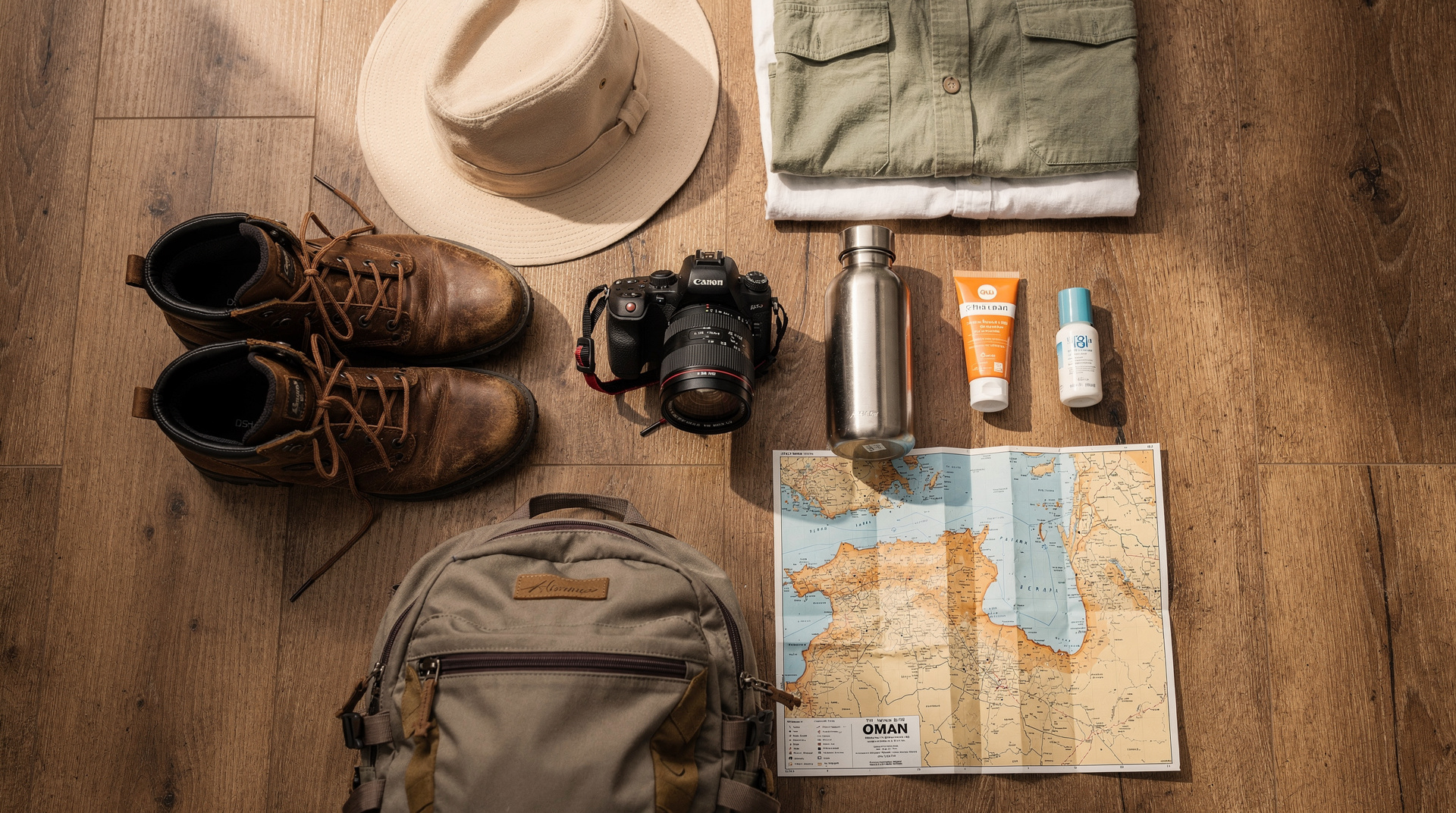
- Daytime layers: Light t-shirts and breathable fabrics for Muscat and the coast; light long-sleeved shirts for cultural sites. By late March, the warmth calls for the lightest possible clothing.
- Evening layers: A light cardigan or zip fleece for early-month evenings; this becomes unnecessary by late March in Muscat.
- Mountains: Still pack a proper warm layer for Jebel Akhdar and Jebel Shams. Nighttime temperatures at 2,000m+ remain cool even in March.
- Sun protection: The UV index rises through March. Reef-safe sunscreen, a wide-brimmed hat, and UV-protection sunglasses are essential. Reapply sunscreen frequently, especially during water activities.
- Ramadan considerations: If Ramadan falls in March, pack a light scarf for women and avoid eating or drinking in public during daylight hours. Dress conservatively throughout the day.
Festivals and Events in March
Ramadan (2026): Depending on the Islamic calendar, Ramadan falls partly or entirely in March 2026. The month of fasting changes the rhythm of travel significantly — daytime activity in restaurants and cafes ceases, but the Iftar celebration at sunset is a highlight of any visit to Oman during this period. Muscat’s restaurants fill at sunset with extended family gatherings and generous traditional meals.
Rose Season Preparation, Jebel Akhdar: The rose season proper begins in April, but late March sees the Damask rose gardens on Jebel Akhdar beginning to show buds. Early visitors sometimes catch the first blooms and have the terraces largely to themselves before April’s crowds arrive.
Nizwa Friday Souq: Every Friday, Nizwa’s livestock market draws farmers, traders, and increasingly curious visitors. The cattle, goat, and camel trading section is operational from early morning. This is one of the most authentic cultural experiences in Oman and entirely accessible to respectful visitors.
March Region by Region
| Region | Daytime temp | Best for | Notes |
|---|---|---|---|
| Muscat/coast | 26-32°C | City sights, Grand Mosque, snorkeling | Sea warms to around 25°C |
| Wahiba Sands | 25-36°C | Desert camping, dune driving | Cooler comfortably early month; hotter by late March |
| Jebel Akhdar | 15-20°C | Walking, terraces, pre-rose gardens | Nights still cool, around 8-12°C |
| Salalah | 28-32°C | Frankincense heritage sites | Pre-Khareef, dry and quiet |
Ramadan and March: What Actually Changes
If Ramadan falls in March, the practical effect on travel is smaller than many visitors expect. Tour operators and major hotels continue operating normally, and most tourist-facing restaurants stay open, though some switch to evening-focused service. What does change is public daytime etiquette: eating, drinking or smoking in public during daylight hours is best avoided out of respect, even though non-Muslim visitors are not legally required to fast.
The evening Iftar meal transforms the atmosphere — see the dedicated Ramadan travel in Oman guide for a fuller breakdown of what to expect month by month, and the dress code guide for how modest dress expectations shift slightly during the holy month.
Shaping a March Route Around the Weather
Because March warms steadily, the order in which you visit regions matters more than it does in midwinter. A sensible pattern is to spend the cooler, higher places and the long outdoor days early in the trip, then settle on the coast as the heat builds. If you arrive in the first half of the month, the 7-day classic Oman itinerary works almost as written. Longer trips can borrow from the 10-day grand tour, keeping the desert and mountain stops toward the start and leaving the beaches for the end.
Travellers with only a few days can stay close to the capital. The 3-day Muscat express and the Muscat city guide suit March well, since mornings are pleasant for the Corniche and the old quarter, and the sea is inviting for a late swim. For the souq in particular, the Muttrah Souq guide explains how to enjoy it in the quieter hours, which also happen to be the coolest.
Mountains, Forts and Villages in Spring Light
March is a rewarding month for the interior because the air is clear and the walking is comfortable. Beyond the main highlights, the terraced villages reward a slow visit: the Al Hamra and Misfat villages guide describes the old mudbrick lanes and falaj-fed gardens, and the Aflaj irrigation guide explains the ancient water system that keeps them green.
Fort lovers can build a day around Bahla Fort and Jabrin Castle, or consult the complete guide to Oman’s forts to choose between them. For the market itself, the Nizwa fort and souq guide and the Nizwa goat market guide help you plan a Friday morning. If you want a single outing from the capital, the Nizwa day trip from Muscat is the simplest option. Higher up, Jebel Akhdar, the green mountain is the place to understand why March is such a calm moment before the rose crowds, and the Jebel Shams balcony walk rewards an early start.
On the Water and in the Wadis
With the sea warm and the crowds thinner, March suits the coast. The snorkeling spots guide and the Daymaniyat Islands snorkeling guide cover the best places to get in the water, while the dolphin watching guide is worth reading if you prefer to stay aboard a boat. For freshwater swimming, the complete Wadi Shab guide and the top wadis list help you pick a gorge that matches your energy level. Wherever you swim, bring water shoes and respect local expectations about modest swimwear, which the Oman etiquette guide explains well.
Getting Around and Staying Flexible
March rewards a little flexibility. A rental car lets you start early, which is the main way to beat the heat, and the getting around Oman guide compares the options. If you plan a longer loop, the Oman road trip planning guide helps you pace the driving. Choosing where to sleep in the capital is easier with the where to stay in Muscat guide, and you can compare this month with its neighbours in the Oman in February and Oman in April guides before locking in your dates. For a wider view of the seasons, the best time to visit Oman guide puts March in context.
Practical Tips for March Travel
Time outdoor activity carefully in late March. From the third week of March, daytime temperatures in Muscat and the desert require that serious outdoor activity (wadi hikes, dune walks) begin by 8am and conclude by noon. Afternoons in shade or air-conditioned spaces are a reasonable strategy.
Confirm Ramadan dates before finalising your itinerary. Ramadan timing affects everything from restaurant hours to the atmosphere at cultural sites. Many Muscat restaurants offer Suhoor (pre-dawn meal) and Iftar (sunset meal) set menus that are worth experiencing even for non-Muslim visitors. Check that your key activities and tours operate normally during Ramadan — most tour operators continue without disruption.
March is ideal for Oman’s interior. If your priority is the cultural heartland — Nizwa, Al Hamra, Bahla, and the villages around Jebel Akhdar — March combines comfortable weather with thinner crowds and better value than the peak season.
Frequently asked questions about Oman in March: Weather, Things to Do & Travel Tips
What's the weather like in Oman in March?
March sees temperatures warming noticeably. Muscat reaches 28-32°C by late March with evenings around 22-24°C. Jebel Akhdar days are pleasant at 15-20°C though nights remain cool. The desert warms quickly — Wahiba Sands can hit 35°C by month's end.What should I pack for Oman in March?
Light summer clothing for Muscat: t-shirts, shorts, and breathable fabrics. A light layer for evenings is useful early in the month. For mountains, pack a fleece or jacket as nights remain cool at altitude. Sun protection is essential — UV index is high and temperatures feel warmer than they are.Are there festivals in Oman in March?
Ramadan may fall in March depending on the Islamic calendar — in 2026 Ramadan begins around late February, so March will see the height of Ramadan observance. This changes the rhythm of the day significantly: most restaurants close during daylight, but Muscat's evening Iftar scene is vibrant.Is March expensive in Oman?
March is shoulder season — prices ease compared to January-February peak. Hotel rates drop 15-25% in the second half of March as European winter visitors return home. Tours and activities have better availability. This value window, combined with still-excellent weather, makes March a smart choice.Is March better than April for Oman?
March is generally cooler and more comfortable than April across the board, with lower prices too. April has the advantage of the Jebel Akhdar rose season in full bloom, which March only previews in its final week. If roses are not a priority, March offers the better overall balance of weather, crowds and value.Can I still visit Wahiba Sands and the coast in the same March trip?
Yes — March is one of the easiest months to combine a full Oman loop. Early in the month, desert camping, coastal wadis and mountain drives are all comfortable within the same week. By the final week, plan desert and coastal activity for morning hours and keep afternoons lighter.
Top experiences
Bookable activities with verified prices and instant confirmation on GetYourGuide.
 📍 Nizwa
 Muscat: explore Nizwa Fort and Souq + Jebel Akhdar
- Free cancellation
- Hotel pickup
- English guide
 📍 Muscat
 Muscat: half-day city tour
- Free cancellation
- Instant confirmation
- Hotel pickup
 📍 Wahiba Sands
 From Muscat: desert overnight and Wadi Bani Khalid
- Private tour
- Hotel pickup
- Free cancellation
 📍 Wadi Shab
 Explore Wadi Shab: hike and swim in paradise
- Free cancellation
- Pickup included
- Small group
 📍 Jebel Shams
 Jebel Shams (day trip): the Grand Canyon of Oman
- Free cancellation
- Hotel pickup
- Small group