Sunset Dhow Cruise Muscat: The Complete Guide to an Evening on the Water
What is a sunset dhow cruise in Muscat like?
A 2-hour cruise on a traditional wooden dhow along Muscat's coastline, passing the illuminated Royal Palace, Mutrah Corniche, and dramatic mountain backdrop. Served with refreshments, it is one of the most atmospheric and accessible experiences in Oman.
Sailing into Muscat Sunset on a Traditional Wooden Dhow
The Omani dhow is one of the great vessels of the Indian Ocean trade world. These double-ended wooden boats — lateen-rigged, hand-built by craftsmen in the fishing town of Sur — sailed the monsoon routes between Arabia, India, and East Africa for more than a thousand years. Today, their graceful silhouettes are synonymous with Oman’s maritime identity, and stepping aboard one for a sunset cruise along the Muscat coastline is one of the most distinctly Omani experiences the capital offers.
The sunset dhow cruise works on the simplest possible premise: a traditional wooden boat, the final hours of daylight, Muscat’s dramatic coastline of volcanic rock and white buildings, and the slow pace that comes naturally when you remove engines from the equation (or at least reduce them to a murmur). What makes the experience memorable is the combination of these simple elements at exactly the right time of day.
This guide covers every aspect of planning your cruise: which operators are worth booking, which routes pass the best landmarks, what a typical cruise involves, how to choose between a shared and private charter, and the practical details for making your evening run smoothly.
At a Glance
| Where | Bandar Al Rowdha Marina, Muscat (most departures) |
| Cost | Around 15-25 OMR per person for a shared cruise; more for private or dinner cruises |
| Time needed | 2 hours for a standard cruise; allow 30 min before and after for transfer/boarding |
| Getting there | Hotel pickup with most operators, or taxi/OTaxi to the marina |
| Best time | October-April for the calmest seas and clearest light |
Muscat’s Coastline from the Water
Understanding what you will see helps set expectations and identify where to position yourself on the boat for the best views.
Muscat’s coast runs roughly east-west, with the city’s old heart — Mutrah — at the eastern end and the newer developments of Qantab, Al Mouj, and Al Qurum extending westward. The coastline is dramatically backed by the Al Hajar mountain range, whose bare volcanic peaks turn deep ochre and red in the late afternoon light before the sun sets behind them.
Mutrah Corniche: The oldest and most atmospheric section of Muscat’s waterfront. The low buildings of the traditional corniche, the minaret of the Mutrah Mosque, and the towers of the Mutrah Fort on the headland above create the most photogenic stretch of the route. At dusk, the corniche streetlights come on, the sea turns golden, and the whole scene has a quality that photographers who have never visited Muscat are sometimes disbelieving when they see the photographs.
Al Alam Royal Palace: The Sultan’s ceremonial palace sits directly on the waterfront between Mutrah and Old Muscat, flanked by two ornate ceremonial gates. From the water, the scale and formality of the palace complex — white facades, gold finials, formal gardens — is clearer than from any land-based viewpoint. Most cruise routes pass the palace at a respectful distance.
Jalali and Mirani Forts: Two Portuguese forts from the 16th century guard the entrance to Old Muscat harbour, one on each headland. Their white walls contrast with the dark volcanic rock, and in the right light they are spectacular. The narrow channel between the forts was once guarded by a chain stretched across the water.
Bandar Al Rowdha: The main marina for dhow cruise operators, located in a protected bay just east of the Al Fahal Island. The bay has a working harbour atmosphere — fishing boats, traditional wooden dhows at anchor, the smell of salt and diesel — that feels more authentic than the newer marina developments elsewhere.
Choosing Your Cruise: Shared vs. Private
Shared Sunset Cruise
The standard format. You join 15-30 other passengers on a dhow for a 2-hour cruise along the coastline. Refreshments (typically soft drinks, tea, Omani dates, and light snacks) are served. The atmosphere is convivial — a mix of tourists from different countries, occasional local families celebrating a birthday or anniversary, perhaps a few expat Muscat residents doing it for the first time after years of meaning to.
The sunset dhow cruise in Muscat runs year-round with reliable departure times aligned to the seasonal sunset hour. This is the easiest and most cost-effective way to experience the cruise without any planning complexity.
The 2-hour sunset dhow cruise is particularly popular with couples and offers a good balance of duration and included refreshments. Departure is typically from the Bandar Al Rowdha Marina.
For those who want to make a full day of it, the Muscat full-day city tour with sunset cruise combo combines the best of Muscat’s land highlights — the Grand Mosque, Muttrah Souq, the palace area — with the evening dhow cruise, making it an efficient way to cover both the city’s culture and its coastline in a single guided day.
The Omani dhow coastal and sunset cruise is a 2-hour option that covers the full coastal route from the Mutrah headland to the palace and fort area, with particular attention to the coastal geography rather than a simple harbour loop — well suited to visitors who want to understand Muscat’s relationship with the sea.
Private Dhow Charter
For couples, families, or groups wanting a more exclusive experience, private charter of a dhow removes the shared atmosphere and allows full control of the itinerary, speed, and duration. Private charters can be extended beyond the standard 2-hour format — some operators offer dinner aboard, evening fishing, or multi-hour coastal cruises combining the sunset with the illuminated Mutrah Corniche after dark.
Price range for private charter: 80-200 OMR for a 2-3 hour cruise depending on dhow size and operator. For groups of 8-12 people, the per-head cost often works out close to the shared cruise price with significantly more space and flexibility.
Luxury Dinner Dhow
Several operators have developed premium dinner cruise products on larger, well-equipped dhows with proper kitchens, proper seating, and Omani set-menu dinners served while cruising. These 3-4 hour experiences are pitched at a special occasion market — anniversary dinners, small corporate events, family celebrations.
Pricing for dinner cruises: 35-60 OMR per person, including dinner and non-alcoholic beverages.
What a Standard 2-Hour Cruise Includes
Departure (approximately 30 minutes before sunset): Guests board at the marina and are shown to seating — either on the open upper deck (recommended) or the enclosed lower section if weather requires. Crew members welcome guests with dates and coffee. The dhow casts off and moves through the marina channel into the open coastal water.
The golden hour (first 60 minutes): The route heads east toward the Mutrah headland. As the sun begins its final descent, the light transforms the landscape systematically — the mountains turn red, the water shifts from blue to gold, and shadows extend dramatically from the jagged rock formations along the coast. This is the photography window. Position yourself on the bow or the port (left) side for the best angles.
Sunset itself: The sun drops behind the Al Hajar mountains rather than into the sea (Muscat faces mostly east-southeast), which means the sunset is reflected light — bands of colour in the upper atmosphere — rather than a direct setting-sun spectacle. This is actually more photogenic than a direct sea sunset for much of the year. After the sun drops, a period of luminous twilight — the Omani coast can seem lit from within for 20-30 minutes after sunset.
Return leg (final 60 minutes): The route typically loops back through the Mutrah harbour entrance between the two Portuguese forts, giving a final view of the illuminated palace complex and the twinkling corniche lights. By the time the dhow returns to the marina, full dark has usually fallen and the lights of Muscat’s coastline create their own spectacle.
Refreshments: Standard cruises include non-alcoholic drinks (water, soft drinks, fresh juice), Omani coffee, dates, and small snacks. Upgraded cruises offer more substantial Omani appetisers. Full dinner options are available on premium packages.
Best Dhow Cruise Operators in Muscat
Muscat Boat and Cruise has been operating dhow cruises longer than most competitors and has a well-maintained fleet with a consistent reputation for punctuality and service. Their standard 2-hour cruise is the most-reviewed option in the capital.
Khasab Travel & Tours (Muscat Office) is better known for the Musandam fjord experience but runs competent Muscat sunset cruises and is a reliable option particularly for groups that want a seamless all-in-one Oman booking.
Al Aman Dhow Cruise specialises in the private charter and dinner cruise market with higher-end fitout on their larger dhows. The quality of food served aboard is notably better than the standard shared cruise refreshments.
Extra Divers (the dive centre) also operates sunset cruises as part of their marine activities portfolio and combines them with post-cruise beach bonfires at the Bandar Al Rowdha beach area in winter.
The Dhow: Understanding What You Are Sailing On
Traditional Omani dhows are not replicas or tourist-modified boats. The working dhow design — the battil, the boom, the ghanjah — has evolved over centuries for specific Indian Ocean conditions. The vessels are typically constructed in the coastal town of Sur, where wooden boat building remains a living craft tradition rather than a museum exhibit.
Key features:
- Construction: Teak planking fastened without screws in traditional technique (modern dhows use some hardware but the basic planking method is centuries-old)
- Propulsion: Contemporary cruise dhows use diesel engines for reliability, but many retain their traditional lateen sails as working rigs on appropriate wind days
- Deck layout: Open aft deck (the social area), partially enclosed midship seating, forward bow area for close-water viewing
- Stability: Traditional dhow hulls are more stable than their narrow profile suggests. The double-ended design handles coastal chop well. Motion sickness is less common on dhow cruises than on speedboats.
The craftsmanship of a well-maintained traditional dhow is visible throughout — the smooth planking, the carved wooden details, the rope work of the rigging. Part of the pleasure of the cruise is the vessel itself.
Learn more about the dhow-building tradition and Oman’s maritime heritage by visiting Sur if your itinerary extends beyond Muscat.
When to Go: Seasonal Sunset Times and Conditions
The sunset time varies from around 5:30pm in December to 7:00pm in June. Operators adjust departure times seasonally to align with sunset. Most tours provide a rolling departure time on their booking page that updates through the year.
October through April: Best conditions. Calm seas, clear air, dramatic light. The relative humidity is low, which means atmospheric haze is minimal and the mountain backdrop is sharp and clear. This is also peak tourist season — book ahead for weekend departures.
May through June: Hotter but still pleasant on the water where the breeze is effective. The pre-monsoon period can bring occasional light haze from dust in the upper atmosphere, which occasionally creates spectacularly coloured sunsets.
July through September: The Indian Ocean monsoon affects sea conditions around Muscat. Surface chop increases and some weeks bring genuine sea swell that makes a 2-hour boat trip uncomfortable. Some operators suspend regular schedules or switch to sheltered-bay routes. Check availability and sea condition reports before booking.
Combining the Dhow Cruise with Muscat Evening Activities
The sunset cruise fits naturally into a Muscat evening itinerary when paired with a pre-cruise visit to Mutrah Souq (the traditional covered market adjacent to the corniche) and a post-cruise dinner at one of the corniche restaurants.
Recommended evening sequence:
- 3:30pm: Arrive at Mutrah, explore the souq (incense, silver, spices, pashminas)
- 5:00pm: Walk the Mutrah Corniche, watch the fish market at the end of day
- 5:30pm: Board the dhow for the sunset cruise
- 7:30pm: Return to marina, transfer back toward Mutrah
- 8:00pm: Dinner at Kargeen Caffe (a favourite for its garden setting and Omani-influenced menu) or Bait Al Luban restaurant for traditional Omani food in an atmospheric old-building setting
This sequence covers the best of Muscat’s traditional waterfront in a single rewarding afternoon and evening.
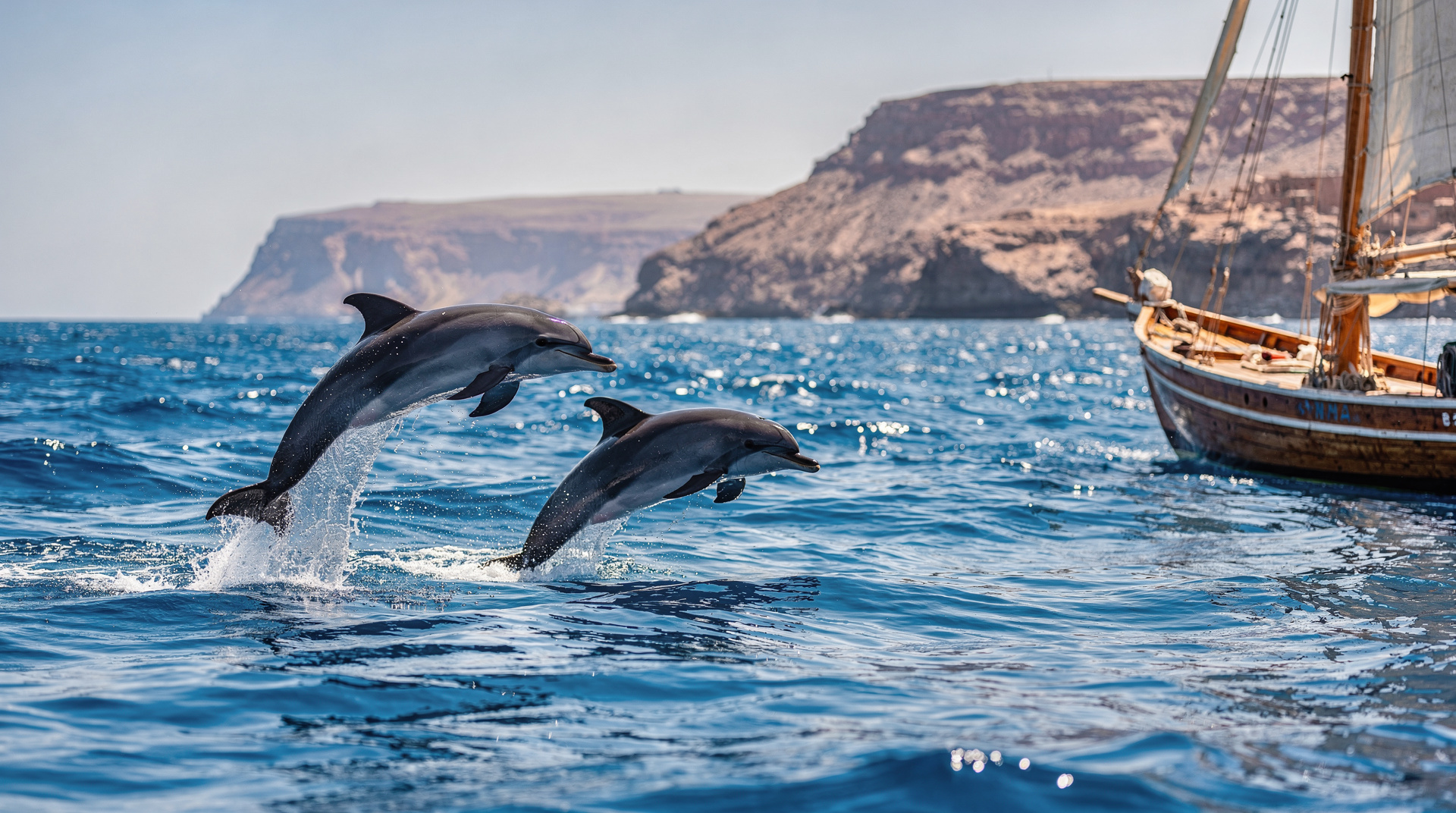
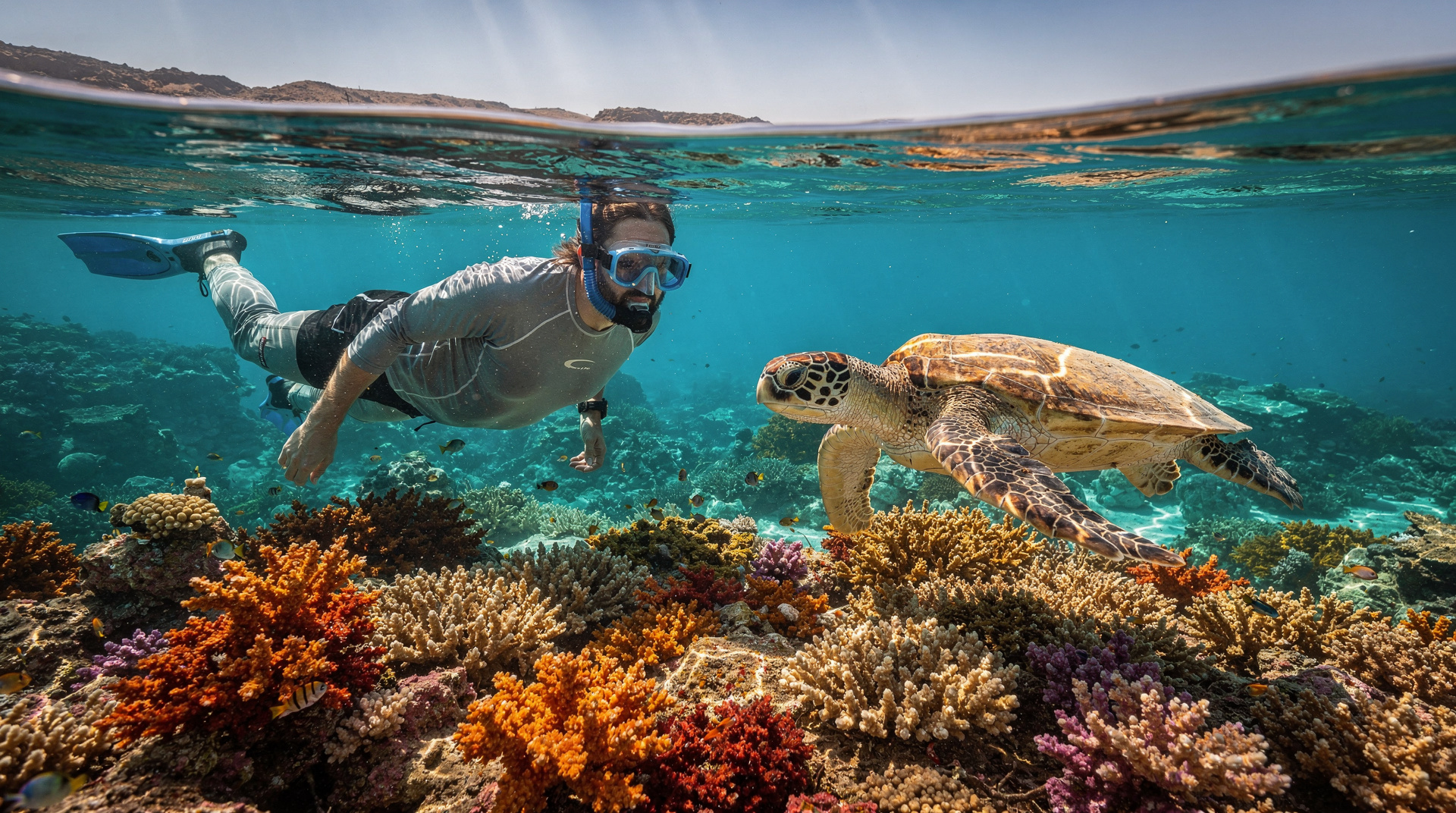
See the dolphin watching guide for marine activity ideas that pair well with an evening dhow cruise, and the Daymaniyat Islands snorkeling guide for daytime water adventures that can precede a sunset cruise.
Practical Tips
Dress code: Respectful casual attire is appropriate. Shorts and short sleeves are fine. The dhow can be breezier than expected once underway — bring a light layer for after sunset from October through March.
Photography: The cruise provides extraordinary photography opportunities. Bring your longest lens for shots of the forts and palace from a distance, a wide lens for the mountain backdrop and full dhow scenes, and a phone or compact for the golden-hour light moments that happen quickly.
Children: Dhow cruises are family-friendly. The stable hull and relatively slow speed make them safe for children who understand basic boat safety (no leaning over the rail). Most operators welcome children from age 5 upward.
Reservations: Essential for weekend departures (Thursday and Friday evenings are the busiest). Weekday cruises often have space for walk-up passengers, but booking 24-48 hours ahead is recommended.
Meeting point: Most operators collect guests from their hotels or from designated pickup points in central Muscat. If making your own way to the marina, arrive 20 minutes before departure — finding the right dock on arrival can take longer than expected.
2026 Pricing
| Cruise Type | Duration | Price Range (OMR) |
|---|---|---|
| Shared sunset cruise | 2 hours | 15-25 per person |
| Shared cruise with Omani dinner | 3 hours | 30-45 per person |
| Private dhow charter | 2-3 hours | 80-200 per boat |
| Luxury dinner cruise | 3-4 hours | 35-60 per person |
| Fishing dhow (morning) | 4-5 hours | 20-35 per person |
Prices include refreshments as specified. Hotel transfers are extra (typically 3-8 OMR per person depending on hotel location).
Booking: How Far Ahead and What to Compare
Most travellers book a shared sunset cruise online 2-7 days ahead, though weekend departures (Thursday and Friday evenings, the local weekend) sell out further in advance during the October-April peak season. When comparing operators, check three things beyond price: whether the route passes both the palace and the forts (some shorter loops skip one), whether refreshments are described specifically (dates and Omani coffee at minimum) rather than vaguely, and whether the boat is an open-deck traditional dhow or an enclosed motor vessel dressed up as one — the open upper deck is what makes the golden-hour photography and general atmosphere work.
For a Muscat evening that also covers land highlights, pairing the cruise with time at the Muttrah Souq beforehand or a night exploring where to stay in Muscat afterward rounds out a full day around the harbour.
Pairing With a Wider Oman Itinerary
If the sunset cruise is one stop in a longer trip, it slots naturally into the first or last evening of a 3-day Muscat express itinerary or the opening days of a longer 7-day classic Oman itinerary, since it requires no full day and works around whatever else is on the schedule. Travellers heading on to the interior afterward often combine the evening cruise with a Nizwa day trip from Muscat the following morning.
Frequently asked questions about Sunset Dhow Cruise Muscat: The Complete Guide to an Evening on the Water
What is a dhow?
A dhow is a traditional wooden sailing vessel with origins in the Arabian Peninsula, historically used for trade across the Indian Ocean. Omani dhows are particularly famous — Sur is the main boat-building centre. Contemporary dhow cruise boats retain the traditional hull form and deck layout while using modern engines for reliable tourist operations.
Is the dhow cruise suitable for non-swimmers?
Yes, completely. Life jackets are available on all boats and the cruise involves no swimming or water entry. Non-swimmers and those uncomfortable in the water are fully comfortable on a dhow cruise.
Do they serve alcohol on dhow cruises?
Standard dhow cruises in Oman serve non-alcoholic beverages. This is consistent with Oman’s licensing framework — alcohol service requires a specific licence and is generally limited to hotels and certain restaurants. The refreshments available are excellent quality: fresh juices, Omani coffee, cold water.
Can I do a dhow cruise if I get seasick?
The Gulf of Oman in calm conditions produces minimal motion on a dhow — the flat-water coastal experience is unlikely to cause issues for most people. In winter (December-February), some days bring significant chop that could affect sensitive passengers. Take preventive motion-sickness medication if you are at all prone and book on a weekday (traditionally calmer mornings) rather than at peak holiday periods when operators may be less careful about weather-dependent cancellations.
Are there private dhow cruises for couples?
Yes. Private charters on smaller dhows (4-8 passenger boats) are available and popular for romantic evenings, anniversary dinners, and proposals. The most atmospheric option is a private charter with a pre-arranged Omani dinner and rose decoration on the deck. Contact operators directly for private charter arrangements — these are not always listed on booking platforms.
How long does the sunset cruise last?
Standard sunset cruises are 2 hours. Premium dinner cruises run 3-4 hours. Private charters can be arranged for any duration you require.
What is the difference between Muscat and Musandam dhow cruises?
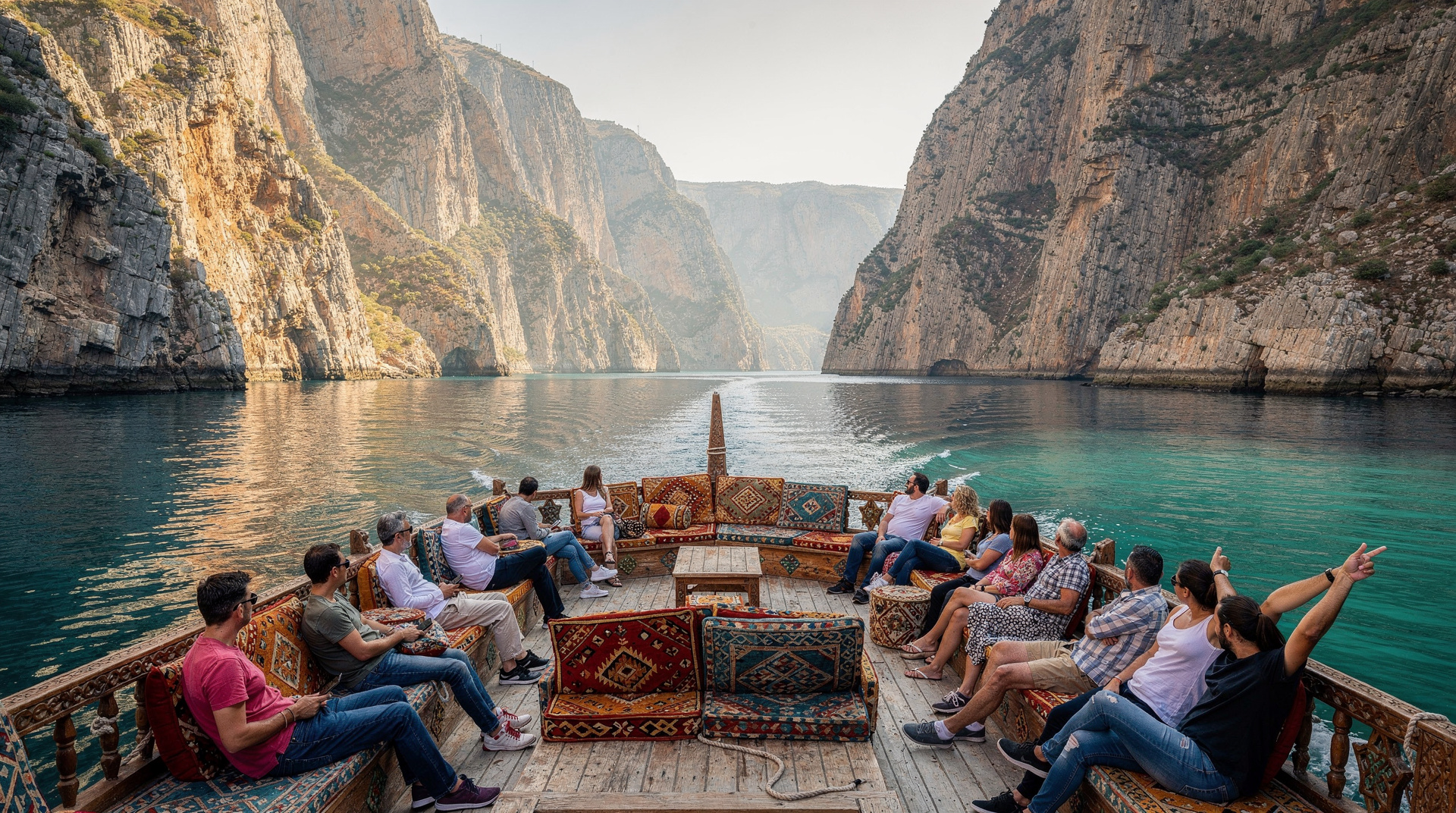
The Muscat sunset cruise focuses on the city’s coastline with its historical landmarks, forts, and palace. The Khasab fjord dhow cruise in Musandam offers a completely different geographical experience — narrow fjords with 300-metre cliff walls, dolphin encounters in enclosed channels, and a wilder, less urban setting. Both are worthwhile but in completely different ways.
Do I need to book in advance or can I turn up at the marina?
Weekday cruises sometimes have space for walk-up passengers, but this is not reliable, and operators generally require booking through their website, a hotel concierge, or a booking platform rather than a pay-on-arrival system at the dock. For Thursday and Friday evening departures during the October-April peak season, book at least a few days ahead. If your schedule is flexible, a weekday cruise booked 24-48 hours out is usually the easiest option.