Khasab Dhow Cruise: Sailing the Musandam Fjords of Oman
What is the Khasab dhow cruise experience like?
A traditional wooden dhow cruise through dramatic limestone fjords with 300-metre cliff walls. Expect dolphin encounters, snorkeling in turquoise waters, and Telegraph Island historical visits. Half-day tours cost 20-30 OMR per person, full-day 35-55 OMR.
Norway of Arabia: The Fjords of Musandam
At a Glance
| Where | Khasab, Musandam Peninsula (Omani exclave, north of the UAE) |
| Cost | Half-day around 20-30 OMR pp, full-day 35-55 OMR pp, overnight 90-130 OMR pp |
| Time needed | Half-day (4-5h), full-day (6-8h), or 2 days/1 night for the overnight cruise |
| Getting there | Fly Muscat-Khasab (~45 min) or drive via the UAE (~4-5h, needs UAE transit access) |
| Best time | October-April for calm seas and comfortable temperatures |
In the far north of Oman — separated from the main body of the country by UAE territory and accessible only by sea or air — the Musandam Peninsula plunges into the Strait of Hormuz in a series of dramatic limestone cliffs and narrow inlets that genuinely resemble the Norwegian fjords. The comparison is so consistent that Musandam has earned the nickname “Norway of Arabia,” and while the fjords here lack snow and the water is a startling turquoise rather than steel-grey, the sense of scale and drama is equally compelling.
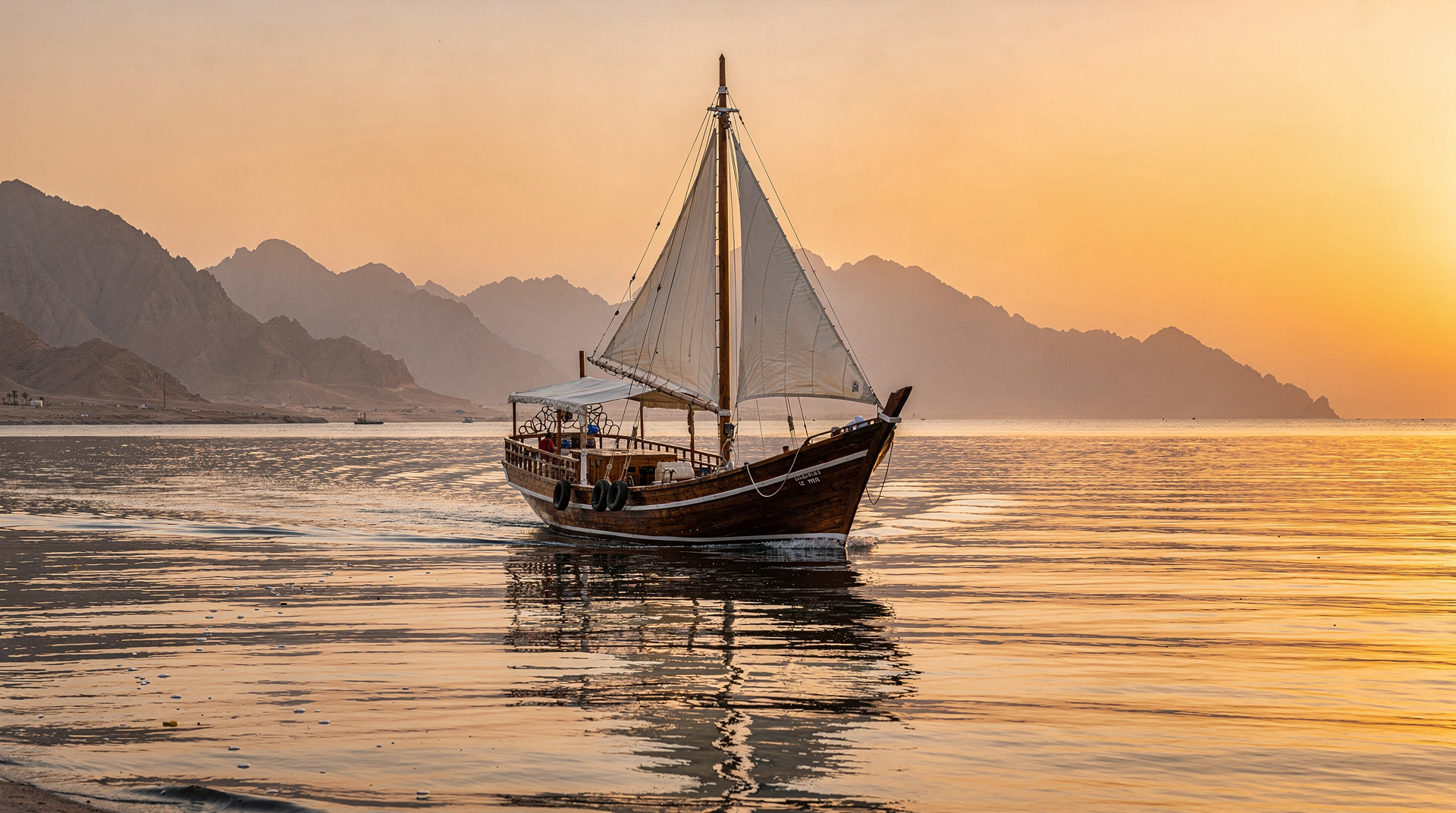
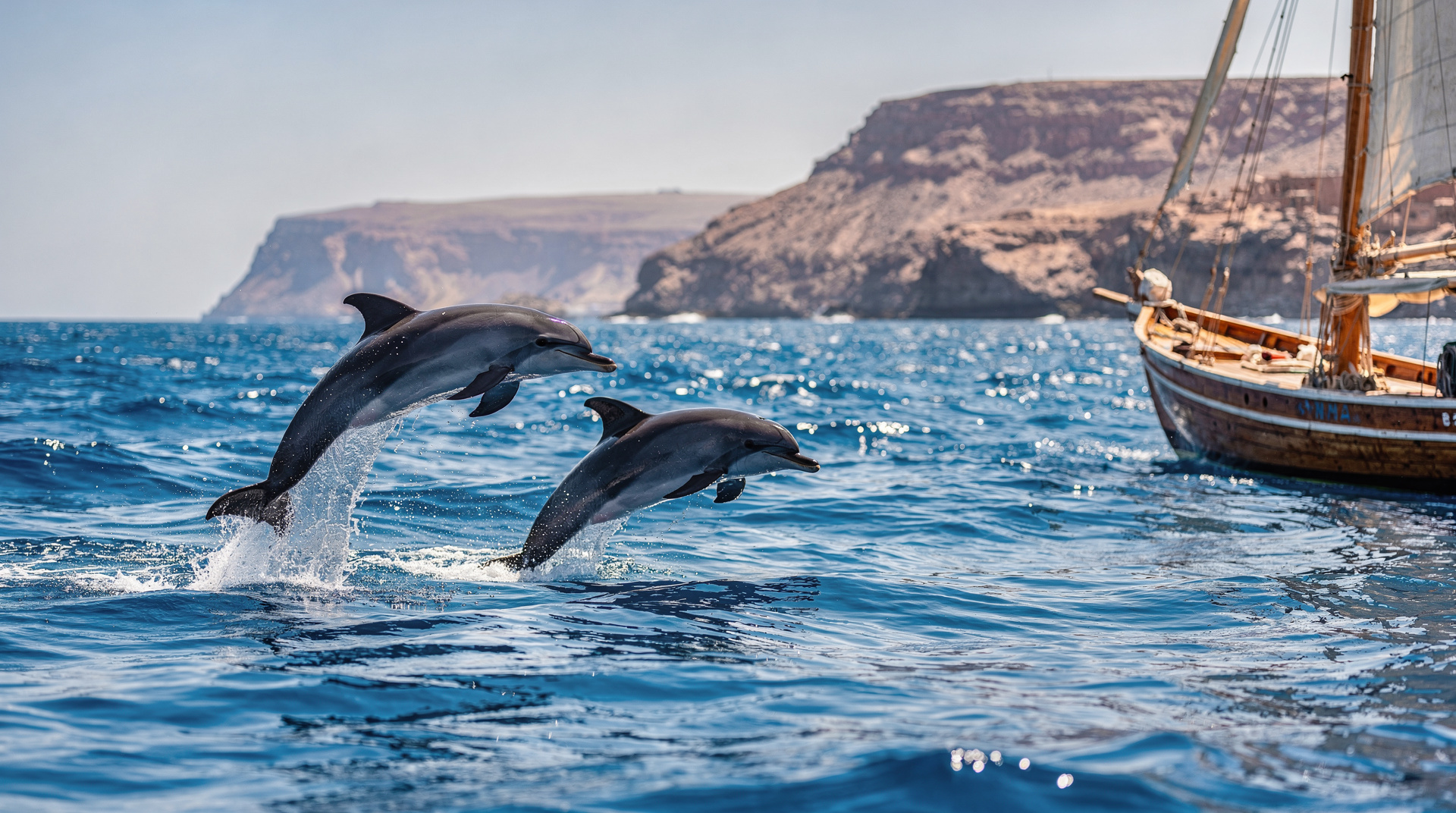
A dhow cruise through the Khasabat creek system is the defining Musandam experience. From the deck of a traditional wooden vessel, the cliffs rise 200-400 metres on either side, the water is clear to 10-15 metres depth, and bottlenose dolphins that live in these sheltered waters appear with remarkable reliability — riding the dhow’s bow wave, circling in the clear shallows, occasionally leaping beside the boat in sequences that cause the entire deck to erupt.
Musandam’s Geography: Why the Fjords Are Here
The Musandam Peninsula sits at the tip of the Arabian Peninsula, thrust northward into the Strait of Hormuz — the crucial waterway through which roughly 20% of the world’s oil passes. The peninsula is geologically active: the Al Hajar mountain range, which runs the length of eastern Oman, tilts northward here and its northern extremity has been submerged by rising sea levels over the past 10,000 years, creating the fjord system (technically called khors rather than true Norwegian fjords — the formation process is similar but different in geological mechanism).
The khor system includes numerous inlets, the most visited being Khor Ash Sham (the main fjord), Khor Qada, and Khor Al Ghubb. Small fishing villages cling to the headlands and cliff faces, accessible only by boat, their inhabitants the Shehhi Bedouin who have fished and navigated these waters for centuries.
Khasab: Gateway to the Musandam Fjords
The town of Khasab serves as the base for all Musandam tourism. It is a small, quiet town — a market, a 17th-century Portuguese fort (now a museum worth an hour’s visit), a few hotels and guesthouses, and the dhow harbour from which all cruise boats depart.
Getting to Khasab from Muscat involves either:
- Driving through the UAE: Cross into the UAE at the Tibat/Khatmat Milahah border crossing, drive north through Ras Al Khaimah emirate, and re-enter Oman at Khasab. Total distance from Muscat approximately 450 km, 4-5 hours. You need your rental car paperwork to confirm UAE access permission and a UAE visa if you are not on the UAE visa waiver list.
- Flying: Oman Air operates flights from Muscat to Khasab. Journey time approximately 45 minutes. Expensive relative to journey length but saves the border crossing.
Most visitors combine Khasab with 1-2 nights at one of the guesthouses (Golden Tulip Khasab or Atana Musandam are the main options) or join a Musandam day trip from the UAE (particularly from Fujairah or Ras Al Khaimah).
Dhow Cruise Options
Half-Day Cruise (Recommended Starting Point)
The Khasab half-day dhow cruise with dolphin watching and snorkeling is the most popular option and covers the essential highlights of the Musandam experience in approximately 4-5 hours. The route passes through the main Khor Ash Sham fjord, stops at the main snorkeling area near Seebi Island, and usually includes a visit to Telegraph Island.
This half-day format is suitable for visitors with limited time, those arriving from the UAE on a day trip, and anyone wanting to experience the fjords without committing a full day on the water. Included: snorkeling equipment, lunch or light refreshments depending on the operator, dolphin watching from the deck.
Full-Day Cruise
The full-day Musandam Khasab cruise covers more of the khor system, including secondary fjords inaccessible on the half-day route, more time at snorkeling sites, and a proper lunch aboard the dhow. This is the better choice for those who want to experience multiple fjord arms, reach the more remote cliff sections, and have a relaxed rather than packed itinerary.
Duration is typically 6-8 hours including the return. The pace is slower than the half-day — time sitting on cushions watching cliff walls reflected in the water, reading, or simply existing without urgency is built into the format.
Overnight Dhow Cruise
For the most immersive fjord experience available, the Musandam Overnight Dhow Cruise anchors inside Khor Sham for the night, allowing passengers to experience the fjords after all day-trip boats have left — stargazing inside the cliff walls with no other light source visible. The two-day, one-night format includes all meals and snorkeling, and provides access to sections of the khor system that single-day cruises do not reach. This is the format recommended for anyone who has already done a half-day or full-day cruise and wants to go deeper.
Private Dhow Charter
Private charters of traditional Omani dhows allow complete itinerary flexibility — which fjords to visit, how long to spend snorkeling, whether to anchor for a swim in a particular cove. For groups of 8-20 people, private charters can be cost-competitive with shared tours. Operators in Khasab harbour offer daily and half-day private charters.
The Fjord Experience: What to Expect
Leaving Khasab Harbour
The departure from Khasab harbour is immediately atmospheric. The dhow moves slowly out of the harbour channel, passing moored fishing boats and the occasional speed boat heading to remote village resupply runs. Within 15 minutes of departure, the cliffs begin to rise on either side as the vessel enters the main khor system.
The scale becomes apparent incrementally. What looks like moderate cliff walls from a distance turns out, as you enter the fjord proper, to be 300-metre vertical limestone — the boat tiny at the base, looking up at rockfaces that catch the morning light in extraordinary ways.
Dolphin Encounters
Bottlenose dolphins that inhabit the sheltered Musandam khor system are among the most reliably encountered and interactive dolphin populations in the region. Unlike ocean dolphins that move constantly through open water, the fjord dolphins have established home ranges in specific sections of the khor system, which means boats that know the fjords know where to find them.
The typical encounter: the crew spots dolphins in the near distance (often announced by the distinctive arched backs breaking the surface in sequence), the engine is slowed, and within minutes the dolphins redirect their travel to investigate the dhow. Bow riding is common — up to 20 animals simultaneously, visible from directly above looking down into the clear water. The narrow fjord walls on either side create a natural echo chamber, and the clicking and squealing of the dolphins is audible.
Sessions with an active pod can last 20-40 minutes before the pod moves on. Most full-day cruises encounter multiple pods in different sections of the fjord system.
Telegraph Island
Officially called Jazirat al Maqlab, this small rocky island in the middle of Khor Ash Sham became famous as the relay station for the British-Indian telegraph cable in the 1860s — the communication line between Britain and India that ran through the Persian Gulf. British telegraph operators were posted here for months at a time in tropical heat, completely isolated, in a posting so miserable that “round the bend” is said (with historical dispute) to have entered the English language from this location.
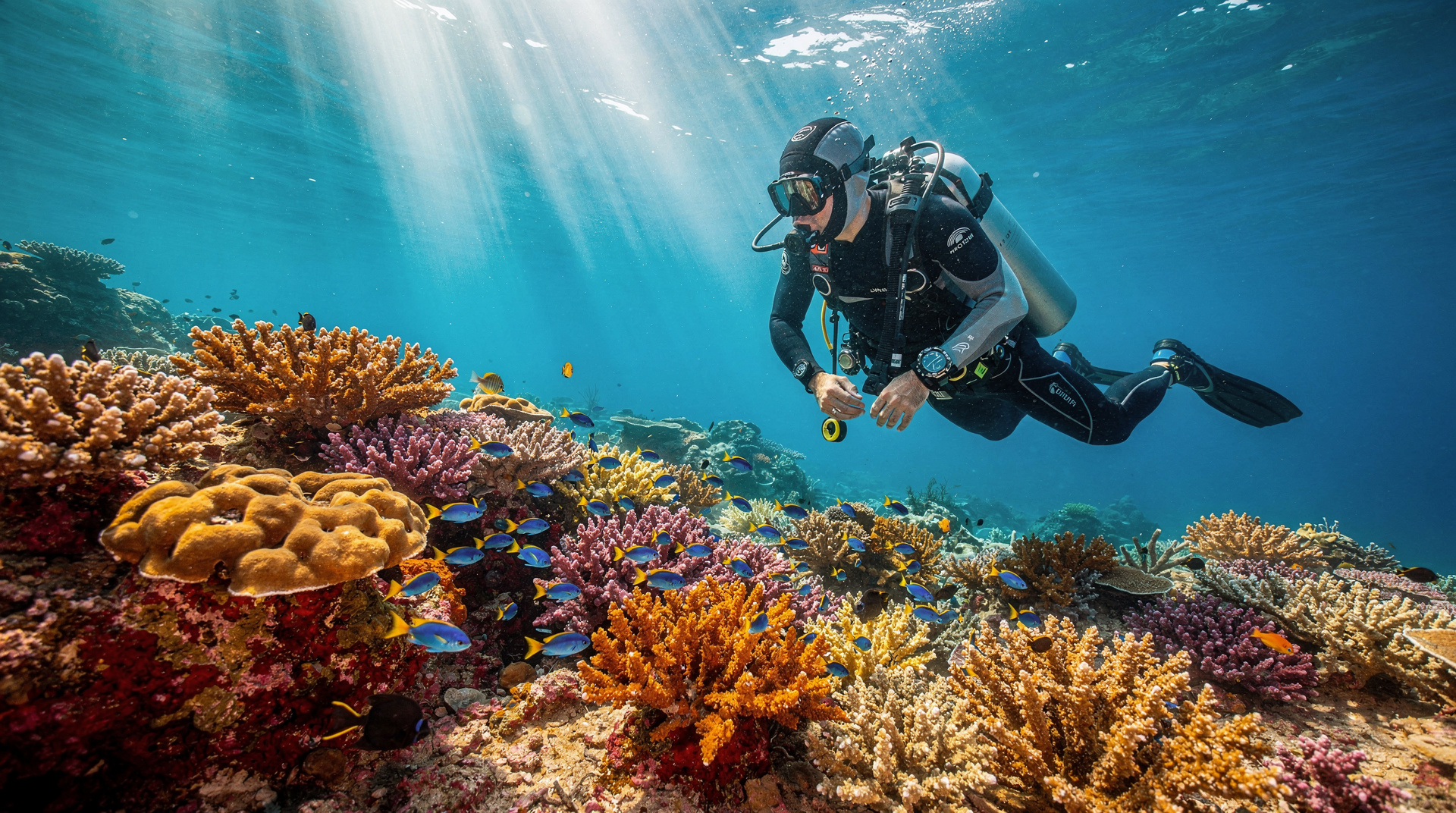
Today, the island retains some ruins of the telegraph station and offers a swim stop and snorkeling opportunity in the sheltered waters around the island. The snorkeling here is good — coral growth on the rocks, colourful reef fish, and the occasional turtle using the island’s sheltered side as a resting spot.
Snorkeling in the Fjords
The clear, calm water of the khor system makes for excellent snorkeling conditions — particularly on the half-day and full-day cruises that include a formal snorkeling stop. Visibility of 10-15 metres is typical. The reef systems in the fjords are different from the open-water Daymaniyat experience: the rock walls continue underwater creating dramatic vertical habitats, with fish species typical of the Strait of Hormuz’s mixed Arabian Gulf-Indian Ocean environment.
Equipment is provided on all tours. The water temperature in the fjords runs approximately 2-3°C warmer than the open Gulf in winter (the enclosed water masses warm faster) — comfortable for swimming throughout the cooler months with a wetsuit.
Sheer Wall Sailing
The most purely beautiful sections of the fjord cruise involve simply sailing alongside the massive cliff walls. Limestone formations create caves, overhangs, and natural arches at water level. Seabirds nest on ledges hundreds of metres above. The silence (relative to the engine murmur) and scale create a meditative quality that many guests describe as one of the most peaceful experiences of their Oman trip.
Small fishing villages — accessible only by boat — appear at occasional fjord edges: clusters of simple houses on rock terraces, fishing nets spread to dry, a solar-powered desalination unit beside a concrete water tank. The Shehhi inhabitants maintain a traditional lifestyle that has changed relatively little with Oman’s modernisation.
Wildlife Beyond Dolphins
Ospreys: Nest on the cliff faces throughout the khor system. These large fishing birds are frequently seen perched on rock outcrops or diving dramatically for fish.
Sea turtles: Present in the fjord waters, particularly in calmer sections. Hawksbill turtles are more commonly seen in Musandam than in Muscat waters.
Whale sharks: Seasonally in the Strait of Hormuz outer waters (April-June) — occasionally encountered on full-day cruises that venture toward the open strait.
Seabirds: Boobies, cormorants, and various gulls use the cliff faces as nesting sites and the clear water for feeding. The bird life visible from the dhow deck adds another dimension to the wildlife experience.
Land Activities: Beyond the Fjords
For visitors who want to complement the water experience with an adrenaline land activity, the Musandam Zipline offers a high-speed ride over dramatic mountain terrain with views across the peninsula — a striking contrast to the slow, meditative pace of the dhow cruise.
Combining Musandam with the Rest of Oman
Musandam is geographically separate from the Omani mainland, which means it requires deliberate planning to include. The most common approaches:
Dedicated Musandam trip (2-3 nights): Fly or drive from Muscat, base yourself in Khasab, take the fjord cruise and any secondary activities (mountain driving, village visits), and return. A clean, self-contained experience.
UAE-based day trip: Visitors already in Dubai, Abu Dhabi, or Ras Al Khaimah can reach Khasab by driving north to the Tibat border crossing and entering Musandam. Travel agencies in Ras Al Khaimah offer day-trip packages that include the border crossing, boat tour, and return. This is the most common way international tourists experience Musandam.
Beginning or ending an Oman trip in Musandam: If flying into or out of Muscat, Musandam can bookend the main Oman itinerary. Fly Muscat-Khasab at the start, spend 2 nights in the fjords, then drive or fly back to Muscat to begin the overland portion.
Read about the Muscat sunset dhow cruise for a complementary but completely different dhow experience based in the capital.
How Musandam Compares to Other Oman Marine Experiences
Musandam is not the only place in Oman to combine boats, dolphins and reefs, but it is the most distinct. Muscat’s own dhow cruise at sunset and dolphin watching tours are far easier to fit into a standard itinerary and require no border logistics, but they sail open Gulf of Oman waters rather than sheer-walled fjords.
Divers chasing reef quality and whale sharks are usually better served by the Daymaniyat Islands, which the broader guide to marine life in Oman covers in more depth. Musandam’s advantage is the geography itself — cliffs, khors and a resident dolphin population concentrated into a small, sheltered area — which is why most visitors treat it as a dedicated add-on rather than a day trip squeezed into a Muscat-based schedule.
Planning Around the Cruise
The cruise is only one part of a stay on the peninsula. The wider Musandam destination page shows how the fjords fit with the mountains and villages, while the Musandam and Khasab guide goes deeper on the town itself. If you are unsure whether to base yourself in Khasab or elsewhere on the peninsula, Musandam vs Khasab lays out the difference.
Travellers coming from the UAE will find the blog post on Musandam from Dubai useful for the border logistics, and anyone driving should read the guide to renting a car in Oman before confirming cross-border permission. Check the Oman visa guide too, since entry rules shape which route makes sense.
If the cruise leaves you wanting more time in the water, the roundup of snorkelling spots in Oman shows where else to go, and the best time to visit Oman helps you place Musandam within the rest of your trip. Families can read Oman with kids for ideas on keeping younger travellers comfortable on the boat and on land. For a different kind of day out in the mountains above the fjords, see the Jebel Harim guide.
Practical Details
Accommodation in Khasab
- Golden Tulip Khasab Hotel: The main mid-range option, with a pool, restaurant, and sea views. Rates approximately 55-80 OMR per night. Organises fjord tours for guests.
- Atana Musandam: More upscale, with better views and a more attentive service standard. Rates approximately 80-120 OMR per night.
- Guesthouses: Several family-run guesthouses in Khasab town offer simple, clean accommodation at 25-40 OMR per night.
Entry Requirements
Musandam is an Omani exclave. An Oman visa (available on arrival for most nationalities) covers Musandam. If driving through the UAE, you need either a UAE visa or to be of a nationality on the UAE visa-waiver list. Check your specific nationality’s requirements before planning this route.
Currency and Payments
Khasab operates on Omani Rial (OMR). UAE Dirhams are occasionally accepted but at unfavourable exchange rates. Cash is widely used — card payment infrastructure in Khasab is improving but not universal.
2026 Pricing Guide
| Tour Type | Duration | Price Range (OMR) |
|---|---|---|
| Half-day shared dhow cruise | 4-5 hours | 20-30 per person |
| Full-day shared dhow cruise | 6-8 hours | 35-55 per person |
| Private dhow charter | Half or full day | 150-400 per boat |
| Musandam day trip from UAE (incl transport) | Full day | 45-80 per person |
| Overnight cruise with accommodation | 2 days/1 night | 90-130 per person |
Snorkeling equipment is included in most tours. Lunch is included on full-day and overnight options. Half-day tours typically include light refreshments only.
Frequently asked questions about Khasab Dhow Cruise: Sailing the Musandam Fjords of Oman
How do I get from Muscat to Khasab?
By plane: Oman Air operates flights from Muscat to Khasab in approximately 45 minutes, several times weekly. By car: Drive through the UAE (approximately 4-5 hours from Muscat) through the Tibat border crossing and back into Oman at Khasab. There is no direct land route from Oman’s mainland to Musandam.
When is the best time to visit the Musandam fjords?
October through April offers the best conditions: calm seas, excellent visibility, comfortable temperatures (20-30°C). Summer (June-September) is hot and the outer waters can be rough. The fjord interior remains somewhat sheltered year-round.
Are there dolphins on every cruise?
Dolphin encounter rates in the Musandam fjords are very high — higher than in the open Gulf of Oman waters around Muscat. The resident bottlenose dolphin population is well-established and experienced crews know the fjord sections where they are consistently found. Most cruises report dolphin encounters on 90%+ of trips.
Is the fjord cruise suitable for children?
Yes, excellent for children. The calm, enclosed waters of the fjord system mean minimal boat motion. Dolphin encounters are naturally exciting for younger passengers. Snorkeling is suitable for children from approximately age 6 with life jacket assistance. Shade should be arranged for younger children during the cruise.
Can I snorkel in the fjords without a guided tour?
The main snorkeling sites are only accessible by boat from Khasab harbour. Without a tour, you cannot reach them independently. Even if you had your own boat, navigating the fjord system requires knowledge of the channels and their conditions. The guided cruise is the correct format for accessing the best snorkeling sites.
What is included in the cruise price?
Standard inclusions: life jackets, snorkeling equipment, light refreshments or lunch (depending on duration), and guide services. Wetsuits are not always included — check when booking, particularly for winter trips.
Is Musandam worth the journey from Muscat?
For the specific combination of dramatic fjord geography, reliable dolphin encounters, and authentic traditional boat experience, Musandam offers something genuinely unique in the region. Visitors who have done Musandam almost universally describe it as a highlight. The journey requires more planning than a Muscat day trip, but the geography and wildlife experience are distinctive enough to justify the effort.
Do I need to book the dhow cruise in advance?
For the half-day and full-day shared cruises, booking 2-3 days ahead is usually enough outside peak season (December-February and UAE public holidays), when it is worth booking a week or more ahead. The overnight cruise and private charters have limited capacity and should be booked further in advance, particularly for weekend departures.