Dolphin Watching in Muscat: When, Where, and How to See Dolphins in Oman
Can you see dolphins in Muscat, Oman?
Yes, reliably. The waters off Muscat are home to spinner, bottlenose, and common dolphins year-round. Morning boat trips have the highest encounter rates. Most tours combine dolphin watching with snorkeling at the Daymaniyat Islands or Bandar Khayran.
Dolphins off the Coast of Muscat: An Extraordinary Everyday Encounter
In most parts of the world, dolphin watching is a hopeful activity — you go out, you hope to see something, you often see something small in the distance. In the Gulf of Oman off the coast of Muscat, it is something closer to a certainty. The waters here are among the most dolphin-rich coastlines in the Arabian Peninsula, with multiple species present year-round and pod sizes that regularly reach into the hundreds.
The most commonly encountered species — the spinner dolphin — earns its name by launching itself from the water and spinning up to seven times on its vertical axis before landing. Watching a pod of 200-300 spinner dolphins work their way alongside a boat, leaping and spinning at close range, is one of the most exhilarating wildlife encounters available anywhere in the Middle East.
This guide covers where to go, when to go, which tours offer the best encounters, what species you might see, and how to combine dolphin watching with snorkeling for a full-day marine experience.
If you are still shaping the wider trip, the Muscat destination page and the Muscat city guide show how a morning on the water fits alongside the capital’s other sights, and the marine life in Oman guide places dolphins within the wider picture of what lives off this coast.
At a Glance
| Where | Al Mouj Marina or Muscat Marina, open waters toward the Daymaniyat Islands |
| Cost | Around 20-35 OMR per person for dolphin-only; 35-55 OMR combined with snorkeling |
| Time needed | 2-3 hours dolphin-only; 5-7 hours for combined dolphin and snorkeling tours |
| Getting there | Hotel pickup with most operators, or taxi to the marina for a 7:30-8:30am departure |
| Best time | October-April for calm seas; May-June for the biggest wildlife numbers |
Dolphin Species in Omani Waters
Oman’s waters sit at the convergence of several ocean systems, creating conditions that support a remarkable range of cetaceans. The species most commonly encountered on day tours from Muscat:
Spinner Dolphins (Stenella longirostris)
The star of the show. Spinner dolphins travel in large pods — often 100-400 individuals — and are among the most acrobatic of all cetacean species. Their spinning leaps are not random play but a form of communication and parasite removal. They are commonly found in the outer waters between the Muscat coastline and the Daymaniyat Islands, often feeding cooperatively on bait balls of small fish in the early morning hours.
Pod size and behaviour: Large pods in loose aggregations that move quickly. When feeding, they dive in coordinated sequences. When resting, pods compact and movement slows. When travelling, they ride bow waves enthusiastically.
Bottlenose Dolphins (Tursiops truncatus)
The most familiar of all dolphin species. Bottlenose dolphins in Oman form smaller pods than spinners — typically 10-50 individuals — but are often more interactive, approaching boats closely and riding bow waves for extended periods. They are found in both open water and closer to the coast, including in the Muscat harbour area.
Common Dolphins (Delphinus delphis)
Fast-moving, high-energy swimmers with beautiful hourglass patterning. Common dolphins form large, fast-moving pods and are seen in the outer waters. Less frequently encountered than spinners and bottlenoses on standard tours but spectacular when found.
Humpback Dolphins (Sousa plumbea)
The Indo-Pacific humpback dolphin is a shallower-water species found close to the coast. Smaller pods (typically 5-15 individuals), less acrobatic than spinners, but distinctive with their characteristic dorsal hump. More commonly seen in the calmer coastal waters of Bandar Khayran.
Occasional Sightings
In the right seasons and conditions, boats from Muscat encounter larger cetaceans: sperm whales, false killer whales, and — during the pre-monsoon season — Bryde’s whales that come to feed on the rich upwelling waters. These encounters are not daily occurrences but happen regularly enough that local operators maintain genuine excitement about them.
Travellers who come mainly for the larger animals may also want to read about whale shark diving and the wider scuba diving options in Oman, which cover encounters that a dolphin boat trip will not give you.
Best Dolphin Watching Tours from Muscat
The most productive dolphin watching typically happens in open water between the Muscat coast and the Daymaniyat Islands — an area where spinner dolphin pods consistently gather in the morning hours.
The Muscat dolphin watching and snorkeling tour combines the morning dolphin search with an afternoon snorkeling session at a marine site, making it one of the best-value half-day marine tours available. The combination makes practical sense: dolphins are most active in early morning, while the light for snorkeling is better mid-morning to noon when the sun is higher.
The Muscat dolphin watching boat trip with local guide and snacks is a purer dolphin-focused experience, with a knowledgeable local guide who can explain pod behaviour, identify species, and position the boat appropriately for observation. This option suits those who prefer wildlife observation over water sports.
Both tours depart from either the Al Mouj Marina or the Muscat marina area, typically at 7:30-8:30am.
When to Go: Seasonal Dolphin Patterns
Dolphins are present in Omani waters year-round, but encounter rates and pod sizes vary seasonally.
October through April (Peak Season)
The most consistent dolphin watching conditions. The surface is calm, visibility is good, and large spinner pods are reliably found in the outer waters. This period also coincides with the main tourist season, so boat traffic is higher — though dolphin pods in the Muscat area are habituated to boats and are not significantly affected by the presence of multiple vessels.
May and June (Transition)
Pre-monsoon upwellings bring nutrient-rich cold water to the surface, triggering massive blooms of small fish and the large predator aggregations that follow. This is potentially the most exciting time for marine wildlife encounters — large numbers of cetaceans, including humpback dolphins and occasional larger whales, alongside spinner and bottlenose pods. Sea conditions can be rougher on some days.
July to September (Monsoon Season)
The Indian Ocean monsoon creates challenging surface conditions — significant swell, some sea spray, and reduced visibility on the water surface. Experienced mariners still operate in these conditions at sheltered sites. Spinner dolphins remain in the area but may be harder to find in choppy seas. Some operators suspend regular tours during peak monsoon; check availability before planning a visit in this period.
Because encounter quality shifts with the seasons, it helps to read the best time to visit Oman guide before fixing dates. A dolphin morning is easy to slot into a short stay, and the 3-day Muscat express itinerary leaves room for exactly this kind of early start. If you need a base close to the marinas, the where to stay in Muscat guide explains the neighbourhoods.
How a Dolphin Watching Tour Operates
Departure and Journey
Boats depart early (7:30-8:30am is typical) to catch the most active morning feeding period. The trip to the outer dolphin waters takes 20-45 minutes by speedboat depending on departure point and target area. Local guides communicate via radio with other operators about pod locations — there is an informal network of information sharing that dramatically improves sighting rates.
Finding the Pod
Experienced guides scan the water surface for several telltale signs: the blows (exhaled breath visible as puffs of vapour), the surface disturbance of a fast-moving pod, the feeding frenzies where seabirds congregate above dolphin-herded bait balls, and eventually the dolphins themselves visible at range.
When a pod is located, the boat manoeuvres to a position ahead of the dolphins’ direction of travel, then holds position as they approach. Spinner dolphins will often approach voluntarily to ride the bow wave — you can hear them clicking and squealing through the hull of the boat before you see them.
The Encounter
Bow riding by dolphins is the defining experience. Stand at the bow, look directly down, and you will see dolphins centimetres below the surface — three, five, ten individuals simultaneously, jostling for position, accelerating with tiny movements of their tails, often rolling to look up at you with one eye. The proximity is extraordinary. At this range, you can hear their breathing, see their markings clearly, and observe their apparently playful interaction with the boat.
Leaping and spinning displays from spinner dolphins are triggered by various stimuli and not entirely predictable. But in a large, active pod, individual animals are leaping continuously — the cumulative effect of 200 individuals leaping at different moments creates a backdrop of constant movement around and ahead of the boat.
The guide manages the encounter: approach angles, time spent with the pod, whether to allow guests to enter the water (see below). Professional guides never chase or separate pods, always approach from the side or ahead (never from behind), and monitor dolphin behaviour for signs of stress (erratic movement, pod compaction, diving to depth without returning).
Swimming with Dolphins
Some tours offer the option to enter the water with a dolphin pod. This is controversial from a conservation standpoint — sustained human approach in the water can stress some cetacean species. The most ethical operators follow guidelines that permit water entry only when:
- The pod approaches the boat voluntarily
- The pod shows relaxed, playful behaviour (not feeding or resting)
- Only 2-3 snorkelers enter at a time
- No pursuit of dolphins is permitted — you float and they come to you or they do not
When the conditions are right and the dolphins are genuinely curious, swimming with dolphins in the open ocean — watching them materialise from the blue, pass within metres, and disappear again — is one of the defining ocean experiences available in Oman.
Responsible Dolphin Watching: What Ethical Looks Like
Dolphin watching has the potential to habituate animals to boat traffic in ways that disrupt feeding and resting behaviour. The following practices distinguish responsible operators from those prioritising profit over animal welfare:
Good practices:
- Approach at a consistent, moderate speed (no acceleration toward the pod)
- Approach from the side, matching pod direction, rather than heading directly at them
- No engine revving or sudden speed changes near the pod
- Maximum 30 minutes with a single pod before moving on or withdrawing
- No feeding of dolphins or tossing food/objects toward them
- In-water encounters only when dolphins initiate approach
Red flags:
- Multiple engines gunning toward the same pod from different directions
- Circling behaviour that confuses or traps a pod
- Continued approach when the pod dives or moves away
- Encouraging swimmers to chase dolphins
Choose operators who articulate a wildlife-first approach. The best operators in Muscat follow guidelines aligned with the Whale and Dolphin Conservation’s responsible dolphin watching standards.
Dolphin Watching in Musandam: A Different Scale
The Musandam Peninsula in northern Oman offers a completely different dolphin watching environment — the enclosed fjord channels concentrate dolphins in narrow waterways where pods can be encountered at very close range from a dhow or smaller boat.
Musandam is particularly known for bottlenose dolphin encounters in the fjords, where pods of 20-50 animals regularly accompany traditional dhow cruises through the narrow channels. The combination of fjord scenery and close dolphin encounters makes Musandam one of the top wildlife cruise destinations in the region. See the Khasab dhow cruise fjords guide for full details.
Combining Dolphin Watching with Other Activities
Dolphin + Snorkeling at Daymaniyat
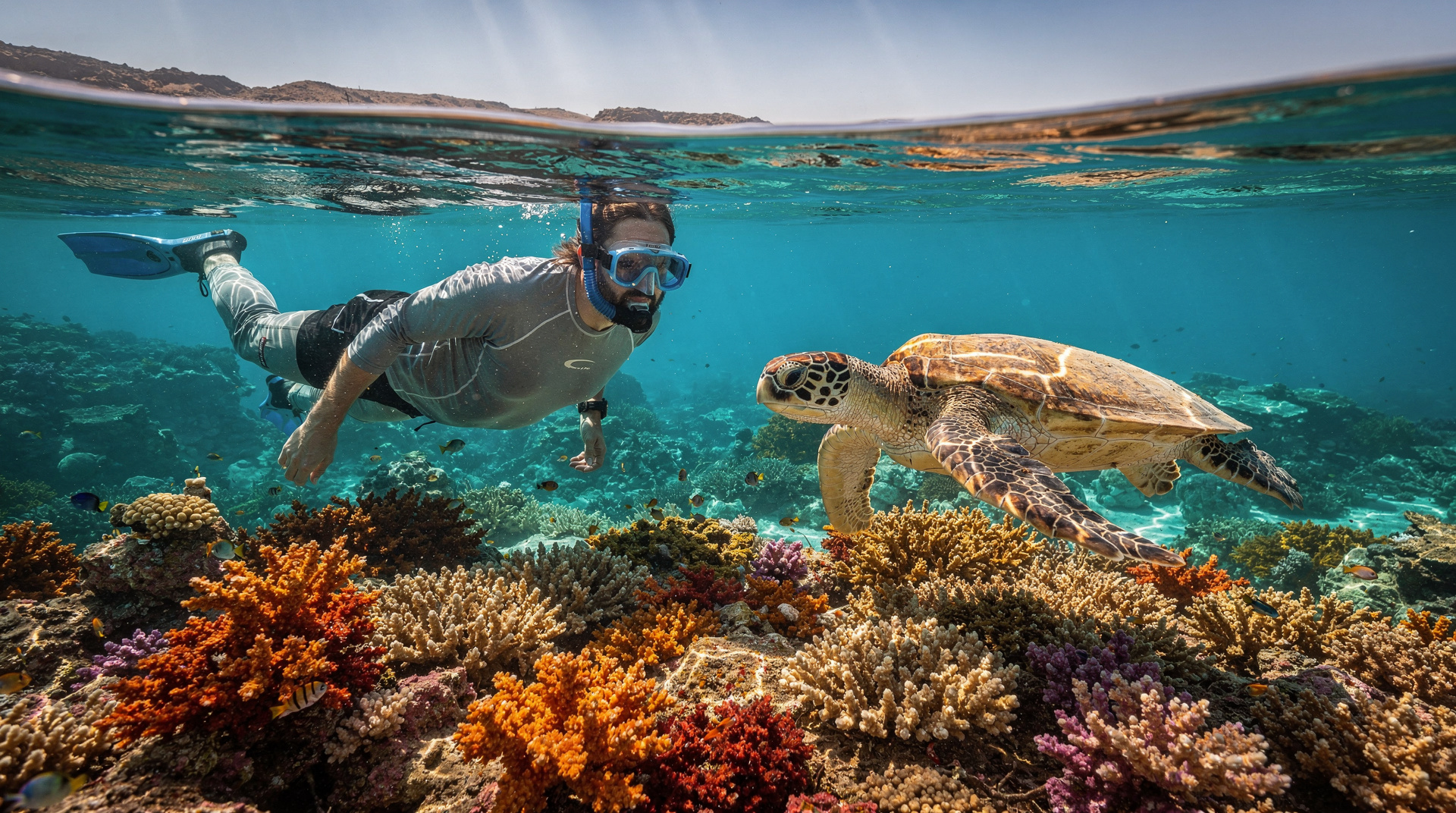
The most popular combination. Morning dolphin watching in the outer waters is followed by snorkeling at the Daymaniyat Islands Marine Reserve. The full day covers both the open-water wildlife experience and the reef-based underwater world. This combination represents genuinely excellent value — two major Oman marine experiences in a single day. See the Daymaniyat Islands snorkeling guide for what to expect underwater.
Dolphin + Sunset Dhow Cruise
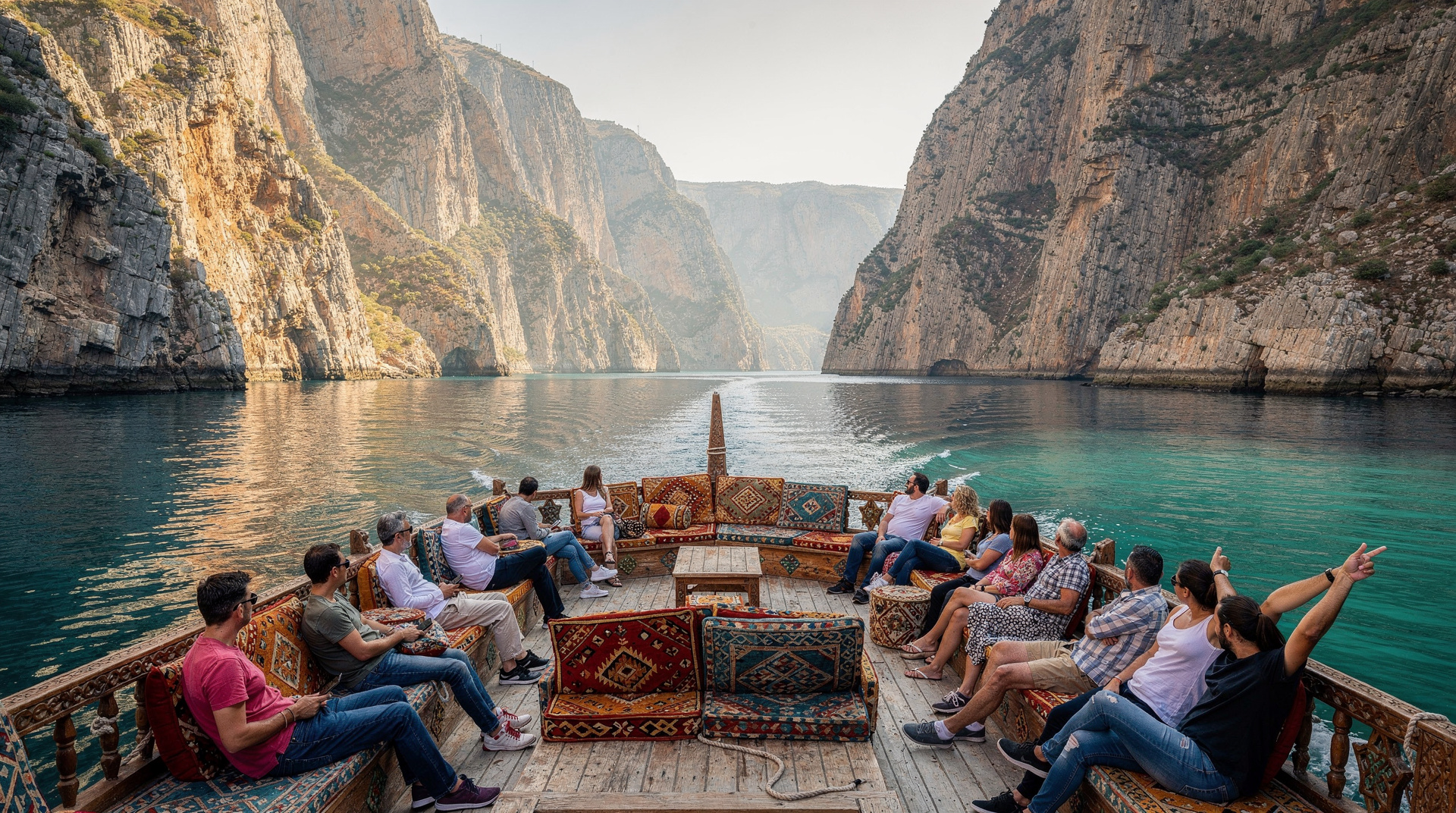
A full sea day: morning dolphin watching, afternoon rest, then an evening dhow cruise for sunset along the Muscat coastline. The contrast between the early morning open-water wildlife encounter and the relaxed evening cruise is a satisfying full-day structure.
Dolphin + Kayaking or Snorkeling Elsewhere
If you would rather spend a different day on calmer water, kayaking at Bandar Khayran offers a quieter, paddle-powered way to see the coast, and the best snorkeling spots in Oman lists other places to get in the water once the dolphin morning is done.
Dolphin + Fishing
Deep-sea fishing trips in the morning (4:00-10:00am) often encounter dolphin pods in the same outer waters where spinner dolphins feed. See the deep-sea fishing from Muscat guide for how fishing trips handle dolphin encounters.
2026 Pricing
| Tour Type | Duration | Price Range (OMR) |
|---|---|---|
| Dolphin watching only | 2-3 hours | 20-35 per person |
| Dolphin + snorkeling | 5-6 hours | 35-55 per person |
| Private dolphin boat charter | 3-4 hours | 120-200 per boat |
| Dolphin + Daymaniyat full day | Full day | 50-75 per person |
| Children under 12 | — | 10-20 per child |
Prices generally include snorkeling equipment on combination tours, bottled water, and guide services. Lunch is usually extra on full-day tours.
What to Bring and How to Prepare
Pack reef-safe sunscreen (mandatory near the Daymaniyat Islands Marine Reserve on combination tours), a hat with a chin strap or clip (wind on an open boat removes loose hats quickly), a light waterproof layer for spray, and a dry bag for phones and cameras. Breakfast before an early departure is worth the effort — most tours do not serve a full meal until after the dolphin-watching segment. If you are prone to motion sickness, take medication well before boarding rather than after symptoms start; see the Oman packing list for a full checklist that covers marine activities alongside the rest of a trip.
For more on travelling with younger passengers, the Oman with kids guide covers the wider trip.
Families travelling with young children should ask operators about boat size and life jacket availability for smaller passengers before booking, since not every speedboat carries child-sized jackets as standard.
Booking and Choosing an Operator
Book at least 2-3 days ahead in peak season (October-April), and further ahead for combination dolphin-and-Daymaniyat tours, which run with limited daily capacity to protect the marine reserve. When comparing operators, ask specifically how they handle the pod once found — a guide who describes a clear approach protocol (moderate speed, approach from the side, time limits with a single pod) is a stronger sign of a responsible operation than price alone. Groups wanting a private, unhurried encounter can charter a boat directly rather than joining a shared departure, though this comes at a significant price premium.
Practical Information
Departure points: Al Mouj Marina (easiest access with dedicated car parking), Muscat Marina, and in some cases the Bandar Al Rowdha Marina near the Qantab beach area.
Boat types: Speedboats (most common — fast but less stable in chop), traditional dhows (slower, more stable, good for photography), and inflatable RIBs (very fast, excellent for locating pods quickly). The choice of boat type affects both the journey comfort and the encounter style.
Motion sickness: The Gulf of Oman can be choppy in winter mornings. Antihistamine-based motion sickness tablets (available at any Muscat pharmacy) are effective if taken 30-60 minutes before departure.
Photography: Long zoom lenses (200mm+ on a 35mm camera, or good optical zoom on a compact) help with leaping shots at distance. For bow-riding footage, a GoPro or phone on the bow rail works extremely well. The light is best in the first 2 hours after sunrise.
Frequently asked questions about Dolphin Watching in Muscat: When, Where, and How to See Dolphins in Oman
Is dolphin watching guaranteed in Muscat?
No wildlife encounter can be truly guaranteed, but dolphin watching in Muscat has one of the highest success rates of any similar activity in the region. Most operators report dolphin sightings on 90-95% of tours year-round. When pods are not found in the primary zones, experienced guides know secondary locations to check.
What species is most commonly seen?
Spinner dolphins are the most frequently encountered — they travel in large, visible pods and are strongly associated with the outer Gulf of Oman waters near Muscat. Bottlenose dolphins are the second most common sighting, particularly closer to the coast.
Can you swim with dolphins in Muscat?
Some tours offer water entry when dolphins approach voluntarily. This is not guaranteed and is subject to animal behaviour on the day. Responsible operators do not force or chase encounters. On tours that permit swimming, it is an in-water floating experience rather than an active chase.
Is dolphin watching suitable for children?
Yes, extremely suitable. The experience — bow-riding dolphins, leaping spinners — is naturally compelling for children. For safety, children should be able to hold the boat railing and follow basic safety instructions. Infants and toddlers on motor boats in open water require specific safety consideration.
How long does a dolphin watching tour take?
Dolphin-only tours typically last 2-3 hours. Combined dolphin and snorkeling tours take 5-7 hours. Allow additional time for travel to and from the departure marina.
What time of day is best for dolphin watching?
Early morning (7:30-10:00am) is the most productive time. Spinner dolphins are actively feeding in the outer waters during these hours. By late morning, many pods move to resting formations and are less active. Tours that depart later in the day have lower encounter rates and less dynamic behaviour.
Are there any whale sightings near Muscat?
Oman has one of the world’s most diverse cetacean lists, and whale sightings are not uncommon in Omani waters more broadly. Off Muscat specifically, sperm whales are occasionally seen in the outer deep waters, and Bryde’s whales appear during the pre-monsoon upwelling season (May-June). These are not regular day-tour encounters but exciting bonuses on the right day.
Do I need to know how to swim to join a dolphin watching tour?
No. Standard dolphin watching is a boat-based activity — you do not enter the water unless you specifically opt into an in-water encounter on tours that offer it. Life jackets are provided, and the boat itself does not require any swimming ability to enjoy.