Dress Code in Oman: What to Wear as a Tourist
Muscat: half-day city tour
Duration: 4 hours
- Free cancellation
- Instant confirmation
- Hotel pickup
What is the dress code in Oman for tourists?
There is no legal dress code for tourists outside religious sites, but modest dressing is culturally important. Cover shoulders and knees in cities and markets; wear full modest dress at mosques. Swimwear is fine at hotel pools and resort beaches.
Dressing for Oman: The Practical Reality
Oman has no tourist dress police. You will not be fined for wearing shorts in Muscat or a sleeveless top on the Corniche. But clothing choices do matter for two practical reasons: cultural respect, which shapes how locals interact with you, and site access, where several of Oman’s most significant attractions have dress requirements.
Getting this right is genuinely simple. Modest clothing in Oman’s heat means loose and light — which is also what you want to wear for comfort. The cultural and practical imperatives align rather than conflict.
What to Wear, By Location: At a Glance
| Location | Women | Men |
|---|---|---|
| Cities, souqs, streets | Shoulders and knees covered | Knee-length shorts fine; long trousers in conservative areas |
| Sultan Qaboos Grand Mosque | Full abaya + headscarf (borrowed free) | Long trousers, sleeved shirt |
| Forts and heritage sites | Shoulders and knees covered | Smart casual, shorts acceptable |
| Hotel pools and resort beaches | Normal swimwear | Normal swimwear |
| Public beaches | Cover up away from the water | Swim shorts fine |
| During Ramadan | Arms and legs covered in public | No shorts outside beach areas |
Practical Context
What “Modest” Means in Practice
In Oman’s context, modesty primarily means coverage of the shoulders and knees as a baseline in urban and semi-public settings. It does not mean shapeless, dark, or particularly conservative by Western standards. Lightweight loose trousers, maxi skirts, linen shirts, and light cotton dresses all fit the brief while being extremely comfortable in the heat.
For men, the shift is smaller. Long trousers are more appropriate than shorts in traditional areas — but knee-length shorts are widely seen and unremarked upon in tourist settings, beach areas, and modern Muscat neighborhoods.
Regional Variation
Muscat is the most cosmopolitan and relaxed city in Oman. Expats, international visitors, and young Omanis mix in a relatively open urban environment. Standards here, while not as liberal as Dubai, are more relaxed than in the country’s interior.
Nizwa, Bahla, and the Hajar Mountains interior are more conservative. Small towns, weekly livestock markets, and traditional villages all have more conservative social atmospheres — this is very visible at the Nizwa Fort and souq, where covering up a little more than you would in Muscat is appreciated. The same clothing you wore confidently in central Muscat might feel more out of place in a rural village souq, and it is worth dressing slightly more carefully in these areas.
What to Expect at Key Sites
The Sultan Qaboos Grand Mosque
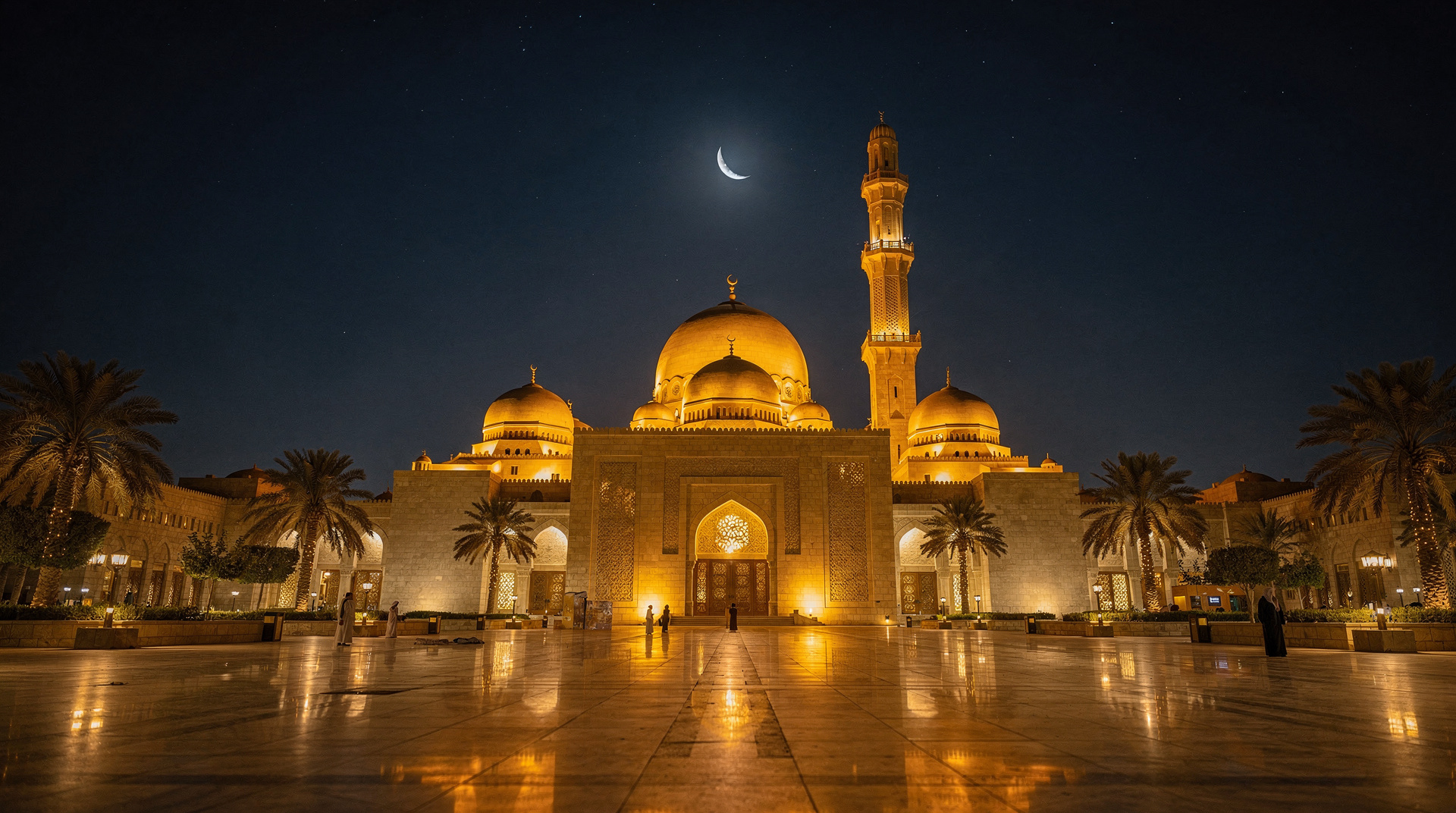
This is the one site with a genuinely strict and actively enforced dress code. The mosque is spectacular — Oman’s largest, capable of holding 20,000 worshippers, with one of the world’s largest hand-woven Persian carpets — and well worth visiting. But you must dress appropriately.
Women need a full abaya (available to borrow) and a headscarf. Men need long trousers and a sleeved shirt. The visiting window for non-Muslims is Saturday to Thursday, 8am to 11am only.
Forts and Heritage Sites
Bahla Fort, Nizwa Fort, Jabreen Castle, and the country’s many other heritage forts have more relaxed dress requirements — but modest dress is still expected and respected. Shoulders and knees covered as a minimum, and you will be welcomed warmly and without awkwardness.
Beaches and Resort Areas
At hotel beaches and pools, normal resort swimwear is entirely appropriate. The Shangri-La’s private beach south of Muscat, the resort beaches in Salalah, and hotel pool areas throughout the country all operate in exactly the same way as European resort pools — see our best beaches in Oman guide for which stretches are hotel-private versus public.
At public beaches — the Qurum Beach in Muscat, the public coastal areas near Sohar or Sur — more conservative swimwear and covering up when not in the water is appreciated, especially on weekends when local families use these spaces. The same logic applies at freshwater swimming spots inland, including the popular Wadi Shab, where modest swimwear is the norm even though it feels more like a natural pool than a beach.
Desert Camps and Wadis
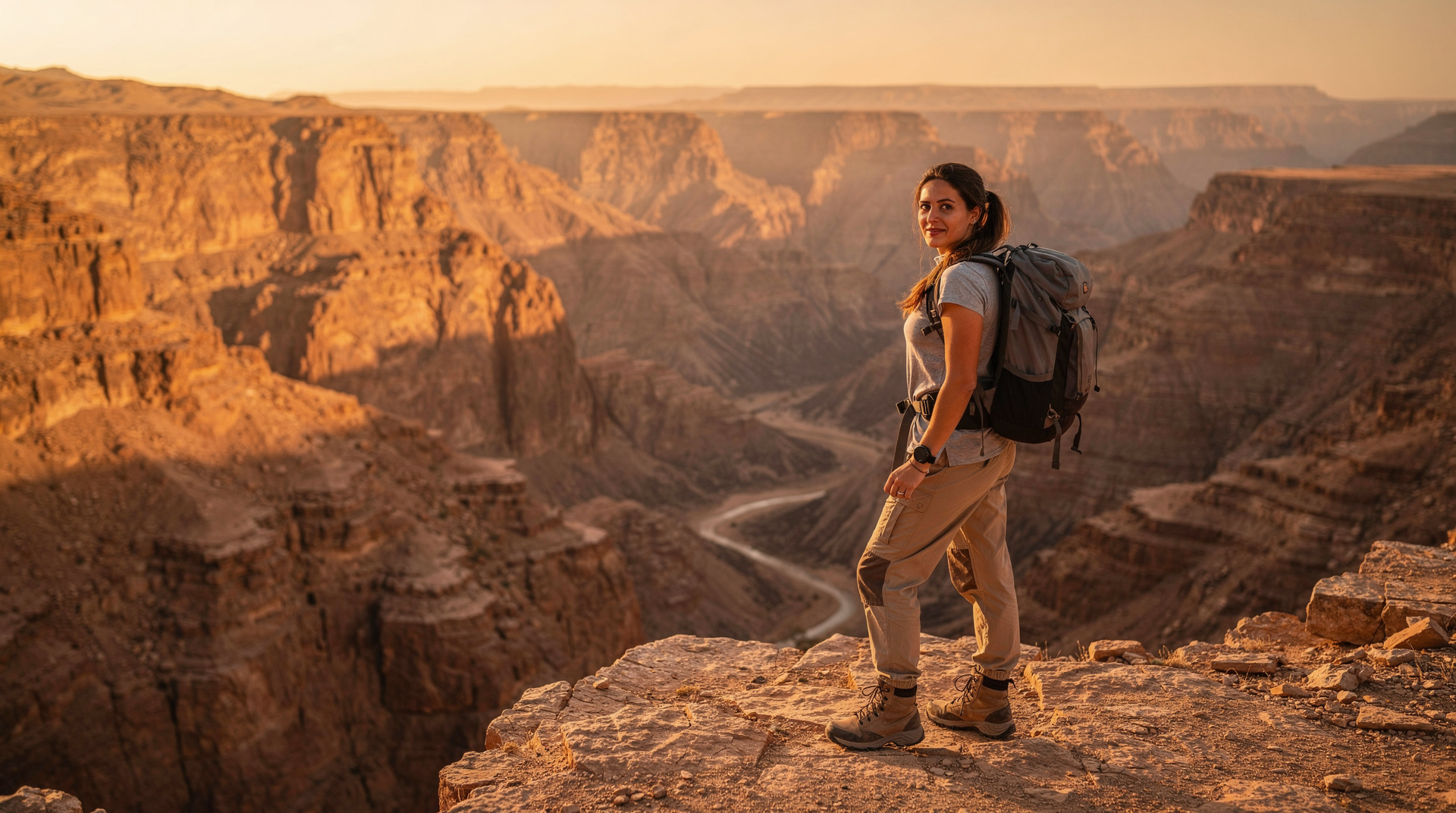
Out in the dunes, the dress question changes character. Nobody is watching what you wear on a ridge at sunset, but the sun, the sand, and the wind make coverage the sensible choice anyway. Light long sleeves, loose trousers, and a scarf that can be pulled over your face when the breeze picks up are what experienced desert visitors actually wear. If you are heading to the Wahiba Sands, the practical and the respectful point in the same direction: cover up, stay cool, and keep sand out of everything.
Camps are usually run by local families or small companies, and staff will notice how guests dress when they arrive and when they eat together. You do not need to change your whole outfit for dinner, but a loose shirt over a tank top is a simple gesture that is always appreciated. Our wahiba sands desert safari guide explains what the day looks like, so you can plan your clothing around it.
Wadis sit somewhere between a beach and a village. Many are visited by local families, especially at weekends, so the safest approach is the one described above for Wadi Shab: modest swimwear, and a light top or sarong for the walk in and out. Quick-drying fabrics are far more comfortable than cotton when you are repeatedly getting wet, and a long-sleeved swim top gives sun protection and respects local norms at the same time.
Restaurants, Cafés, and Hotels
Inside international hotels, upscale restaurants, and the cafés of modern Muscat, you will see a wide range of clothing and no one will comment on yours. Smart casual is the usual standard for an evening meal. For a more traditional setting, such as a family-run restaurant serving classic dishes from our Omani food guide, dressing a little more conservatively is a courteous touch, and you will feel more comfortable sitting among local diners.
Air conditioning in Oman is generous, sometimes aggressively so. A light cardigan or shawl is therefore useful for indoor spaces even in the hottest months, and it quietly solves the shoulder question at the same time. If you are staying in a resort listed in our best luxury resorts in Oman guide, expect relaxed norms inside the property but a return to the usual expectations the moment you step out to a souq or a village.
Markets and Everyday Interactions
In a souq, clothing is part of how you are read before you say a word. Shopkeepers tend to be warmer and more patient with visitors who have made a small effort, and the bargaining is friendlier for it. The Muttrah Souq is a good first test: it is busy, covered, and full of both locals and visitors, and a loose shirt with long or knee-length bottoms fits perfectly.
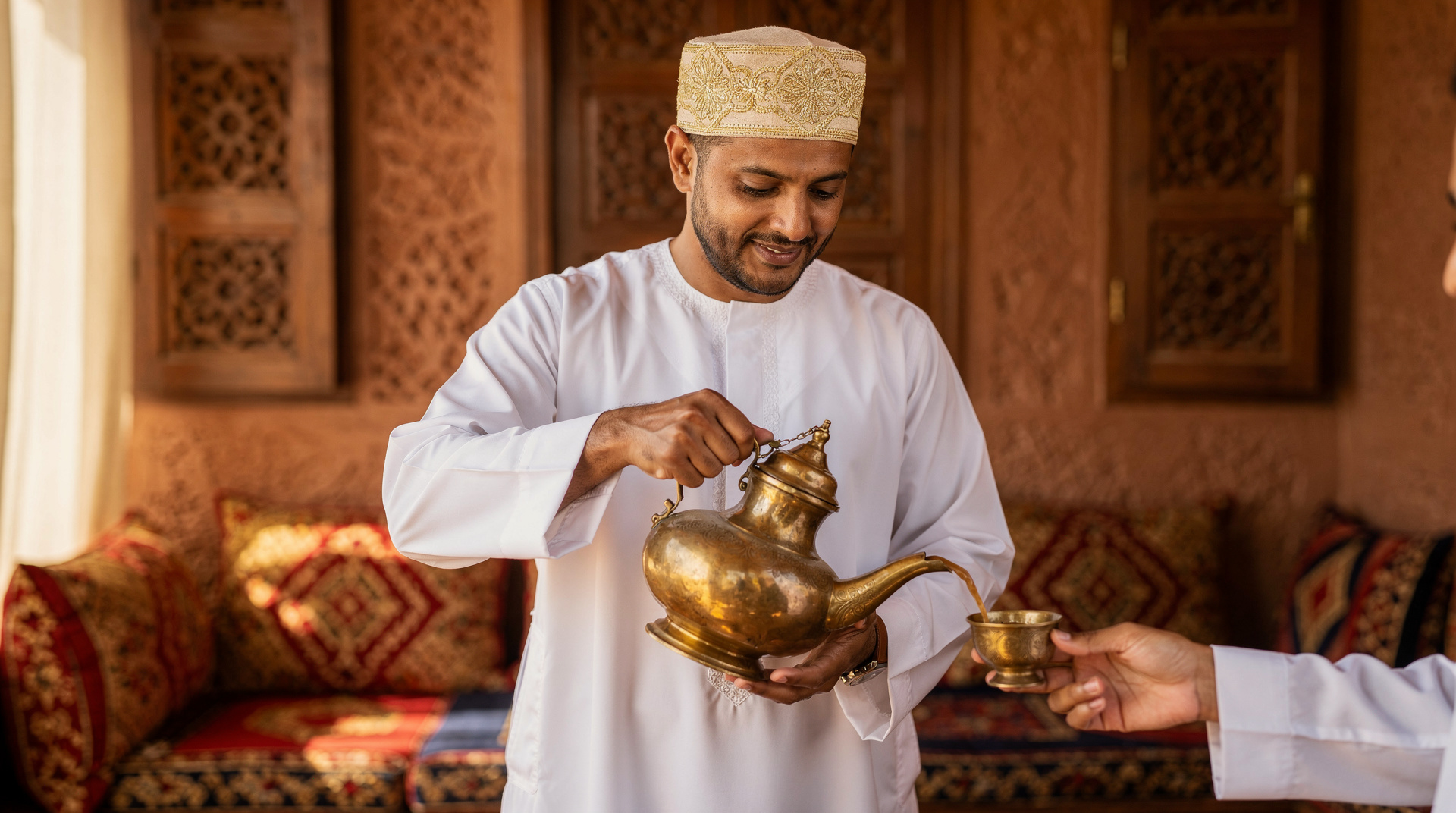
Shoes matter as well. Slip-on footwear is easier at mosques, in some shops, and in private homes if you are ever invited in. If a host offers coffee, as happens often in Omani hospitality, you will sit more comfortably in clothing that does not ride up when you are on a low cushion. Our Omani coffee culture guide describes the ritual and what to expect when it is offered.
Dress Code for Different Travelers
Women Travelling Solo
Women on their own often worry most about what to wear, and the reassuring answer is that the same simple rules apply as for everyone else: shoulders and knees covered, loose and light fabrics, and a scarf in the bag. Clothing is rarely the reason for unwelcome attention in Oman, but dressing modestly does remove one source of awkwardness and lets you move through markets and villages with less friction. For wider advice, see our guides to solo travel in Oman and the more detailed is Oman safe for women page.
Couples
Couples will notice that public displays of affection are not part of everyday life in Oman, and clothing follows the same quiet logic. Nothing needs to change in the privacy of a resort, but outside it, keep things understated. Our Oman for couples guide covers romantic settings in more depth, including where relaxed norms apply.
Families With Children
Children are given far more freedom than adults, and nobody expects a small child to be covered the way an adult is. Older children and teenagers are better served by following the adult guidance, especially around mosques, forts, and village markets. Light long sleeves also double as sun protection, which is a practical bonus. More family-focused planning is in our Oman with kids guide.
Men
Men often assume that the dress code is not their concern. In reality, the expectations are simply lighter. Long, lightweight trousers and a short-sleeved shirt are the most flexible combination, and they take a man comfortably from the mosque to the souq to a restaurant in a single day without a change. Keep sleeveless tops and very short shorts for the beach club or the pool.
Dressing by Season
The climate shapes what you will actually want to wear. In the cooler months, a thin layer for the evening is helpful and long trousers feel pleasant rather than burdensome. In the hot months, the same modest clothing must be even lighter, and the emphasis moves to breathable natural fabrics, a hat, and a scarf for sun protection. If you are planning around the weather, our best time to visit Oman guide helps you choose, and the Oman in summer page is especially useful if you expect to travel in the heat.
The Khareef season in Salalah is a special case. The south turns misty and cool, and visitors often bring a light waterproof layer along with their modest clothing. The mood in the green hills is relaxed, but families from across the region visit, so the same respectful standards apply. Our Salalah in khareef guide gives more context.
If You Get It Wrong
Mistakes happen, and Omanis are generally gracious about them. If you arrive at a site underdressed, staff will usually offer a wrap or politely ask you to cover up, and the matter is over in a moment. A scarf in your daypack solves most problems before they begin. If someone points out an issue, simply thank them and adjust; there is no need for an extended apology, and a friendly tone is always received well.
The key is to treat dress as a small courtesy rather than a burden. A few well-chosen pieces, a little attention to where you are going that day, and a willingness to adapt are enough. For the wider picture of manners, greetings, and behavior, read our Oman etiquette and culture guide, which pairs naturally with this one.
Common Myths
Myth: You need to wear black. No. The abaya worn by Omani women is traditionally black, but there is no expectation that tourists wear black or dark colors. Light linens, earth tones, and any modest style are entirely appropriate.
Myth: Covering up will make you unbearably hot. The opposite is often true. Loose, light, breathable fabrics covering your body protect from sun exposure and can feel cooler than sunburned skin in 38°C heat. Many experienced desert travelers cover up specifically for temperature management, not just modesty.
Myth: Dress codes only apply to women. Men face expectations too, especially at religious sites and in conservative rural areas. The bar is set lower, but it exists.
Myth: You need to buy specific Omani clothing. Your regular modest travel wardrobe from home is perfectly appropriate. There is no need to purchase traditional Omani dress unless you specifically want to.
Packing Recommendations
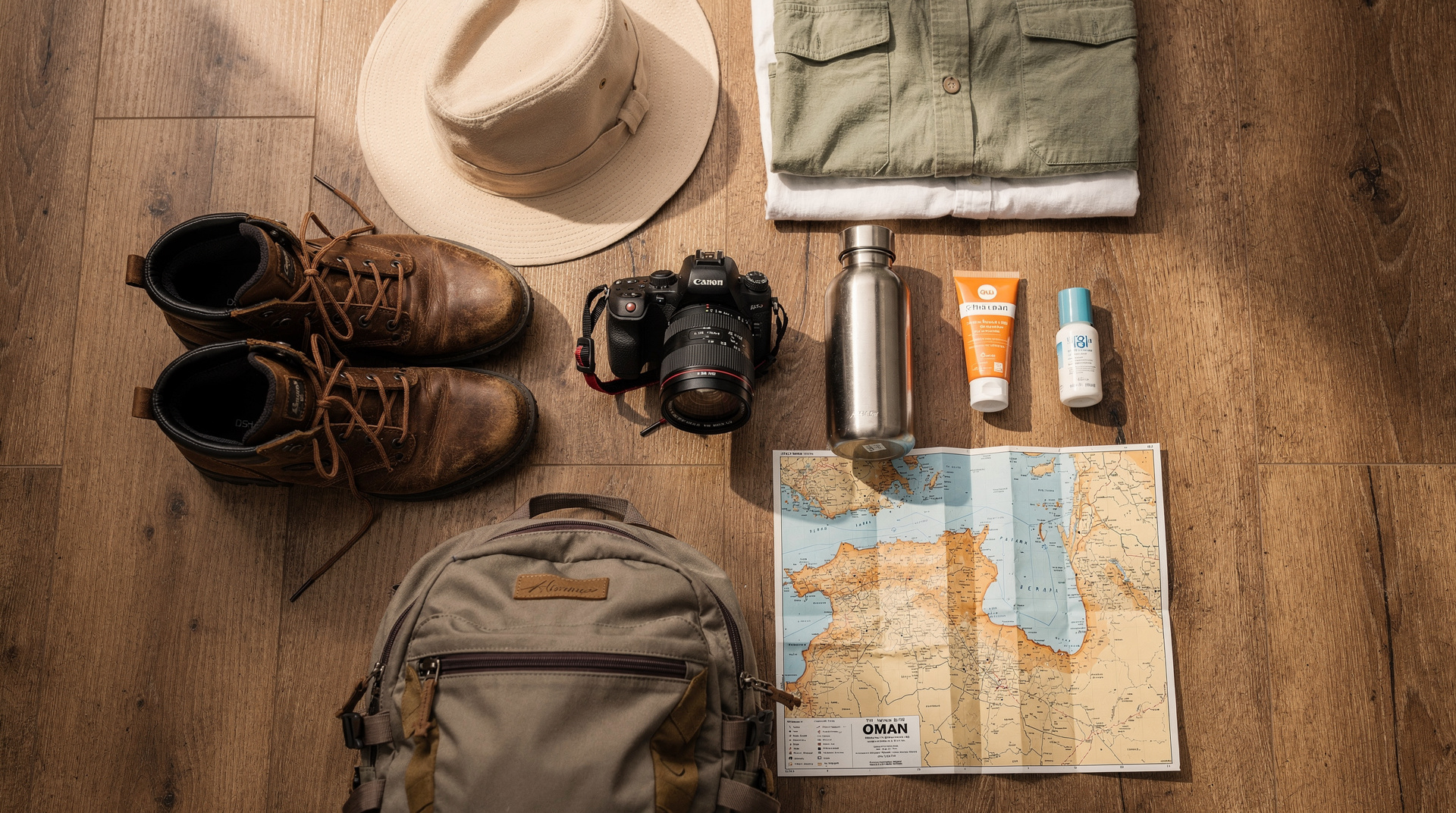
The ideal Oman wardrobe includes: two or three pairs of lightweight loose trousers or maxi skirts, several linen or cotton shirts and blouses, a versatile scarf or shawl, a light casual jacket for air-conditioned spaces, and comfortable walking shoes that slip on and off easily (for entering mosques). For your beach or pool days, a kaftan or sarong provides a quick cover-up over swimwear when leaving the resort area.
See our full Oman packing list for a comprehensive breakdown by season and activity type.
Building a Simple Capsule Wardrobe
The easiest way to pack for Oman is to think in combinations rather than outfits. Choose a small palette of neutral colors so that every top works with every bottom, then add one or two lighter or brighter pieces for variety. Loose trousers in a breathable fabric, a long skirt, two or three shirts with sleeves that reach at least the elbow, and one longer layer for the mosque cover nearly every situation described above.
Think about laundry as well. Linen and light cotton dry quickly in the dry air, so a small supply of clothes can be rotated through a longer trip without much effort. Quick-drying fabrics are especially useful if your route includes wadis, the coast, and the desert in a single journey, as in our 7-day classic Oman itinerary.
A Final Checklist Before You Leave
- A light scarf or shawl that works as a head covering, shoulder cover, and wrap
- Loose, lightweight long trousers or a maxi skirt
- Shirts or blouses with sleeves, in breathable fabric
- Slip-on walking shoes for mosques and forts
- A sarong or kaftan for leaving the pool or beach
- A thin layer for strongly air-conditioned rooms, cars, and malls
- A hat and sunglasses, since coverage and sun protection go together
With this short list in your bag, the dress code stops being something to worry about and becomes one more small part of travelling well in Oman.
Frequently asked questions about Dress Code in Oman: What to Wear as a Tourist
Is there a legal dress code for tourists in Oman?
There is no law requiring tourists to dress in any specific way outside of religious sites. However, clothing that is deliberately revealing or provocative in conservative public spaces can attract negative attention and is considered disrespectful. Oman's government actively encourages visitors to dress modestly out of cultural respect, and signs at some sites and parks specify minimum standards.What is the minimum standard for women visiting Oman?
In cities, souqs, markets, and public outdoor spaces, covering your shoulders and knees is the practical minimum. Loose trousers or a maxi skirt with a T-shirt or linen blouse is ideal. In more conservative rural areas and small towns, looser and more covering clothing is more appropriate. At mosques, you must cover your head, arms to the wrists, and legs fully. At tourist resorts and hotel pools, normal swimwear is completely acceptable.What should men wear in Oman?
Men have more flexibility. Shorts that reach the knee are acceptable in most tourist settings, beach areas, and casual environments. In conservative towns, souqs, and religious sites, long trousers are more appropriate. Sleeveless tops should be avoided in mosques and government buildings. Smart casual clothing — light chinos and a short-sleeved shirt — covers the vast majority of situations comfortably.What should I wear to visit the Sultan Qaboos Grand Mosque?
The Sultan Qaboos Grand Mosque has a strict dress code for all visitors. Women must wear a full-length abaya (available to borrow at the entrance free of charge), a headscarf covering all hair, and closed shoes. Men must wear long trousers and a shirt with sleeves. Shorts, revealing tops, and sandals are not permitted. The mosque is open to non-Muslims Saturday to Thursday from 8am to 11am.Can I wear a bikini or swimwear in Oman?
Swimwear is appropriate at hotel pools, resort beaches, and designated tourist beach areas. Wearing a bikini or swimming shorts on public beaches frequented by local families is not recommended and can cause offence. Many public beaches attract mixed local and tourist usage — the general rule is that if you see locals (particularly families and women) on the beach, cover up or use the hotel facilities.What should I wear when visiting a Nizwa Souq or fort?
For souqs and forts, modest casual dress is appropriate. Women should cover shoulders and knees at minimum. Men can wear knee-length shorts and a T-shirt, though longer trousers are more comfortable for walking through the covered souq areas and show respect. Bright colors and casual styles are entirely fine — the key is coverage rather than any specific style.How should I dress during Ramadan?
During Ramadan, more conservative dress is strongly expected. Revealing clothing in public is considered particularly disrespectful during the holy month. Women should cover their arms and legs in all public spaces, and men should avoid wearing shorts outside of clearly touristic beach areas. Some shopping malls and public venues post specific dress code reminders during Ramadan.Do I need to buy an abaya in Oman or can I borrow one?
You do not need to buy an abaya. The Sultan Qaboos Grand Mosque provides abayas for borrowing at no cost. Many other significant religious sites do the same. If you plan to visit multiple mosques regularly or prefer the convenience, a simple black abaya can be purchased at the Muttrah Souq in Muscat for around 5-15 OMR, and it doubles as a useful cover-up for conservative areas throughout your trip.What fabrics work best for Oman's climate and dress code?
Lightweight, breathable fabrics are essential. Linen, cotton, and moisture-wicking synthetic blends work best in Oman's heat. Avoid heavy denim or synthetic fabrics that trap heat. Loose-fitting clothing both respects local norms and keeps you significantly cooler in temperatures that can exceed 40°C in summer. A light cotton shawl or scarf is the single most versatile item — it serves as a headscarf, shoulder cover, and lap blanket in air-conditioned spaces.Will I be turned away from attractions for inappropriate dress?
At mosques and some government-linked heritage sites, yes — you will be politely declined entry if your dress does not meet requirements. At the Sultan Qaboos Grand Mosque specifically, the dress code is enforced at the entrance. At most forts and outdoor attractions, staff will typically ask you to cover up or provide a wrap rather than turn you away. At private resorts and tourist beaches, dress code enforcement is less strict.
Top experiences
Bookable activities with verified prices and instant confirmation on GetYourGuide.
 📍 Muscat
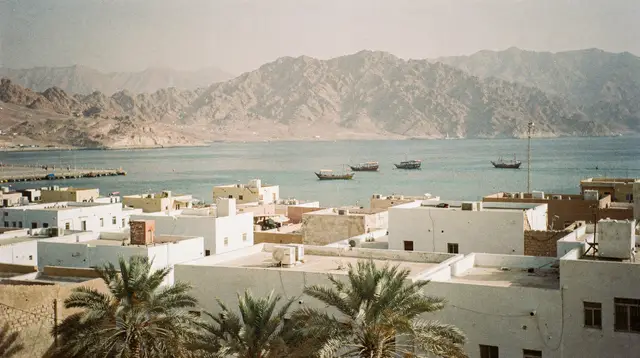
 Muscat: half-day city tour
- Free cancellation
- Instant confirmation
- Hotel pickup
 📍 Nizwa
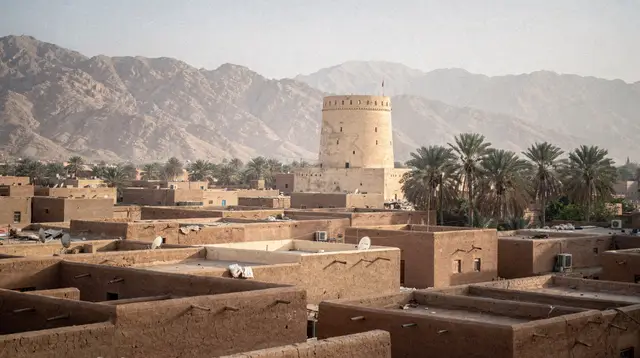
 Muscat: explore Nizwa Fort and Souq + Jebel Akhdar
- Free cancellation
- Hotel pickup
- English guide
 📍 Salalah
 Salalah: highlights tour of heritage sites, markets and beach
- Free cancellation
- Hotel pickup
- English guide
 📍 Wahiba Sands
 Muscat: Wahiba Desert and Wadi Bani Khalid guided group tour
- Free cancellation
- Hotel pickup
- Small group
 📍 Jebel Akhdar
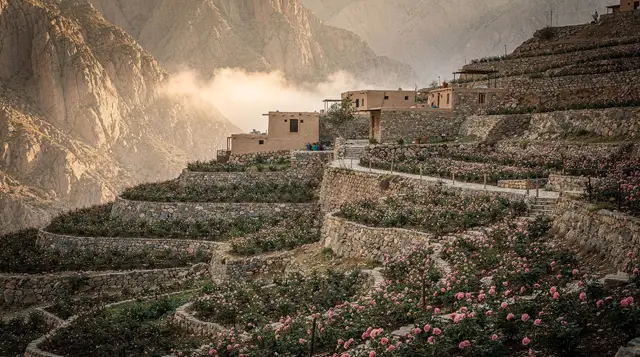
 From Muscat: full-day private trip to Nizwa and Al Jabal Akhdar
- Free cancellation
- Hotel pickup
- Best seller