14-Day Ultimate Oman: Complete North and South Circuit
The Full Length of Oman in Two Weeks
Two weeks is the threshold at which Oman transforms from a highlight reel into a genuine encounter with the country’s extraordinary range. Oman is roughly the size of France, and its two major regions — the northern mountains and the southern Dhofar — are separated by 1,000 km of desert. A domestic flight bridges that gap elegantly, allowing this itinerary to cover both worlds without backtracking.
The north gives you everything in the classic itinerary: the Grand Mosque, Nizwa’s forts, the vertical world of Jebel Akhdar and Jebel Shams, the Wahiba Desert, and the coastal wadis. The south gives you Salalah — a city that the monsoon transforms every summer into a green highland, where frankincense trees drip their ancient resin, waterfalls plunge to empty beaches, and the Empty Quarter sits at the edge of the world.
At a Glance
| Where | Muscat, Nizwa, Jebel Akhdar, Jebel Shams, Wahiba Sands, Sur, Salalah and Dhofar |
| Cost | Around OMR 1300–1950 per person mid-range (see full budget table below) |
| Time needed | 14 days, split roughly evenly between the north and a domestic flight south to Salalah |
| Getting there | Self-drive 4WD in the north, second rental car in Salalah, connected by an internal flight |
| Best time | October–June for the north; add the July–September khareef if Salalah’s green season is the priority |
Route summary:
- Days 1–2: Muscat
- Day 3: Muscat — Nizwa (165 km)
- Day 4: Nizwa — Jebel Akhdar (50 km from Nizwa)
- Day 5: Jebel Akhdar — Jebel Shams (80 km)
- Day 6: Jebel Shams — Wahiba Sands (200 km)
- Day 7: Wahiba Sands — Sur (120 km)
- Day 8: Sur — Wadi Shab — Muscat, fly to Salalah
- Days 9–12: Salalah and Dhofar region
- Day 13: Salalah — fly to Muscat
- Day 14: Muscat (departure)
| Day | Focus | Overnight |
|---|---|---|
| 1–2 | Muscat: Grand Mosque, Muttrah, dhow cruise | Muscat |
| 3 | Drive to Nizwa: forts and souq | Nizwa |
| 4 | Jebel Akhdar: rose villages, canyon rim | Jebel Akhdar or Nizwa |
| 5 | Jebel Shams: Balcony Walk | Jebel Shams plateau |
| 6 | Drive to Wahiba Sands: desert camp | Desert camp |
| 7 | Wadi Bani Khaled, Sur, turtle coast | Sur |
| 8 | Wadi Shab, Bimmah, fly Muscat–Salalah | Salalah |
| 9–12 | Salalah and Dhofar: frankincense, beaches, Empty Quarter | Salalah |
| 13 | Fly Salalah–Muscat | Muscat |
| 14 | Departure | — |
Days 1–2: Muscat — Grand Mosque, Muttrah, Dhow Cruise
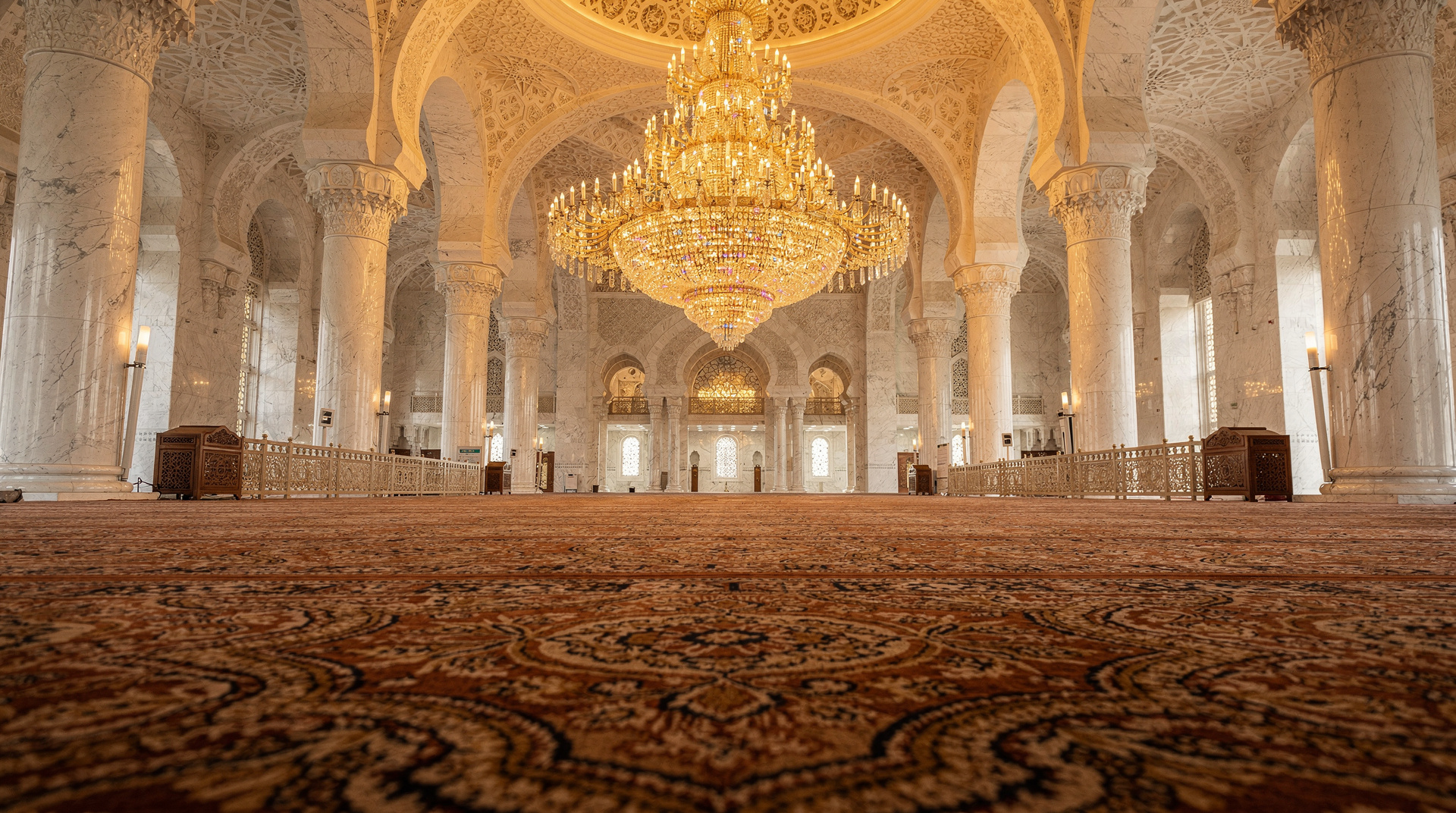
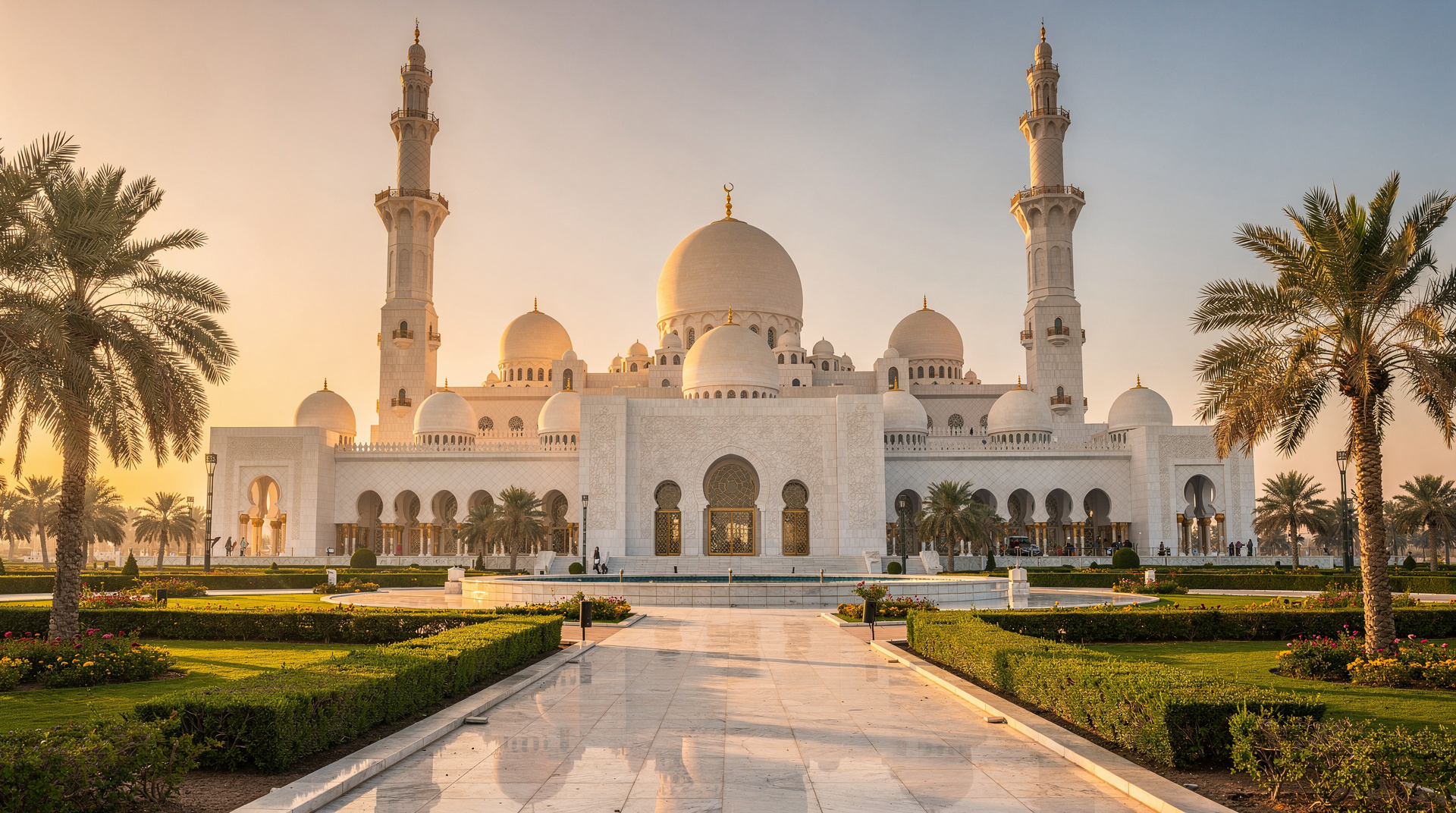
Day 1 begins at the Sultan Qaboos Grand Mosque — open to non-Muslim visitors 8 AM to 11 AM Saturday through Thursday. The Grand Mosque is Oman’s most magnificent architectural achievement and should not be missed on any timeline. Free entry, 90 minutes minimum.
Afternoon at the Royal Opera House Muscat exterior and the Bait Al Zubair Museum (5 OMR) for Omani cultural context.
Day 2: Full day exploring Muscat’s old city. Morning city tour: Half-Day Muscat City Tour — Old Town, Muttrah and Palaces (from 20 USD, 2026).
Evening: Sunset Dhow Cruise in Muscat from Muttrah harbour (from 25 USD, 2026). The dhow glides past the Corniche as the mountains behind the city glow orange — one of the signature experiences of the trip.
Stay: Crowne Plaza Muscat OCEC (45–65 OMR/night) or Golden Tulip Muscat (35–50 OMR/night).
Day 3: Muscat to Nizwa — Mountain Pass and Fort
Drive: 165 km, 2 hours
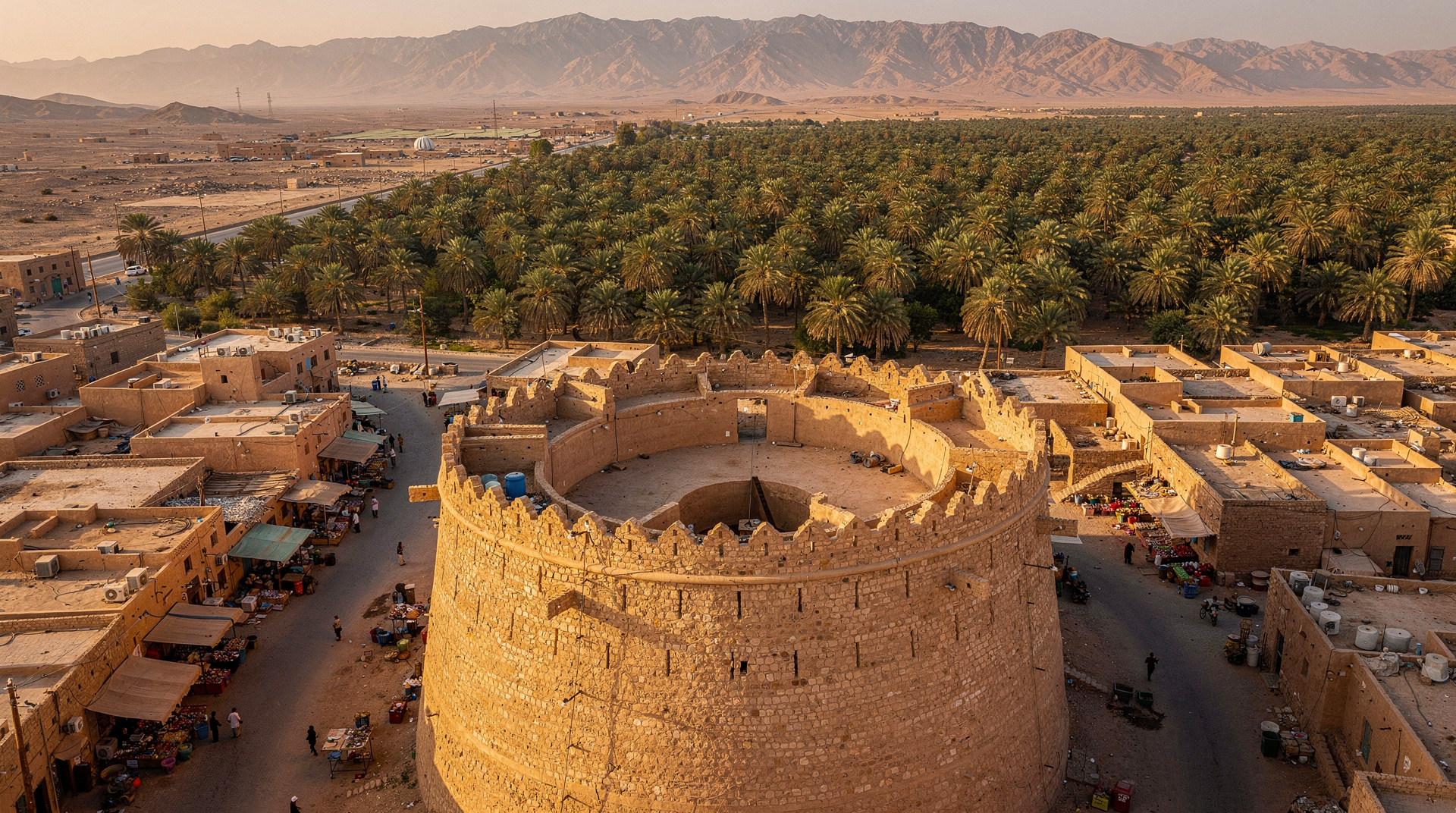
Depart 7:30 AM via Route 15 through the Al Hajar range. Arrive Nizwa by 10 AM. Nizwa Fort (5 OMR) and souq occupy the morning — the fort’s circular tower is the emblem of Omani military architecture, and the souq is the finest place in the country to buy traditional Omani silver. For a guided walkthrough of the old capital’s highlights — fort, souq, falconry, and silver market — book the Old Capital of Oman: Highlights Tour of Nizwa (from 35 USD, 2026).
Afternoon at Jabreen Castle (5 OMR, 30 km southwest) — the most elaborately decorated interior of any building in Oman, with painted ceilings and carved arches from the 1670s. Book the guided fort day tour: Full-Day Tour: Forts of Nizwa and Jabreen (from 55 USD, 2026).
Stay in Nizwa: Noor Arjaan by Rotana Nizwa (55–75 OMR/night).
Day 4: Jebel Akhdar — Rose Valley and Canyon Views
Drive: Nizwa to Jebel Akhdar (50 km, 1 hour)
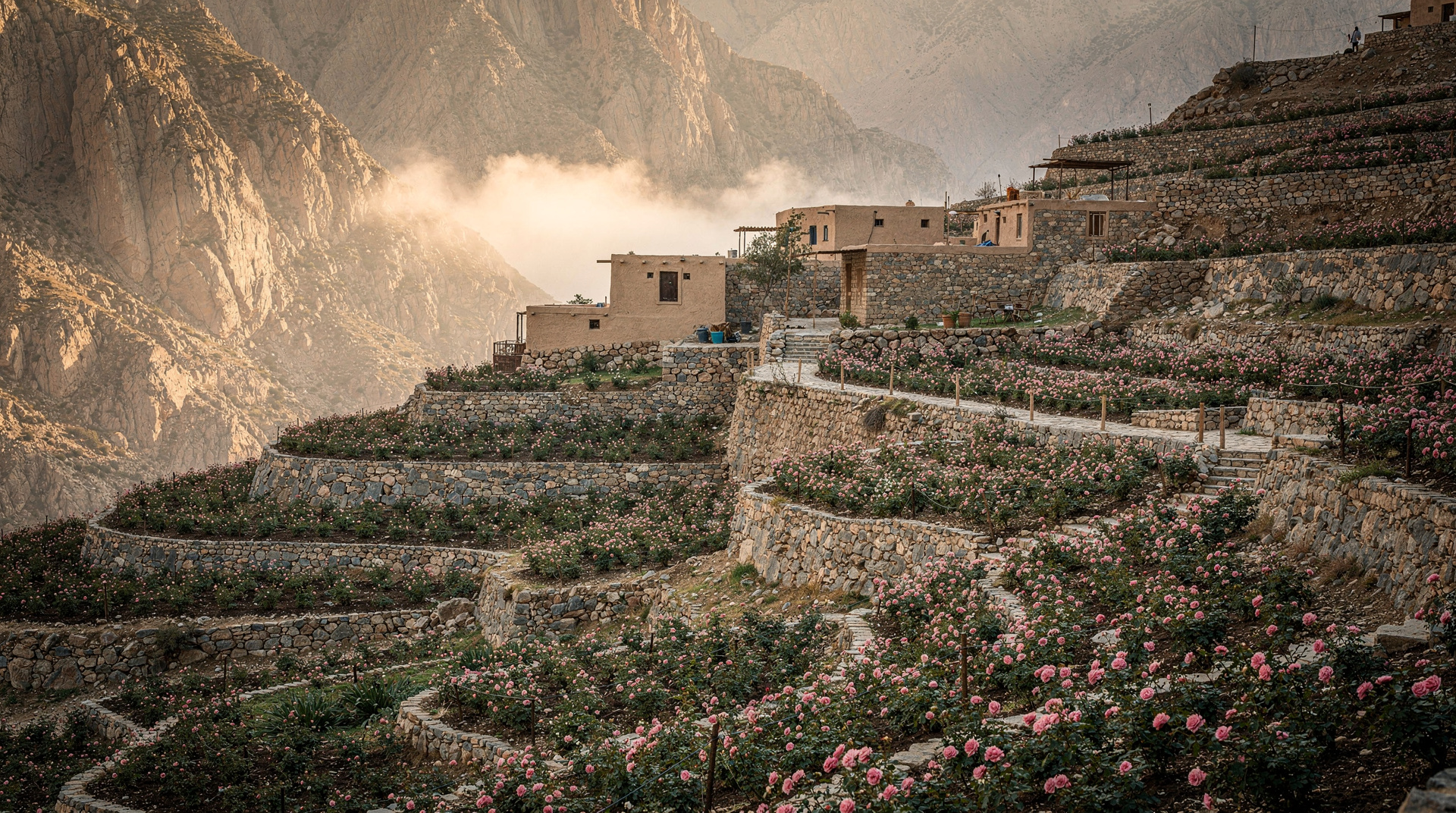
The Jebel Akhdar plateau (2,000–2,900 m) requires a 4WD — a military checkpoint enforces this. The mountain villages of Al Ain, As Shirayjah, and Al Ayn grow roses, pomegranates, walnuts, and apricots in terraced gardens above sheer canyon walls. Rose water and rose jam from Jebel Akhdar are among the finest culinary souvenirs in Oman.
Diana’s Viewpoint overlooks a 1,500-metre canyon — genuinely vertigo-inducing. For a guided alternative, a full-day private trip from Muscat to Nizwa and Al Jabal Akhdar covers both stops (from 70 USD, 2026).
Stay on the mountain: Anantara Al Jabal Al Akhdar Resort (200–350 OMR/night) for a splurge night — canyon-rim villas with an infinity pool overlooking 2,000 metres of nothing. Or descend to Nizwa for more affordable options.
Day 5: Jebel Shams — Grand Canyon Walk
Drive: Jebel Akhdar to Jebel Shams (80 km, 1.5 hours via Al Hamra)
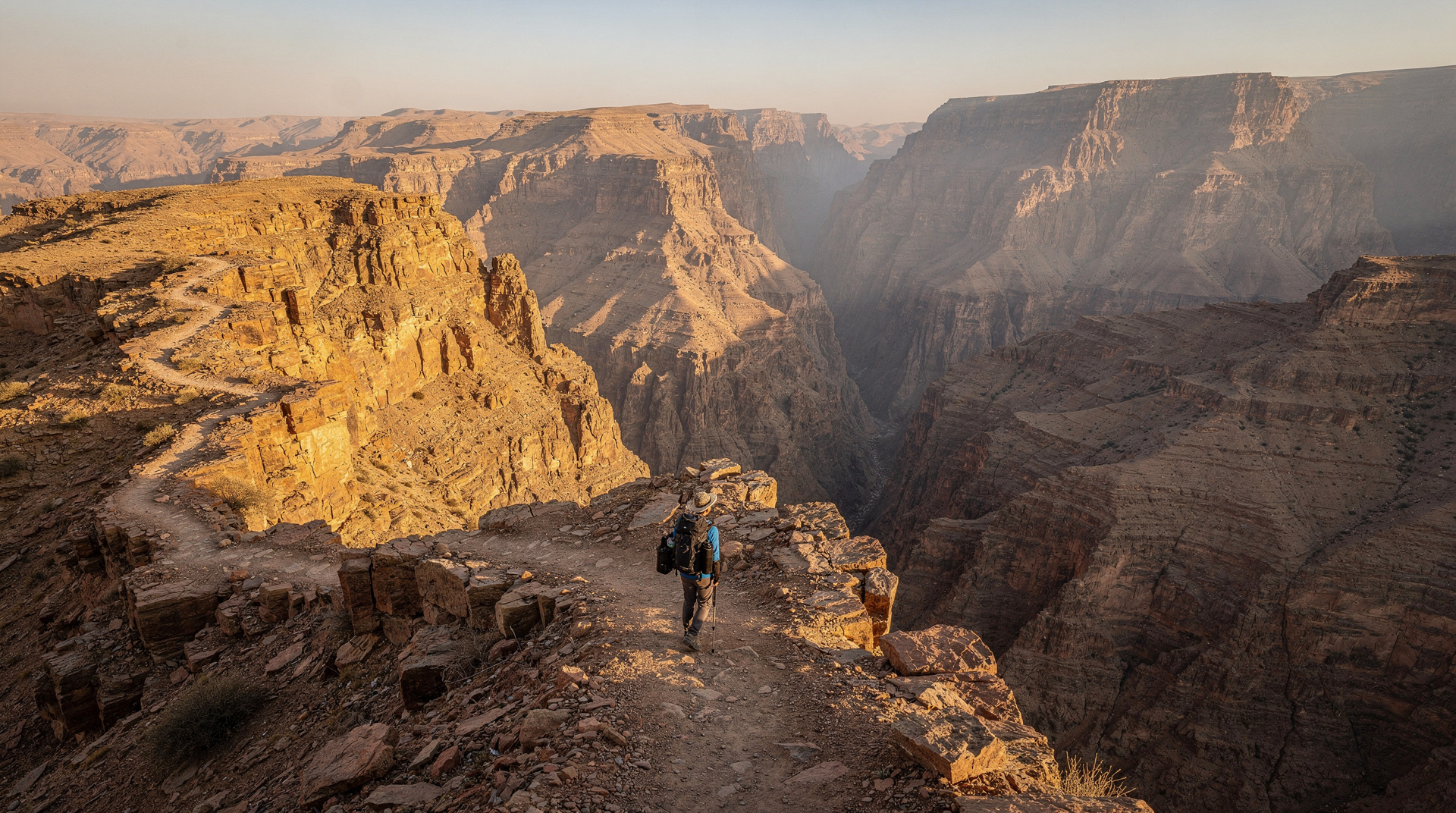
The Balcony Walk at Jebel Shams is the highlight of the mountain section. A 9-km return trail follows the rim of Wadi Nakhr — Oman’s Grand Canyon at 1,000 metres deep — past the abandoned cliff village of Ghul to a breathtaking final viewpoint. Start by 7 AM. Allow 3–4 hours. No technical skills required but good footwear is essential.
For a guided mountain day trip: Jebel Shams Day Trip from Muscat (from 65 USD, 2026).
Afternoon: visit Al Hamra mudbrick village and Misfat Al Abriyeen terraced gardens. Both are free and deeply photogenic.
Stay: Jebel Shams Resort (70–110 OMR/night) — on the summit plateau.
Day 6: Jebel Shams to Wahiba Sands
Drive: 200 km, 2.5 hours
Descend from Jebel Shams and drive east through Nizwa and Sinaw to the Wahiba Sands. Desert camp check-in by early afternoon. The afternoon includes dune bashing, sandboarding and a sunset camel ride. Night in a traditional Bedouin-style camp under extraordinary stars.
Stay: 1000 Nights Camp or Desert Nights Camp (75–130 OMR including dinner and breakfast).
Day 7: Wahiba Sands — Wadi Bani Khaled — Sur
Morning: Wadi Bani Khaled
Year-round turquoise freshwater pools accessible by a short walk from the car park. Swimming is excellent; the inner pools (30 minutes further) are quieter and more beautiful.
Sur (120 km northeast)
Oman’s great maritime city. Visit the working dhow yards, the dhow museum, and Ras Al Jinz Turtle Reserve (25 km south) for evening turtle watching (book ahead: rasaljinz.com, 12 OMR, night tours from 9 PM).
Stay: Sur Plaza Hotel (45–60 OMR/night).
Day 8: Wadi Shab — Bimmah — Muscat — Fly to Salalah
Morning: Wadi Shab and Bimmah Sinkhole
The emerald canyon pools of Wadi Shab require a 1–2 hour walking excursion from the boat crossing point. Swim in the pools; the most adventurous reach the cave waterfall.
Bimmah Sinkhole (15 km north of Wadi Shab, 1 OMR entry) — collapsed limestone cavern with turquoise water open for swimming. Allow 1 hour.
If time allows before the flight, the Daymaniyat Islands marine reserve (accessible by boat from Al Sawadi, 45 km north of Muscat) is home to sea turtles, reef sharks, and brilliant coral — one of the finest snorkeling destinations in the Arabian Sea. Book the Daymaniyat Islands Snorkeling Trip from Muscat (from 55 USD, 2026) for a morning expedition that returns well before afternoon flight check-in.
Return to Muscat and Evening Flight
Drive 130 km north to Muscat. Return the rental car. Fly to Salalah with Oman Air — approximately 90 minutes, 50–80 OMR each way. Collect a second rental car in Salalah.
Stay in Salalah: Hilton Salalah Resort (70–110 OMR/night) on a long beach with excellent pool and restaurants. The Hilton is the best-positioned hotel for exploring the Dhofar region.
Days 9–12: Salalah and the Dhofar Region
Salalah is the capital of Dhofar, Oman’s southern province, and it occupies an entirely different ecological niche from the north. During the khareef (monsoon, July–September), the hills surrounding Salalah receive rainfall from the Indian Ocean monsoon and transform into green highlands with running streams and waterfalls. Outside the monsoon, the region is drier but the coastline, frankincense trees, archaeological sites, and Empty Quarter access are all year-round attractions.
Day 9: Salalah City and Frankincense Heritage
Begin with the Museum of the Frankincense Land (2 OMR) — a UNESCO-recognized site explaining 5,000 years of frankincense trade that made Dhofar one of the wealthiest places on earth in antiquity. The ancient city of Sumhuram (entry 5 OMR) nearby is an excavated Incense Route trading post.
Al Baleed Archaeological Site within Salalah contains the ruins of a major medieval city active from the 12th to 16th centuries. Entry is 4 OMR including the excellent museum.
In the afternoon, visit the frankincense trees at Wadi Dawkah — a UNESCO World Heritage Site where wild Boswellia sacra trees grow in a protected reserve. The resin drips from cuts in the bark and hardens into the precious frankincense traded since biblical times. The trees are low and gnarled, surprisingly unassuming given their historic importance.
For a guided eastern Salalah experience covering Wadi Darbat and its seasonal waterfall, mountain villages, and the archaeological coast, book the East Salalah: Wadi Darbat Waterfall and Mountain Safari Tour (from 45 USD, 2026) — an excellent half-day or full-day option that handles the navigational complexity of the eastern Dhofar mountains.
Day 10: Mughsail Beach and the Blowholes
Drive west from Salalah along the coastal road to Mughsail Beach — a vast arc of white sand backed by limestone cliffs, one of the most dramatic beaches in Arabia and virtually deserted outside holiday periods. Entry is free.
At the far western end of the beach, the Mughsail Blowholes are a series of openings in the cliff through which incoming waves force spectacular jets of water. During the monsoon these become geysers; in calm conditions they still perform impressively in the morning when swells are largest.
Continue to Marneef Cave — a large sea cave accessible at low tide with impressive stalactite formations.
The combined Mughsail and Salalah coastal experience is well-covered by the guided day tour: Salalah: Fazayah Beach, Mughsail Beach and Frankincense Trees (from 40 USD, 2026).
Fazayah Beach (60 km west of Mughsail, last 10 km requires 4WD) is arguably the most beautiful beach in Oman — bone-white sand, turquoise water, no facilities whatsoever, and complete solitude.
Day 11: Desert Safari — Edge of the Empty Quarter
The Rub al Khali (Empty Quarter) is the largest continuous sand desert on earth, covering 650,000 square kilometres across Saudi Arabia, UAE, Oman and Yemen. The Dhofar region gives access to the Omani edge of this vast wilderness.
The desert safari from Salalah ventures into the dunes and showcases the contrast between the green Dhofar coast and the raw desert interior. Activities include dune bashing, traditional Bedouin camp visits, and sunset over the endless sands.
Book the guided experience: Salalah Sunset Desert Safari — Rub al Khali Empty Quarter (from 50 USD, 2026). Tours typically include camel riding, sandboarding, and a traditional Arabic dinner.
The overnight camping option (available through several operators at 80–120 OMR per person) puts you to sleep under one of the darkest and most star-filled skies in Asia.
Day 12: Job’s Tomb, Ain Razat Springs, and Departure Preparation
Nabi Ayoub (Job’s Tomb) sits on a hilltop above Salalah and is a revered site for Muslims. The approach road offers panoramic views over the green coastal plain and the sea beyond.
Ain Razat is a natural spring 30 km east of Salalah where freshwater bubbles up beneath palm trees — an oasis of remarkable tranquility. The park surrounding the springs is pleasant for an afternoon walk.
Spend the final evening in Salalah at the Hilton Salalah’s Al Mina beach restaurant for grilled seafood and sunset views (12–20 OMR per person). Buy frankincense at the souq — Dhofari frankincense is the finest quality available anywhere, priced from 2–15 OMR per bag depending on grade.
Day 13: Fly Salalah — Muscat
Return to Muscat by air (90 minutes, 50–80 OMR). If you have an evening or late departure, Muscat’s Avenues Mall has good food court options and last-minute souvenir shopping. Muscat Airport Duty Free carries decent Omani halwa and dates.
Day 14: Departure
Most international flights from Muscat depart in the early morning or late evening. The airport is 30 minutes from the city center. Lounge access is available at the airport on a pay-per-use basis if your airline doesn’t provide it.
Seasonal Advice for Salalah
| Season | Conditions | Notes |
|---|---|---|
| Oct–June | Dry, sunny, 25–35°C | Best overall conditions, beaches perfect |
| July–August | Khareef monsoon | Hills green, waterfalls active, mist and cloud, beaches rough — uniquely beautiful |
| September | Transitional | Monsoon ending, still green, fewer crowds |
The khareef is the most remarkable time to visit Salalah and attracts huge numbers of Omani and Gulf visitors who flock south to see the green landscape — book accommodation months ahead for this period.
Full Trip Budget (14 days, per person, mid-range)
| Category | Estimated Cost (OMR) |
|---|---|
| Accommodation (13 nights) | 520–780 |
| Car rental North (8 days, 4WD) | 200–320 |
| Car rental Salalah (5 days) | 125–200 |
| Flights Muscat–Salalah return | 100–160 |
| Guided tours and entry fees | 180–240 |
| Fuel (both regions) | 35–50 |
| Food (all meals) | 140–200 |
| Total per person | 1300–1950 OMR (3380–5070 USD) |
Further reading: Jebel Akhdar destination guide, Grand Mosque visitor guide, and Muscat city guide.
Salalah: The Complete Visitor Guide
Most northern Oman itineraries never make it to Salalah, which is precisely why adding it transforms a good holiday into an unforgettable one. Here is everything you need to know about Oman’s second city.
Geography and Climate
Salalah sits at the base of the Dhofar Mountains on the southern coast of Oman, 1,000 km south of Muscat as the crow flies. The mountains block the prevailing northerly winds and instead catch the summer monsoon that sweeps in from the Indian Ocean — making Salalah one of the very few places in Arabia where it genuinely rains and stays green for months.
The coastal plain where Salalah sits is at sea level; the Dhofar Mountains behind rise to 1,500 metres and capture the cloud cover during the khareef season (June through September). The temperature even in summer rarely exceeds 28°C in Salalah itself — a dramatic contrast to Muscat’s 42°C.
The Frankincense Economy
Dhofar produces the majority of the world’s frankincense supply, specifically from the Boswellia sacra tree — a small, gnarled tree that grows in rocky limestone soils at 500–1,500 metres altitude. The resin (harvested by making cuts in the bark and allowing the sap to dry into hard tears) has been traded for over 5,000 years — mentioned in the Bible, burned in ancient Egyptian temples, traded via the ancient Incense Road to Rome and Greece.
Three grades dominate the Omani frankincense market:
Hojari (Al-Hojari): The finest grade, pale green to clear in color, found only in Dhofar. Burns clean with a light, complex scent. Highly prized internationally — genuine Hojari is exported to perfume houses in France and artisan incense makers worldwide. Cost in Salalah: 3–15 OMR per 100g depending on quality.
Najdi: Slightly darker, with a stronger, more traditional incense smell. Widely used across Arabia for home burning. 1–4 OMR per 100g.
Sha’bi: The most common grade, dark amber, intense smoke. Used in larger quantities for ceremonial purposes. Very inexpensive.
The UNESCO-listed ancient cities of Sumhuram, Al Baleed, and Khor Rori are the remains of the Incense Route trading settlements that made Dhofar fabulously wealthy in antiquity. Al Baleed in particular — with its 14th-century mosque foundations, city walls, and excavated streets — conveys the extraordinary scale of the pre-Islamic and medieval trading empire.
Salalah’s Beaches
Dhofar’s coastline is entirely different from the north — wider, wilder, and with a genuine Atlantic-style energy when the Indian Ocean swell runs. The main beaches:
Mughsail Beach: 40 km west of Salalah, a vast crescent of white sand backed by limestone cliffs. Almost entirely deserted outside local holiday periods. The western end has the famous blowholes — channels in the cliff that jet seawater into the air. Entry to the beach park is free.
Al Haffa Beach: The beach immediately west of Salalah city, popular with local families in the evening. Basic food stalls sell fresh fish, samosas, and chai. Good for watching the local life.
Fazayah Beach: 100 km west of Salalah (last 10 km requires 4WD). Arguably the most beautiful beach in Oman — absolutely deserted, white sand, clear water, dolphins offshore. No facilities; bring everything you need.
Shuwaimiyah Beach: 200 km east of Salalah (requires 4WD for the last section) — enormous isolated bay with dramatic cliff backdrop. Worth the journey for self-sufficient travelers.
Salalah Food
Al Mina Restaurant (Salalah waterfront): Excellent fresh fish, grilled or fried, with rice and salad. A whole kingfish for 6–8 OMR. The view over the Salalah harbour is good.
Haffa House Restaurant (near Al Haffa): The most established Omani restaurant in Salalah, known for traditional Dhofari dishes including harees, shuwa, and fresh fish preparations that differ from northern Oman recipes. 5–10 OMR per person.
Salalah Beach Resort buffet dinner: The Hilton Salalah and Salalah Beach Resort both run Thursday evening Omani buffets featuring a wide range of traditional Dhofari dishes — an excellent introduction for first-time visitors to southern Omani food. 12–18 OMR per person.
Frankincense coffee (kahwa): Salalah’s kahwa is brewed differently from the north — with the addition of a small piece of frankincense resin in the pot, giving a subtle, woody note to the coffee. Try it at the Al Husn Souq coffee vendors in the evening.
Two Weeks vs. One Week: Is 14 Days Worth It?
The honest answer: yes, unreservedly. Here is why:
North Oman alone is excellent; north plus south is transformative. The contrast between the Al Hajar mountains, the desert interior, the coastal wadis, and then Dhofar’s green frankincense highlands is something that no single-region trip can replicate. It demonstrates the extraordinary geographic variety packed into one country.
Salalah requires its own week. Three to four days there feels like just enough — you see the main sites, understand the frankincense story, visit the beaches, and make it to the desert. It is not rushed, but there is no slack. A fifth day would allow a proper eastern coast exploration (Shuwaimiyah, Hasik) that four days does not permit.
You come back different from 14 days. Travel research consistently shows that the psychological benefits of travel increase significantly with the depth of the experience rather than its breadth. Fourteen days in Oman — at a comfortable pace, staying long enough in each place to begin noticing details — produces a different quality of memory than a rapid highlights tour.
Cost efficiency: The fixed costs of any Oman trip (flights, visa, car rental base rates) are spread across more days, reducing the effective daily cost. The marginal accommodation cost for extra nights is lower than the average, particularly with camp nights in the itinerary.
The Muscat guide and Jebel Shams guide provide additional depth on the northern section, while our Jebel Akhdar page covers the Green Mountain in full detail.
Practical Prep for Two Weeks
Confirm your Oman visa and travel insurance covering 4WD and desert activity before booking flights. The car rental guide explains why you need one 4WD in the north and a second car (2WD is usually fine) in Salalah, and the domestic flights guide covers booking the Muscat–Salalah leg.
For deeper prep on the southern half, read the Salalah complete guide, the frankincense trail guide, and, if timing around the monsoon, the khareef season guide. Travellers wanting more than a single desert safari day should look at the Empty Quarter expedition guide before Day 11.
Frequently asked questions about 14-Day Ultimate Oman
Is 14 days too long for Oman?
Not for most travellers who enjoy a slower pace. The country’s north and south regions are different enough — mountains and desert versus the green Dhofar monsoon coast — that two weeks lets you actually settle into each rather than rush between highlights.
Do I need two different rental cars?
Generally yes. Most travellers return their northern 4WD in Muscat before flying to Salalah and pick up a second car there, since Salalah’s roads are mostly paved and a 2WD is usually sufficient outside the Empty Quarter safari, which is normally done as a guided tour rather than self-driven.
Related Itineraries and Destination Guides
For first-time visitors who want to start shorter and scale up, the 3-Day Muscat Express covers the capital and Daymaniyat Islands. The 5-Day Highlights adds Nizwa, the desert, and Wadi Shab. The 7-Day Classic Oman circuit is the most popular northern route. Adding Musandam to seven days gives the 10-Day Grand Tour.
For specialist interests, the Adventure Road Trip goes deeper into canyoning and off-road 4WD experiences in the north, while the Luxury Oman week covers similar geography from the finest hotels in the country. Families planning a two-week trip can cross-reference the Family Oman itinerary for advice on which experiences work with children.
The cultural foundation for the northern section of this trip is covered in depth by the Grand Mosque visitor guide, the Jebel Shams Balcony Walk guide, and the Jebel Akhdar destination guide. For the capital, the Muscat destination page covers neighborhoods, restaurants, beaches, and practical transport in full detail.