Visiting Oman from Dubai: Border Crossings, Day Trips, and Weekend Escapes
How do I get from Dubai to Oman?
You can drive from Dubai to Muscat in 5–6 hours via the Hatta border crossing, fly in about 1 hour, or take a ferry from Muscat Port. For a day trip, Musandam (Khasab) is just 2 hours by car from Dubai. Visa-on-arrival is available at land, sea, and air borders for most nationalities.
The Neighbour That Most UAE Residents Haven’t Fully Explored
Oman is one of the world’s great travel secrets hiding in plain sight. For Dubai residents, it sits 350 km away — closer than Abu Dhabi is to Al Ain — yet it delivers a completely different world: ancient walled cities, empty desert landscapes, mountain villages where time has genuinely moved differently, and a hospitality culture that still surprises visitors accustomed to Gulf transactional tourism.
This guide covers every practical angle for visiting Oman from Dubai in 2026: how to cross the border, what visa you need, which day trips are realistic, and how to structure a longer escape into the country.
| At a glance | |
|---|---|
| Distance | around 350-500 km to Muscat depending on route; Musandam is about 2 hours |
| Cost | from around AED 200-300 driving to Muscat, AED 350-450 per person for a Musandam day trip |
| Time needed | a Musandam day trip fits in a single day; Muscat deserves at least a 3-night weekend |
| Getting there | drive via Hatta or Khatm Melaha, fly Dubai-Muscat in about 1 hour, or the Shinas-Muscat ferry |
| Best time | October-April; avoid Thursday evening and Friday morning border traffic year-round |
Option 1: Driving from Dubai to Muscat
The drive from Dubai to Muscat is one of the best road trips in the region — and it is more popular than ever. The distance is approximately 500 km via the Al Hili/Hatta route, taking 5–6 hours with minimal stops. Traffic leaving Dubai on Thursday evenings and Friday mornings can add 60–90 minutes at the border.
The Route
The standard route leaves Dubai via the Hatta Road (E44), passes the Hatta Heritage Village (a worthwhile short stop), and crosses into Oman at the Wajajah/Al Wajajah border post near Hatta. This is the most straightforward crossing for direct Dubai-to-Muscat travel.
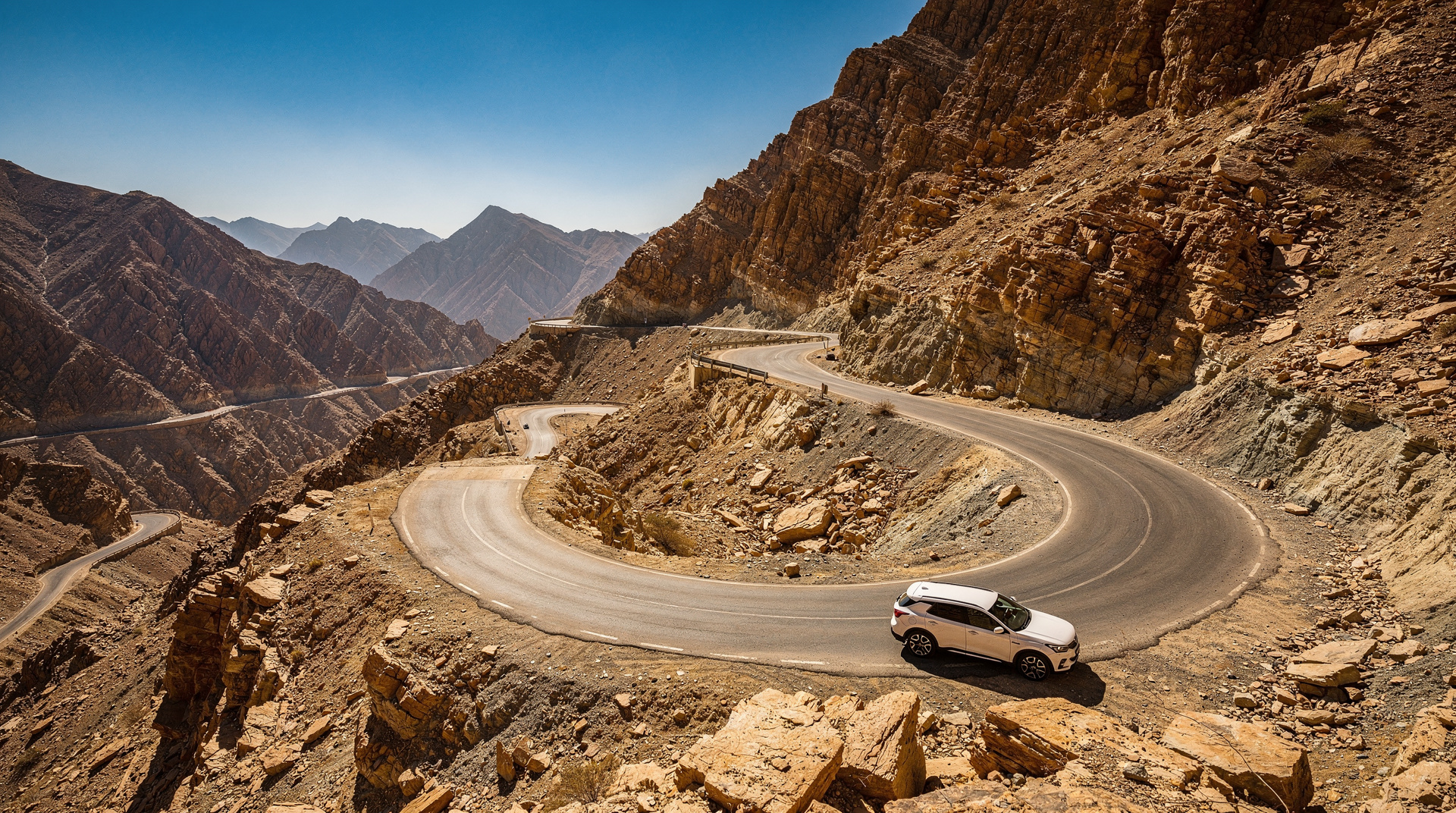
From the border, the Omani highway continues southwest through the Hajar Mountain foothills, passing the ancient town of Ibri and connecting to the main national highway (Route 1) for the final run into Muscat. The last 100 km approaching Muscat traverse beautifully bare mountain scenery before the coast appears.
An alternative crossing at Khatm Melaha/Mahadha (near Buraimi/Al Ain) cuts travel time if you are coming from Abu Dhabi rather than Dubai.
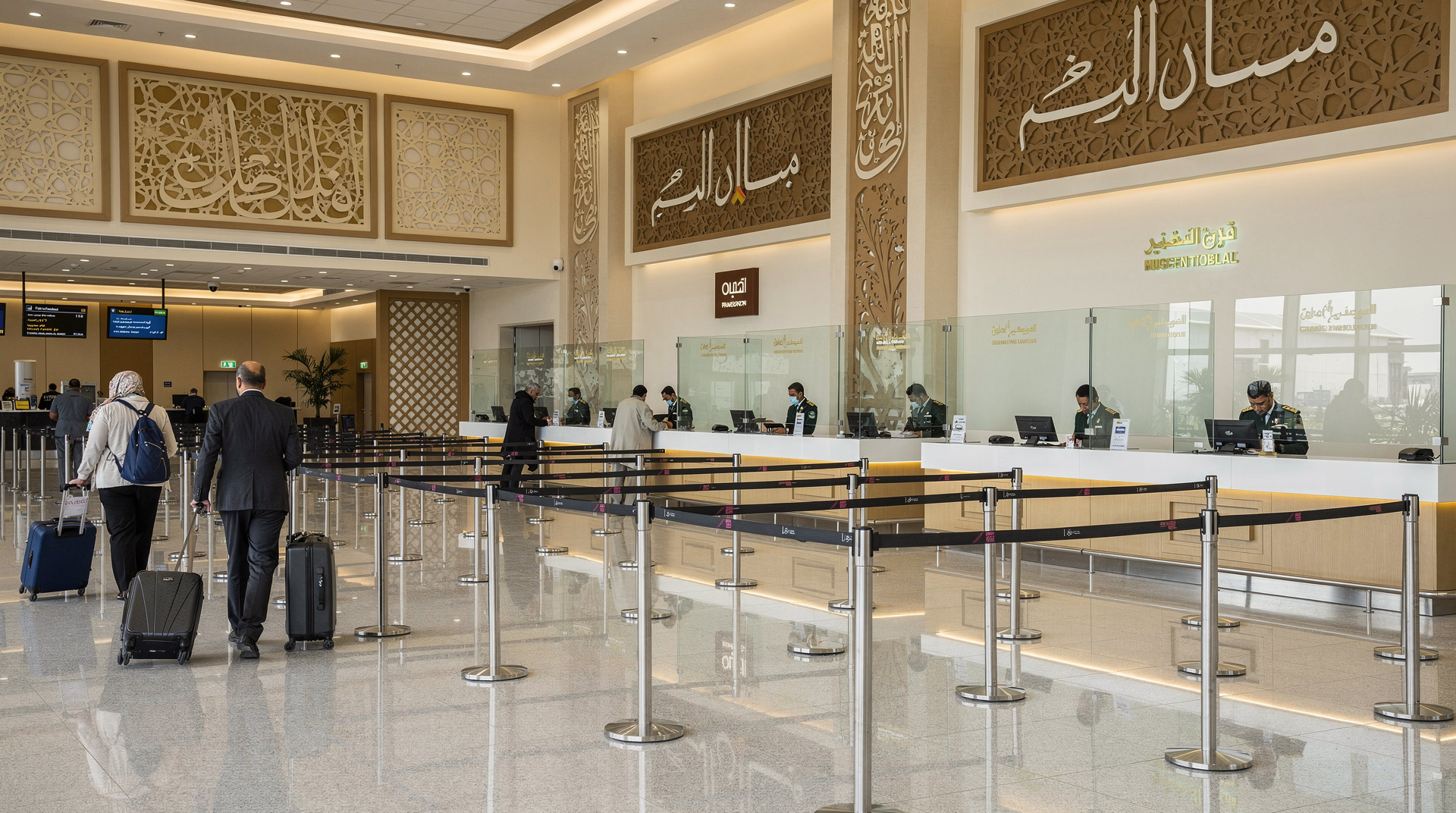
Border Crossing Practicalities
Timing: The Wajajah crossing operates 24 hours. Best times to cross: early morning (6–8 am) or early afternoon (1–3 pm). Avoid Thursday 5–10 pm and Friday morning.
Documents needed:
- Valid passport
- UAE residency visa or visit visa (for non-GCC nationals)
- Vehicle registration (if driving your own car — rental car approval needed, see below)
- Third-party vehicle insurance valid in Oman (purchase at the UAE side of the border, approximately AED 35–50 for a week)
Rental cars: Most UAE rental companies prohibit taking cars across the border. Exceptions include specific operators in Dubai who offer cross-border rentals — confirm explicitly before booking. Alternatively, take a taxi to the Hatta border, cross on foot, and pick up an Omani rental car at the border or in Muscat.
Fuel: Fill up in the UAE. Oman’s fuel is cheaper (around 220 baisa/litre for Super 95, approximately USD 0.57) but stations on the border stretch can be busy.
2026 Cost Estimate: Dubai to Muscat by Car
- Petrol (round trip): approximately AED 120–160
- Oman border insurance: AED 40–80
- Visa on arrival (if required): OMR 20 (USD 52)
- Total driving cost (excluding accommodation): AED 200–300
Option 2: Flying from Dubai to Muscat
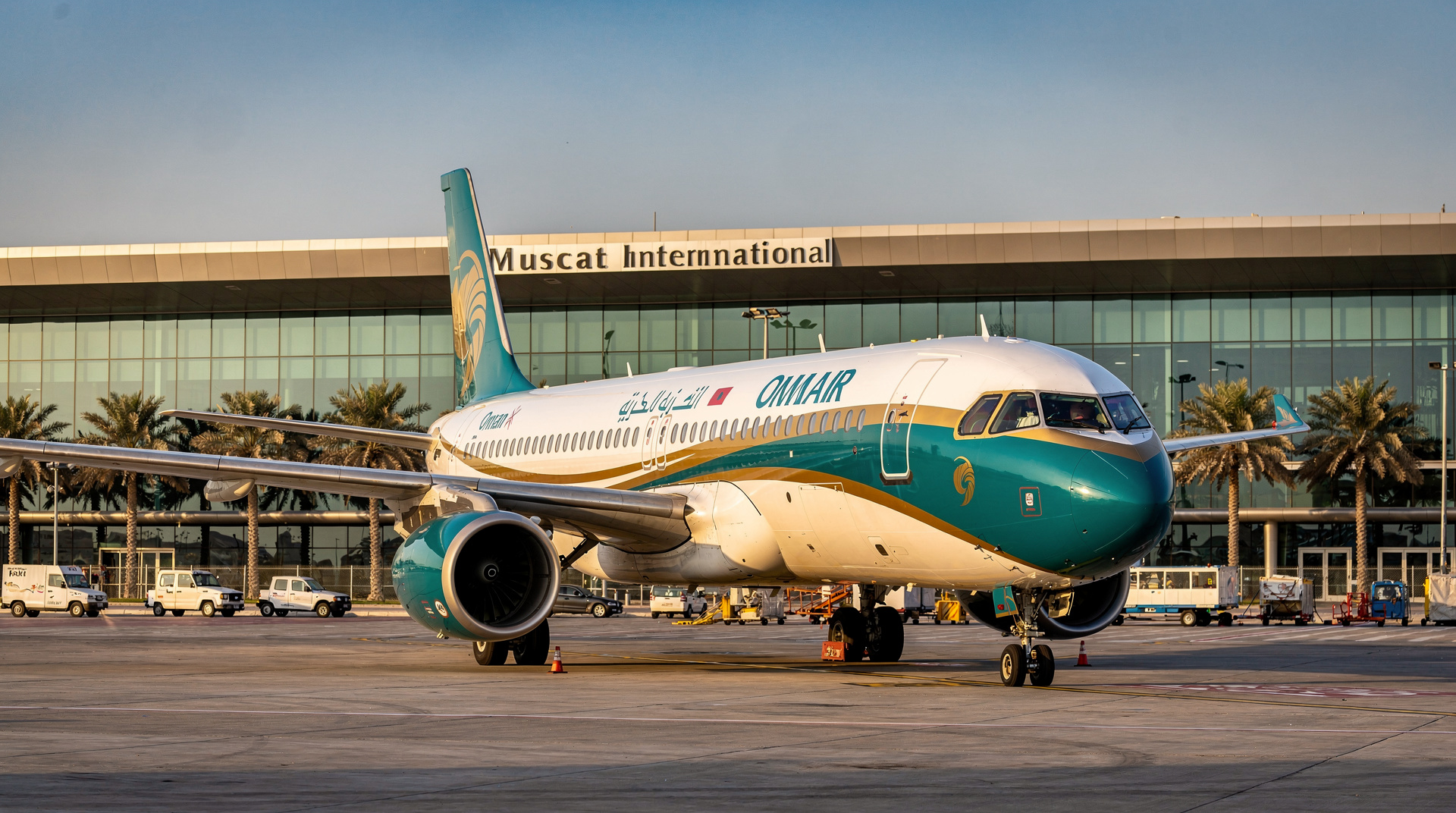
Muscat International Airport is served from Dubai by multiple daily flights. The flight takes just 55–65 minutes. In 2026, fares start from AED 150–200 one way on flydubai or Air Arabia with advance booking; Oman Air and Emirates price higher at AED 350–500 one way.
For travellers who want to explore Oman without the drive, flying into Muscat and collecting a rental car at the airport (see domestic flights within Oman for onward connections) is the most efficient approach.
Dubai airports serving Muscat:
- Dubai International (DXB): flydubai, Emirates, Oman Air — most frequencies
- Dubai World Central (DWC/Al Maktoum): check flydubai and Air Arabia schedules
Booking tip: Book Muscat flights 4–6 weeks ahead for best fares. UAE public holidays (particularly UAE National Day in December and Eid periods) see prices spike 3–4x normal rates.
Option 3: Day Trip to Musandam from Dubai
Musandam is Oman’s exclave — a peninsula of dramatic fjord-like inlets and limestone mountains separated from mainland Oman by UAE territory. For Dubai visitors, it offers something extraordinary: a genuine taste of Oman’s mountain and maritime character within a 2-hour drive.
Getting there: Drive north from Dubai via the E11 coastal highway to Ras al Khaimah, then continue to the Tibat border crossing into Musandam. The crossing is generally fast (15–30 minutes). Total drive from Dubai: approximately 2 hours.
From the border, the road climbs immediately into bare limestone mountains before descending to Khasab, the main town and harbour. The scenery on this 45-km stretch is exceptional — fjord inlets (called khors) cut deep into the mountains, their water a vivid turquoise against grey rock.
What to do in Musandam:
The centrepiece experience is a traditional dhow cruise through the fjords. The Musandam Khasab dolphin watching trip with lunch covers the best of the khor scenery, stopping at Telegraph Island (where a 19th-century British cable relay station still stands), snorkelling in gin-clear water, and watching dolphins in the straits. Most tours run 4–5 hours and include a traditional Omani lunch on board.
Alternatively, the Musandam day trip from Ras al Khaimah operates with hotel pickup from RAK and Dubai, handling all logistics including the border crossing — ideal for those who prefer not to self-drive.
For Dubai-based visitors who want a sea safari experience without managing the land border, the Musandam day sea safari from Dubai departs directly by sea from the UAE coast, reaching the Musandam fjords without any road border crossing — a particularly scenic and logistically simple alternative.
The Dibba Musandam trip with dhow cruise from Dubai, Sharjah, or Ras al Khaimah approaches Musandam via Dibba on the east coast — a different and equally dramatic entry point that avoids the Tibat border crossing entirely, with pickup options from multiple UAE cities.
Khasab town: Beyond the harbour and dhow tours, the Khasab Fort is a compact but well-preserved Portuguese-era fortress with a small museum of local history. The fish market on the harbour front operates from dawn and offers fresh kingfish, hammour, and red snapper at excellent prices.
Road to Khor Najd: 20 km north of Khasab, a well-graded road (4WD recommended but not always essential) leads to Khor Najd beach — a sweeping bay of clear water and clean sand backed by mountains, consistently described as one of the most beautiful beaches in the Middle East.
2026 Day Trip Budget:
- Petrol from Dubai return: AED 60–80
- Oman border insurance: AED 40
- Visa on arrival Musandam: OMR 20 (USD 52)
- Dhow tour with lunch: OMR 15–25 per person
- Total per person: approximately AED 350–450 (USD 95–120)
Visa Requirements for Visiting Oman from UAE
Visa rules for entering Oman from the UAE vary by nationality. Here is the 2026 position:
GCC nationals (Saudi, UAE, Bahrain, Kuwait, Qatar): No visa required. Gulf ID card or passport.
Nationals of most Western countries (UK, EU, USA, Canada, Australia, Japan, etc.): Visa on arrival available at all land, sea, and air border posts. Cost: OMR 20 (approximately USD 52). Valid for 10 days, extendable to 30 days. You can also purchase an e-visa in advance at evisa.rop.gov.om.
Indian nationals: E-visa required in advance (OMR 20). Processing time 2–3 working days. Or get the Visa Express if you hold a valid USA/UK/EU/Schengen visa — this streamlines processing.
Other Asian and African nationalities: Check the Royal Oman Police e-visa portal for current requirements, as rules have changed several times in 2024–2025.
Important note for UAE residents: If you are a UAE resident but not a UAE national, you still need an Oman visa — your UAE residency does not substitute. However, UAE residents who hold a valid US, UK, or EU visa can use the simplified e-visa process.
Visa for Musandam specifically: Entering Musandam via the Tibat border counts as entering Oman; the same visa rules and OMR 20 fee apply, even for a day trip. Factor this into your day trip budget.
Option 4: The Muscat Ferry
A less commonly used but scenic option is the Muscat–Dubai/Fujairah sea crossing. National Ferries Company operates a service between Muscat Port and Shinas (on the UAE coast near Fujairah). From Shinas it is approximately 2 hours by road to Dubai.
In 2026, ferry tickets start at approximately OMR 40 one way for economy class. The journey takes around 4–5 hours and operates several times per week (schedules vary seasonally). This is a genuine sea voyage — the Strait of Hormuz can be choppy — and it offers a perspective on the Arabian Peninsula coast that no flight or road trip can match.
Booking: National Ferries Company website or authorised UAE travel agents. Book at least a week ahead during UAE public holidays.
Planning a Weekend Escape: What to Do in 2–3 Days
With a Thursday evening departure from Dubai, a 3-night escape allows genuine immersion in Oman.
Day 1 (Thursday evening): Drive to Muscat via Hatta border. Check into your hotel. Dinner at Kargeen Caffe in the Al Qurum area — an institution for Omani grilled meats and mezze under jacaranda trees.
Day 2 (Friday): Muttrah Corniche and the labyrinthine Muttrah Souq in the morning — the greatest traditional market in Oman. Afternoon at the Sultan Qaboos Grand Mosque (open to non-Muslims 8 am–11 am Friday excepted). Sunset from the Portuguese-era Al Jalali Fort viewpoint.
Day 3 (Saturday): Day drive to Nizwa (2 hours from Muscat) for the fort, the old souq, and lunch. Return via the mountain road to Jebel Akhdar for the Wadi Ghul viewpoint.
Day 4 (Sunday): Morning at the Bimmah Sinkhole and Wadi Shab (2 hours from Muscat south), then return drive to Dubai via Hatta border.
Where to Stay in Muscat for UAE Visitors
For a short Dubai escape, the quality of your base matters. See the full Muscat neighbourhood guide for detailed area breakdowns.
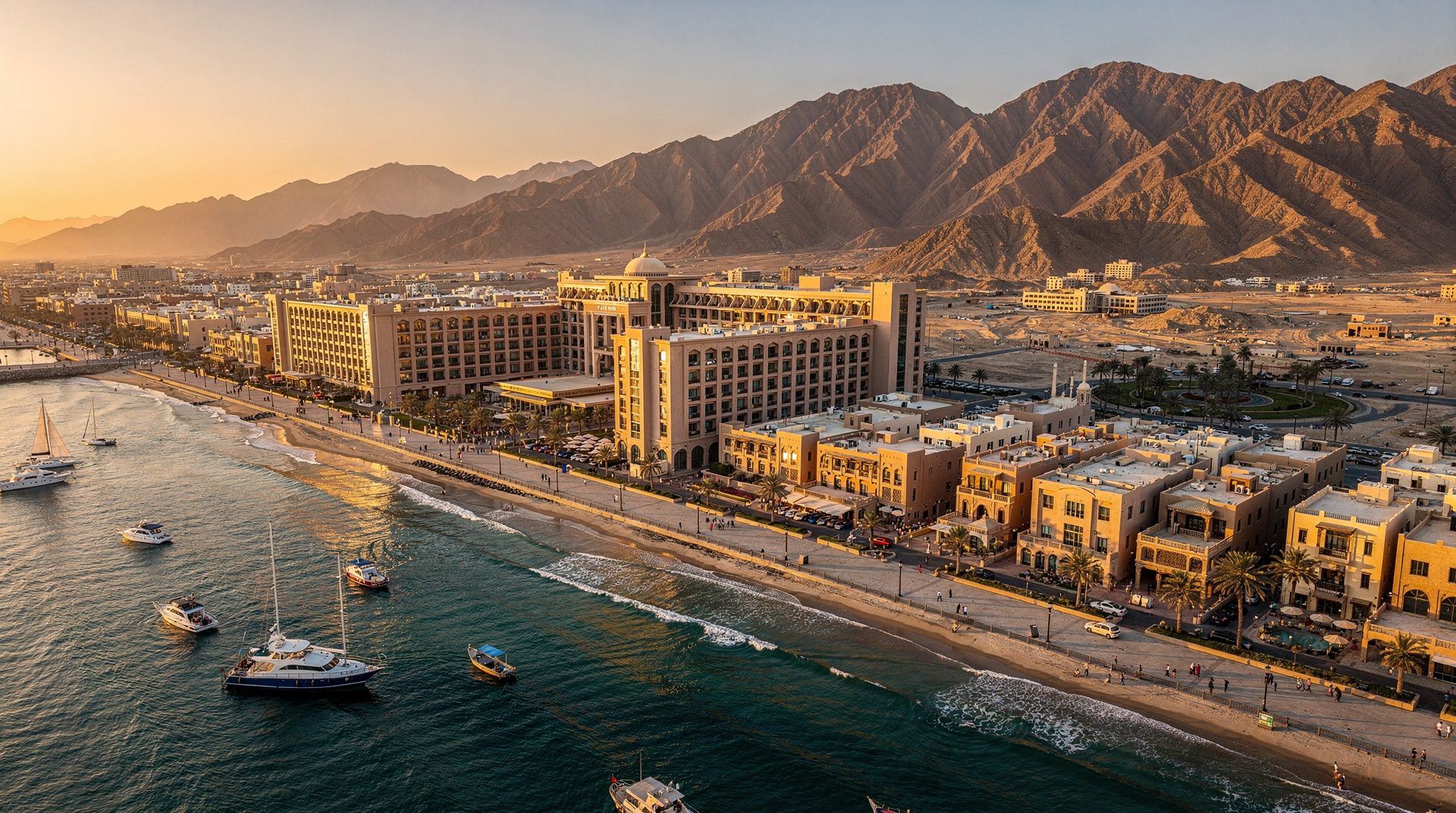
Luxury tier: Shangri-La Barr Al Jissah (two properties, Al Bandar and Al Husn) offers cliff-edge rooms and private beach from OMR 130–280 per night in 2026. Al Bustan Palace (Ritz-Carlton) sits in its own bay south of Muscat from OMR 160–350.
Mid-range: Crowne Plaza Muscat OCEC is modern, well-located near the convention centre, from OMR 45–70 per night. Park Inn by Radisson Duqm is better suited to those exploring beyond the city.
Budget: OYO-managed and independent hotels around the Ruwi business district from OMR 18–28 per night.
Comparing Options: Car vs Flight vs Day Trip
| Option | Cost | Time | Best for |
|---|---|---|---|
| Drive to Muscat | AED 200–300 total | 5–6 hours | UAE residents, exploring freely |
| Fly to Muscat | AED 300–600 return | 1 hour | Short stays, maximising time |
| Musandam day trip (self-drive) | AED 350–450 per person | Full day | First-time taste of Oman |
| Musandam tour from RAK/Dubai | AED 250–400 per person | Full day | Hassle-free, no border admin |
| Ferry Shinas–Muscat | OMR 40+ | 4–5 hours | Scenic option, less practical |
Making the Most of Repeat Trips from Dubai
Because Oman is so close, many UAE residents treat it as a recurring weekend destination rather than a once-a-trip country. If your first visit covered Muscat, a second trip is well spent on the interior — Nizwa and the fort circuit, or a night on Jebel Akhdar for cooler air and mountain scenery, both realistic as a long weekend from Dubai. A third trip could target Musandam properly (an overnight rather than a rushed day trip) or the wadis and coast south of Muscat around Sur.
For UAE residents planning several trips per year, an Oman residence visa or multiple-entry visa option can be worth investigating through the e-visa portal, since repeated single-entry visa-on-arrival fees add up. See our Oman visa guide for the full breakdown of visa types, and best time to visit Oman to plan which season suits which region on repeat visits.
Frequently asked questions about visiting Oman from Dubai
Do I need a visa to enter Oman from Dubai?
It depends on your nationality. GCC nationals need no visa. Most Western passport holders get a visa on arrival at the border for OMR 20 (approximately USD 52). Indian nationals need an e-visa in advance. Always check the Royal Oman Police e-visa portal for current rules before travel.
Can I take a UAE rental car into Oman?
Most standard UAE rental agreements prohibit cross-border travel. A small number of rental operators in Dubai and Abu Dhabi offer Oman-approved rentals at a premium (typically AED 50–100/day extra). Always confirm in writing before departure. The alternative is to cross the border on foot (or by taxi to the border) and rent a car from an Omani operator.
How long does the Dubai–Muscat border crossing take?
At the Wajajah/Hatta crossing, crossing times average 30–45 minutes off-peak. On Thursday evenings and Friday mornings it can stretch to 2–3 hours. The Khatm Melaha crossing near Buraimi is often faster for Abu Dhabi departures.
Is Musandam worth a day trip from Dubai?
Absolutely. Musandam offers genuinely spectacular scenery — fjord-like inlets, crystal-clear water, and dramatic limestone mountains — that feels completely different from the UAE coast. The dhow cruise experience alone justifies the trip. Allow a full day: leave Dubai by 7 am, arrive Khasab by 9 am, join the morning dhow tour, explore the fort and fort, and return to Dubai by 7–8 pm.
Can I visit Musandam without an Oman visa?
No. Musandam is Omani territory; entering requires an Oman visa or visa on arrival. The same OMR 20 fee applies as for entering mainland Oman, even for a one-day visit. Factor this into your budget.
What currency should I bring from Dubai?
The Omani Rial (OMR) is the currency. You cannot get OMR reliably in the UAE before departure — UAE exchange houses rarely stock it. Withdraw cash at the ATMs at the border crossing or at your Muscat hotel. Visa and Mastercard are widely accepted at all hotels and most restaurants; carry some cash for markets and small operators.
How do I drive from Dubai to Musandam specifically?
Take the E11 coastal highway north from Dubai through Sharjah and Ras al Khaimah. Continue north on the same road toward the UAE–Oman border at Tibat (approximately 2 hours from Dubai). The border is signed from Ras al Khaimah; your navigation app will route you correctly. From Tibat, Khasab is 45 km further into Musandam.
Is it better to visit Oman for a day trip or a longer stay from Dubai?
A day trip (Musandam) is a good introduction, but Oman rewards a longer stay. Muscat and the interior forts need at least 3 nights to see properly, and a mountain stay on Jebel Akhdar adds a genuinely different experience that no day trip can replicate. If you can only spare a weekend, prioritise Muscat over a rushed Musandam day trip.
Can I combine Dubai and Oman in one trip with kids?
Yes, and it is a popular combination. The drive to Muscat is manageable with children, and the Musandam dhow cruise (with dolphin watching) is generally a hit with kids. See our Oman with kids guide for age-specific advice on pacing a Dubai-Oman combined trip.