Salalah vs Muscat: Which City Suits Your Oman Trip?
Salalah: highlights tour of heritage sites, markets and beach
Duration: 5 hours
- Free cancellation
- Hotel pickup
- English guide
Should I visit Muscat or Salalah in Oman?
Muscat for a first visit to Oman — it has the Grand Mosque, fort, souq, wadis, and desert within reach. Salalah for a second visit or if you specifically want tropical scenery, beaches, and the khareef monsoon season. Both cities are best combined in a 10+ day trip.
At a glance
| Category | Muscat | Salalah |
|---|---|---|
| Region | Muscat Governorate | Dhofar Governorate |
| Distance from each other | 1,000 km by road | 1 hour by flight |
| Population | Approx. 1.5 million (capital) | Approx. 300,000 |
| Climate | Hot desert (Oct–Apr pleasant) | Tropical; khareef Jun–Sep |
| Landscape nearby | Mountains, wadis, desert | Tropical coast, frankincense trees, Empty Quarter |
| Main attraction | Grand Mosque, Nizwa day trip, Mutrah | Beaches, frankincense, khareef, Wadi Darbat |
| International airport | Muscat International (MCT) — major hub | Salalah International (SLL) — growing |
| Hotel choice | Very wide | Moderate; limited luxury options |
| Nightlife | Limited | Very limited |
| Day trips | Nizwa, Wadi Shab, Wahiba Sands | West coast, east coast, Empty Quarter |
Climate and seasons
This is the most important factor in your choice.
Muscat is pleasant from October to April. Temperatures sit between 22°C and 32°C, humidity is low, and conditions are ideal for sightseeing, wadis, and beaches. From May onwards it heats up rapidly. June to September is punishing — 42–47°C, high humidity near the coast, and most outdoor activities abandoned before noon.
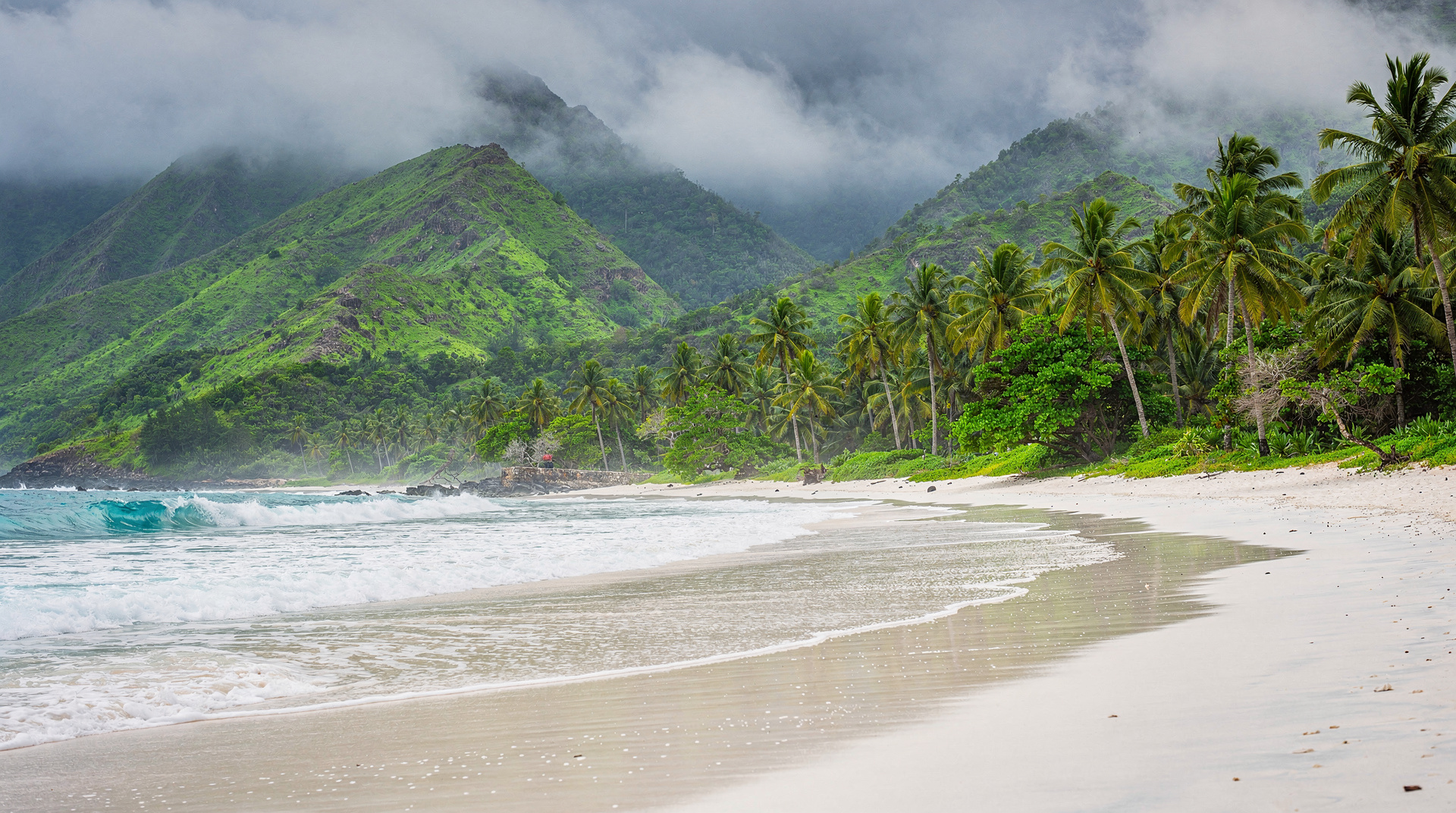
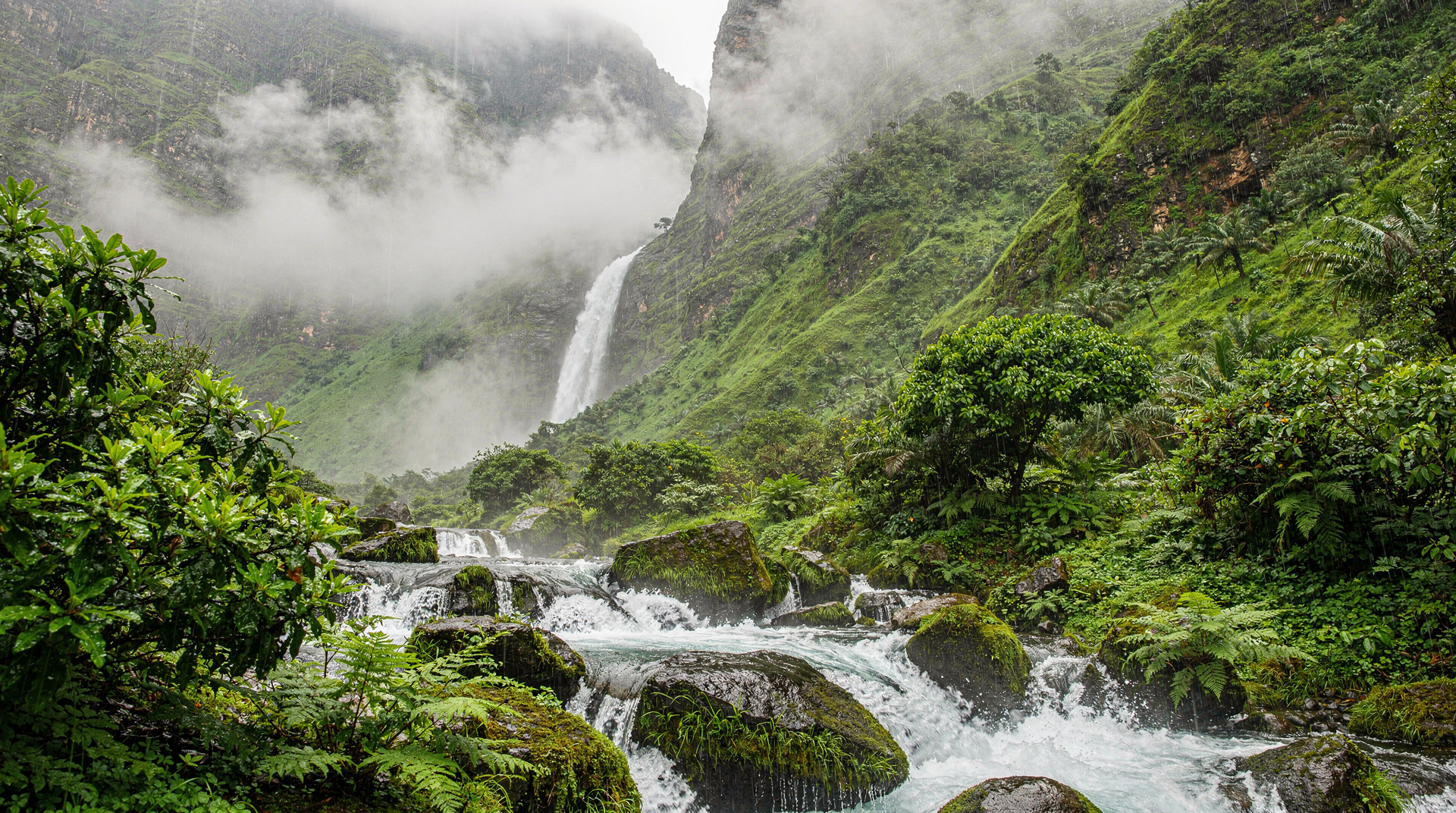
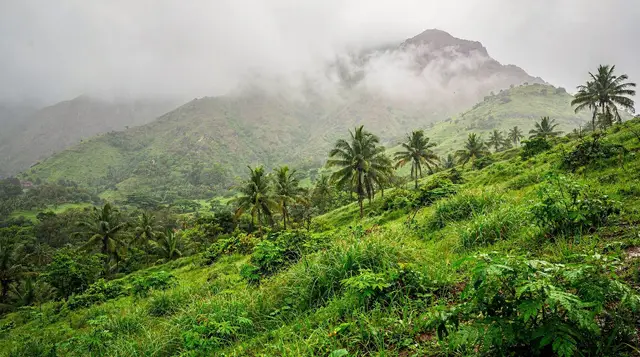
Salalah operates to a different seasonal logic entirely. The Indian Ocean monsoon (khareef) hits Salalah from mid-June to mid-September, bringing cloud, mist, drizzle, and temperatures that drop to 25–30°C. The surrounding hills — normally brown and dry — turn vivid green, waterfalls appear in Wadi Darbat, and the town fills with Omani and Gulf tourists escaping the summer heat. This is Salalah’s peak season, not its off-season.
The rest of the year, Salalah is hot and dry like Muscat, but with more tropical vegetation and Indian Ocean beaches to soften the experience.
Verdict: If you’re travelling October–April, Muscat is the primary base and Salalah is an add-on. If you’re travelling June–September, Salalah is your only viable Oman option — and it genuinely delivers.
Top experiences
Muscat
Sultan Qaboos Grand Mosque — One of the great mosques of the Islamic world, non-Muslim visitors are welcome on non-prayer mornings. The main prayer hall carpet (4,343 m², hand-woven in Iran) is a remarkable work of art.
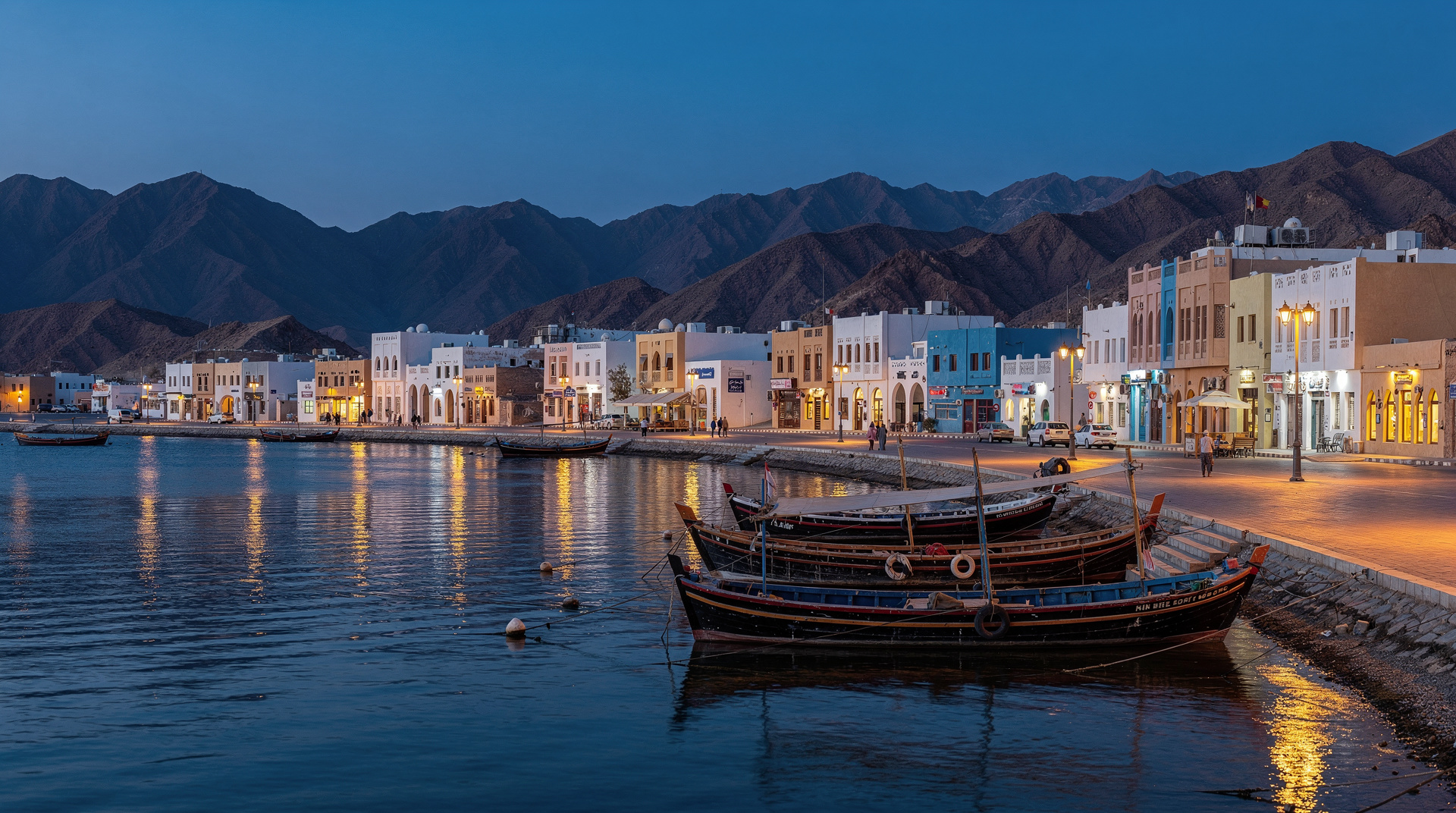
Mutrah Souq and Corniche — The most atmospheric old market in Oman, selling frankincense, khanjar daggers, silver jewellery, and Omani textiles. The corniche at sunset with the old port and fort silhouettes is one of Oman’s iconic images. The Muscat half-day city tour covers the main highlights with a guide.
Wadi Shab (day trip) — 140 km from Muscat, this is one of Oman’s most famous natural sites and often the highlight of a traveller’s Oman trip.
Nizwa Fort (day trip) — 165 km from Muscat, the interior’s most impressive fort combined with an excellent souq.
Sunset dhow cruise — An hour on the water from Muscat harbour at golden hour is the most atmospheric way to end a day in the capital. Book via GetYourGuide.
Salalah
Khareef season — The annual monsoon transforms the landscape. Wadi Darbat fills with a kilometre-long waterfall, frankincense trees drip with moisture, and Jabal Samhan becomes accessible to wildlife photographers.
West coast beaches — Al Mughsail Beach and Fazayah Beach are among the most beautiful in Oman, particularly October–May.
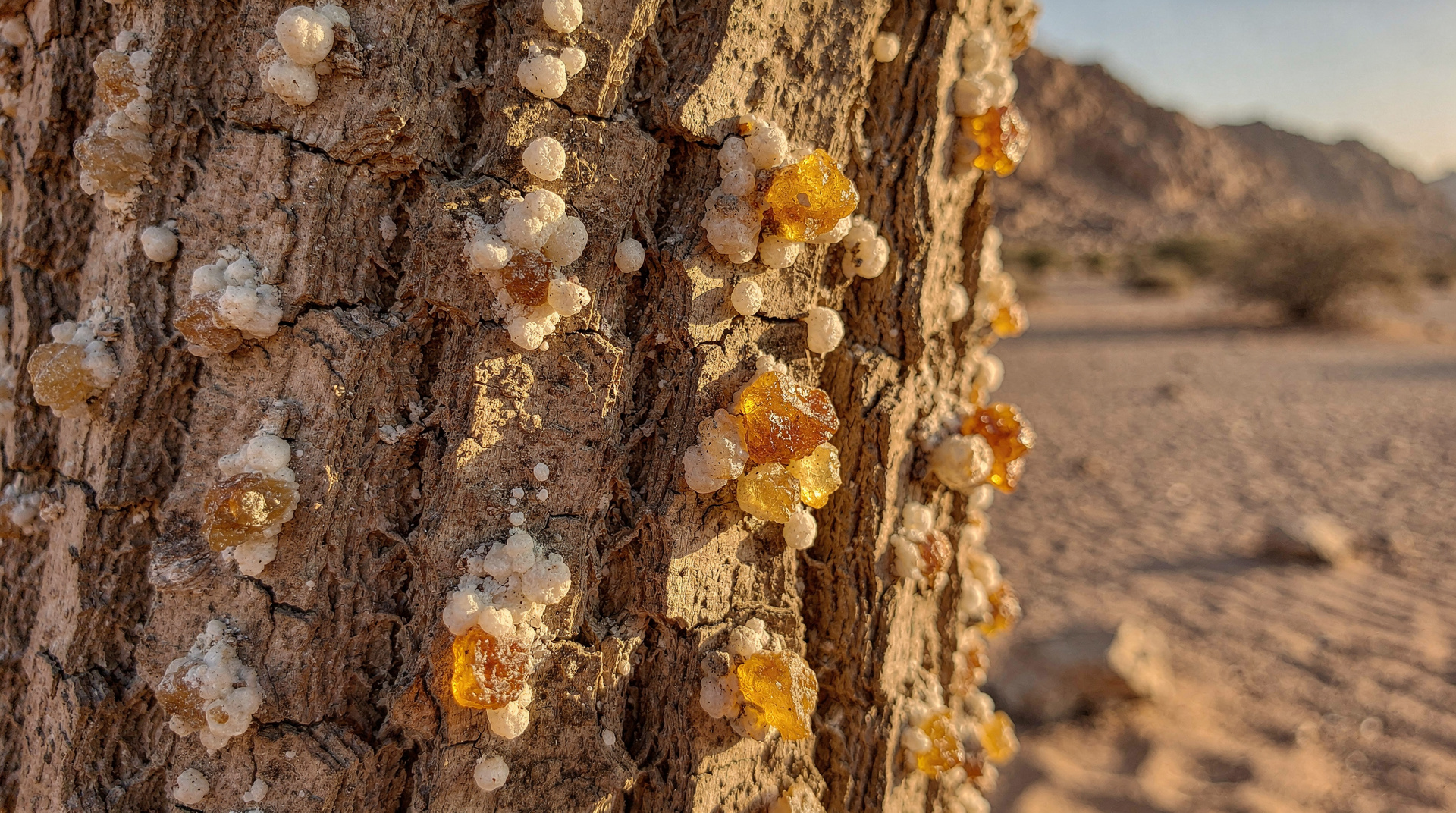
Frankincense heritage — The Dhofar region supplies much of the world’s frankincense. The Al Baleed Archaeological Site (UNESCO) and the ancient port of Sumhuram are extraordinary. The Salalah city highlights tour includes the key frankincense sites.
Wadi Darbat — A year-round seasonal lake (rare in Oman) flanked by frankincense trees, waterfalls in season, and flamingos. The Salalah east highlights tour is the most popular way to see it.
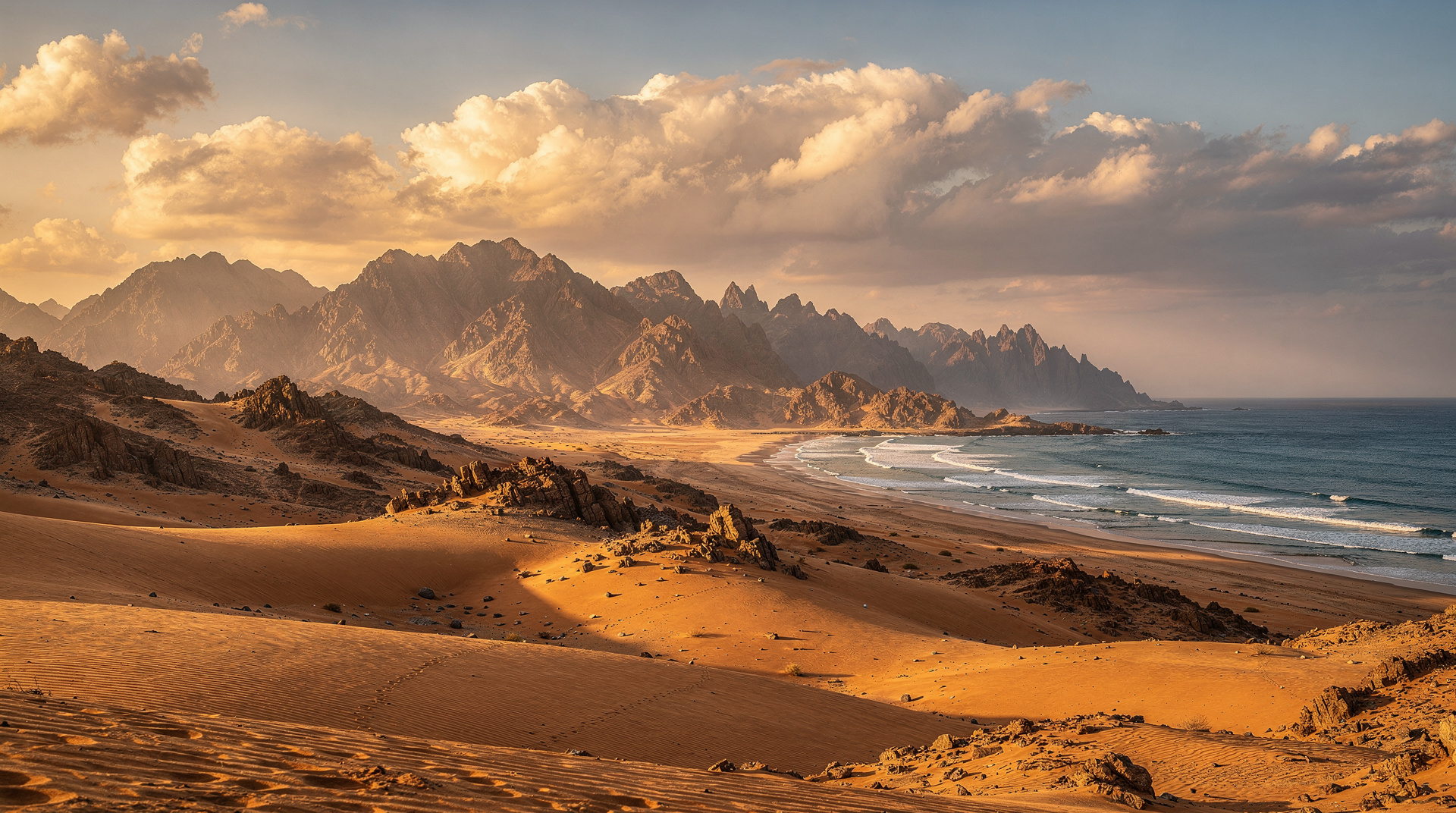
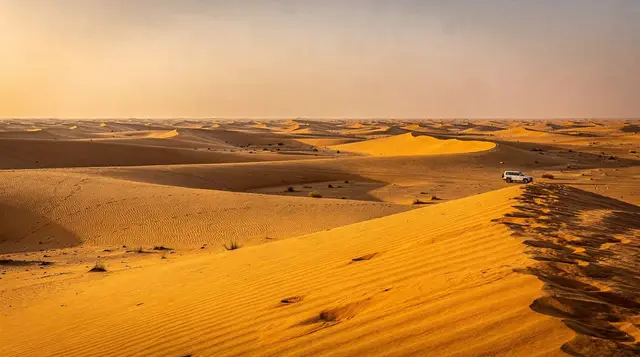
Empty Quarter — The Rub Al Khali desert starts north of Salalah. Sunset dune drives and day trips into the Empty Quarter are surreal. The Empty Quarter desert tour from Salalah is excellent.
Logistics and accessibility
Muscat is significantly easier to use as a base. The city has wider hotel choice, better international connections, and the country’s best infrastructure for day trips. Rental cars are cheaper and more available. English is spoken widely.
Salalah requires more planning. The city itself is spread out and less walkable than Muscat’s compact tourist areas. A rental car is almost essential. Hotel options are growing but still limited compared to Muscat, and international flights are fewer.
Who should choose Muscat?
- First-time Oman visitors
- Travellers with 5–7 days who want to see the country’s greatest hits
- Hikers and wadi swimmers
- Beach lovers visiting October–April
- Travellers connecting from Europe or Asia on direct flights
Who should choose Salalah?
- Travellers visiting June–September (khareef is unmissable in season)
- History enthusiasts fascinated by the ancient frankincense trade
- Beach lovers who want Indian Ocean swimming and dramatic coastline
- Second-time Oman visitors who already know Muscat
- Anyone interested in the unique Dhofari culture and landscape
Can you combine both?
Yes, and ideally you should. A 10–12 day Oman itinerary might look like: 5–6 days in and around Muscat (city, Nizwa, Wadi Shab, Wahiba Sands), then fly to Salalah for 4–5 days. The 1-hour flight makes it entirely practical. See our Salalah complete guide and Muscat city guide for detailed day-by-day plans.
How the two cities feel on the ground
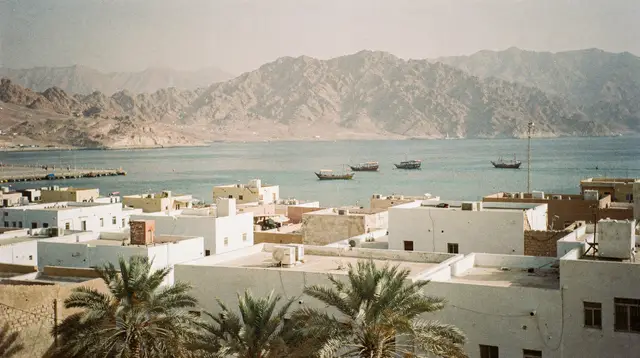
Numbers and attractions only go so far, so it helps to picture the rhythm of each place. Muscat is a long, low capital stretched between mountains and sea. It is not a city of skyscrapers; whitewashed buildings, discreet architecture and a calm pace define it. Days there tend to revolve around a few anchor visits, a long lunch, and an evening by the water. The Muscat city guide maps out these areas, and the best restaurants in Muscat are a good way to plan the evenings.
Salalah feels like a different country. The coastal plain is green with coconut and banana plantations, and the pace is slower still. Roads run past roadside fruit stalls and open stretches of countryside, and the mountains behind the town are never far. Visitors often describe it as the most relaxed corner of Oman, with less of the capital’s formality and a stronger sense of local Dhofari identity. If you want to understand where to base yourself, the where to stay in Salalah guide explains the main options, while the where to stay in Muscat guide does the same for the capital.
Culture, food and atmosphere
Muscat is where Oman presents itself to the world. It is the seat of government, home to the opera house, the grand mosque, and a broad mix of residents from many countries. That mix shows up in the food, the shops and the general ease of getting around in English. The Royal Opera House is a good example of the capital’s cultural side, and a visit to Muttrah Souq shows the older trading character of the city.
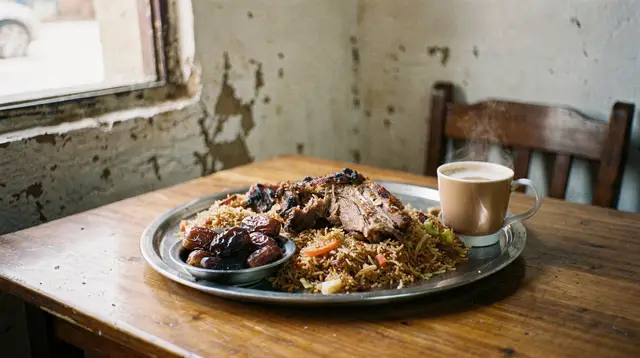
Salalah’s culture is rooted in the south: frankincense, the sea, and the mountain communities of Dhofar. Meals tend to lean on local ingredients and long-standing recipes, and the old trade in aromatic resin still shapes how people talk about the region. The frankincense trail is the best way to connect the history to what you see in the landscape. For a broader taste of what to eat across the country, the Omani food guide is worth reading before you decide, and the shuwa guide covers one of the traditional dishes you may meet in either city.
Matching the city to your travel style
If you like variety. Muscat gives you the widest mix inside one trip: a city, a souq, mountains, wadis and desert, all reachable from a single hotel. You do not have to move often, which suits travellers who dislike repacking.
If you like slow travel. Salalah rewards staying put. The beaches, the plains and the hills each take a separate day, and none of them is rushed. You are likely to come away with a stronger feeling for one region rather than a checklist of sights.
If you travel with family. Both work, but in different ways. Muscat offers more services and a larger choice of places to stay, while Salalah offers open space and gentle outdoor days. Our Oman with kids guide goes further into what suits younger travellers.
If you travel as a couple. Salalah’s beaches and quiet evenings have a romantic quality, while Muscat offers more polished hotels and dining. The Oman for couples guide compares the options.
If you travel alone. Muscat is the easier introduction, mostly because of its infrastructure and the sheer number of visitors who pass through it. See the solo travel in Oman guide for practical advice.
Getting between the two
The two cities are far apart, which is why most visitors treat the connection as a decision in itself. Flying is the quick option and keeps your holiday time for the places themselves. Driving is slower, but it turns the journey into a trip of its own, with long empty stretches and a very different landscape to the one you will have seen in the north. If that appeals, read the Muscat to Salalah drive guide before committing, and compare it with the domestic flights in Oman guide. Whichever you choose, think about how you will get around once you land: the renting a car in Oman guide covers what to organise in advance.
A simple way to decide
If you are still undecided after reading the sections above, ask yourself three questions. First, when are you travelling? If it is the summer months, the answer is almost automatic. Second, is this your first visit? If so, the capital and its surroundings give the clearest introduction to the country. Third, what do you want to come home with: a sense of the whole country, or a deep impression of one corner of it? Your answers will usually point clearly in one direction.
For a full plan that links the two, the 7-day classic Oman and 10-day grand tour itineraries show how longer trips can be structured, and the Salalah destination page and Muscat destination page give a quick overview of each place.
Budget and Trip Length Considerations
Beyond climate and landscape, budget and available time often decide the question in practice. A trip of 5 days or fewer is usually better spent entirely in and around Muscat, since the flight to Salalah plus a worthwhile stay there eats into time that could otherwise cover Nizwa, Wadi Shab, and Wahiba Sands at a comfortable pace. Trips of 8 days or more comfortably support both, particularly given the short 1-hour flight connecting them.
Cost also differs by season. Outside khareef, Salalah hotel rates tend to run below Muscat’s, making it a relatively economical add-on. During khareef itself, Salalah prices spike well above their off-season levels and can temporarily exceed comparable Muscat rates, so travellers on a tight budget should avoid the July-August peak if cost is the deciding factor.
For travellers still undecided, the Oman budget guide and best time to visit Oman guide both provide useful context for weighing the trade-offs before booking.
Frequently asked questions about Salalah vs Muscat: Which City Suits Your Oman Trip?
How far is Salalah from Muscat?
Approximately 1,000 km by road (10–12 hours driving) or a 1-hour direct flight. Oman Air and SalamAir both operate the route daily. The road journey through the Dhofar mountains is scenic but long.Is Salalah better than Muscat in summer?
Yes — Salalah during the khareef (June–September monsoon) is Oman's only viable summer destination. Temperatures drop to 25–30°C, the hills turn green, and waterfalls appear. Muscat in summer is brutally hot (45°C+) and beaches are avoided.What is Salalah famous for?
Salalah is famous for its frankincense — it sits in the heart of the ancient Dhofar frankincense region, and the trees grow wild in the surrounding mountains. It is also known for its beaches, khareef season, and the archaeological sites of Sumhuram and Al Baleed.How many days do you need in Salalah?
Three to four days is ideal — one day for the city and west tour (beaches, blowholes), one for the east tour (Wadi Darbat, Mirbat), one for the desert (Empty Quarter), and a half-day for frankincense sites and the Al Baleed museum.Is it cheaper to visit Muscat or Salalah?
Salalah is generally the cheaper of the two, with lower hotel rates outside khareef season and fewer premium dining options driving up costs. Muscat has wider hotel choice at every price point, but its top-tier resorts and restaurants push the average trip cost higher than a comparable Salalah stay.Which city has better food, Muscat or Salalah?
Muscat has a wider range of international dining given its larger expatriate population, while Salalah's food culture is more distinctly Dhofari, centred on dishes like shuwa and dried-lime rice. Neither is objectively better; they represent different regional identities within Oman.
Top experiences
Bookable activities with verified prices and instant confirmation on GetYourGuide.
 📍 Salalah
 Salalah: highlights tour of heritage sites, markets and beach
- Free cancellation
- Hotel pickup
- English guide
 📍 Salalah
 Salalah highlights: Wadi Darbat, Taqah Cave and Baobab tour
- Free cancellation
- Hotel pickup
- English guide
 📍 Salalah
 The Empty Quarter desert tour
- Free cancellation
- Hotel pickup
- Instant confirmation
 📍 Muscat
 Muscat: half-day city tour
- Free cancellation
- Instant confirmation
- Hotel pickup
 📍 Muscat
 Muscat: Omani traditional dhow sunset cruise
- Instant confirmation
- Pickup included
- Best seller