Muscat to Salalah Drive: The 1,000 km Desert Highway Guide
Salalah: sunset desert safari - Rub Al Khali - Empty Quarter
Duration: 5 hours
- Free cancellation
- Hotel pickup
- Small group
How long does it take to drive from Muscat to Salalah?
The drive is approximately 1,000 km and takes 9 to 11 hours of driving time without significant stops. Most travellers split it over two days with an overnight stop at Duqm or Haima. Flying is the alternative for those short on time.
The Drive That Puts Oman’s Scale Into Perspective
The Muscat to Salalah highway is one of the great road journeys of the Arabian Peninsula. Over approximately 1,050 kilometres of road — the majority of it dual-carriageway highway — the landscape shifts from the rocky mountains and coastal plains of the north, through the vast gravelly emptiness of the central Omani interior, into the frankincense hills and lush coastal scenery of Dhofar in the south. It is a journey that reveals an Oman most visitors never see.
The statistics are unambiguous: this is a long drive. The pure driving time, without stops, is nine to ten hours. With fuel stops, meals, photography, and the human biological requirements of a long journey, a non-stop single-day drive takes twelve to thirteen hours. This is achievable but leaves limited capacity to appreciate what you are driving through. The two-day version, with an overnight stop at roughly the halfway point, is far more satisfying.
This guide covers the route choices, the significant stops along the way, the practicalities of fuel and facilities, accommodation options for splitting the journey, and an honest assessment of what the drive is actually like. It also addresses the question many travellers ask: should I drive or fly?
| At a glance | |
|---|---|
| Distance | Around 1,050 km (Route 31 inland) or roughly 200-300 km longer via the coastal Duqm/Sur route |
| Driving time | Around 9-11 hours non-stop; 12-13 hours realistic single-day with stops |
| Best split | Overnight at Haima (inland midpoint) or Duqm/Sur (coastal route) |
| Fuel cost, one way | Roughly 25-35 OMR for an average sedan, more for a 4WD |
| Flight alternative | Around 1h45, roughly 25-80 OMR one way depending on carrier and timing |
| Best time to drive | October to April; the central desert is punishing in summer heat |
The Two Route Options
Route 31: The Inland Highway
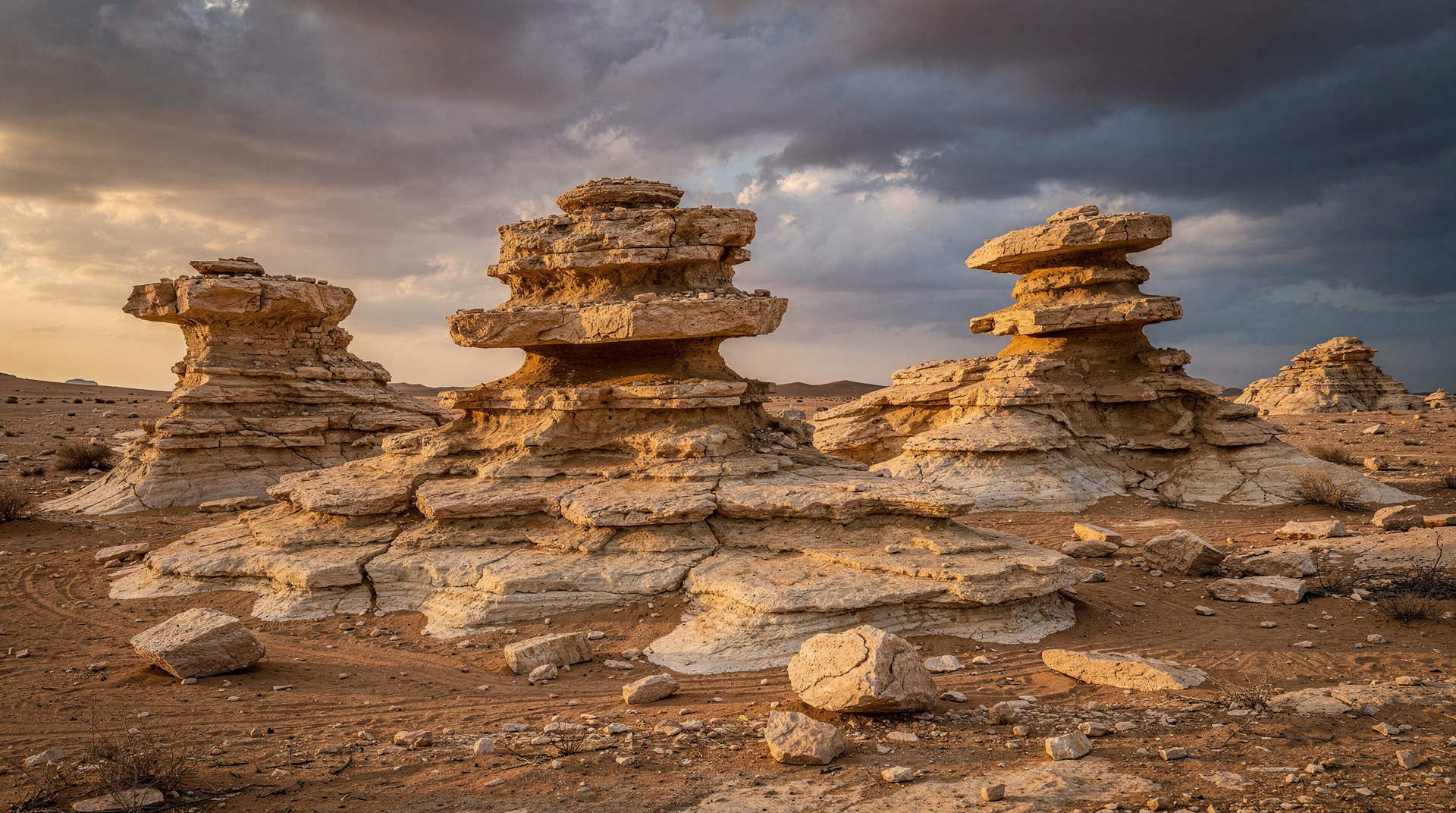
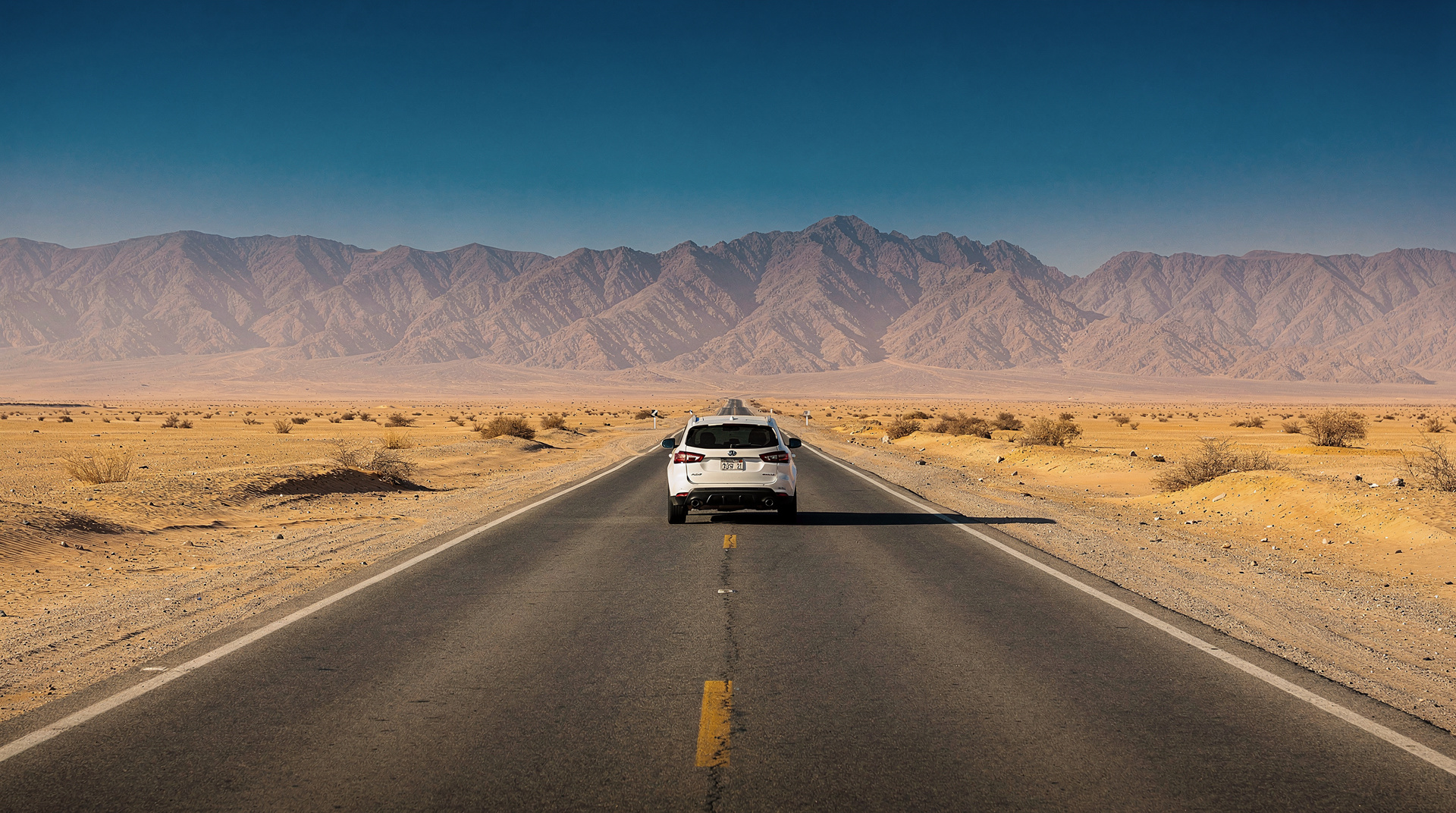
The primary route and the one taken by the vast majority of travellers. Route 31 leaves Muscat heading southwest, passes through the industrial port city of Sohar, descends to Barka, and then turns south through the Hajar foothills before striking into the open desert interior. The desert section between Haima and Thumrait is the longest continuous stretch of near-total emptiness — approximately 370 kilometres with essentially nothing except road, heat shimmer, and the occasional camel warning sign.
Route 31 is entirely dual carriageway for the vast majority of its length. Road quality is excellent. Signage in English and Arabic is consistent. Petrol stations appear at sufficient intervals for normal planning with the notable exception of the long Haima to Thumrait section.
The visual experience of Route 31 is stark rather than spectacular in the conventional sense. The central desert is flat, the colours are variations of brown and ochre, and the sky dominates the view. For travellers who find desert landscapes meditative and interesting, this is compelling. For those expecting mountain scenery and dramatic vistas, it is more challenging.
The Coastal Alternative: Via Duqm and the Sharqiyah Coast
For travellers with additional time — ideally a three-day rather than two-day allocation for the journey — a coastal alternative routing via the Sharqiyah coast, Ras Al Jinz, Sur, and down through Duqm offers a dramatically more varied experience.
This route is longer by roughly 200-300 kilometres depending on specific diversions, requires more road changes (some sections are still improving), and includes stretches that reward a 4WD. The payoff is access to Wadi Shab, the turtle beaches at Ras Al Jinz, the dhow-building heritage of Sur, the empty beaches of the Sharqiyah coast, and the strange industrial-meets-desert landscape of Duqm.
The coastal route suits travellers for whom the journey itself is the destination — where stopping to swim at a deserted beach or watching dhow-builders at work matters as much as reaching Salalah efficiently.
Key Stops on the Inland Route 31
Nizwa
If departing Muscat on Route 31, a diversion through Nizwa adds approximately 80 kilometres but is worthwhile for travellers who have not previously visited. Nizwa’s fort and souq are among Oman’s most significant historical sites. The morning livestock market (Friday and Saturday) is one of the most authentic cultural experiences in the country. Allow two to three hours for a meaningful Nizwa visit before continuing south.
The Nizwa diversion makes most sense if departing Muscat early — by 5:30am, arriving in Nizwa by 8am, exploring until 10:30am, and continuing to Salalah or the overnight stop from there. For detailed Nizwa information, the guide to Al Hamra and Misfat villages covers the broader Nizwa region.
Adam
A small town with a fuel station, a few basic restaurants, and a roundabout junction that marks the point where Route 31 begins its long southward push into the interior. Adam is significant primarily as a logistics stop — fill fuel here if you have not done so recently. The old town of Adam has an interesting ruined mud-brick centre that rewards a brief exploration for those with architectural interest.
Haima
The last significant fuel and facilities stop before the long empty section to Thumrait. Haima has two fuel stations, a handful of roadside restaurants serving basic Omani and South Asian food, a small supermarket, and accommodation in the form of a rest house and a Marriott property (the latter being one of the more unexpected hotel locations in Arabia).
Fill your tank completely at Haima. This is not optional advice. The next reliable fuel is at Thumrait, 370 kilometres to the south. There is one interim station at Ghayda that some maps show but which is not consistently operational. Do not count on it.
Haima also marks the appropriate overnight stop for travellers splitting the journey into two days at the midpoint. The Marriott Haima is comfortable if not exciting, and its existence makes the midpoint stop far more appealing than it was a decade ago.
Thumrait
A military town and air force base that marks the transition out of the central desert into the Dhofar region. Fuel stations, a small commercial district, and the visual shift as you begin the climb through the Qara Mountains toward Salalah. On the Thumrait to Salalah section (approximately 90 kilometres), the vegetation begins to appear and the landscape changes with almost startling suddenness.
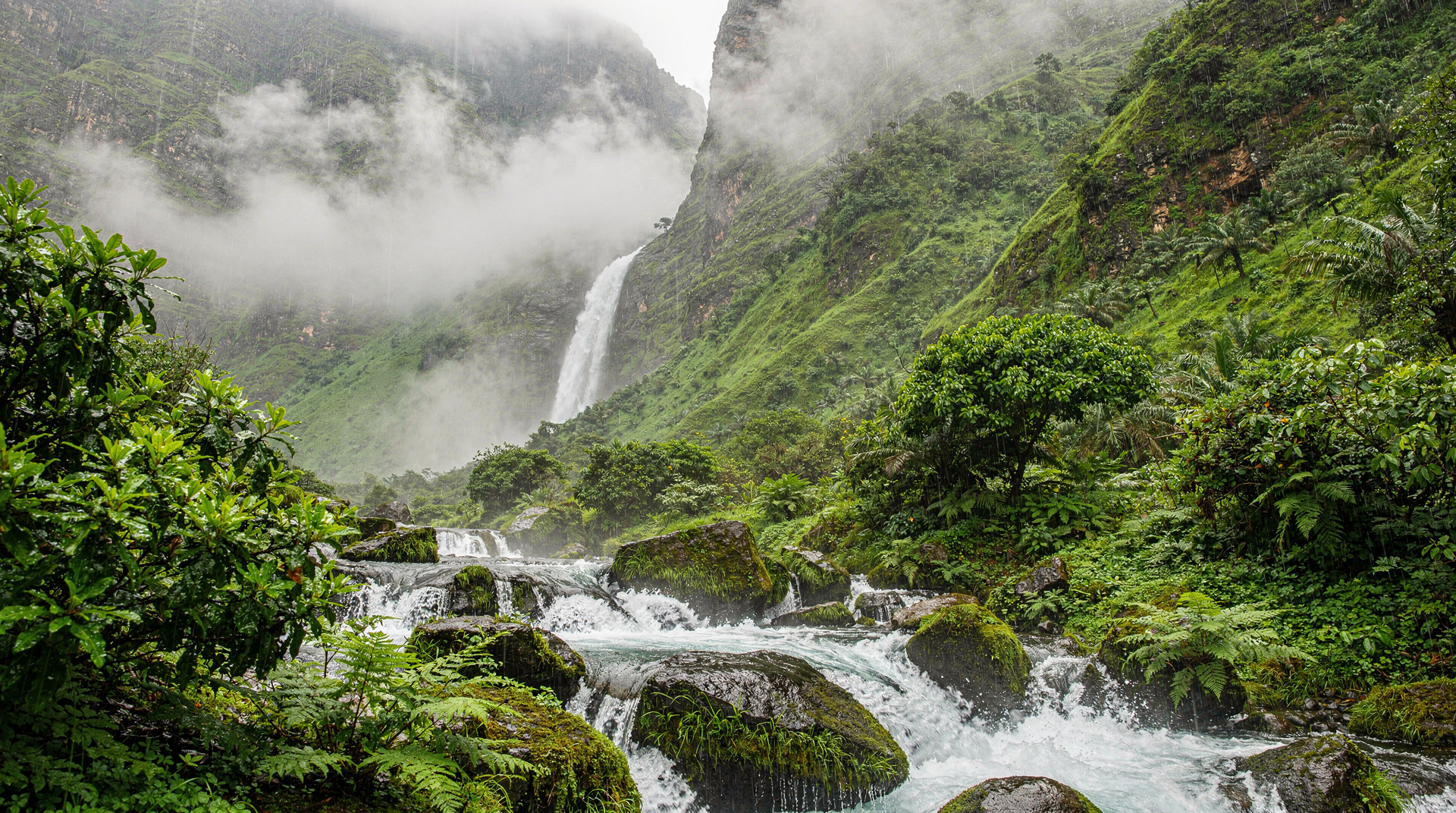
During the khareef monsoon season (June through September), the Qara Mountains on this final section are covered in mist and transformed into an improbably green landscape — a visual shock after hours of tan desert. Outside monsoon season, the mountains are brown but still dramatically shaped.
Accommodation Options for Splitting the Journey
Haima Marriott (Midpoint Option)
The Marriott at Haima is the standout accommodation option for travellers splitting at the midpoint. It is comfortable, well-run, has a pool (critical for morale after a desert drive), and serves reasonable food. The price is somewhat elevated relative to the setting — you are paying for the lack of alternatives, which the hotel is aware of. Booking in advance is advisable, particularly during Omani public holidays when the transient traffic spikes.
Duqm Hotel Options (Coastal Route Option)
The coastal route split works well at Duqm, which has seen significant hotel investment associated with the Special Economic Zone development. Several mid-range and business-oriented hotels now operate in Duqm with good facilities. The town itself is more interesting than Haima and a short morning drive can include the dramatic rock formations and beaches of the Duqm coast before continuing south. See the Duqm destination guide for detailed accommodation options.
Sur (Coastal Route Option)
For travellers on the coastal routing, Sur offers the most interesting overnight stop. The city has several comfortable hotels, excellent fresh fish restaurants, the living dhow-building tradition at the Souq Araqi boat yards, and easy access to Ras Al Jinz turtle watching in the evening. Sur as an overnight stop transforms the coastal version of the journey into a significantly richer experience.
The Drive Itself: What to Expect Hour by Hour
Hours 1-2 (Muscat to Nizwa diversion junction or continuing south): The most visually varied section, with the Al Hajar mountains framing the road and the landscape shifting between coastal plain and rocky gorges. Traffic is heavier here than anywhere else on the journey.
Hours 2-4 (Nizwa junction to Adam): The mountains begin to recede. The road straightens. The desert opens. This is when the scale of what you are crossing begins to register.
Hours 4-6 (Adam to Haima): The pure interior. Flat gravel plains extending to a featureless horizon. The heat shimmer makes distances deceptive. The road quality remains excellent. Traffic thins to almost nothing except trucks. This section is hypnotic rather than interesting — experienced travellers use it for podcasts and audiobooks.
Hours 6-8 (Haima to Thumrait): The longest, emptiest stretch. The terrain is slightly more varied than the Adam section — some low ridges, occasional dried riverbeds — but remains fundamentally empty. The air temperature at road level on a summer day is extraordinary; even in the vehicle with air conditioning at maximum, the sun through the windscreen is forceful.
Hours 8-9 (Thumrait to Salalah): The reward for the preceding hours. The Qara Mountains rise from the plain, the vegetation begins, and the air changes perceptibly. In khareef season, clouds roll in from the ocean and the mountains disappear into mist. The descent to Salalah through the mountain road is the most interesting driving of the entire journey.
Practical Logistics and Tips
Departure timing
For the single-day drive, departure from Muscat between 4am and 5am is optimal — this gets you through the Muscat traffic in pre-dawn quietness and ensures arrival in Salalah in the early evening rather than after dark. The alternative, departing at a civilised hour of 7am or 8am, means arriving after nightfall.
For the two-day version, departure timing is flexible. Leaving Muscat by 7am allows a comfortable arrival in Haima by early-to-mid afternoon with time for a brief rest before dinner.
Refreshments and supplies
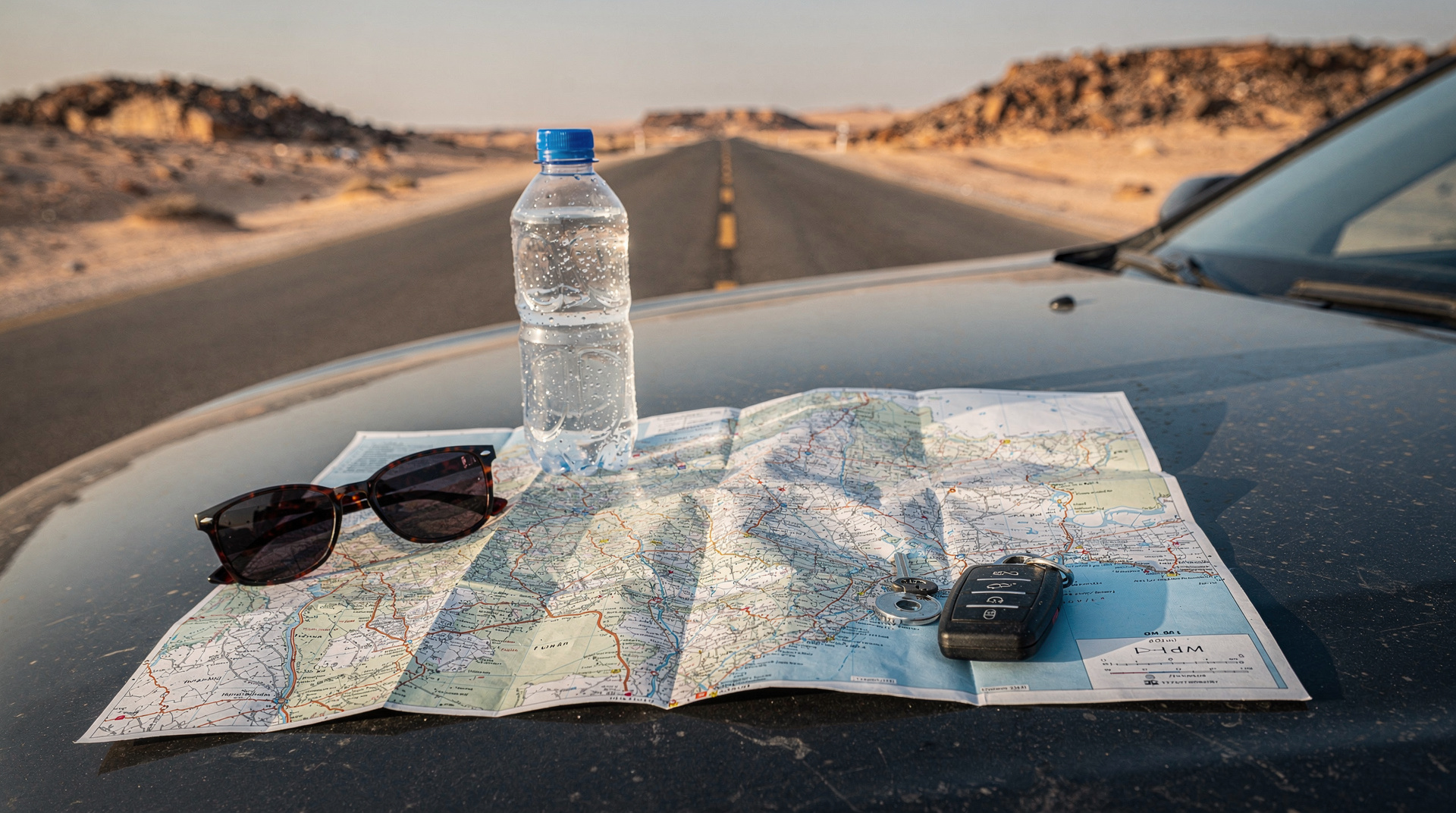
Beyond the fuel logistics, carrying a cool box of water, snacks, and cold drinks is strongly recommended. Roadside stops exist but the food quality is variable and waiting for a roadside restaurant to produce a meal adds significantly to overall journey time. A prepared cool box with sandwiches, fruit, and cold drinks turns what could be a frustrating logistics exercise into a pleasant picnic break at a scenic layby.
Driving fatigue
The empty central section of Route 31 produces genuine driver fatigue — not from physical effort but from monotony. The flat straight road with minimal visual variation reduces alertness in a way that mountain or city driving does not. Take breaks every 90-120 minutes whether you feel tired or not. Share driving if possible. Use the breaks to walk briefly and re-engage the senses.
Overnight stops for Salalah activities
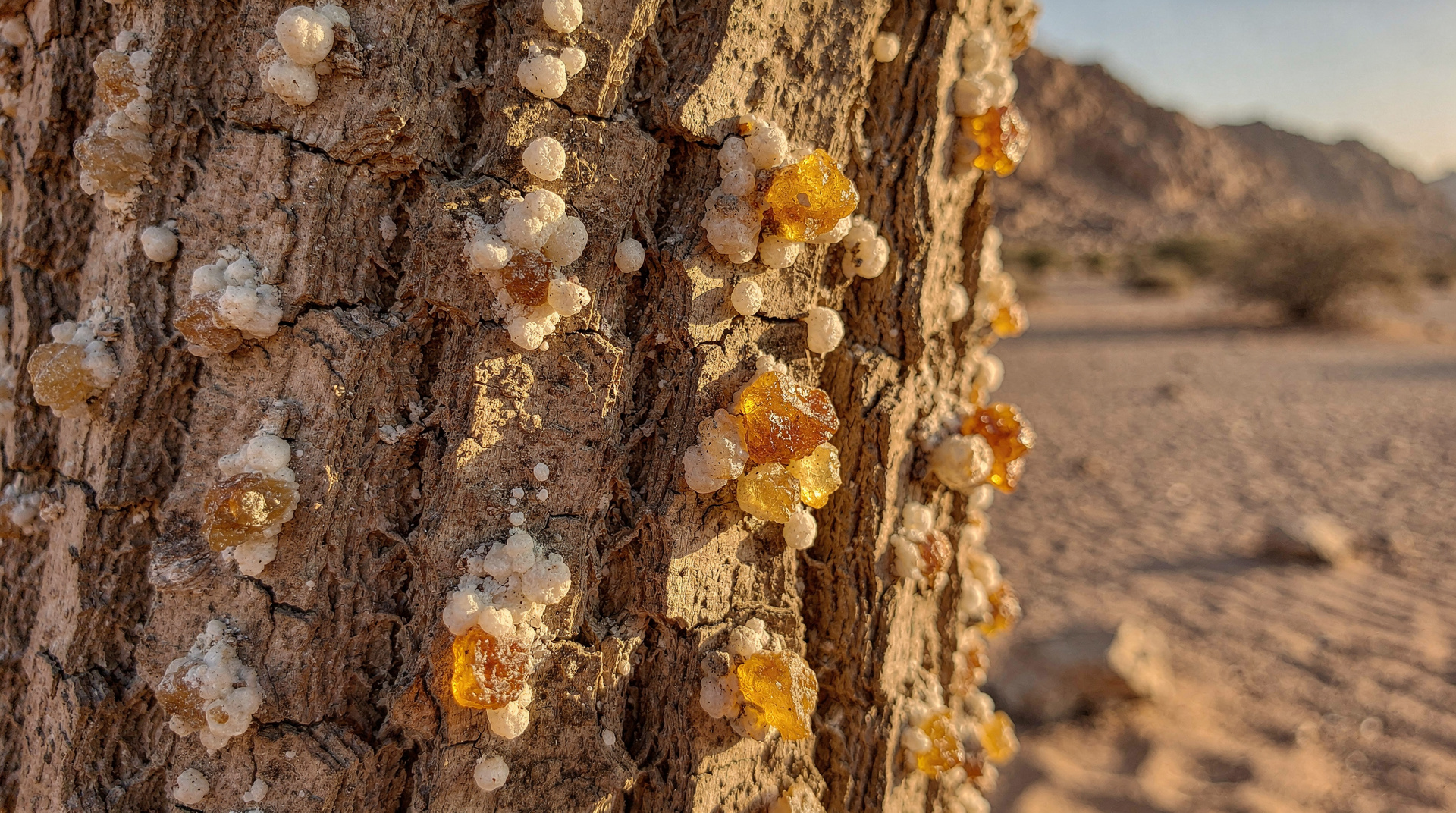
Once in Salalah, the city repays time. The frankincense lands of Dhofar — the ancient source of the most important trade commodity of the ancient world — are unique. The khareef season transforms the landscape into something extraordinary. For visitors interested in experiencing the Salalah region fully, allow at least two to three nights rather than using it purely as the endpoint of the drive.
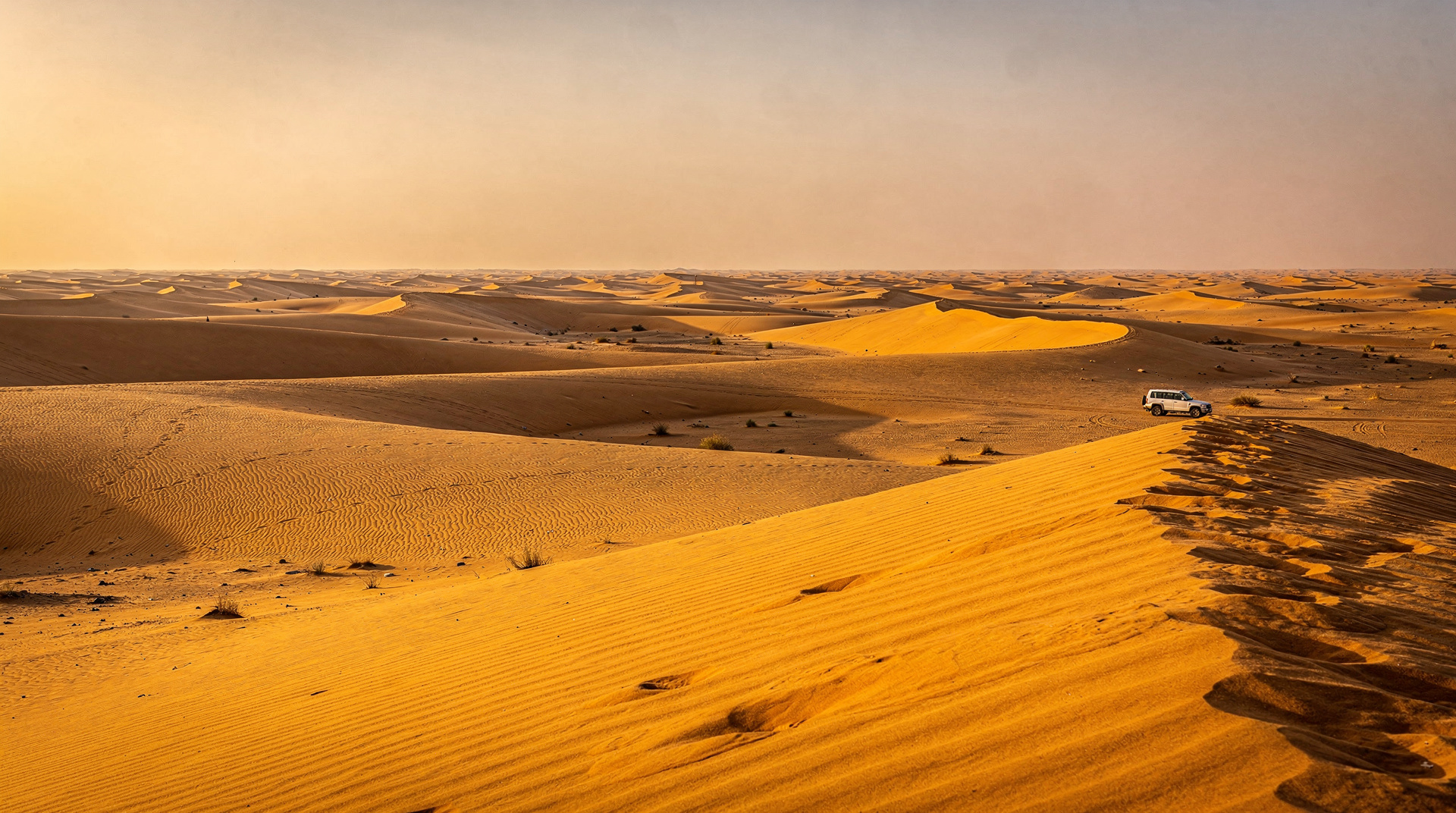
The Salalah sunset desert safari into the Rub al Khali Empty Quarter makes an excellent activity for the first evening after arriving, requiring no significant energy beyond sitting in a 4WD and watching the sunset over the Empty Quarter — a fitting reward for the day’s drive.
For broader planning of a southern Oman stay, see the frankincense trail guide and the khareef season guide.
Should You Drive or Fly?
Oman Air and SalamAir both operate multiple daily flights between Muscat and Salalah. The flight takes approximately one hour and forty-five minutes. Prices range from approximately 25-30 OMR one way on low-cost carrier SalamAir to 60-80 OMR on Oman Air, depending on booking timing.
Choose to fly if: You have limited total trip time (under ten days), Salalah is one of several destinations rather than a centrepiece, or you find long drives more exhausting than energising. Flying is straightforwardly the efficient choice.
Choose to drive if: The journey itself matters — you want to see the interior, you are interested in making stops that would be impossible on a flight, you are travelling with a vehicle that you need in both cities, or you have the specific ambition of experiencing the full length of Oman by land. Some travellers drive south and fly back, which gives the interior experience while saving the return drive.
The multi-day option, combining driving one way with stops at Haima or coastal diversions, and flying the other direction, is an excellent compromise that delivers the journey experience without the total time commitment of both legs by road.
Renting the Right Vehicle for This Drive
A standard sedan is genuinely sufficient for Route 31 — the road is sealed dual carriageway for its entire length. Where the calculus changes is if you plan any diversion off the main highway: Wadi Shab, sections of the coastal route, or a detour into the Jebel Akhdar area near Nizwa all require a 4WD. Our renting a car in Oman guide covers the practicalities of hire companies, insurance, and cross-country drop-off, which matters if you plan to fly back from Salalah rather than driving both directions. For general road conditions and driving rules across the country, see the getting around Oman guide.
Worth a Detour: Photography and Swimming Stops
Travellers taking the coastal routing should budget real time, not just a photo stop, for two places. Wadi Shab is a short boat crossing and a swim from the road and is one of the most photogenic spots in the country — plan at least two hours if you stop. Sur, with its dhow-building yards and turquoise lagoon, rewards an overnight rather than a drive-through. Even on the inland route, the descent from Thumrait into Salalah through the Qara Mountains is worth slowing down for; see our broader scenic drives in Oman guide for other road-trip routes that pair well with this one.
Staying Connected and Safe on the Road
Mobile coverage thins in the central desert, so download offline maps before leaving Muscat and consider a local SIM or eSIM in advance — our Oman SIM card and eSIM guide covers the practical setup. For general road-trip safety, including what to do if you break down in a remote section, our Oman safety tips guide is a useful companion read, and travellers budgeting the wider trip should check the cost of 7 days in Oman guide for how fuel, tolls, and overnight stops fit into an overall budget.
Frequently asked questions about the Muscat to Salalah drive
Can I do the Muscat to Salalah drive in a single day?
Technically yes — the driving time is 9-11 hours and some travellers do complete it in a day. However, it is a long and tiring journey that leaves little capacity to stop and explore along the way. The two-day version with an overnight at Haima is far more comfortable and allows time to appreciate the journey.
Do I need a 4WD for the Muscat to Salalah drive on Route 31?
No — Route 31 is entirely sealed dual carriageway and is perfectly manageable in any standard vehicle. A 4WD is only required if you plan significant off-road diversions or the coastal route sections.
Are there fuel stations between Haima and Thumrait?
The 370-kilometre section from Haima to Thumrait has very limited fuel availability. There is a station at Ghayda that is sometimes operational, but it cannot be relied upon. Fill completely at Haima. A small range extender (jerry can) is worthwhile for peace of mind.
What is the road like during the khareef monsoon season (June to September)?
Route 31 remains open and in good condition during the khareef season. Some sections near Salalah may have brief weather-related conditions to navigate. The final mountain section before Salalah becomes mist-shrouded and dramatically atmospheric during khareef. The central desert section is unchanged regardless of season.
Are there places to stop and sleep cheaply along Route 31?
Beyond the Haima Marriott, basic rest houses operate at several points along the highway. Standards are low — shared bathrooms, simple beds, minimal services — but they are safe and functional for a transit overnight stay. Haima has the most reliable mid-range option.
How does driving compare to flying in terms of total cost?
For a solo traveller, flying is typically cheaper when hire car costs are considered. For a family or group of four sharing a hire car, driving becomes economically competitive, particularly if one hire car covers the entire Oman trip rather than requiring separate city and Salalah rentals.
Is there mobile phone coverage for the entire Muscat to Salalah route?
Coverage is good but not complete. The main towns and approximately 70-80 percent of the highway have reasonable coverage on Omantel or Ooredoo networks. Deep sections of the central desert may have weak or no signal for stretches of 20-50 kilometres. Download offline maps before departure and do not rely solely on data navigation.
What wildlife might I see on the drive?
Arabian oryx (the national animal) are occasionally visible from Route 31, particularly around the Arabian Oryx Sanctuary area near Haima. Dromedary camels are common, especially in the early morning and evening when they move to road edges. Various raptors circle overhead in the desert sections. The Dhofar mountains approaching Salalah have a distinctly different wildlife character — more lush and with different bird species — that rewards a slow approach with a stop.
Can I hire a car in Muscat and drop it off in Salalah?
Most major hire companies operating at Muscat International Airport offer one-way rentals to Salalah, usually for an additional drop-off fee. This suits travellers who plan to drive south and fly back to Muscat. Confirm the one-way fee and any mileage limits when booking; see the renting a car in Oman guide for details.
Is the drive worth doing if I am short on time?
If your total Oman trip is under ten days, flying is almost always the better choice — it frees up a day or more that the drive would otherwise consume. The drive earns its place on longer trips, or for travellers who specifically want to experience the interior’s scale.
Top experiences
Bookable activities with verified prices and instant confirmation on GetYourGuide.
 📍 Salalah
 Salalah: sunset desert safari - Rub Al Khali - Empty Quarter
- Free cancellation
- Hotel pickup
- Small group
 📍 Salalah
 West Salalah tour: Fazayah Beach, Al Mughsail Beach, blowhole
- Free cancellation
- Hotel pickup
- Instant confirmation
 📍 Muscat
 Muscat: half-day city tour
- Free cancellation
- Instant confirmation
- Hotel pickup
 📍 Muscat
 Muscat: 2-hour sunset dhow cruise
- Instant confirmation
- Free cancellation
- Best seller